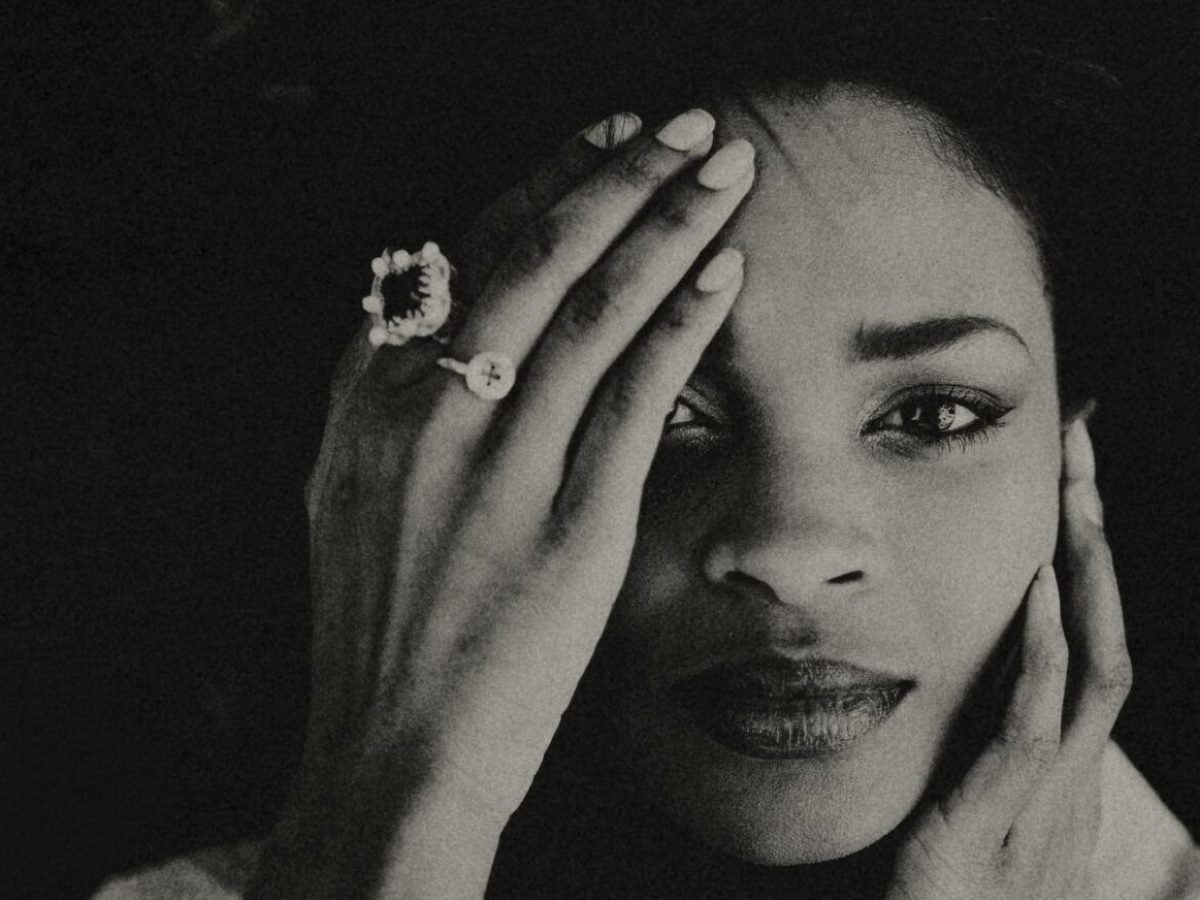

This story is featured in the 55th Anniversary, July/August 2025 issue of ESSENCE.
Fifty-five years ago, ESSENCE published its very first issue—with the cover line, “Sensual Black Man, Do You Love Me?” The article dove deep into the glaring uptick in numbers of single Black women. Writer Louise Meriwether framed the rise of marriages between Black men and White women—which had been legalized only three years before, in 1967—as the main cause of the “man drain” at the time.
While some of the sentiments in that article ring true today, things have changed in monumental ways. Recent data published by ESSENCE paints an interesting picture of the current state of Black love: The percentage of Black women who had never been married grew from 37 percent in 1990 to 49 percent in 2022. While the numbers may seem alarming on the surface, they actually point to a growing trend of Black women seeking personal fulfillment rather than opting for marriage for its own sake.
We’re redefining what “happily ever after” means, even if it doesn’t include the husband, kids, and a white picket fence. Most of all, we’re taking the boundless love that we pour so freely into family, career and community and pouring much of it back into ourselves. Should romantic love cross our path on the journey, we’ll welcome it.
Therapist and former ESSENCE relationship columnist Sherry Blake, Ph.D. (aka, “Dr. Sherry”) sees this shifting mentality as a positive trend. “For many years, I think there was a panic that if you did not have a husband or a mate by a certain age, then you were a failure,” she says. “That pushed a lot of women into settling in relationships that they were not happy in. Women have decided: I am no longer willing to allow that panic button to go off in me. I am okay on my own.”
First Comes Love
Eboni K. Williams, attorney and television personality, has long forged her own path when it comes to love. The native of southeastern Louisiana was raised by a single mother who ascended from poverty as an entrepreneur. Growing up, Williams did not know her father; and she recalls that the lessons on finding a mate that she received from her elders were more cautionary than aspirational. “What was modeled for me in my immediate family was not being a wife or getting a husband,” she says. “Instead, I watched my mom literally go from food stamps and housing vouchers to BMWs, Porsches, 3,000-square-foot houses, Louis Vuitton and all the things, with no man in sight.” For Williams, this birthed the idea that money and earnings correlated with freedom and safety—and that love was secondary.
In 2020, at the height of the COVID-19 pandemic, Williams and her ideology about love were tested when she decided to end an engagement with her then-fiancé, businessman Steven Glenn. At the time, Glenn chose to quarantine with his children instead of with her. Suddenly, Williams realized she was staring down the tunnel of a future in which she would always be on the sidelines. “We didn’t have a love problem; we didn’t have a money problem; but what became clear to me in his choice during COVID was that he had already created a family with his ex-wife and his children, and I was always going to be outside of that family,” she says.
Post-breakup, she moved out of the luxury apartment they’d shared and bought a condo in Harlem—a move that ignited a desire to be a mom. “Once I was able to provide for myself in that way, I trusted my ability to provide for a future child,” she says. “Now, I don’t think you need to own a home to have a baby, by any stretch—but I know for me, it shifted my perspective. God was like, ‘I got you.’”
Having already frozen her eggs at age 34, Williams decided to pursue motherhood at 40, choosing a sperm donor for the IVF process. She gave birth to her daughter, Liberty, in August 2024. “I wanted a baby, and I wanted love, but it seemed like the kind of men that I was likely to fall in love with could not give me a baby,” she says of her decision. “So I bifurcated these two desires. And because I’m blessed and in a position to do so, I can have my baby as a solo mom—and then I can reenter the dating market as a solo mom, where I no longer expect nor need a man to be a father to my baby.”
Williams, who had been married at 27 and divorced by 28, no longer fantasizes about a “perfect” family. She is now dating and prioritizing true companionship over checking the marriage box, and she says that creating her own definition of family has been her saving grace. “God told me, ‘You’re going to have everything in life you ever wanted,’” she says. “He didn’t say what it was going to look like. He didn’t say when. But He said it, and I believed it. And I still believe it.”
Manifest Destiny
Known on the Internet as Jessie Woo, the popular content creator and podcaster has always moved through life as if the odds were stacked in her favor. Born to Haitian parents, she grew up in Miami and was raised by an ultra-conservative Christian mother who instilled ideals of purity in her from a very young age.
“In Haitian culture, you’re taught, ‘Do not love with the lower part of your body,’ ” she says. “You’re not taught how to date. You’re not taught what to look for. But then, when you turn 30, people ask, ‘Where’s your husband?’ ” Dating was made even more complicated by the colorism she experienced. “In high school, there was a football player that I had a huge crush on, and he was darker than me,” she recalls. “He told me, ‘Jess, you’re cool, but dark skins are not in right now.’ I’ll never forget that.”
Moving to Atlanta offered Woo a fresh start—not only for her career, but also in terms of living in a culture where Blackness is the standard. In her 30s, she decided she would approach dating openly and fearlessly. “I just was like, ‘I’m going to meet my husband this year.’ I was delusional like that,” she says. “I kept coming up short, but I was like, ‘F–k it. I’m okay. It’s January 1st. I’m up to swing at bat again.’ I kept renewing that vow to myself.”
That unwavering faith led her to meet her current boyfriend, Jay Allen—a producer who visited Dish Nation in 2024 to promote his Freaknik: The Wildest Party Never Told documentary. Woo was a host on the show at the time—and didn’t realize they had already crossed paths by living in the same building. Allen asked for her number; and after a week of exchanging voice notes, he invited her to attend church service with him on Easter Sunday. Afterward, they hit brunch and became absorbed for hours in deep conversation. “I cut everybody off after that,” she says. “I knew I had found someone to whom I wanted to dedicate my time.”
Woo calls her encounter with Allen a move directed by God that wouldn’t have been possible if she hadn’t kept the faith. “I don’t like when people say, ‘You find him when you least expect him.’ No—I always expected him,” she says. “I came into the year looking for my husband. I was always expecting that I was going to find my person.”
Holding Onto Hope
We can’t talk about the current state of love without revisiting the past. “We are at a moment in history when we are bearing the fruit of a lot of long-term patterns in our community,” says former ESSENCE Lifestyle and Relationships Editor Charreah K. Jackson. “The reality is that Black Americans never had the space, time or resources to truly heal from the immense trauma of enslavement and oppression, and all the realities of what it has meant to be Black in America.”
This trauma, compounded with the rise of gender wars on social media and “red pill” podcasts, creates friction that taints the dating pool. “There’s a lot of bleeding on each other in our community,” Jackson says, “where you see unhealed behavior that’s now broadcast out.” The silver lining is that Black women have more options than ever before. When the first issue of ESSENCE was published, women could not even get credit cards or loans without a male cosigner. Now, Black women are the fastest-growing group of entrepreneurs. The freedom, autonomy and independence we now have were once only a dream held by our ancestors. And with the fulfillment of the dream comes the possibility to reach beyond limits that no longer need exist—including when it comes to romance.
Jackson’s favorite features to work on during her time on staff at ESSENCE were about women finding love abroad. To this day, she thinks traveling—and being open to love from other cultures and across the diaspora—is an area that Black women should explore more often. “If you are an educated Black woman, put your passport to use,” she says. “Go where you are celebrated—where there are Black men who love and celebrate us, and there are other men who appreciate and celebrate us as well.”
Though the love and dating waters can be murky, the future is nevertheless bright for us. “Black women are moving away from defining themselves, and other women, solely by relationship status,” says Jackson. “This generation is more educated. We are more exposed. We are valuing ourselves, seeing our worth, doing the work on our relationships with ourselves and our relationships with our sister friends. We aren’t necessarily waiting on a man to live the life we dream about.”