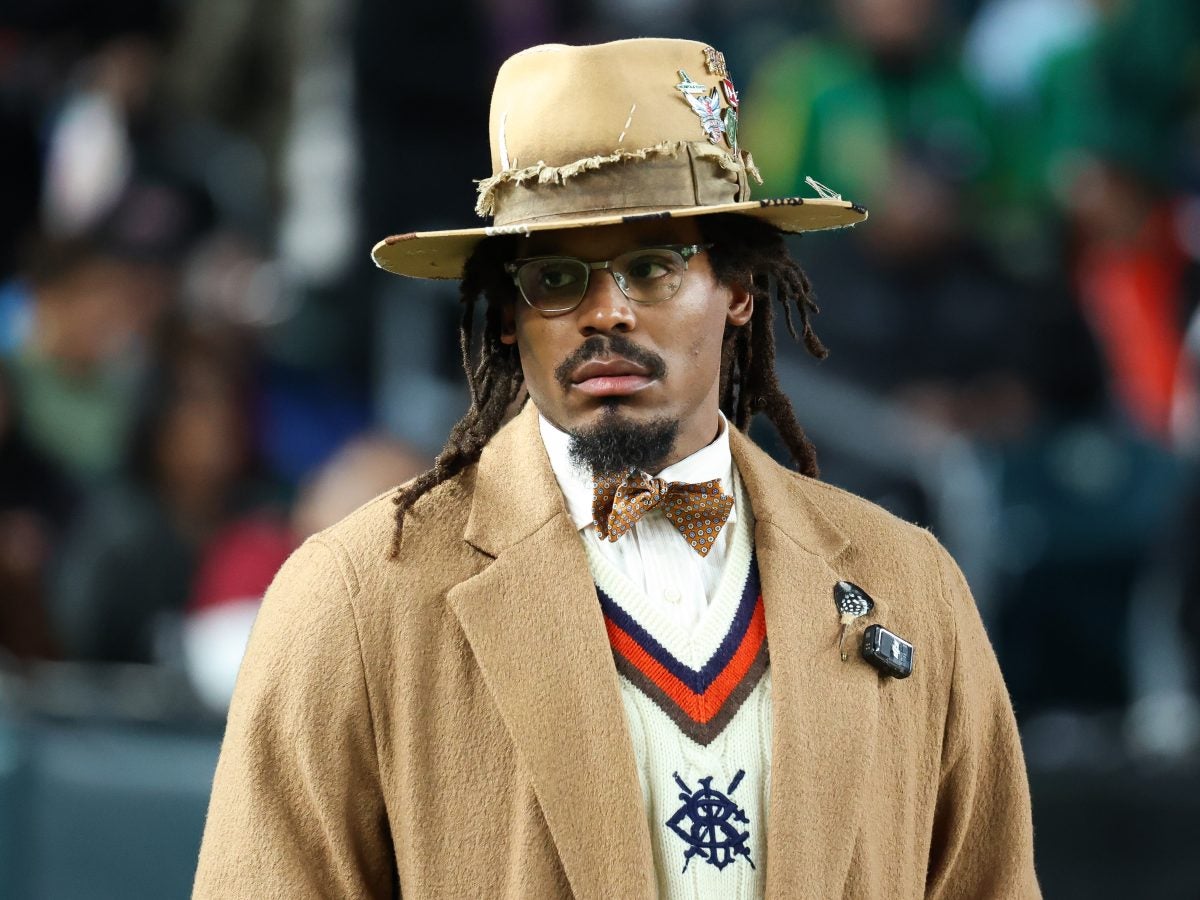

In a time when the average person’s attention span on screens is measured in mere seconds or minutes, I sat through an hour-and-33-minute-long interview on YouTube. The interview in question is Bishop T.D. Jakes’s conversation with former NFL player Cam Newton on his NXT Chapter podcast. The viral clip of the renowned pastor checking Newton in the most graceful way I’ve seen is what led me to watch the interview in its entirety. What I witnessed was that after the sportsman spent more than an hour making excuses for why he’s apprehensive about getting married, has nine children with multiple women, and can’t be vulnerable, Jakes tells Newton to do the hard work to “fix it” while he still has time.
The “hard work” Jakes refers to, and the “it,” is Newton naming and healing the hurt causing his internal rage. The athlete said the hurt stems from his fallout with ex-girlfriend Kia Proctor, whom he was with for seven years, the fractured relationship with her daughter, whom he claims as his own, and his inability to have all of his children under the same roof more often. The multihyphenate pastor warned Newton—who noted that he grew up a pastor’s kid—that time is running out, as he warned Newton that he’s “built his life around a youth that’s leaving.”
“Youth is a vapor. It’s like steam on a mirror in the bathroom after a shower. By the time you dry off, it’s gone. You just got a minute to fix this, and none of those girls and none of those jobs and none of that money is going to be able to fix it,” he said to the star, who listened seemingly teary-eyed.
The teary eyes were contagious. I found my tear ducts welling up because of how profound the message is, but also because I’ve never seen Newton more quiet. It was the first time in the nearly 90-minute conversation (and any interview of his I’ve watched) that he didn’t have an excuse, rebuttal, or deflection. All he could do was listen.
The 68-year-old added that he hoped Newton would hear him so he wouldn’t turn into a bitter old man making excuses for wasting his life.
“It’s not like you’re sleeping up under a bridge, but you are sleeping up under a bridge. It’s not like you don’t have anything, but you don’t have anything. It’s not like you don’t count, but where it counts, you don’t matter, and only you can fix that,” he concluded, suggesting Newton has everything and nothing at the same time.
My initial stance for this piece was steeped in criticism for Newton’s contradictions around marriage, kids, and commitment. My disdain increased as I listened to him avoid accountability at every turn. Jakes asked him to share what he’d learned from his shortcomings throughout the entire interview. Yet the conversation kept circling back to Newton’s need to put women through obstacle courses to prove they wouldn’t abandon him, as well as highlighting everyone else’s shortcomings.
In many words, he said the following:
His girlfriend, Jasmin Brown, is his “Cinderella,” but he’s not convinced that after almost four years together, she’ll stay when the going gets tough.
The only person he’s willing to be vulnerable with is his kids.
He wants to know without a shadow of a doubt that the woman in his life will stay for better or worse before getting married. But he also says he’ll never know for sure.
He says it hurts him that all of his children can’t be under one roof more often. Yet, he can’t trust anyone enough to marry them and create a single, solid household.
Nevertheless, he’s also open to having more kids. It seems Newton wants unconditional love but isn’t willing to offer vulnerability, long-term commitment, or loyalty.
I was perpetually frustrated listening to him talk — it was almost insufferable. It felt like listening to soliloquies of an abandoned little boy trapped in a 36-year-old man’s body. But by the end of the interview, something unexpected happened; I softened, and for the first time, I felt empathy for Newton. Because he is struggling with the same boogeyman as many of us, especially Black men: vulnerability. Particularly when their attempts at openness are violated by someone they trust, or they’re rejected.
Few men have been given the tools needed to recover from heartbreak, so it becomes part of them, carried like a keepsake. Consequently, we get a distorted and emotionally unavailable version of Black men like Newton and Nick Cannon. Instead of true vulnerability, we’re bombarded with candy-coated language devoid of accountability, behavior that contradicts their touted values, and circuses instead of stable homes. We meet their toxic, broken representatives because they’re too afraid to show us who they truly are, when they’re hurting, and where they need help.
In my first ever therapy session about seven years ago, I went into the office masking and talking about everything but what was broken. My therapist at the time said to me, “Your vulnerable self is your true self.” Afterward, I spent years doing the “work” that Jakes calls Newton to do during the interview, and I can confirm my therapist was right. I have since been reacquainted with the vulnerable version of myself, and I’ve developed the courage to share that person with trusted people. I know what it’s like to feel trapped in a dark room with your pain, but you won’t be free until you open the door. Vulnerability is a superpower; it’s where the healing happens. It also gives us the information we need to transform into who we want to be.
I used to think Newton was a lost cause, but now I share Pastor Jakes’s hope. The hope that Newton does the necessary work to heal what’s broken and show up as a more divine version of himself. I pray he taps into the openness needed to course-correct with himself, the women in his life, and his children. And I pray all of our Black men hiding under their beds from the boogeyman—vulnerability—find the courage to face their fears and heal.
His interview with Jakes may be a turning point because it tapped into the vulnerability he’s so terribly afraid the world will see. It was a raw reality check that called Newton to a level of accountability and healing that can only happen when you’re willing to tell the truth, no matter how naked it makes you feel.