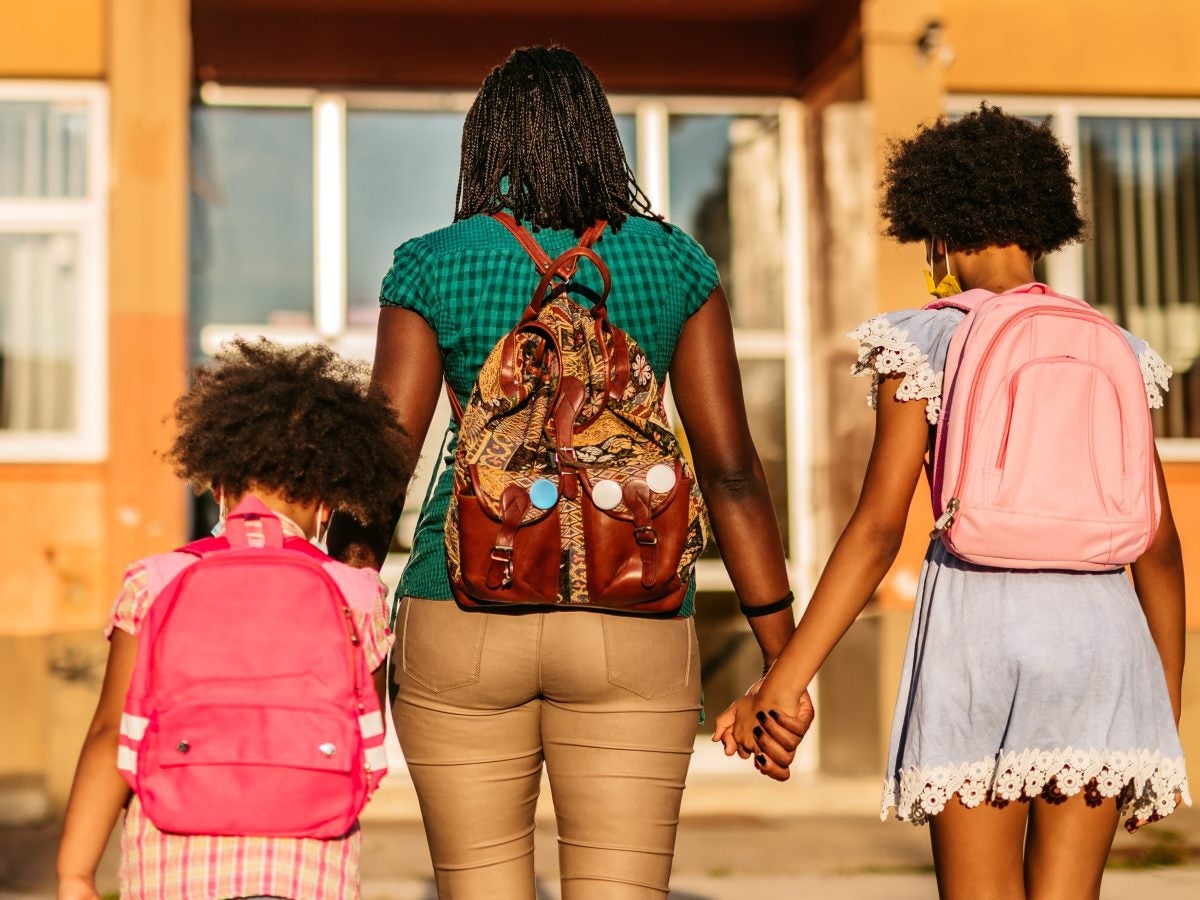

While the rest of the country prepares for large gatherings and festive meals of turkey and stuffing, the tragic story of Corshawnda Hatter still haunts me. Chicago mother Corshawnda Hatter and her children were recently followed, berated and beaten by a group of youngsters during what should have been an innocent walk home from school. I was born, raised and presently live in Chicago. I am the mother of two school-aged children. I simply cannot just move along to the next viral social media story. And the truth is, neither should you.
It’s been a week since the brutal attack on Hatter. The attack that was filmed and initially shared—and widely re-shared without any hint of ethical or privacy concerns—across social media platforms. The world zoomed in on the violent assault on a 33-year-old mother and her 9-year-old son, while a younger daughter looked on.
In the days following the incident, dozens of adults “pulled up” to the school seeking street justice or offering support for Hatter while others sought to protect the children accused of orchestrating the attack. This week, Chicago schools are closed for Fall Break, and perhaps that’s serendipity for all involved. Why? Because for the next five days, content creators looking to get Internet-famous from filming in front of Orville T. Bright Elementary School won’t likely find any Chicago Public Schools (CPS) students on campus. And Hatter, who was relocated after city officials intervened, can settle into her new lodgings in her new neighborhood and figure out her next steps.
This story of a beating preceded by school-based bullying has captivated Black America and its cultural commentators. A nation latched on to the narrative not only because of the horrifying visuals but also because we feel American culture overall is backsliding, and we know this can happen again. That’s why so many people made so many posts about how they would have responded if it had been them.
“She was doing her job, she was being a responsible parent,” says Shante Holley, a Chicago-based trauma-informed mental health coach. “That you can become victimized while minding your own business is really what has triggered people. People immediately put themselves in her shoes. [They] say, ‘If that had been me, I would be throwing those bows,’ or ‘I would be in jail.’ That sort of thing.”
Hatter responded online to critics who suggested she should have hit her attackers. She said she is ill with sickle cell anemia, and her sister confirms to me that Hatter was also ill over the weekend. But, even if she was 100 percent, Hatter asked a poignant question: Is it ever appropriate for an adult to beat down some kids?
“It’s reasonable for people to want justice. The question is what does that look like?”
Holley thinks Hatter’s question is part of a larger community conversation that needs to be had. She’s also among a growing number of mental health professionals who encourage us to acknowledge our pain while also taking a beat before we respond. That’s mostly because a situation uploaded to social media has been followed up with very little clear, factual information.
“Outrage is a natural response, and we should be outraged when violence is senseless,” says Holley. “I also think that it’s reasonable for people to want justice. The question is what does that look like?”
Chicago police told me that a 10-year-old has been arrested and charged with one count of misdemeanor battery with intent to cause bodily harm. The Chicago Police Department (CPD) also said “The juvenile was processed by the Chicago Police Department through the Youth Intervention Pathways program and diverted to family and social services as an alternative to juvenile court.” Sources say that a 13-year-old who gave a social media confession and apology will likely be arrested this week. Chicago Housing Authority officials have not detailed where Hatter has gone. This is also to be expected because the city is trying to quell a brewing maelstrom. Chicago police state that the investigation into the battery, which other sources say included children ages 7 to 13, is “ongoing.”
As a Chicagoan who also lives on the South Side and has kids in CPS, I’m aware of the ripple effect of this type of violence. Not only is viewing it harmful, but the physical repercussions could echo for years if restorative justice isn’t put into play. You never know who is related to whom, which is why getting into it with folks can bite you in the ass. And while 2025 Chicago is not in the same galaxy of the gutter violence of 1990s Chicago, the city is still in a world of hurt due to the impacts of a hundred years of systemic racism and the policies that it has wrought.
“We’re all watching something unfold on social media and we need to be careful because we don’t know the details.”
Many community supports are gone, which explains why Bright Elementary has never had yellow-vested “Safe Passage” community workers who watch the kids at dismissal, as they do in other neighborhoods. The local Boys and Girls Club of Chicago that operated after-school programs inside of the school was shuttered in April, due to a lack of funds. The Chicago Teacher’s Union says it has no library and no sports program.
The neighborhood of South Deering, where this incident occurred, is approximately an hour drive from downtown. The local public housing project, Trumbull Park Homes, was the site of White violence against Black tenants, resulting in a horrific race riot in 1953. Like most of the South Side, it used to be White but then the steel mills shut down, Blacks and Mexicans moved in.
The neighborhood is what activists describe as a “resource desert” and recent media attention is shining a light on this pocket of the city that even many Chicagoans have never visited. At the same time, millions of tax dollars that could have gone to the school system or community programs have instead been routed to pay out more than $1 billion in police brutality settlements and, separately, city pensions.
Former school principal, educational leader and Chicago resident Femi Skanes, Ed.D., advises that children on all sides of the issue need wraparound services. She understands why community members went to the school and why Chicago police lined the block the day after the incident, even though most students at the school weren’t involved.
“We’re all watching something unfold on social media and we need to be careful because we don’t know [the details],” says Skanes, who has worked in the past to deescalate similar situations. “I would have worked with CPS, CPD and safety and security to, if nothing else, make sure that everybody is safe. For all of my students—those who were or were not involved—is everybody going to be safe in the morning?”
“It is complex. What heals violence is empathy, understanding and individual reconstructive work. Violence does not heal violence.”
Skanes points to another type of help that can come from organizations like Youth Advocate Programs (YAP) whose advocates work with the entire family—not just the offender—to provide individualized wraparound services that support a family’s journey to possibility and peace.
“[YAP] puts a kid’s life on a positive track and incorporates restorative justice where they recognize the harm that was done,” says Kelly Williams, YAP’s chief communications officer.
This is not just weekly counseling. YAP offers cognitive behavioral therapy, and a full suite of services that families might use for years. They’ve found success with it, as 87 percent of the kids in their program do not reoffend.
“It is complex. What heals violence is empathy and understanding and individual reconstructive work,” Williams says. “Violence does not heal violence.”