
Crashing out. That moment when you feel on the verge of smashing car windows, yelling at your boss, or having a full-on Waiting to Exhale meltdown—that’s a crash out. While some ways of releasing steam might not always be productive, the goal is the feeling of release when emotions run high.
As more people seek healing, the conversation has shifted toward calm approaches to managing intense feelings. But what about embracing those crash outs in a healthier way? That’s where creativity and artificial intelligence (AI) meet. Thirty-four-year-old innovator and boy mom, Karima Williams, is tapping into both to help people cope during these fiery emotional moments.
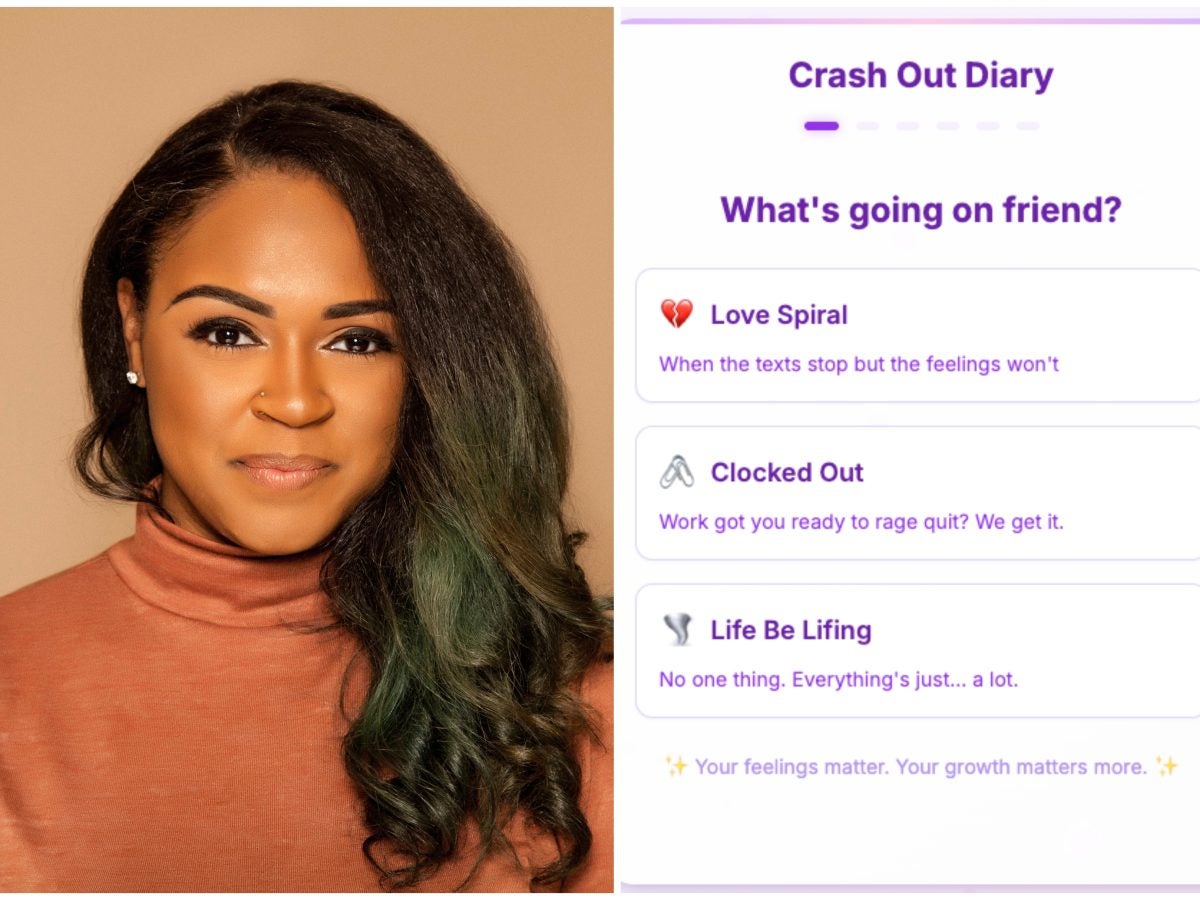
After using the Claude AI app to better understand and navigate her own emotions, Williams was inspired to create something similar—but on a larger scale. Earlier this year, she launched her idea and went viral. It’s called Crash Out Diary, a website (crashout.now) and soon-to-be mobile app designed to help people channel their anger and frustrations into a safe digital space instead of launching it toward real-life objects or others.
With a tech background dating back to 2018, working with product teams, engineers, and exploring “vibe coding,” a process where AI helps build websites and apps through prompts, Williams is turning Crash Out Diary into a sought-after social-emotional tool for young adults and mental health professionals across the country. And, she says, it’s been a powerful tool for her own growth as well.
“I remember one crash out I had, I actually got the idea from the internet. I was in a situationship and thought it was going to be something more. But come to find out, he was dating another girl while making me feel like I was the only one,” Williams recalls. “So I put his number on a fake Craigslist ad for different cities all over the country. After that, he got so many phone calls, and he had to answer each one to figure out where the ad was coming from. I have had other moments, but building the Crash Out Diary has been motivating me to keep going and crashing out less.”
In addition to offering healthy ways to release your feelings, Williams created it to be a place to get rid of shame over finding yourself overwhelmed with frustration. This app not only minimizes the fallout from “going ham,” but it also normalizes crashing out. No judgment. No critics.
“Shame has been very close to my story, so I understand how other people function with it. It’s not that I don’t want people to continue to crash out. But we can find ways to minimize it over time without this negative narrative around it because you’re in a high emotional state from time to time,” she says.
Crash Out Diary has multiple features that foster a space to share thoughts, relieve stress, and gain rewards. Williams has worked on a step-by-step process that offers helpful support for those who just need to vent, as well as resources for those who may need immediate support for more serious issues, including thoughts of self-harm.
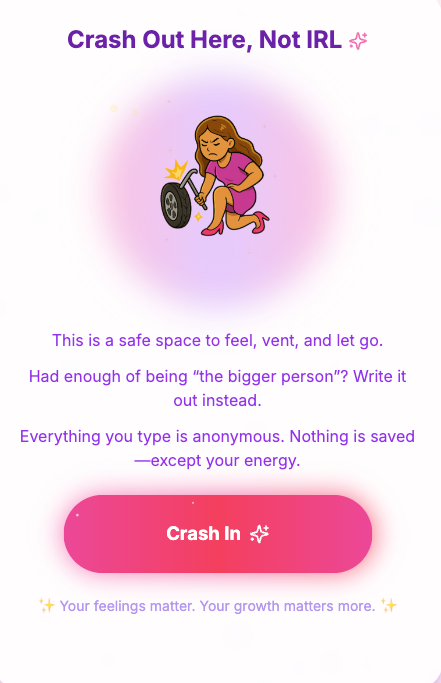
“The first step of the process is to offload. So, let’s say you’re thinking about smacking somebody, possibly slashing a tire, etc. You go in and click ‘crash in.’ From there, you pick a theme that the crash is stemming from. Whether it’s work, life, or love. Once you choose that, you choose a persona to talk to. The most common persona is the chaos twin. That’s the person who’s meant to talk with you. The second most common persona is the boy best friend who gives you very truthful advice. And the third common one is big sis. After you talk to one of them, they give you a message back that’s contextual to what you’re talking about. Then it gives you an option to do something else with your energy. So you can crash out or choose peace. If you choose to crash out, there’s a tapping game where you click and can break a phone. If you choose peace, you can either get alternative activities, or you can do a breathing exercise,” she explains.
“Finally, the app rewards you,” she adds. “It’s a fun meme saying, ‘You politely declined the chaos.’ I am working on adding guided meditations and affirmations that can be specific to someone’s situation. I also have a goal to one day make Crash Out Diary into a game for people to play.”
People are embracing more ways to incorporate AI into their mental health practices. Apps like ChatGPT and Claude are common tools used for emotional regulation or places to vent. While there may be controversy around using tech versus going to in-person therapy, Williams understands the importance of both. The goal is not to replace traditional methods, but rather, to provide a service that can be the first step into becoming more comfortable with the thought of speaking to a therapist about one’s emotional needs.
“Traditional therapy feels inaccessible sometimes, and it can be overwhelming to get that immediate connection that you need,” she says. “With therapy, you are looking for someone who is the right match for you, and you have to build that trust with them. That takes time. So with AI, it can be catered to have the same vibe as you, and you get the immediate gratification of feeling heard and seen. It’s a non-judgmental feeling, and people are really seeking that.”
“The more AI comes, it doesn’t mean that people need humans less. It just means humans become more of a premium,” Williams adds. “For example, let’s say you’ve used Crash Out Diary for a year now and you’re ready for the next step in your healing journey. Now, you can take the steps to meet someone in person to connect and confront your problems head-on.”
This balance between technology and human connection is at the heart of how Williams envisions healing—offering support tailored to where someone is at.
“Overall, I believe in building tools that are for people in a certain part of their journey,” she says. “Some people need therapy. Some people just need to have a structured place to vent. Instead of cursing out their boss, they can go into this app. They’ll find themselves saying, ‘OK, I actually feel better now.’”