
Who doesn’t love The Golden Girls? Whether you watched it during its original run in the ‘80s or caught it through reruns, you probably laughed at the antics and camaraderie of four women building a life together under one roof in sunny Miami, never imagining that kind of arrangement for yourself one day. I certainly didn’t. But here I am at 48, single, child-free, and seriously wondering if I, too, might one day find myself in a sisterhood-style living situation of my own.
I’ve been living outside the U.S. since 2018, chasing not just adventure, but healing. After two failed relationships and a career in education that I no longer loved, I set out to find a life that felt whole again. Travel became the spark that reignited me. I’ve gone paragliding off a mountain in Vietnam, stared down crocodiles on Lake Tonle Sap in Cambodia, and even run with world-class athletes in Rwanda, the land of a thousand hills. Now, as I approach 50, the question that echoes more often is: Where—and how—do I want to grow older?
I call Mexico home now and I’m currently “dating cities” to see which one fits. In my research, I stumbled upon a home in Lake Chapala, central Mexico, where two Black women over 50 are already co-living, with more on the way. Suddenly, the idea of aging in community stopped being a quirky TV fantasy. It started to feel like a real possibility.
Community As Health Care
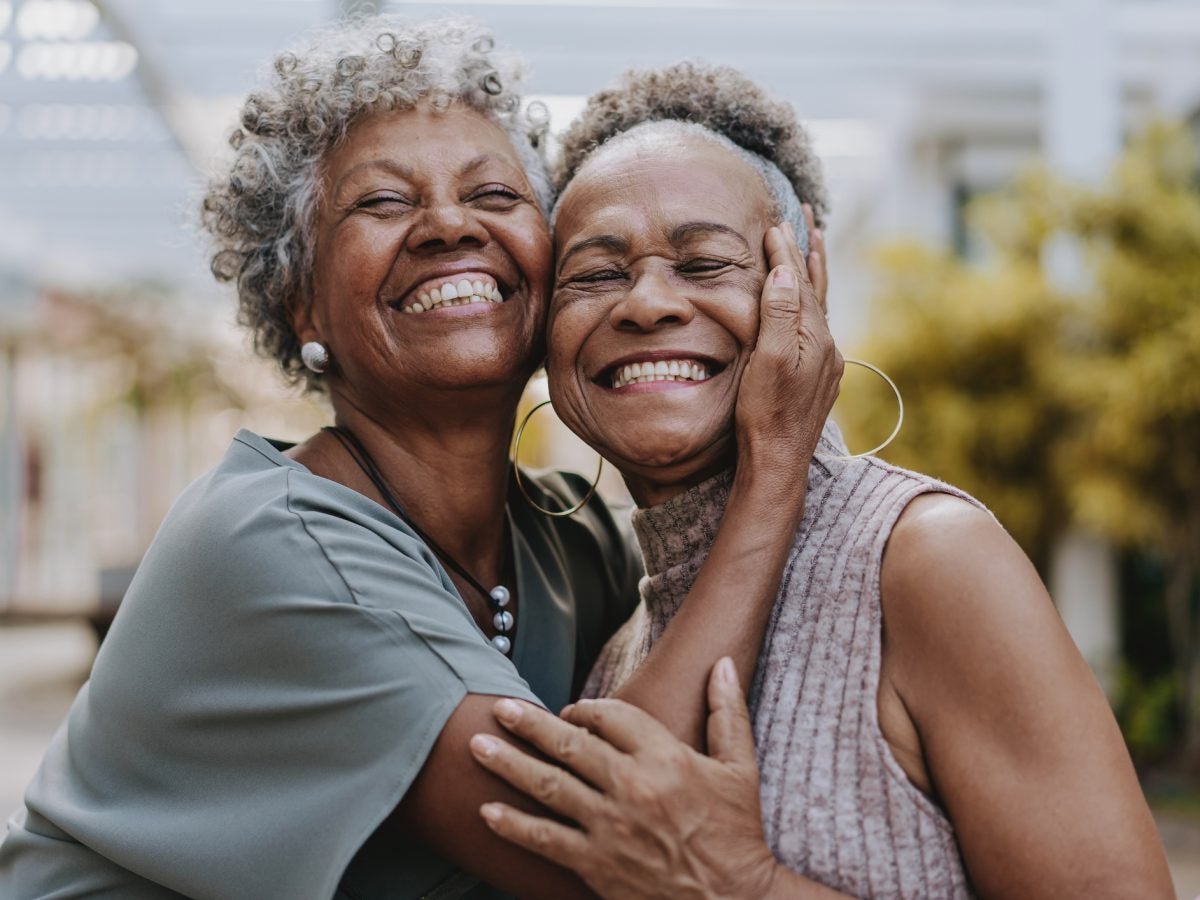
Black women are becoming an increasingly visible part of the wave of U.S. retirees moving abroad. While many are drawn by a lower cost of living, easier access to fresh food, or simply more sunshine, some are seeking something deeper: they don’t want to age without their sisters by their side.
They aren’t just looking for companionship. These women are reclaiming a pathway to wellness, longevity, and joy. “What I’ve observed with my patients over the years is that [community] makes a significant difference in everything,” says Jameca Woody Cooper, PhD, a counseling psychologist in St. Louis and fellow world traveler who has worked with older adults for more than two decades. “On their overall well-being, their mental health, their physical health, their cognitive abilities, and really their longevity.” Social connection, she explains, keeps the mind engaged and alert, helping to prevent cognitive decline by encouraging communication, presence, and a sense of being seen.
For Black women, this pull toward community is cultural. “We’re communal beings,” Cooper says. “We once lived in tribes and communities with elders, intergenerational communities where everyone was valued. And in those communities, the elders had the most value.”
Choosing to age together abroad offers emotional and psychological relief from the systems that have long marginalized us. It creates spaces where Black women are seen and valued not for their income, education, or skin color, but for who they truly are. As Cooper explains, finding community is healing.
Inside the New Village
Tucked in the heart of the Lake Chapala area of Mexico, a former boutique hotel has been reborn as something far more intimate and intentional. Casa de Caoba, otherwise known as The Mahogany House, is a communal living space created by and for Black women over 50. “We have renamed the house Casa de Caoba, because it’s all Black women,” says Sunya Folayan, 70, a textile artist, musician, and creative force from Charlotte, North Carolina, who co-manages the space with her business partner, Donna “Savvy” Jones. The three-story building includes four private suites, shared kitchens, and a rooftop with sweeping views. This is a space where slow mornings, community meals, and laughter can coexist with deep privacy and time for reflection. “On the third floor is our communal area, there’s a large living area, a large chef’s kitchen,” she explains. “It’s where we come together.”
Folayan moved to Mexico permanently in December 2021 after initially arriving for an artist’s residency earlier that year. Now with adult children and grandchildren still in the U.S., she’s chosen to root herself in a lifestyle built around her love for creativity and global community.
Her suite at Casa de Caoba includes a studio space where she continues her work as a textile artist, while also building a new artist residency program. She previously lived in the same space when it was known as Casa de Arte Ibiza, part of a thriving artist community. “We are building as we live,” she says of the house’s current evolution. The women share expenses through a communal fund, hold regular house meetings, and are co-creating a shared code of ethics. Still, boundaries are honored as much as connection. “We are grown women, and we don’t have a problem expressing what our boundaries are. We can say what works and what doesn’t work. Communication is important.”
“We invite our neighbors to our events because our goal is to truly integrate into the community, not hide behind walls like so many others do,” says Folayan. She emphasizes the importance of building genuine connections with both Mexican neighbors and members of the local Indigenous community. “We’re starting to get invitations now to go places and do things,” she adds, a sign that their efforts are being received in kind. For Folayan and her housemates, this global lifestyle is about showing up, engaging, and rejecting the stereotype of the “ugly American” abroad.
Her story left me inspired, but also curious. What does it actually take to build a co-living arrangement like this? How do you find the right people, protect your peace, and still create something that feels like home?
Donna “Savvy”Jones, Folayan’s business partner and a resident of Casa de Caoba, has an idea. At 65, she’s redefining what retirement can look like for Black women ready to reclaim their time, power, and purpose. Originally from Muskegon Heights, Michigan, Jones spent nearly 34 years working as a psychiatric nurse before retiring and relocating to Mexico. Her message is clear: “We don’t have to die alone. We don’t have to live alone,” she says. “The second act can be your best act.”
For Jones, the heart of co-living is all about companionship, growth, and collaboration. “Each of us brings something different to the table,” she says. “Instead of being in competition, we’re in collaboration. I get to straighten my queen’s crown, and we grow together.” Over time, she adds, “We actually become family.”
Jones now teaches other women how to build lives rooted in clarity, community, and what she calls “grace gigs”—sustainable, soul-aligned work and living that centers more rest over hustle. As a coach, she guides women through the practical and emotional terrain of co-living.
Her method is both strategic and spiritual: use tools like Myers-Briggs or the Color Spectrum to understand personality dynamics, ask honest questions about financial stability, and watch for red flags like frequent moves or vague plans. She recommends a minimum six-month commitment and encourages open conversations early on about lifestyle rhythms, boundaries, and shared responsibilities. “Less is more,” she reminds her clients. “We’re not just sharing a space, we’re creating a sanctuary.”
A Holistic Haven for Intentional Aging
While Casa de Caoba offers a collaborative, co-creative model of living, some women may be drawn to a more structured approach to community living. That’s where Michelle Wedderburn steps in with a vision that blends comfort, independence, and wellness in the central highlands of Mexico.
At age 56, Wedderburn is the founder of Hacienda Elm, an all-inclusive mature living community in San Miguel de Allende, a one-level property with private suites, walking trails, fruit trees, and intentional design elements. Born in Toronto to Jamaican parents who migrated to Canada in the 1960s, she grew up in Connecticut before leaving the U.S. in 2000.
Wedderburn’s path to creating this community was shaped by deeply personal experiences during visits to her mother’s senior apartment complex in Connecticut. She saw firsthand the quiet devastation of elder isolation. She knew there had to be a better way to age with dignity, joy, and daily purpose. Her response was to build not just housing, but a holistic living experience that supports mind, body, and spirit. Residents can engage as much or as little as they like, with access to gentle yoga, shared meals, movie nights, and wellness gatherings designed to prevent the decline that often comes with solitude.
This is not a one-size-fits-all senior community. Residents must be relatively healthy and mobile. A 24/7 on-site manager ensures support is available without sacrificing autonomy. What Wedderburn has created is more than a place to live. It’s a proactive, empowering approach to aging. “People need to plan. They need to make decisions before someone else makes it for them,” she says. This community offers a grounded yet expansive model for aging, one that honors personal independence while surrounding residents with the support of a chosen family. It’s a vision rooted in care, connection, and the power to shape this chapter of life on your own terms.
Interdependent Living Over Independence
As I continue to explore what aging might look like for me, I’m reminded that we were never meant to do it alone. Through shared meals, rooftop conversations, and quiet companionship, this is most certainly a return to collective care.
As Cooper puts it, aging in community isn’t just a lifestyle choice, but a healing practice. It’s how we preserve our minds, our spirits, and each other. In a world that often demands Black women carry everything alone, choosing to grow older in community is a bold act of resistance and a return to care, connection, and ease. This conversation of Black women moving abroad is no longer only about picking the prettiest or even the cheapest destination. It has become a much deeper exchange about who we choose to become, together.