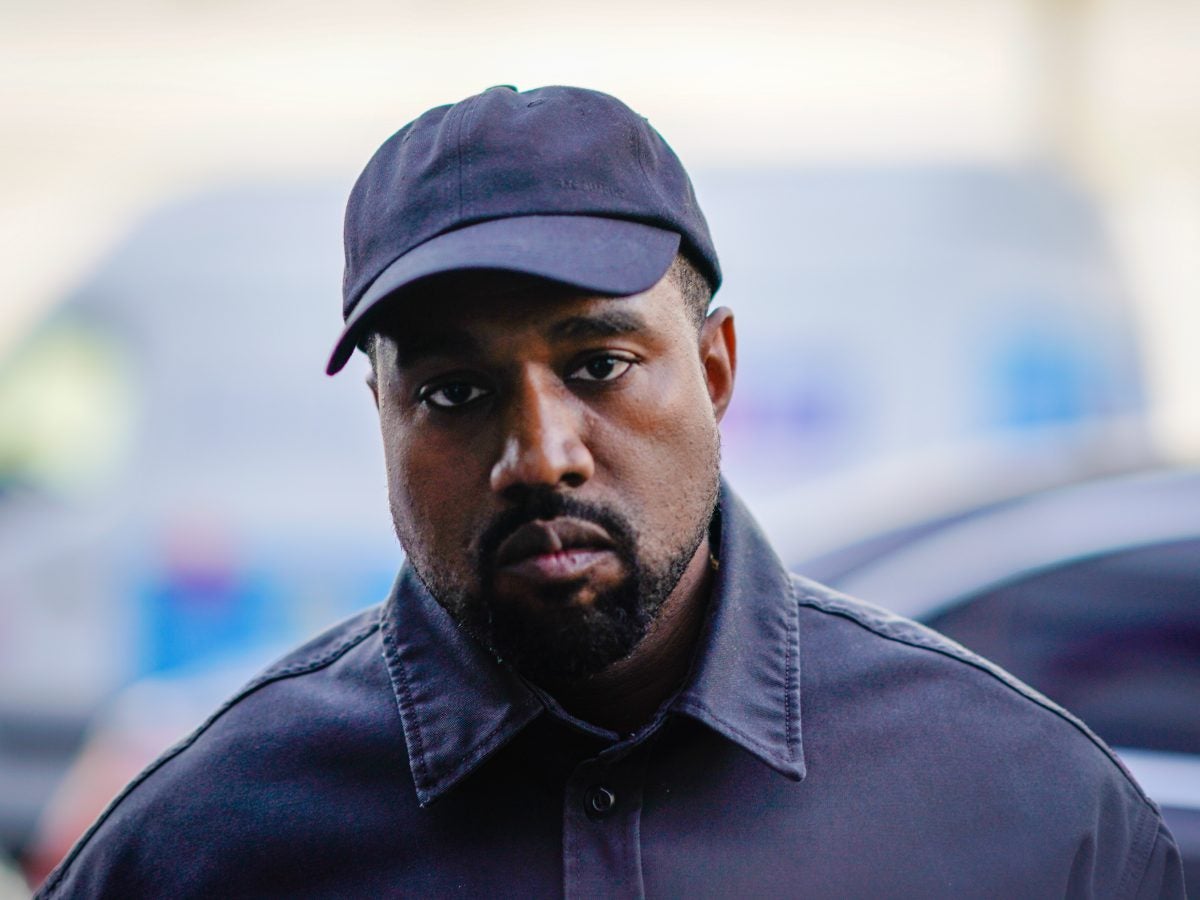

Kanye West is sorry. Again.
At least, that’s what he’s saying in an ad he took out in the Wall Street Journal.
In the composition, he spoke of the car accident that became a defining moment in his career. A jaw wired shut due to the incident helped him to create his first hit outside of production with 2004’s “Through the Wire.” But according to West, it also led to an injury to his frontal lobe.
While the fracture that came from it was tended to, the neurological effects weren’t looked into, per the star. So 25 years and a bipolar type-1 diagnosis later, he says it was responsible for the last few years of chaos that we’ve watched him create with his words and conduct.
“The scariest thing about this disorder is how persuasive it is when it tells you: You don’t need help. It makes you blind, but convinced you have insight. You feel powerful, certain, unstoppable,” he wrote. “I lost touch with reality. Things got worse the longer I ignored the problem. I said and did things I deeply regret. Some of the people I love most, I treated the worst. You endured fear, confusion, humiliation, and the exhaustion of trying to have someone who was, at times, unrecognizable. Looking back, I became detached from my true self.”
He says it was the whirlwind of his mental state that led to him at one time embracing the swastika, in addition to “poor judgment and reckless behavior that oftentimes feels like an out-of-body experience. I regret and am deeply mortified by my actions in that state, and am committed to accountability, treatment, and meaningful change. It does not excuse what I did though. I am not a Nazi or an antisemite. I love Jewish people.”
He also, very briefly, addressed Black folks, without specifically mentioning the comments he made in 2018 about 400 years of slavery sounding “like a choice.” (He did apologize for those comments afterward). “To the black community – which held me down through all of the highs and lows and the darkest of times. The black community is, unquestionably, the foundation of who I am. I am so sorry to have let you down. I love us.”
He went on to note that he started 2025 in a manic episode, displaying “behavior that destroyed my life” and led to him questioning whether or not he wanted to be “here” anymore. Now though, he’s learning and seeking to share about his bipolar disorder, and realizing the impact of his words and behavior.
“As I find my new baseline and new center through an effective regime of medication, therapy, exercise, and clean living, I have newfound, much-needed clarity. I am pouring my energy into positive, meaningful art: music, clothing, design, and other new ideas to help the world,” he concluded. “I’m not asking for sympathy, or a free pass, though I aspire to earn your forgiveness. I write today simply to ask for your patience and understanding as I find my way home.”
West, or Ye, as he likes to be called, is seeking a clean slate. Does the culture want him to have it?
I know how we got here. But seriously, how did we get here? If you had told 2006 me, then 17 going on 18, that Kanye West would be a pariah in the culture 20 years later, I wouldn’t have believed it.
I couldn’t have. My admiration of the Chicagoan as a Chicagolander (a resident of the area right outside of Chicago…the suburbs if I’m being honest) was through the roof. Two years prior, he’d released the iconic debut College Dropout and followed up with the fantastic Late Registration the year after. His style had transformed the way everyone approached fashion, from layering polos to toting backpacks. I owned the shutter shades and the houndstooth scarf during his Graduation era, and every conversation with my classmates during that time was about how brilliant he was. An outstanding producer and a clever wordsmith. He was putting the city on the map, along with its beloved stars, from Twista to Do or Die, in ways that hadn’t been done before.
I continued to be a huge fan, as the years passed, going to the Glow in the Dark tour (an experience I’ll never forget) in 2008, engrossed by the greatness of My Beautiful Twisted Dark Fantasy, watching him in awe. But I’d be remiss to act as though I didn’t begin to quietly wonder and worry about his mental health. Following his mother Donda West’s untimely death in 2007, someone who had played such a siginifcant role in his career and life, I could see he was changing. Nevertheless, the brilliance continued, amid some controversy, and so I stood behind him.
That is, until I couldn’t. I had endured the difficult moments. I rooted for him after declaring that “George Bush doesn’t care about Black people.” But things began to go left, and he looked more like a loose cannon than the genius he once seemed to be. I was there for the Taylor Swift controversy, the decision to wed Kim Kardashian just to slut-shame his ex Amber Rose, as well as the change in his musical direction. But things got weird after that.
By the 2020s, there was a toxic turn that I couldn’t handle. “You see your boy, Kanye?” my husband would ask, as I ate the second-hand embarrassment. Not only did I stop paying attention to him, but I stopped listening to his music. I stopped rooting for him. I stopped giving life to a Kanye West I no longer recognized. From praising Adolf Hitler, those slavery comments, the White Lives Matter shirts, to the alignment with Donald Trump and the statements made last year about Jay-Z and Beyoncé’s son, the irresponsibility had spiraled. And by that point, only the people who were die-hards (as well as Trump fans and incels, perhaps?) could stand by him.
That said, I think the acknowledgement of his behavior, the insight into his mental health journey, and the apologies can never come “too late.” You can never miss a deadline to be a better individual and want to make an amends. That’s for him. Not for us. And I feel for him in the battles he was facing in his mind. Sanity is fragile. I believe that his dive into religion, the Sunday Service period, was his effort to grasp onto faith to help him cope with that internal war.
But what are we to do with Kanye West now? I’ve noticed, that in moments where Black folks see a glimmer of who he used to be, the humor, the confidence that borders on light arrogance, and the musical aptitude, they talk about “old Kanye.” They hope. They’d like to forgive.
But they won’t forget.
So are we buying it? The words are nice, but at this point, it would be even nicer to just see him be different. Be the person folks used to have so much admiration for, versus someone sneered at when his name is mentioned. But that is now up to him to show. And for those closest to him whom he’s burned, that’s up to him to prove.
As for me, if a Ye song comes on, I don’t change it. “The New Workout Plan” can still get me out my skin. But the days of the fandom that were such a major part of my developmental years are gone. I don’t wish anything negative for him, but I no longer think of him, or look for him when I think about the music that moves me at this point in my life.
But I do wish him peace. Because as his journey has shown, once the money, the fame, the love, the friendships and the accoutrements that come with it wane, isn’t that all anyone wants? To be at peace with the way they live, with the decisions they’ve made, and with the life they have left to live by God’s grace. So, if there is a future for Kanye West now as a public figure, it may not be in shaping culture as he once did so easily—but in learning how to live quietly within it.