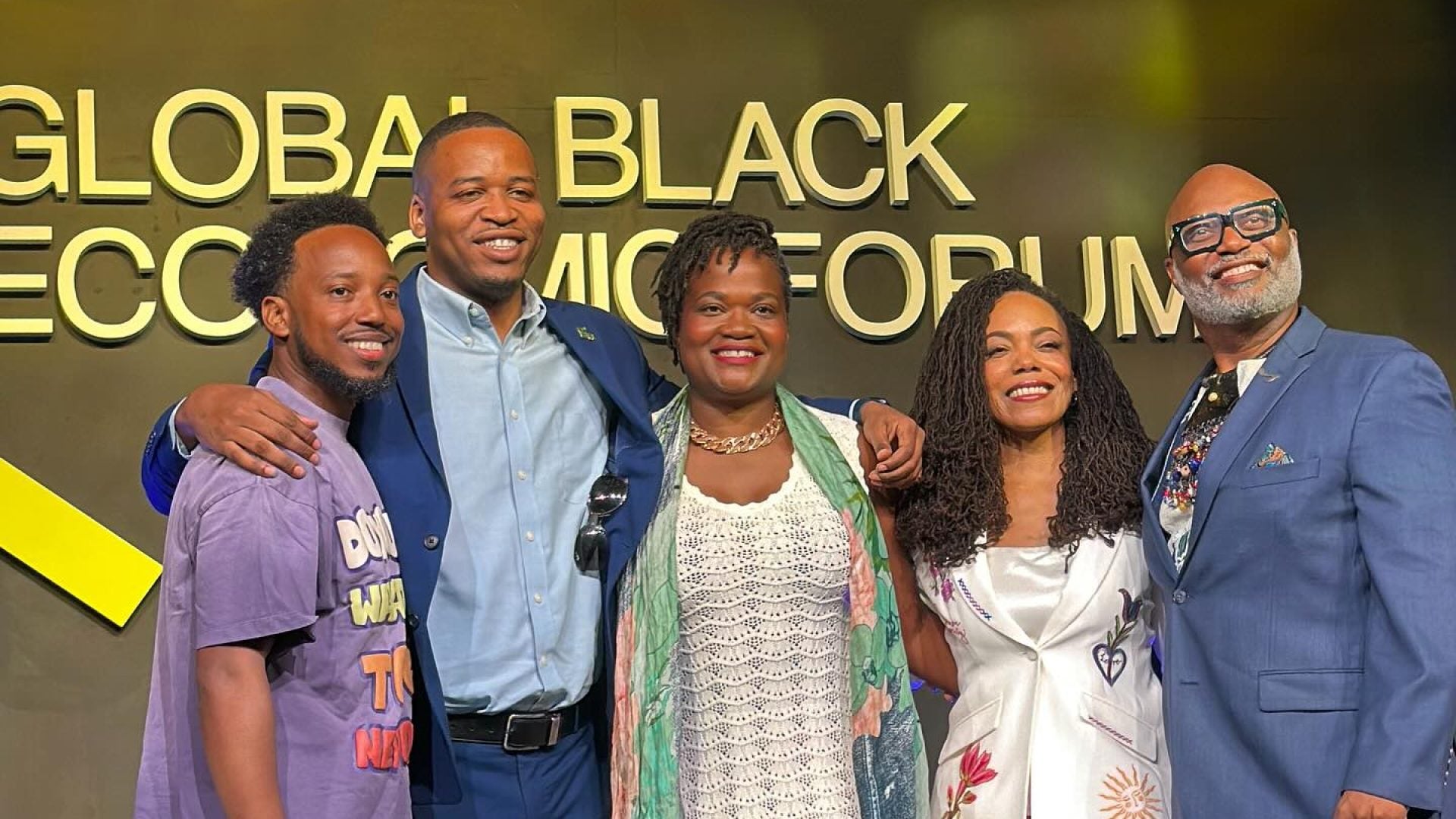

“Your hurrication was forced on you,” said Dr. Maurice Sholas, using a local term sometimes used describe the mass evacuation of New Orleanians during Hurricane Katrina. “Nobody chose that.”
That stark reflection set the tone for “20 Years Since Hurricane Katrina“, a powerful panel held on the Global Black Economic Forum stage at the 2025 ESSENCE Festival of Culture in New Orleans. The conversation brought together survivors, leaders and advocates to examine the storm’s enduring legacy—and the uncomfortable truths it exposed about systemic neglect, racial inequality and the calculated displacement of Black communities.
For Sholas, a practicing physician in New Orleans, Katrina wasn’t just a natural disaster, it was a targeted disruption. “I have never seen something so intentionally and surgically displace Black people and people of lower economic status like that disaster,” he said.
That idea of strategic disruption echoed through the panel. Adrinda Kelly, executive director of BeNOLA, a nonprofit dedicated to improving education equity in New Orleans, pointed to the mass firing of 7,500 school staff — over 4,000 of them Black women educators — as a turning point. “That move, you know, really changed the face of our city politically, economically and educationally,” she added.
Moderator Brent Craige, founder of Newtral Groundz, a media platform focused on New Orleans culture and community storytelling, helped guide the conversation through the layers of loss and growth. Emile Washington of Black Equity Strategy Trust noted that “policy is not always connected to poverty—and it needs to be.” He emphasized the importance of rebuilding local ecosystems and investing in those already doing the work on the ground.
Camelback Ventures CEO Shawna Young called for a shift from being consumers to creators. “As disturbing as it is to go through many things as Black people, especially right now, these systems around us were not built for us,” she said. “So we’re thinking about how do we use the next 10 years to set up the next 100 years of legacy?”
Technology and ancestral wisdom also took center stage. From Young’s investments in Black-founded education models to Sholas’ push for digitized medical records, the panelists highlighted innovation born out of necessity. But Kelly reminded the audience that tech isn’t the only kind of knowledge that matters. “Artificial intelligence is important,” she said. “But ancestral intelligence is just as important.”
When asked what advice they’d give someone displaced today, the panel agreed: connect locally, prepare proactively and lean on your community. “Arts matter,” said Sholas. “It gives you a way to express what you’re feeling when you don’t have the words.”
Washington emphasized the power of unity moving forward. “What they’re giving us without giving it to us is that opportunity to come back together again and realize that my brother is my brother, my sister is my sister and they’re not my enemy. And if we take that moment, we can do so much.”
As the discussion closed, Young left attendees with a reminder of New Orleans’ spirit. “It doesn’t matter what’s going on, we’re going to laugh, we’re going to have a good time and we’re going to still make s**t happen.”
Twenty years later, that may be Katrina’s greatest legacy: the unbreakable will of Black New Orleans.