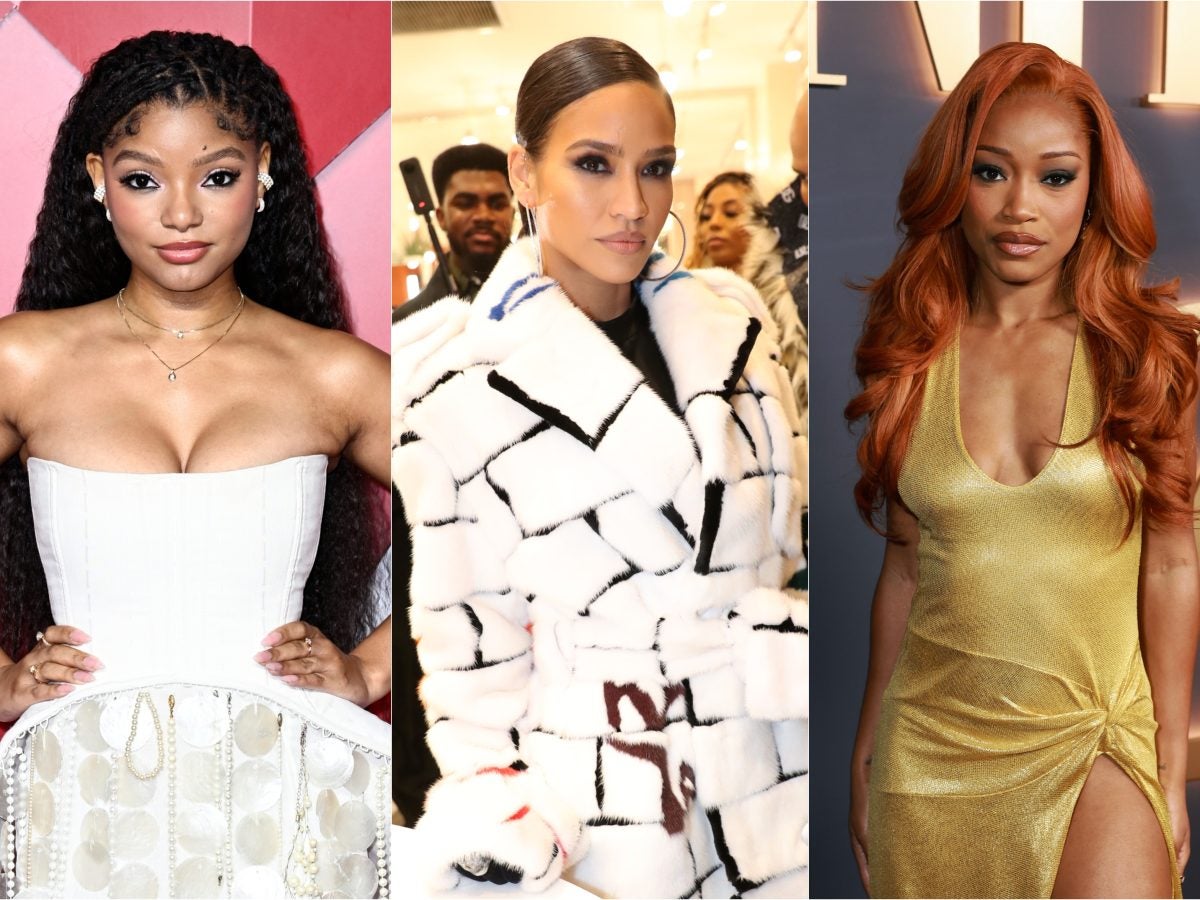

In the age of Instagram empowerment, media scrutiny, and #BlackGirlLuxury, it would seem impossible that so many beautiful, brilliant, talented Black women—like Halle Bailey, Megan Thee Stallion, Keke Palmer, and Cassie—could still find themselves entangled in abusive relationships. But we do. Again and again.
That’s why the question “Why did she stay?” deserves more than judgment or detachment. It must be asked not as condemnation, but as a doorway to deeper understanding—of her, of ourselves, and of the social and emotional architecture that keeps so many of us bound in silence, shame, and survival.
This piece isn’t about celebrity drama. It’s about us—Black women in the everyday—watching our reflections in these public stories and feeling our own pain mirrored back to us. It’s about the private conversations in group chats and therapy sessions, the secret journal entries, the church pew prayers, and the silent rides home after being talked over, dismissed, disrespected, and diminished.
The truth is, many of us were never taught what abuse looks like beyond bruises. We don’t always recognize emotional interrogation, gaslighting, manipulation, isolation, and financial control for what it is. Sometimes it looks like charm. Sometimes it feels like love—until it doesn’t. And by then, we’re invested. Often financially. Often as mothers. Almost always emotionally.
We’re conditioned to protect our men—even when they hurt us. We’re taught to carry family on our backs, to preserve the appearance of strength and harmony for our children, our communities, and even for our own mothers who once suffered in silence and expect us to do the same.
I grew up in the Mississippi Delta, in a culture where my church’s doctrine told me a woman’s role was to submit. That for her to speak “over men,” or to lead a song during worship, was literally a sin. If she had a question or needed to voice a concern, the protocol was that she speak only to her husband, and he would relay her message for her (1 Corinthians 14:33b-36).
I internalized that.
So when my husband began showing signs of control, I told myself he was just stressed. When he became emotionally distant and dismissive, I blamed myself. When he screamed, gaslit me, and told me I didn’t respect him, I believed I was the problem. When he put a gun to my head, I still asked whether it was something I had done. And when I finally sought help from a church counselor, she didn’t ask what happened. She didn’t listen. She told me not to reject my husband in bed. She told me I could take a lot.
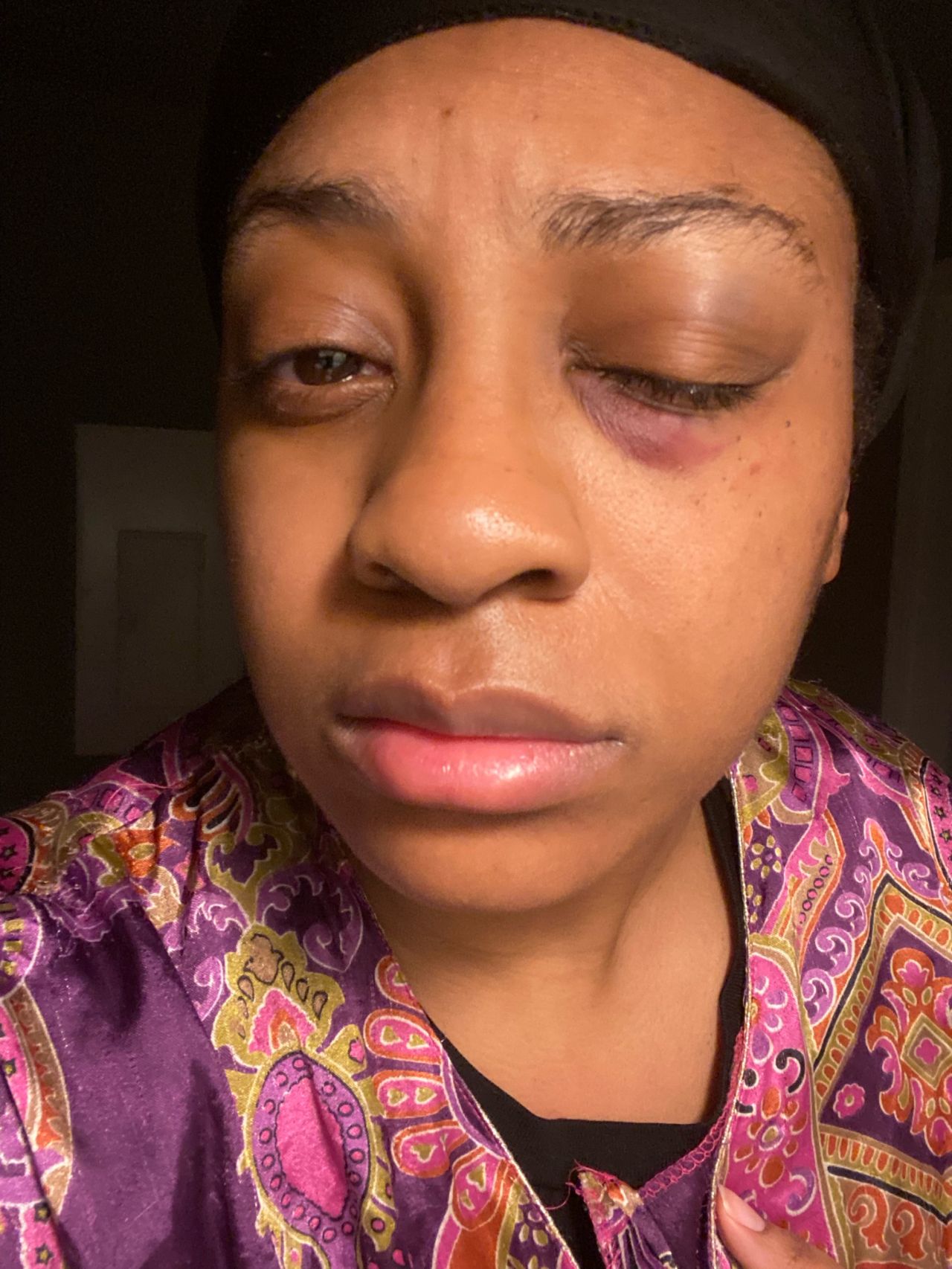
I stayed because I had three children and no family nearby. I stayed because I didn’t know if I could afford to leave. I stayed because every time I tried, I was made to feel like I was destroying our family, or worse, exaggerating what was happening. When I left while eight months pregnant, it wasn’t planned—it was survival. I had to call my brother to come get me. I left my kids, my belongings, everything. When the police were called, the report was made against me, not him. When I called my mother, her only advice was to go to a shelter and not call the cops so he wouldn’t get in trouble. And when I tried to retrieve my children, I learned he had put them on a plane to another state without my consent.
Still, no one empathized. No one protected me. Not my church. Not my family. Not the law. And that’s the part so many people don’t understand. Leaving isn’t liberation when your entire support system is wired to shame you, silence you, or force you back into harm’s way.
Even after the physical abuse, what stayed with me most was the slow erosion of self: the gaslighting, the emotional interrogation, the subtle implications that my needs were unreasonable and that I should be grateful to be chosen at all. I was told I contributed nothing. That I was lucky he still came home. And whenever I protested, the “pick me” women around him reminded me they would gladly take my place, no questions asked.
This is how abuse hides in Black love. This is how it thrives in our silence.
We have to talk about what happens when churches center male entitlement over women’s well-being. We have to talk about how some of our mamas and aunties became so numb to their own pain that they passed down shame instead of support. We have to talk about how courts, cops, and communities too often side with abusive partners, especially when the abuser is charming, educated, or respected. We have to name reproductive coercion, financial dependence, emotional abandonment—and stop only recognizing abuse once it turns physical.
And we have to talk about why we stay. Not as a critique, but as a confession. As a cultural reckoning. As a cry for help.
So many Black women are still asking: “Is this abuse?” Because no one calls it that. And when they do, it’s often too late. The bruises don’t have to show for the damage to be real. The trauma of being constantly blamed, ignored, disrespected, or made to question your own worth is just as life-altering. And it becomes even more disorienting when no one validates your fear, your fatigue, your confusion.
As someone who has left, returned, and is still trying to fully leave again, I want to say this out loud: abuse is not always loud. It can be deeply quiet. It can be disguised as structure. It can feel like disappointment instead of danger—until it’s both.
Black women deserve safe love. We deserve family that listens. Churches that protect. Communities that don’t shame. Systems that don’t fail us. We deserve to heal without being judged for how long we stayed, or how many times we went back.
If you are reading this and questioning your relationship, know that confusion is a valid signal. Know that your feelings matter. Know that leaving is not a one-time event—it is a process, often cyclical, often complicated by survival. But you are not crazy. You are not alone. You are not weak. You are not the problem.
You are a Black woman worthy of peace. Of gentleness. Of someone who believes you the first time. Of freedom, not just from abuse, but from the shame of enduring it.
Let’s stop asking “Why did she stay?” with callousness or empty curiosity—and start asking, “What can we do to make sure the next woman never has to?”
If you or someone you know is experiencing abuse, emotional or otherwise, please contact the National Domestic Violence Hotline at 1-800-799-SAFE (7233) or visit thehotline.org.