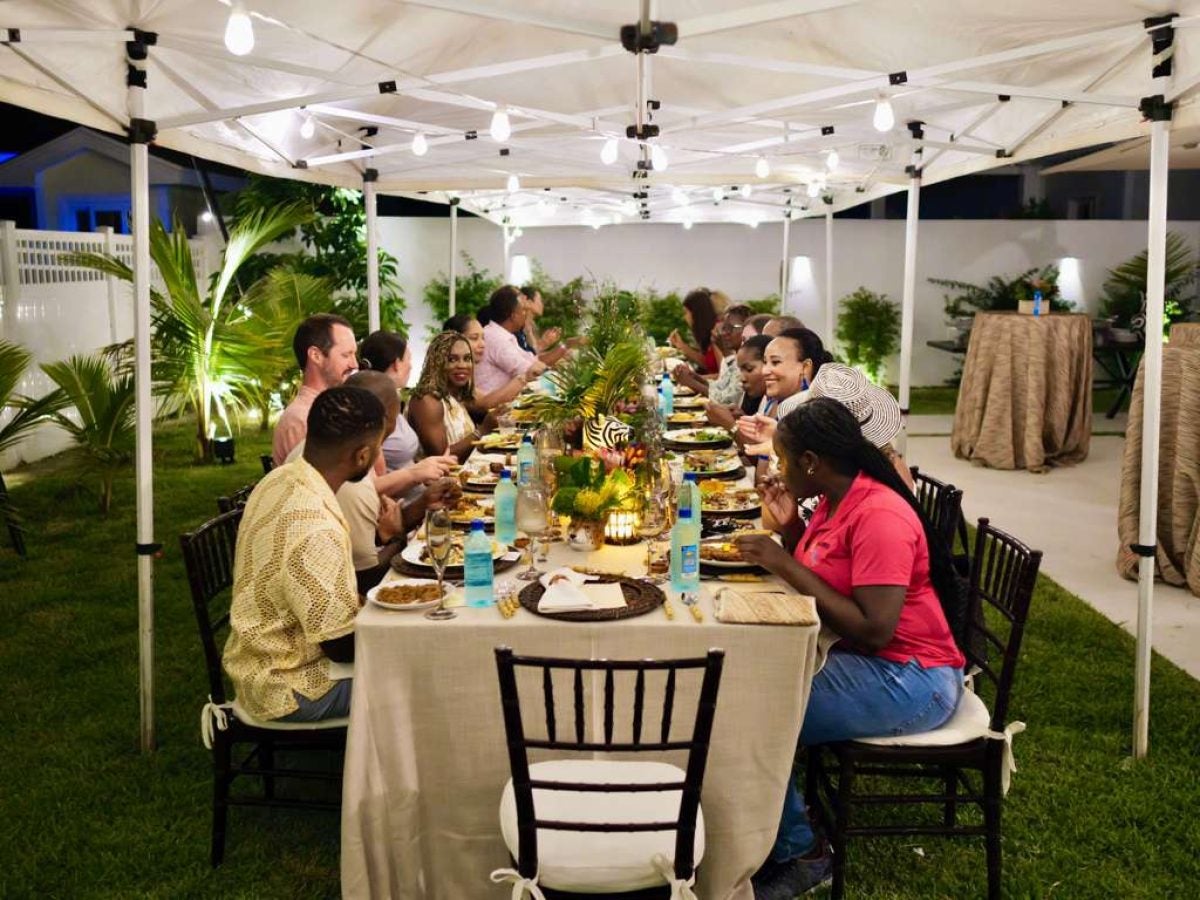

NASSAU, BAHAMAS—Culture, community, connection. That’s how Anthea Butler described The Bahamas‘ People-to-People program when I sat across from her at breakfast the morning after the program’s 50th anniversary celebration. Surrounded by several program ambassadors in a palm tree–lined backyard, those three words took on a deeper meaning. I listened to the group share stories and talk about traditions.
We had gathered poolside at a program ambassador’s home and enjoyed a delicious local breakfast of chicken souse, johnnycakes, fish and grits, and fresh fruit. These volunteers didn’t have to come, but they chose to—just as so many have since 1975, opening their homes and hearts to strangers who always leave changed.
Butler, a third-generation ambassador, learned the ins and outs early. She recalls being 6 years old when her grandmother would call her into the backyard to gather banana leaves and bougainvillea to decorate the dining table for visitors. “She would bring in busloads of tourists and prepare a scrumptious Bahamian meal,” Butler says.
Her grandmother was among the first ambassadors of the People-to-People program, helping shape an approach to tourism that invited visitors to venture beyond resorts and basic itineraries and into Bahamian homes, kitchens, and everyday life.
Over time, the program expanded beyond Nassau to the Family Islands, including Eleuthera, Harbour Island, the Exumas, Bimini, the Abacos, Andros, and Cat Island. Through these experiences, visitors get up close and personal with Bahamian culture and the distinct rhythms that define each island.
Today, the program spans all 16 inhabited islands of the archipelago, which includes more than 700 islands and cays. More than 500 volunteer ambassadors continue the work, matching with visitors based on shared interests and age.
“When you come to The Bahamas, you may arrive as a visitor, a tourist, but you’re going to leave as family,” Butler shares. “It’s what we now call transformative travel—when you immerse so deeply that you don’t leave the same way you came.”
That little girl who once gathered flowers now carries the legacy forward. Late last year, on a typically warm Bahamas evening, Butler stood at the center of the moment, serving as mistress of ceremonies for the 50th anniversary event hosted at Government House. It was a full-circle homecoming rooted in tradition and pride.
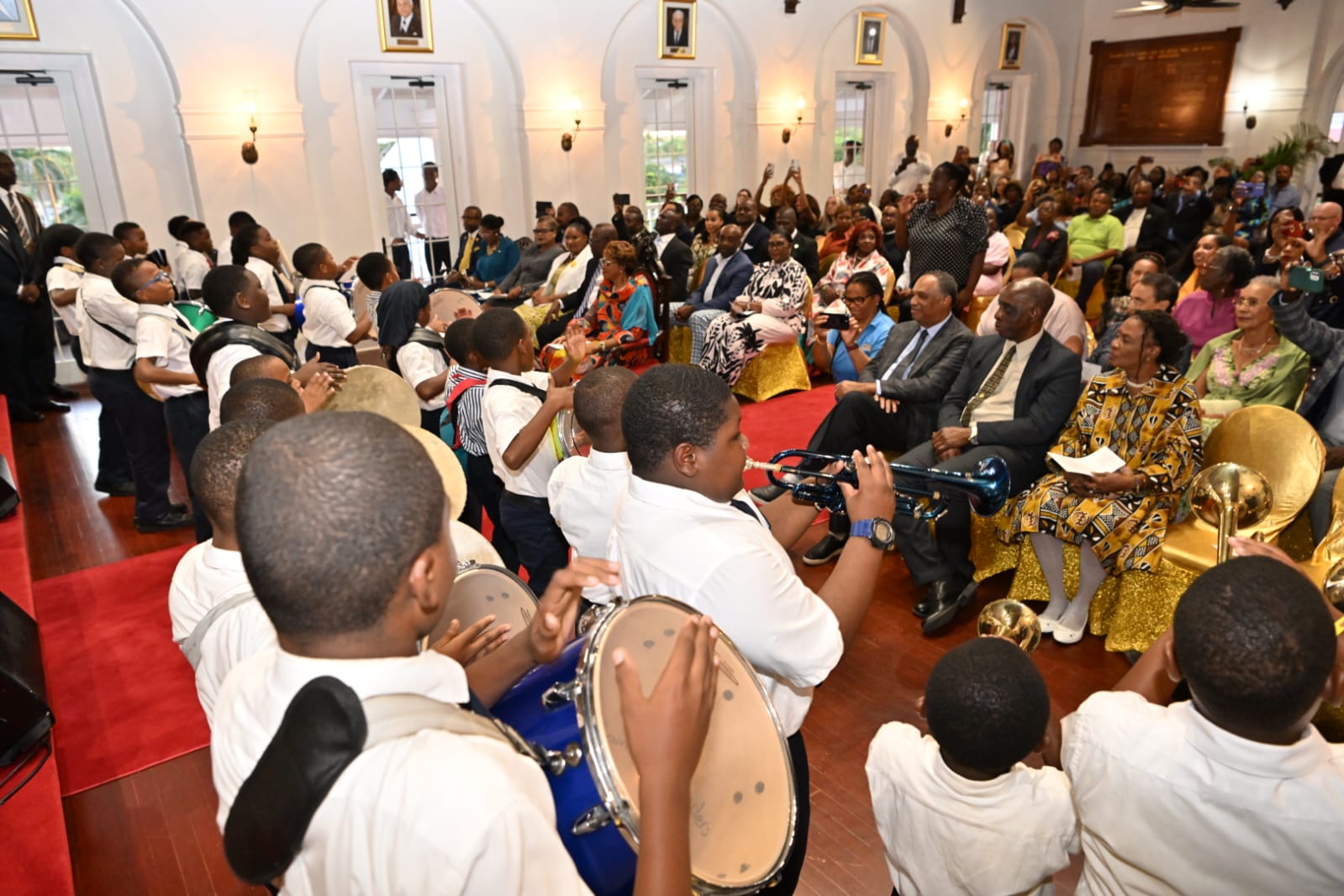
The night opened with the world-famous Royal Bahamas Police Force Marching Band, crisp and commanding, moving seamlessly from pop hits to R&B with the kind of precision that only decades of excellence can produce. When the Eva Hilton Primary School Rake and Scrape Band followed, the energy shifted but never slowed. Goatskin drums thumped, the saw and accordion kept the rhythm flowing, and the music carried through the crowd.
The celebration highlighted not just the performances but also the program’s lasting impact as it continues to connect people and cultures worldwide. Reflecting on the program’s endurance, Deputy Prime Minister and Minister of Tourism I. Chester Cooper said, “From its inception, the People-to-People program was envisioned to give visitors a true understanding of Bahamian heritage. Fifty years later, it continues to live on. This signature program has demonstrated our world-renowned Bahamian hospitality and has made tourism deeply personal.”
For Butler, an official ambassador since 2007, the program is more than cultural exchange—it’s cultural preservation. Taking visitors to farmers’ markets, family-owned restaurants and civic gatherings boosts small businesses and showcases authentic Bahamian life that might otherwise be overshadowed by commercial tourism. This is sustainable tourism in action: culture kept alive by sharing it.
What struck me that morning in that backyard wasn’t just the food or the setting—it was the passion ambassadors brought. The volunteers eagerly shared their genuine selves. Their voices brimmed with joy as they talked about hosting visitors; they leaned in to chatting up their favorite spots and revealed pride in local traditions. This was sustainable tourism at its purest.
“For 50 years, we’ve had ordinary Bahamians doing extraordinary things, opening their homes and their hearts to people from around the world to show them, welcome them inside, and show them the authentic side,” said Bernadette Bastian, Director of Family Island Development and the People-to-People program at The Bahamas Ministry of Tourism, Investments & Aviation.
“People want more authentic experiences. The only way to actually experience a destination in its truest form is to connect with a local.”
It’s a philosophy that was ahead of its time. Fifty years ago, when marketing strategists were selling sun, sand, and sea, Bahamians already understood that their greatest asset wasn’t just those postcard-perfect beaches—it was their people.
Later, as I moved through the cultural village alongside other guests at this milestone celebration, sampling local chocolate, rum, pepper sauces, and admiring handcrafted straw work, it became clear that the most sustainable tourism isn’t just about preserving beaches or buildings. It’s about sustaining culture through people who care enough to share it.
The People-to-People program says come and see not just where the Bahamas is, but who Bahamians are. For half a century, ordinary Bahamians have done the extraordinary work of opening doors, setting tables, and turning strangers into family. They do it one meal, one story, one connection at a time.