
Since 2018, I’ve lived in 10 countries in search of more than just adventure. I was seeking healing by any means necessary. What began as an urgent need to restore my body and spirit grew into something far more radical: a complete reimagining of who I was allowed to be.
But in those early years wandering through Southeast Asia, working as a freelance writer online, I felt an ache. I wanted to be witnessed. I wanted my family and friends to see how I was changing, how my body was getting stronger, how my heart was softening. But they couldn’t. They were consumed with surviving back home. To them, my life looked like a long vacation.
What I truly craved wasn’t just connection but belonging. A place outside of home and work where I could feel seen, heard, and understood. I didn’t have the language for it back then, but now I do: a third place.
Now, living in Playa del Carmen, Mexico, I finally understand that what I was looking for wasn’t just community. It was a container for who I was becoming.
Defining Third Places for Black Women
The term “third places” was coined by American sociologist Ray Oldenburg in his 1989 book, The Great Good Place. He defined them as public spaces separate from home and work where people gather to socialize and build community.
These are places like churches, community activities in the local park, libraries, and hair salons. Third places are where we go to connect, to belong, to breathe. In the lives of Black women, these are places that have nourished our families, both in celebration and in the midst of struggle.
But what happens to our third place when we leave behind what has shaped us? Once you move abroad, you quickly learn that those familiar spaces don’t exist in the same context you experienced before. So we find ourselves searching for a new definition of belonging.
The Loneliness of Transformation
I landed in Thailand first, and I often felt like I was both invisible and hyper-visible at the same time. I stood out everywhere as a tall, brown-skinned, curvy woman with bushy natural hair and no language fluency to help me blend in. I was healing and growing, finally listening to what my body needed. But I was also lonely. I didn’t just want companionship. I wanted someone to see me.
I asked Londi “Dr. Londi” Cox, Ph.D., an international psychologist and fellow Black woman traveler who has worked with military families in England and Japan about the importance of third spaces. “We are created for community,” she says. “In a world where we’ve historically been ostracized, these spaces allow us to exist without having to explain ourselves.”
She shares that third spaces provide more than just connection; they offer affirmation and the opportunity to see oneself reflected in others’ experiences.
“It’s about having a space where someone who looks like you has already set the path, giving you that extra push to understand you are capable of doing something extraordinary.”
Women Redefining Third Places Abroad
For some, third places emerge through physical transformation and deep commitment to self. Sharon Dodzo, a U.K.-based traveler who has explored approximately 40 countries since 2015, found her grounding through health and wellness. While traveling with her then seven-year-old son, she began to carve out a consistent routine in movement, fitness, and diet.
“I started traveling in April 2015, so this year is actually my 10th anniversary,” Dodzo shares. She beams when talking about hiking Everest Base Camp in Nepal with her son. They spent approximately 23 days in the mountains, with some breaks included in that time.
Shortly after that, the world went into lockdown, and like many, she put on a lot of weight. “In January 2022, I started eating more low-carb,” she says. When she moved to Kuala Lumpur, Malaysia, her condo had a gym, which became her sanctuary. Her third place.
Sharon lost 21 kilos and now maintains her weight at around 61 kilos through intentional lifestyle choices. “What I learned most is you have to stay consistent and committed to whatever you do and it will work,” she explains. Her motivation comes from a deeper place. “I’m committed because I really want to live long, but I also want to live well.”
For Andrea Leeth, a freelance writer and editor in Playa del Carmen, Mexico, third places have emerged through creative and intentional online community, especially with other Black women writers. After leaving her chemical engineering career in 2014 to travel, Leeth explored various countries in Asia and South America before settling in Quito, Ecuador, as an English teacher.
She transitioned to freelance work during the pandemic as a copy editor and proofreader, which led her to seek a structured connection. She joined a co-working group with other Black women, meeting weekly to hold each other accountable. She also participates in an online writing circle she discovered at a women’s publishing conference, where she’s the only member based overseas.
“It’s the consistency that makes it work,” she shares. “We’ve built a sense of community. It feels like a safe space to bounce ideas off of people, to get advice in different situations in life and in business.” These quiet, virtual third places have supported her as she dives into writing her first book about living abroad and starting a freelance career.
Keelah Rose Calloway—a comedian, teacher, and global creative—claims that third places, for her, have looked like stages, green rooms, and after-show hangouts. After leaving law school during the 2008 financial crisis, she began teaching abroad and even built a career in stand-up comedy across countries like Vietnam and South Korea.
“Vietnam was the perfect opportunity to start a comedy career because there was a lot of comedy happening in the north of Vietnam as well as in the south. But based on my analysis of the situation, there was nothing happening in central Vietnam. So, I moved to Hue and I started my own comedy production company,” she says.
Calloway was excited about being part of one of the strongest global female comedy scenes she’d ever experienced. It was more than just telling jokes for fun. It was about being seen, embraced, and understood as a Black woman creative in a place far from home.
Her experience underscores a different kind of third space: one where creative expression becomes the connector. “A lot of us leave the U.S. because we want to actually live, not just hustle,” she says. For her, third places are essential for creative survival.
Reclamation, Not Escape
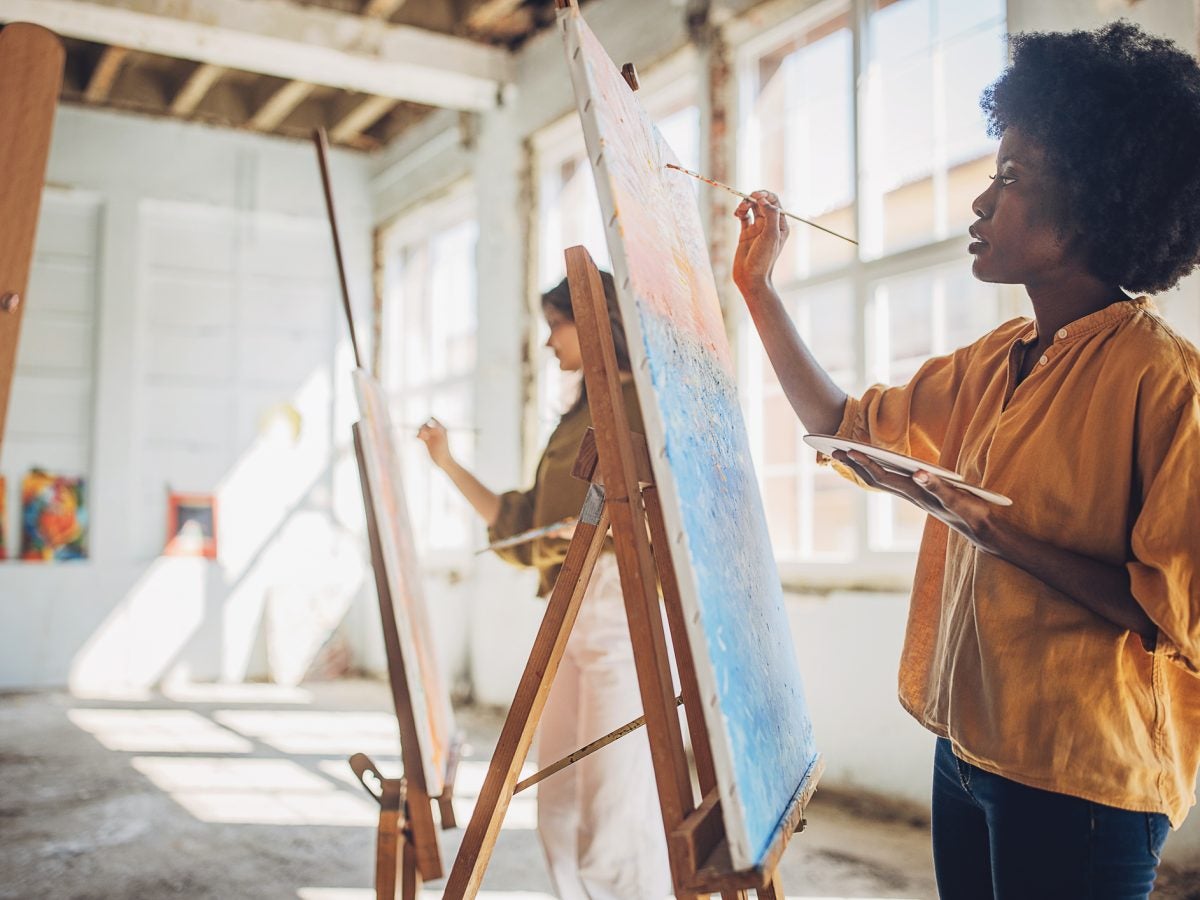
As I move towards age 50, I’ve reached a place where I no longer want to pass through a town. I’m ready to sit down and stay a while. That’s part of why I am choosing to settle in Central Mexico, where I can take painting classes with local Mexican artists and immerse myself in learning Spanish within a creative community. I first picked up watercolor painting during the pandemic, living alone in Vietnam during lockdown. It became a meditative practice I carried with me to Kigali, Rwanda and Istanbul, Turkey, always looking for a school or a teacher who could help me be better.
And now, in midlife, painting has become more than a hobby. My third place is where I can be a beginner artist and a member of something deeply rooted in my adopted country.
Third places are more than just sites to gather or feel less alone. For Black women, they can also be spaces of becoming. This is where our gifts are noticed, our talents are nurtured, and our value is self-affirmed, not questioned.
This is the opportunity that awaits when a Black woman chooses to leave parts of herself behind in pursuit of something new. Third places abroad can offer the rare freedom to explore identities we may never have had space to fully embody at home.
The world is a safe place for Black women to bloom.