
Earlier this month, I ventured to Martha’s Vineyard to support the work of Ujima: The National Center on Violence Against Women in the Black Community. They hosted a “Healing the Healers” wellness activation in honor of their 10th anniversary. The timing was divine, as August, in addition to being National Wellness Month, is historically a Blackity-black time on the island. Between the influx of travelers for the star-studded annual Martha’s Vineyard African American Film Festival, to the normal island traffic of multi-generational Black vacationers sauntering around the historic community of Oak Bluffs, the eighth month of the year offers a beautiful display of Black heritage, Black culture, and Black beauty.
But the invitation for Black women to come find rest and respite on the island was timely in a broader context. Having endured a year that has thus far seen the passing of discriminatory federal legislation, and most recently instigated an economic downturn that has disproportionately impacted Black women (Black women have experienced the most layoffs than any other demographic, and organizations like Ujima have lost thousands of dollars in federal funding due to anti-DEI legislation), the need for pause, peace and practices of respite is critical.
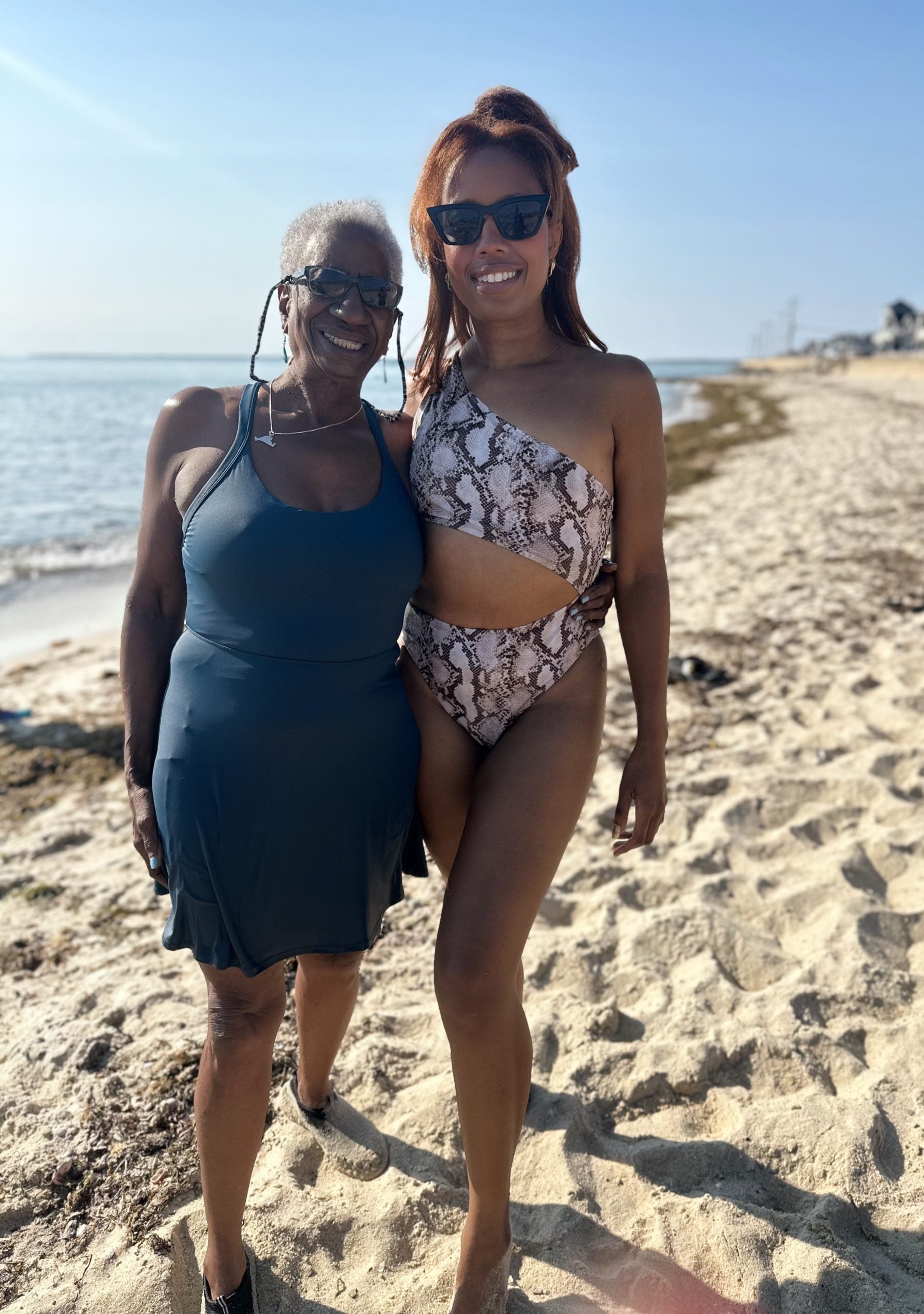
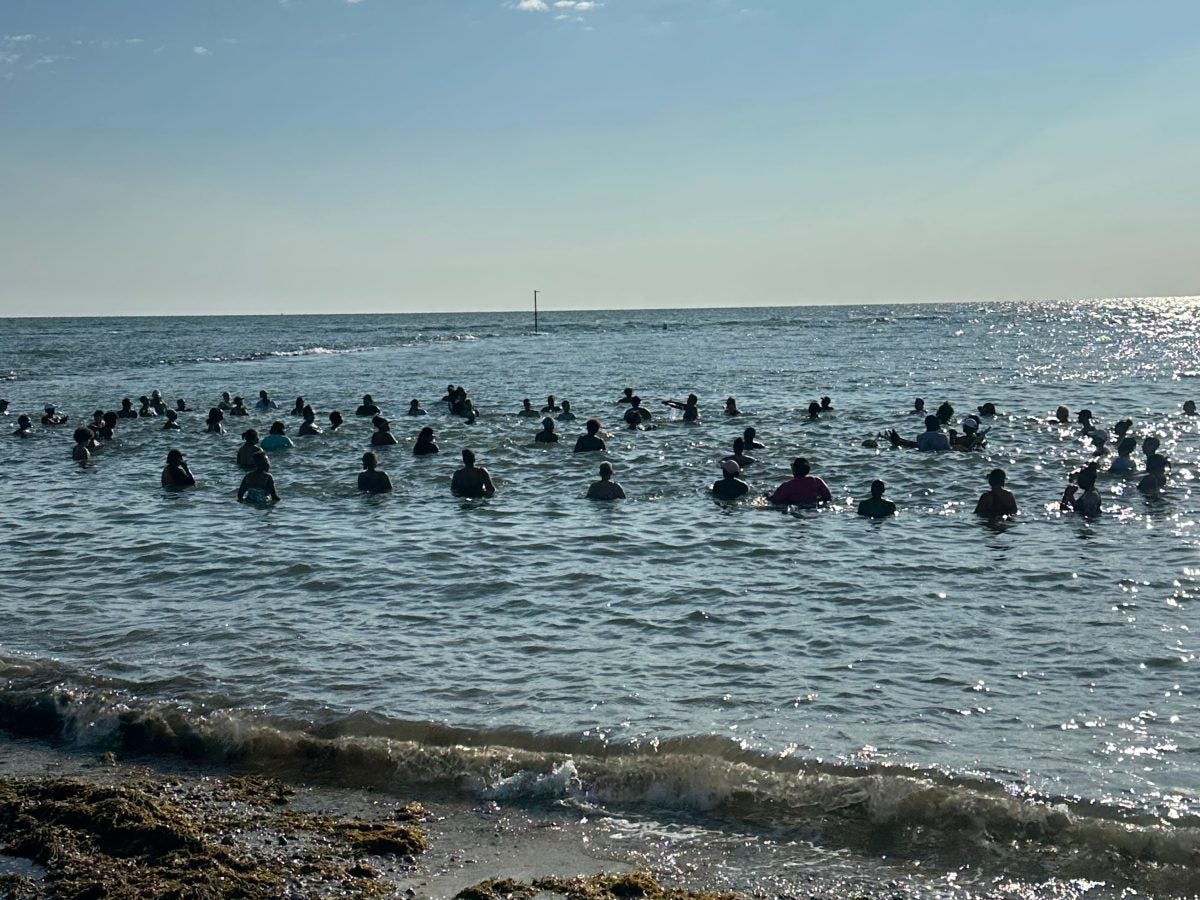
So, on the first Saturday of August, more than 70 individuals ranging in age from 15 to 86 gathered to take part in a nearly 78-year tradition created by The Polar Bears of Martha’s Vineyard. Since 1948, Black swimmers and beach goers have gathered at 7:30 a.m. to plunge into the Atlantic on Inkwell Beach (the first desegregated beach on Martha’s Vineyard). As I assembled on the shoreline and locked eyes with my fellow plungers, I was struck by the diversity of those who surrounded me. I found my peers, my aunties, and my elders, all seeking the same moment of reprieve.
As we entered the water, we were encouraged to hold hands with the person next to us to quell our inevitable apprehension and regrets once the frigid water touched our toes, and were then lulled by the comfort of the voices of the seasoned Polar Bears who got in before us. The song that greeted us was the familiar melody of “Wade in the Water.” There was something profoundly comforting and emotional about being washed over by the lyrics, once sung by our ancestors. A song that once used a coded language to lead people to freedom in the Underground Railroad, that same sense of communal trust and collective care was felt that morning.
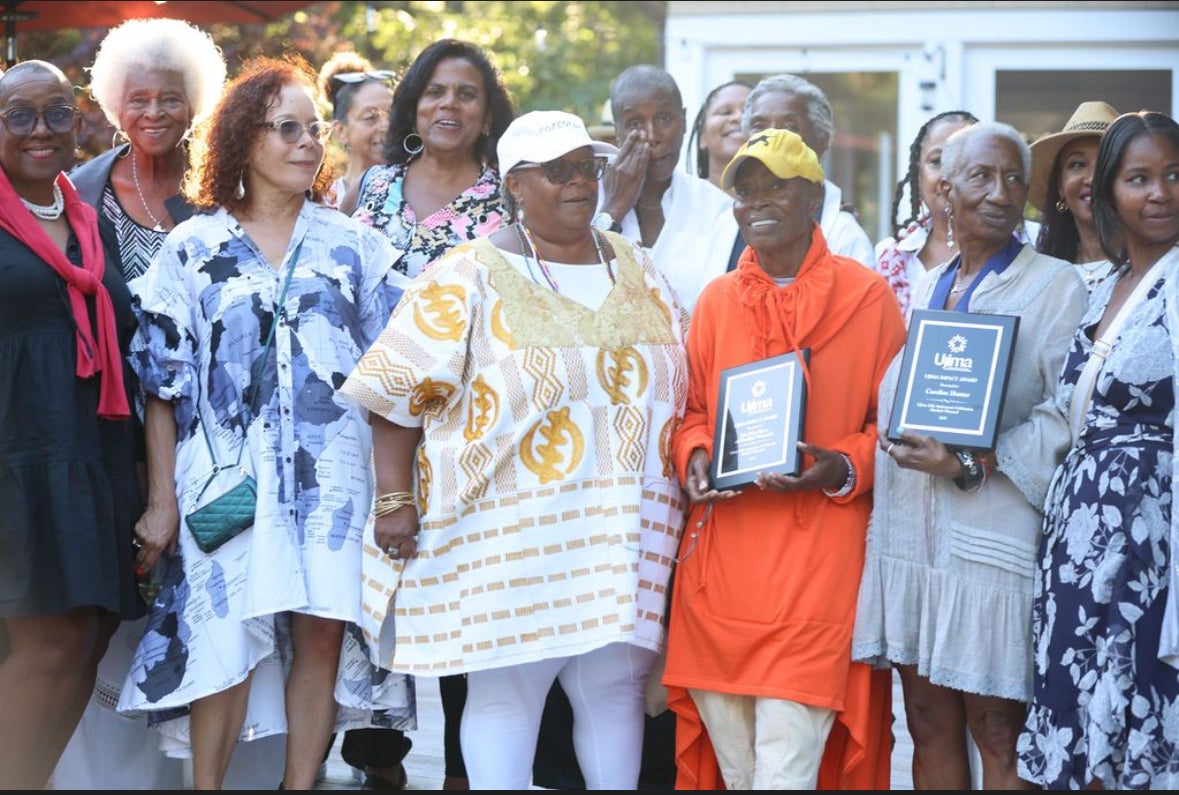
Mrs. Caroline Hunter, a well-known anti-apartheid activist and local community leader, has been the face of the Polar Bears for the last few decades. The 78-year-old (and no, she does not look it) helped shape the rhythm and rituals of the Polar Bears. “Everything we do is about community, about positivity, and joy,” Hunter shares. “The songs we sing and the exercises we lead are all rooted in the tradition of ‘call and response,’ because as Black people, there is power in the oral tradition, and what we’ve witnessed since childhood is that we generate joy through our collective voice.”
Once in the water, we were led through a series of exercises, each of which offered an invitation to reflect and return to ourselves. One of the exercises had us mimicking a climbing motion, while we sang all three verses of “We Are Climbing Jacob’s Ladder.” The lyrics had been slightly amended to reflect the story of the Polar Bears. The words seemed to narrate the rhythm of the waves and our collective movement towards peace, joy, and rest. The audacity of our presence (70 Black people in the water in New England) and our unified singing was palatable and potent. And as I looked around, I saw the tears of men and women around me fall into the sea below them. It was a feeling informed by both heritage and healing. It’s as if with each inhale we were breathing in the belief that peace and joy were indeed our birthright.

When reflecting on why she wakes up every morning at dawn to lead this practice for a community of mostly strangers, for free (the Polar Bears don’t take payment or sponsorship), Hunter says, “So many of us know what it is like to be othered, marginalized, and unwelcomed. That is a familiar experience in this country as Black people. But there is something beautiful and safe about the space we’ve created in the water…That’s what churches do, what sororities do, and that’s what happens when we create that circle in the water. It becomes a space of healing and protection. I need that for myself, and it’s an honor to give it to others.” It is the pursuit of this feeling of safety, peace, and communal love that fuels the work of Ujima to build a safer, freer future for Black women and girls.
Ujima founder and CEO Karma Cottman echoed this sentiment when sharing the impetus for the event. “Rest as Black women often feels aspirational, and we want it to feel tangible and accessible,” she shares. “I think there is something about the water that lures you into feeling present, still, and centered. The water gives you the ability to let go, and there is so much for us to let go of this year.”
“Black leaders, Black led programs are under siege, Cottman adds. “Being in a space of healing or talking about rest feels like a luxury that we can’t afford while we wrestle with the work to protect our people. But in order for us to face it and be ready for the urgent needs of our community, we have to be okay, we have to be healthy, we have to be whole.”
Hunter closed out our morning by instructing us to turn to the horizon and invite the sun to touch our faces. She then guided us through a beautiful meditation, which unfortunately, is for Polar Bear ears only. It reminded me of this poignant reflection by Toni Cade Bambara: “Silence. Stillness. To give her soul a chance to attend to its own affairs at its own level.”
In a time where so much is being stripped away from Black women, the choice to gather, to grieve, to laugh, to move, and on this particular Saturday, to simply be together in the water was nothing short of radical. It reminded me that healing isn’t passive. It’s a practice. And in the tradition of The Polar Bears, Ujima, and every ancestor who leads with care, it’s also a promise we continue to make—to ourselves, and each other.
To find a Healing the Healers event near you, follow Ujima on Instagram.