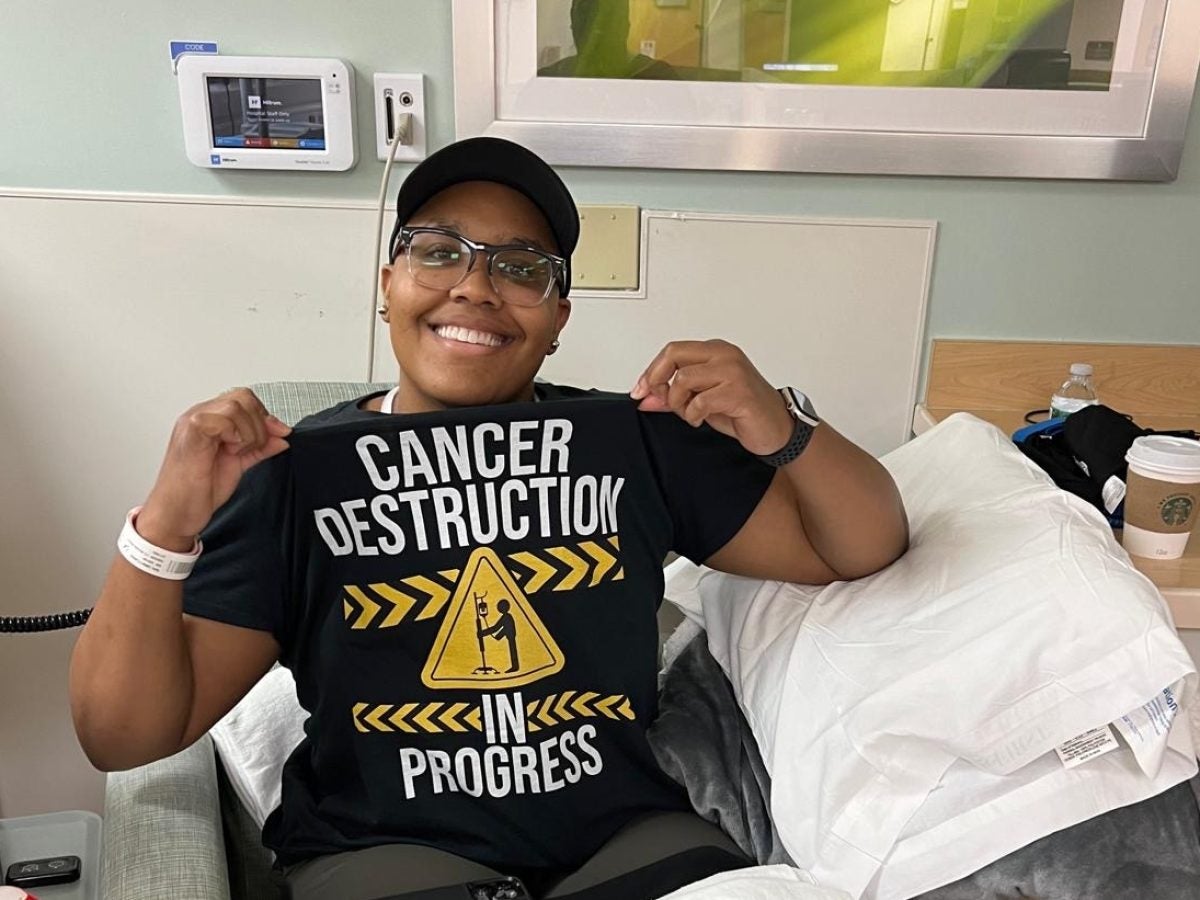

When you receive unexpected, life-altering news, the most powerful thing you can do amid the uncertainty is advocate for yourself — and remember that you are stronger than you know. LaShae D. Rolle, MDH, CPH, had to learn this firsthand at just 26 years old. In October 2023, while she was studying for her PHD in, of all things, cancer prevention, Rolle was diagnosed with HR+, HER2-, node-positive early breast cancer with a high chance of returning.
In October 2022, she noticed a small lump and went to the doctor to get it checked out. While there, she was told that things seemed fine and there was no need to investigate further. Given her age at the time, the chance of a malignant tumor seemed highly unlikely, as the average age to start breast cancer screening is around 40.
“In year two, when I was about to start the spring semester, I felt that same area. So, I went to the student center, asked about it, and they still thought it was nothing. But the doctor said, ‘Let me go ahead and send you for a mammogram anyway.’ And so, when I got that done, they found out it was cancer.”
Her insistence that the lump be checked out, despite being told multiple times that it wasn’t necessary, proved to be a lifesaver, because there were no other signs that something deadly was in her body. “I never had any major side effects, just that lump. It was difficult even for me to go ahead and get the mammogram and ultrasound, because when I called, they said, ‘You don’t really need to do a mammogram and ultrasound. You’re too young to get breast cancer.’ I said, ‘Well, still sign me up for that ultrasound,’” Rolle says.
These days, she’s determined to spread awareness about high-risk early breast cancer, the importance of early detection, and prioritizing strength to live a full life.
“What happened to me is rare. But that doesn’t mean there’s a 100% chance it can’t happen to you,” she says. “So I think people should be very aware of this and their bodies. Not just because of cancer, but anything could be wrong with your body. So always be aware of what is ‘your normal’ and then work with that. If something feels off, see a doctor, and don’t feel discouraged. I know that there are a lot of constraints and things that are stopping people. If you are insured, please go ahead and use that insurance. If you are not insured, try to find a free clinic and advocate to get some care.”
For Rolle, cancer survivorship means showing up for yourself every day, honoring your body’s strengths and limits, and staying determined to live a strong, purposeful life—no matter what. We spoke with Rolle to learn more about her journey, the power of self-advocacy, and what she hopes others take away from her experience.
ESSENCE: Please walk me through the day when you received your diagnosis.
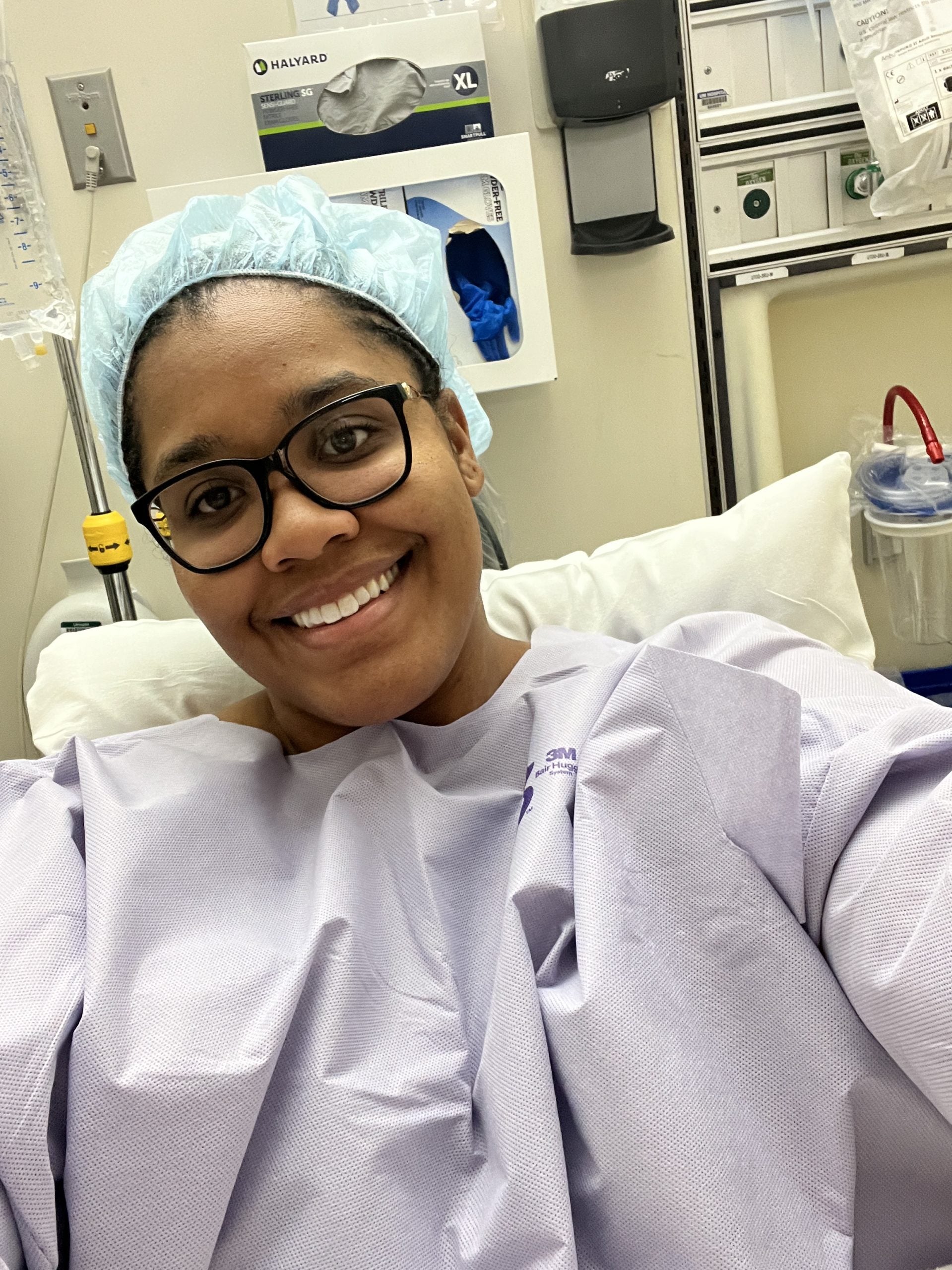
LaShae D. Rolle: The day I received the diagnosis, I got a phone call. They said I had invasive ductal carcinoma, and they were going to set up an appointment for surgery. But before that, when I went to do the ultrasound and mammogram, they initially said, “We’re not going to do a mammogram today because you don’t need a mammogram. We’re just going to do the ultrasound. It should take 10 to 15 minutes.” So, I’m back there, having a good time, and getting a little coffee. And then your girl puts the ultrasound on, and she asks, “How long have you had these masses? Oh man, I’ve got to go find somebody to help me with this. I’ve never had to do a 360 before.” So then I’m in there for an hour. That’s when I had to do a mammogram. So, I did the mammogram, and they told me I need to do a biopsy very soon. I do that, and in my chart, it says BI-RADS 5, and with my background of research, I know that BI-RADS 5 means you have a 95 to 100 percent chance of breast cancer.
What did treatment look like for you?
So immediately after everything, I set up an appointment with the surgical oncologist. We spoke about the options. The only option I had was one. It was to go ahead and get the entire breast removed. A full mastectomy was performed because I was diagnosed with multicentric breast cancer, so it was in all four quadrants. So, I think that’s a good thing because, otherwise, I would have been trying to figure out whether to do this or that, or what the percentages would be of different options. After we had the surgery, I found out that some of the cancer had spread to my lymph nodes. So because of that, I had to have chemotherapy, followed by radiation, and now I’m on hormonal therapy.
Has your experience changed your perspective on how to advocate for your body and the healthcare industry?
Let me tell you, I’ve made sure I advocate 24/7 because if someone tells me, “Oh, this is rare! This might not happen,” I don’t even listen to you. I’m going to go with whatever I think is right because right after my mastectomy, I had a blood clot in my lung. I went to the ER, and the doctor was like, “This is not a surgery where you can get blood clots. So we don’t need to do a CT scan.” I said, “No, let’s do that CT because I learned my lesson from before, and a blood clot in your lung could be life-threatening.” So when it comes to my health, I’m not even messing with it. I talk to my doctors, advocate for myself, and make sure that I’m okay with the plan. Just because somebody says something is rare doesn’t mean it’s impossible.
What was the biggest lesson you learned about your body during treatment?
I learned that you have to listen to your body. Number one, I learned you need to get to know your body and know what your normal is so that you can act on it. Number two, I learned that you have to really just advocate for yourself. Nobody’s going to care about you more than yourself.
What is a significant milestone you are working on as a cancer survivor?
Well, a big milestone I hope to achieve is for cancer survivors and patients to know right out the gate that they can exercise before, during, and after treatment. That can be a part of your regimen, and you can do anything. The number one thing to know is that you’re strong after cancer, no matter what. The fact that you went through it, you’re here today, you’re living, you can breathe. You are stronger after cancer.
What advice do you have for other women about getting tested for early detection?
Well, the first thing I’ll say is if I had been tested at the recommended time, I wouldn’t have been tested because I would have been dead. Straight up. So, I think you should do what’s best for you in any situation. If you get your cancer detected earlier in life, then you have a better chance of beating it, because if you look at early breast cancer, the rates for five-year survival are in the 90 percentiles. But then, when you move into stage four, the rate drops dramatically to less than 50%. So, you really want to try to catch it early and get some treatment, because the treatments are much better nowadays. Just listen to your body, get to know yourself, talk to your doctor, and don’t worry about what others say you don’t need. It’s better to “waste people’s time” than regret it later.