

“Wakanda ain’t a movie,” Kirby sings urgently on “Miss Black America,” the title track to her forthcoming album with the same name. “I talked to God, he said my skin was such a beauty,” she adds while deliciously singing about her pride in being from the Deep South, Memphis, to be exact. With her infectious smile and her easy ability to laugh, I pick up on the fact that the singer-songwriter is on the cusp of a new era. Stemming from the refreshing preview I’ve been sitting with for over a month of the 12-track album, it’s most noticeable that she’s once again staking her claim in the R&B market.
One track of Kirby’s that put her on the map includes “Koolaid,” a sultry and funk-leaning track that feels more neo-soul than R&B. Much of her work as a songwriter is what the music industry has renowned her for. But the artist is so much bigger than a writer. From my vantage point, her contributions to the neo-soul market make her a force to be reckoned with. “It’s a lot of noise [these days], which I believe, is a great time to be authentic and really figure out how to cut through,” the artist shared. Nothing about her music is simplistic–it’s thorough while simultaneously pushing against the sounds that algorithms seem to be chasing these days. And when combined with her knack for executing excellent fashion moments, there’s not one moniker you can place on her, she’s that expansive.
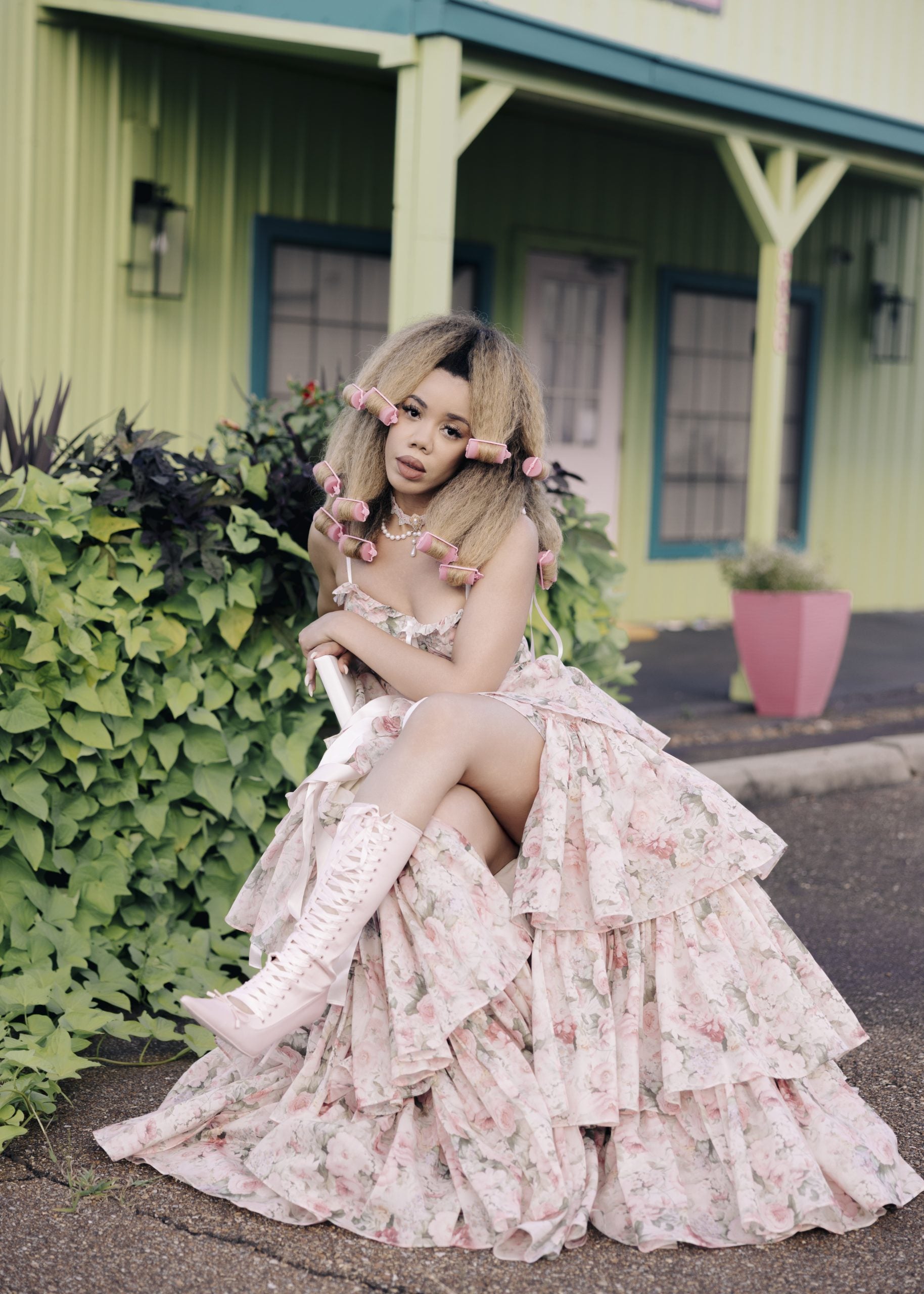
To deliver Miss Black America (out on August 29), the singer-songwriter tells me that she returned home to Mississippi, a state she credits with transforming her into the woman she is today. Though she’s currently back and forth between Brooklyn and Mississippi, she explains that it was only right to build the crux of her album in a place where she spent her formative years. By returning home, she was able to write about what’s been on her mind: the pressures many of us feel due to the state of the nation, her political standings, and Black joy.
The level of storytelling she worked on for this album would not have been possible if she hadn’t placed herself back in an environment apt for rediscovering her creative self while carving out a new artistic chapter. “There’s some systematic oppression still happening in Mississippi, but there also is deep love,” Kirby shared. “There are deep familial roots [here too]. I wanted to paint the entire picture. Whereas, if you’ve never been to this part of the South, you might be afraid,” the singer-songwriter declared.
Miss Black America, short for Mississippi Black America, which features Big K.R.I.T., Akeem Ali, her father, and more, is emotionally charged and profound. The record which was produced by Thomas Brenneck and Homer Steinweiss is also a love letter to the Deep South. The intentionality of the album is heard on tracks like “Thick n’ Country.” This song features the artist paying homage to curvy women like herself–it’s a spirited track that offers a chance for Black women to be proud of their curves. “Thick n’ Country” is followed by “Nasty,” a funky song enriched by piano keys that could’ve been heard in a Baptist church. What’s interesting about this number is how Kirby fuses politically charged lyrics about racism over music that you can also dance to. This juxtaposition is impressive.
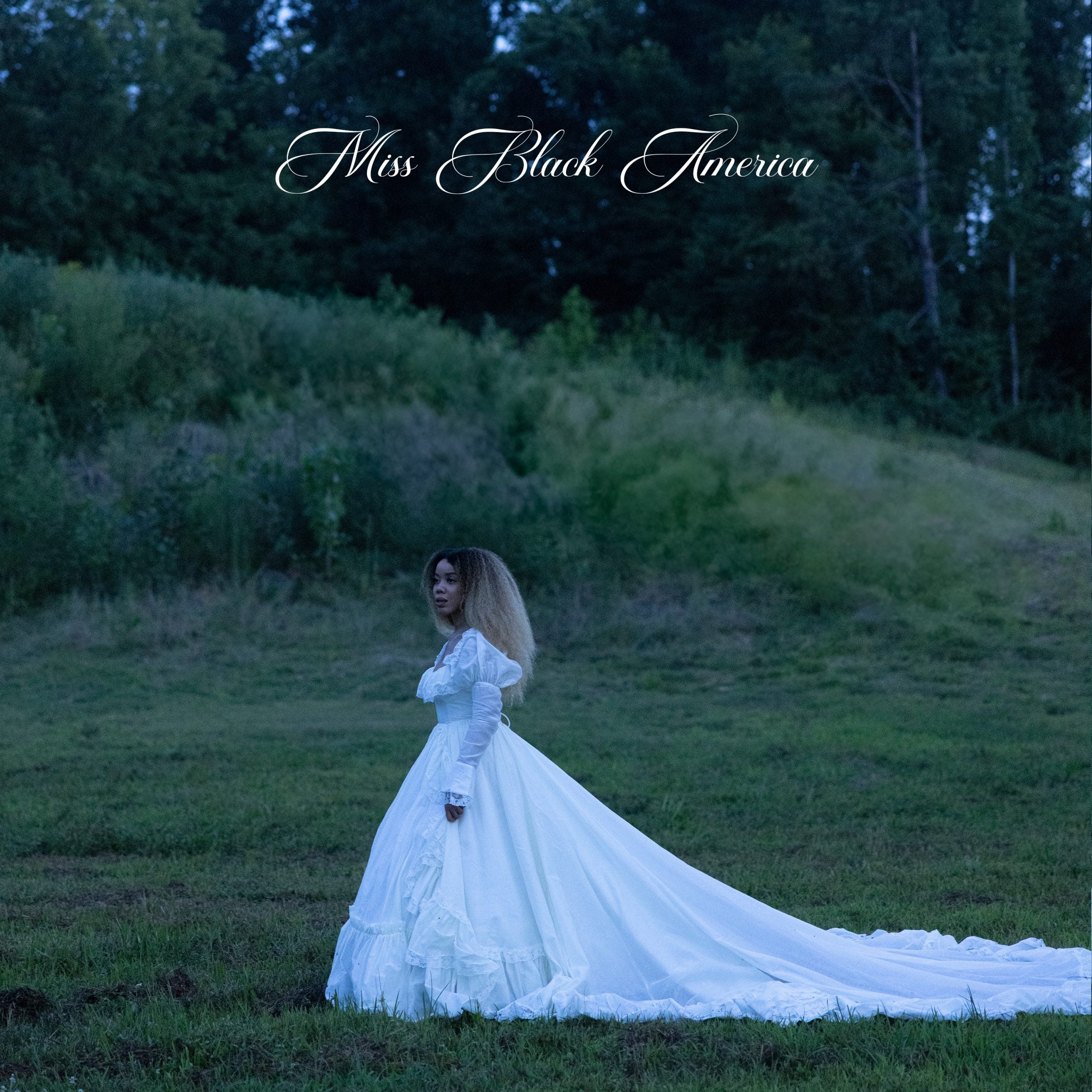
Apart from being sonically pleasing, the record is also timely. This is largely because symbolically it represents a chance to reflect on topics such as reparations on the track “Reparations,” Black figures in our families who take on traumas, which is explored on “Mama Don’t Worry,” and marriage, which is dissected in “Jump the Broom.” Kirby beautifully etches these notions into Miss Black America. Not only are these topics apt, they’re also realistic, especially for many of us who hail from the South. However, many songs on the album feel timely due to how isolated many African Americans may feel at different stages in their lives. No matter your age and perhaps your race, there is messaging on the album that might lead you to fully acknowledge the lived-in complications that are a part of our daily lives. (One that comes to mind is finding happiness amid Donald Trump’s alarming presidency).
One might ask how she landed on all of these topics? Kirby shares that soul-searching led her here. Another ideal that led her here was creating music that feels real. Her focus and what grounded her was chasing sounds that aren’t forced. When we touch on these topics, she explains that a lot of music marketing is chasing the “lowest hanging fruit.” And to her, with Miss Black America, she was aiming to do the opposite. “It takes a really strong conscience to not succumb to that game,” she added.
When thinking about how she’d market the forthcoming album, she says she decided to work with creatives strictly based in Mississippi. She says she filmed and world-built the album’s visuals solely in Mississippi, too. By doing so, she was also able to style herself in looks that speak to her. (The album was largely written in Los Angeles, and was recorded in both New York and LA). In the past, she’s leaned on imagery of the 1960s, according to Kirby, but with this compilation, she chose to key in on the Victorian era. The gaudy nature of this era allowed her to delve into her more feminine side. It even allotted her space to think about being sensual while being fully clothed. She mentions here that there’s a delicacy and softness that comes with this type of clothing–Kirby also notes that this way of dressing challenged her idea of what it is to dress femininely.
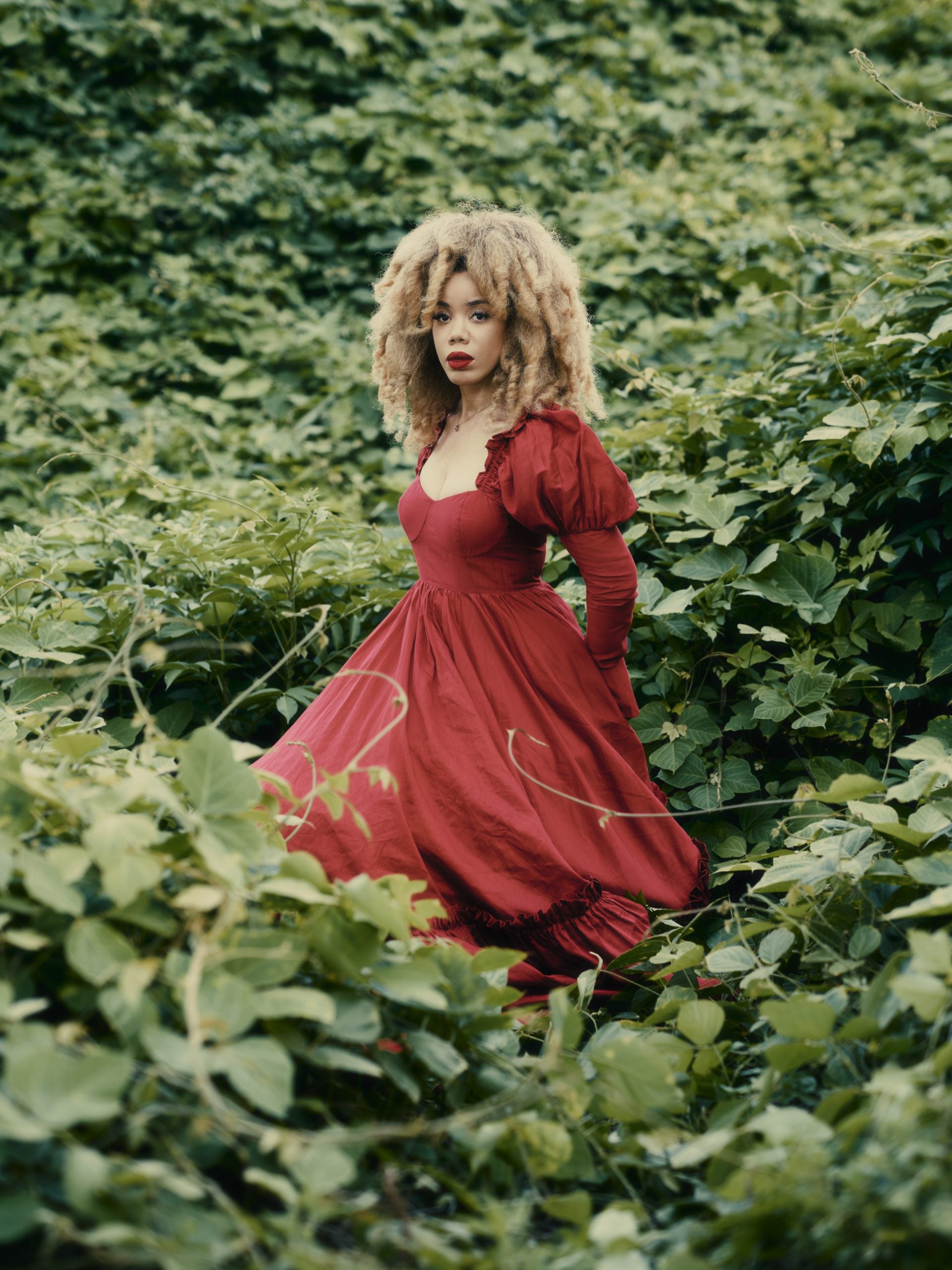
“I think what I really wanted to capture with this record is just like how being a woman, a Black woman from Mississippi, is a very layered experience,” Kirby explains. “There’s so much more beauty to the black Mississippi experience than maybe you’ve been shown.”
A feel-good song, “My People,” showcases the self-assuredness and easy-going nature associated with Kirby’s songwriting. It also further presents how the artist is ushering in a glorious chapter. By surrendering to the earnest stories she felt were living through her, she has created a robust and significant album.
“I just want to make my ancestors proud… I didn’t want to just shine a light on the heaviness of Mississippi; I truly have to believe that even in our ancestors’ oppression, the juke joint and church were places of joy for us. So I wanted to make sure that those expressions were on the record,” she adds.