
Harlem’s Fashion Row is doing revolutionary work within an industry that often has little to no regard for Black designers beyond lip service. On Tuesday evening, ahead of the official start of New York Fashion Week, at Cipriani Wall in Manhattan, Brandice Daniel and her team executed an evening dedicated to artisans and creatives. In the room were editors, stylists, and figures whom you might have regard for if you’re paying attention to the heartbeat of the global fashion market. There was a spirit of abundance and joy, too; that can’t be remiss.
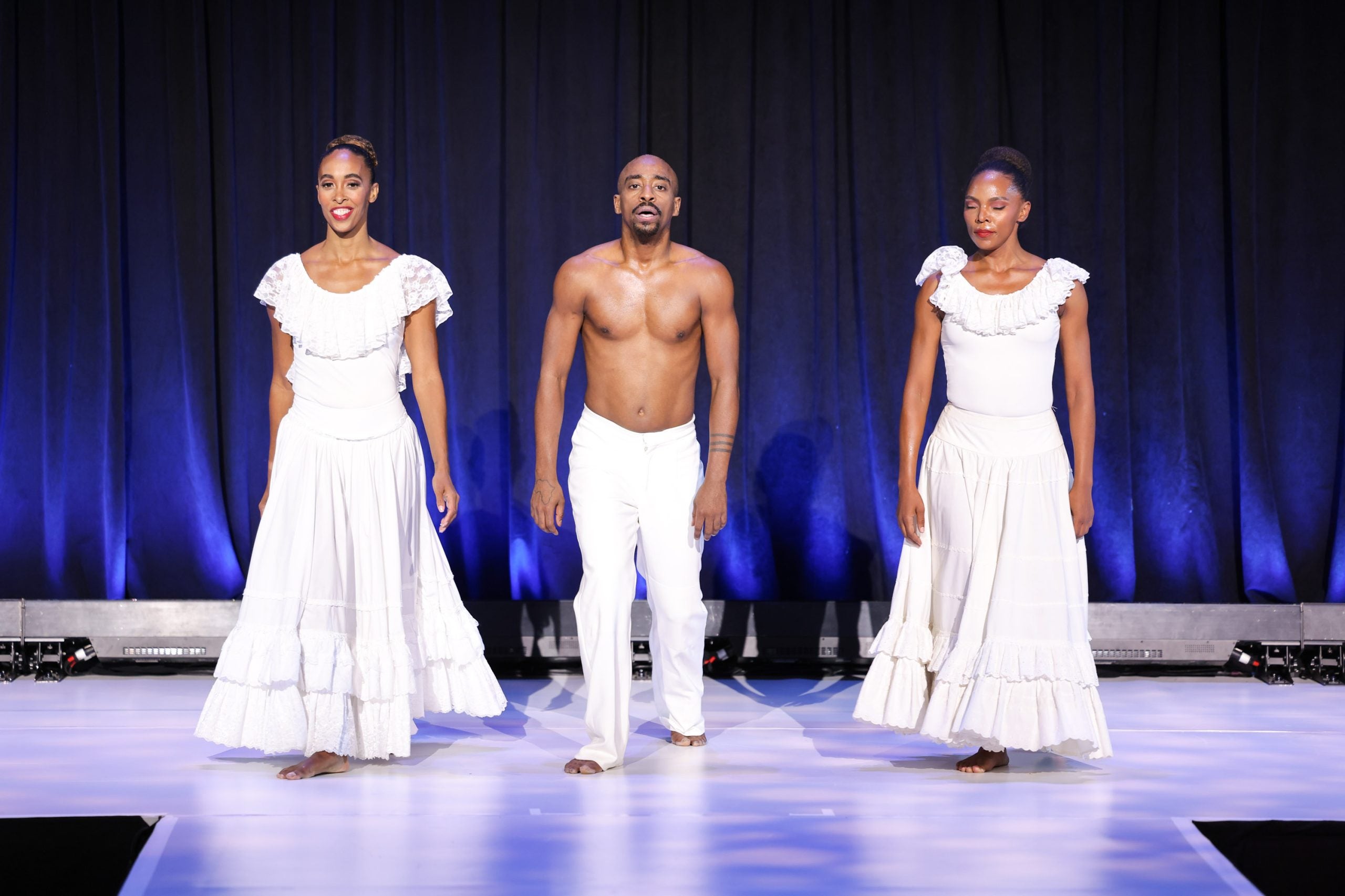
The beginning of the evening was marked by an intimate performance on behalf of the Alvin Ailey American Dance Theater. As a former ballerina myself, I felt seen while I watched the stunning dancers display their artistic practices amongst fellow creators and designers. This kick-off wasn’t just beautiful; it also presented the ideal that Black creativity is boundless. Daniel has a special way of gathering folks who hold no qualms with showcasing their talent; so to see the historic dance company in this part of the city was such a distinct moment.
Each year, Daniel and HFR present distinguished awards to individuals who are leading innovators in their respective fields. Jason Bolden, Stylist of the Year, shared that he often does his job and seeks to just stay put rather than embracing the idea of being a public figure. “This honor means so much,” said Bolden. “Harlem’s Fashion Row, I’ve watched you transform and create this large table–so for you, I’m super grateful.” Bolden also thanked his husband, Adair Curtis, and the titans Phylis Hyman, Nina Simone, and James Baldwin. “They showed us that Black style is a form of protest… and poetry.”
The Editor of the Year, Nikki Ogunnaike, has made countless strides during her time as the editor-in-chief of “Marie Claire.” Her sister, the acclaimed journalist Lola Ogunnaike, introduced her and spoke candidly about the wisdom she instilled in her upon her move to New York years ago. Her poignant speech felt relatable as she noted that many Blacks who work in media are often tasked with working harder than our white counterparts.
Nikki also shared a few candid sentiments upon accepting her award. She noted: “As free speech and critical thinking [are] under siege, we must continue to choose clarity over complacency.” Ogunnaike also thanked her parents for instilling a sense of courage in her. “Thank you for holding me down in these chiffon trenches as they’re called,” Nikki mentioned when speaking of her mentors, her close friends, and her family.
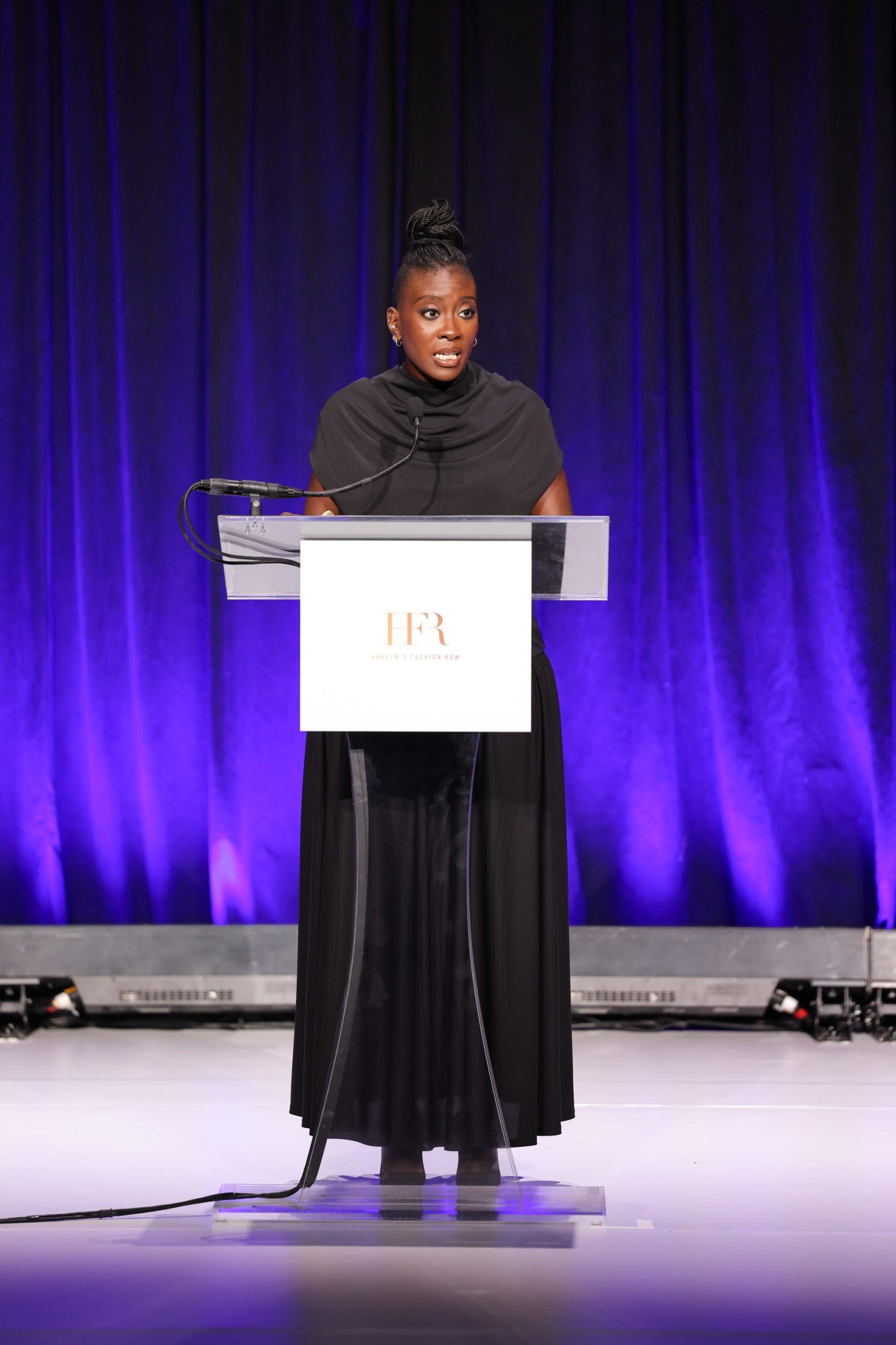
The Corporate Impact award was presented by Mark Breitbard, president and CEO of Global GAP Brand, to Christiane Pendarvis, the co-chief executive officer of Pattern Beauty. “I spent the vast majority of my career in the fashion industry,” Pendarvis expressed. She went on to explain that she inherited her grandmother’s fixation on fashion decades ago–Pendarvis also said her grandmother’s Stuart Weitzman shoe collection, which consisted of hundreds of shoes, went to her. These candid moments, which Christiane shared, were touching as they alluded to her lifelong love not just for fashion, but also for how integral clothing and accessories are to her.
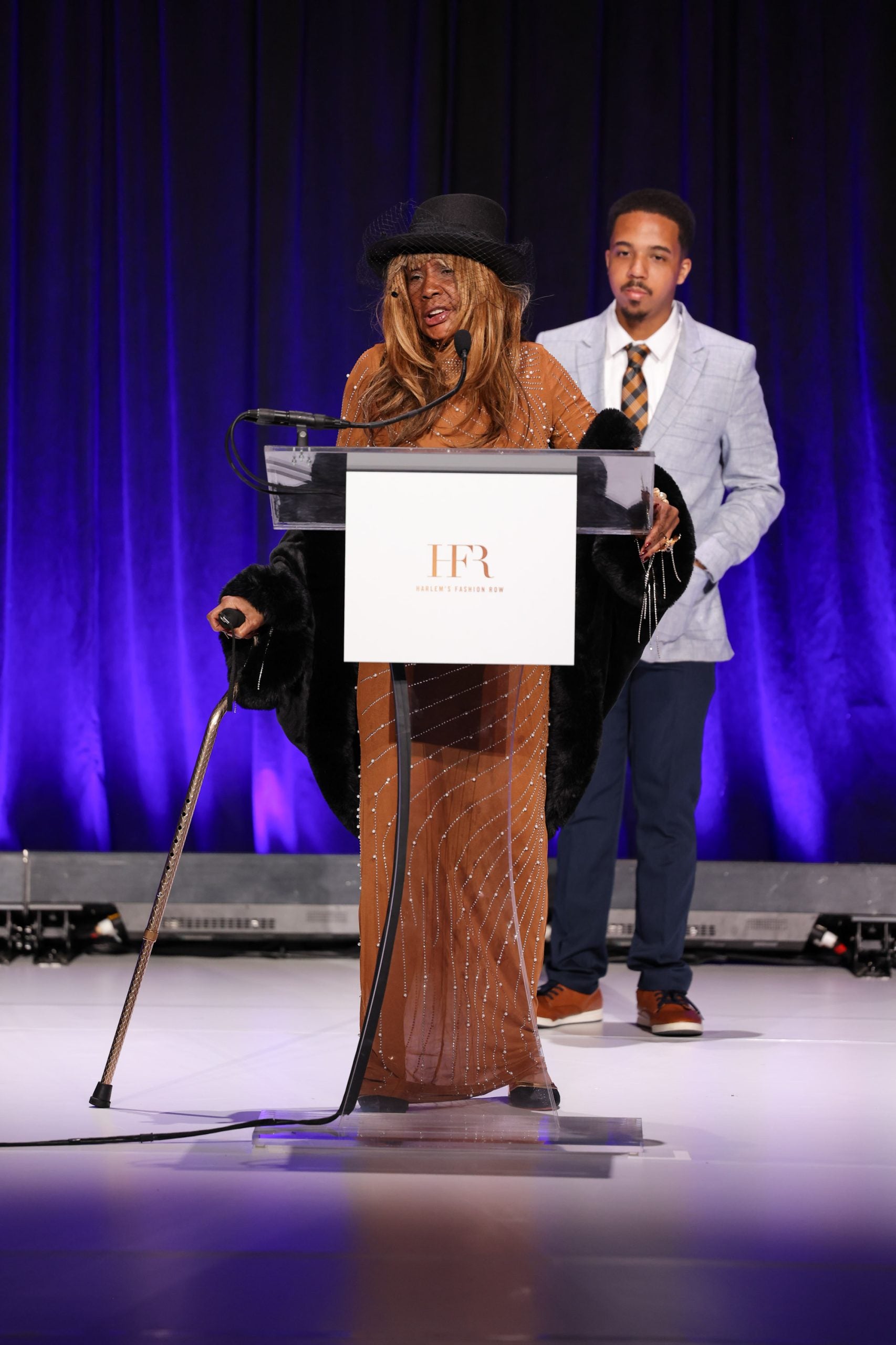
Though Oscar-winning costume designer Ruth E. Carter was unable to attend the affair to receive the inaugural Ann Lowe Maverick award, her presence was felt. A video featuring a recording of Carter played in place of an in-person speech. Before the video played, Lowe’s granddaughter, Linda Dixon, expressed how close she was with her. “I spent many, many days with her watching her obsession with her art; so quickly she would do things and have ideas–nothing could keep her down,” she expressed.
“It truly gives me chills just to say maverick. The word maverick means someone who breaks new ground… Ann Lowe was a maverick; she shaped the image of American design even when her name was erased,” Carter said. She added that Lowe did so, which led to her blazing a path for many who’ve followed her, including herself. Carter has had a longstanding relationship with Spike Lee whom she has worked with on multiple occasions; she mentioned him during her acceptance speech.
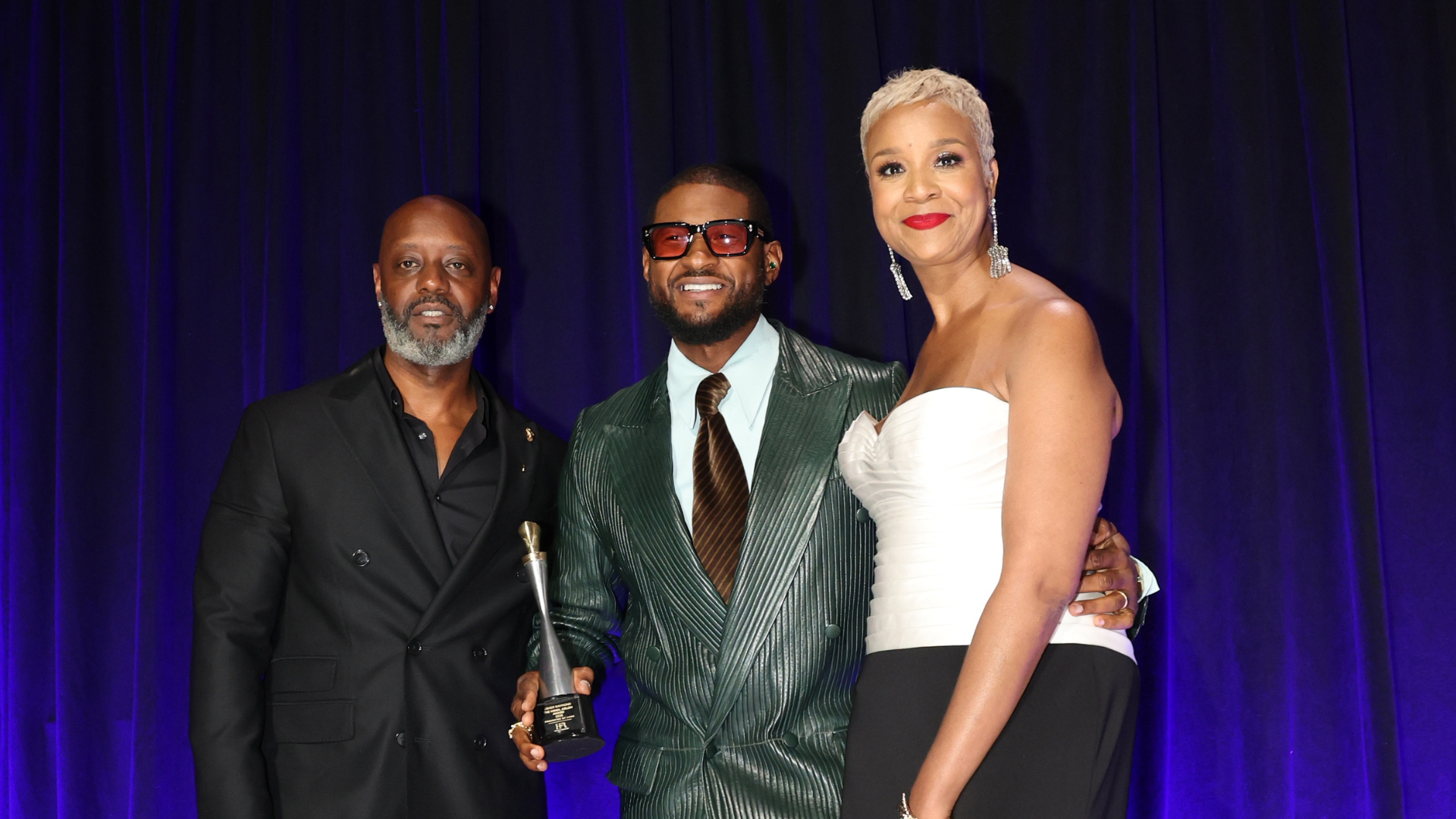
Next, presented by Corey Smith, Head of Diversity & Inclusion, North America, LVMH Moët Hennessy Louis Vuitton, was the Virgil Abloh award to global artist and fashion icon Usher. His work within and outside the confines of the entertainment industry led to this honor. Smith touched on the importance of the award before the artist touched the stage, especially due to the fact that Abloh was regarded as an innovator and cultural steward.
“They taught me to dream and use my imagination in fashion,” Usher shared as he mentioned his family members, including his grandmother and an uncle, who were integral to him. He also thanked his heavenly father and his wife. When touching on Virgil Abloh, he shared that the titan instilled an idea that chasing newness and dreams with just 3% as a major force in his life, especially regarding innovation needed to drive forward, executing his ambitious ideas.
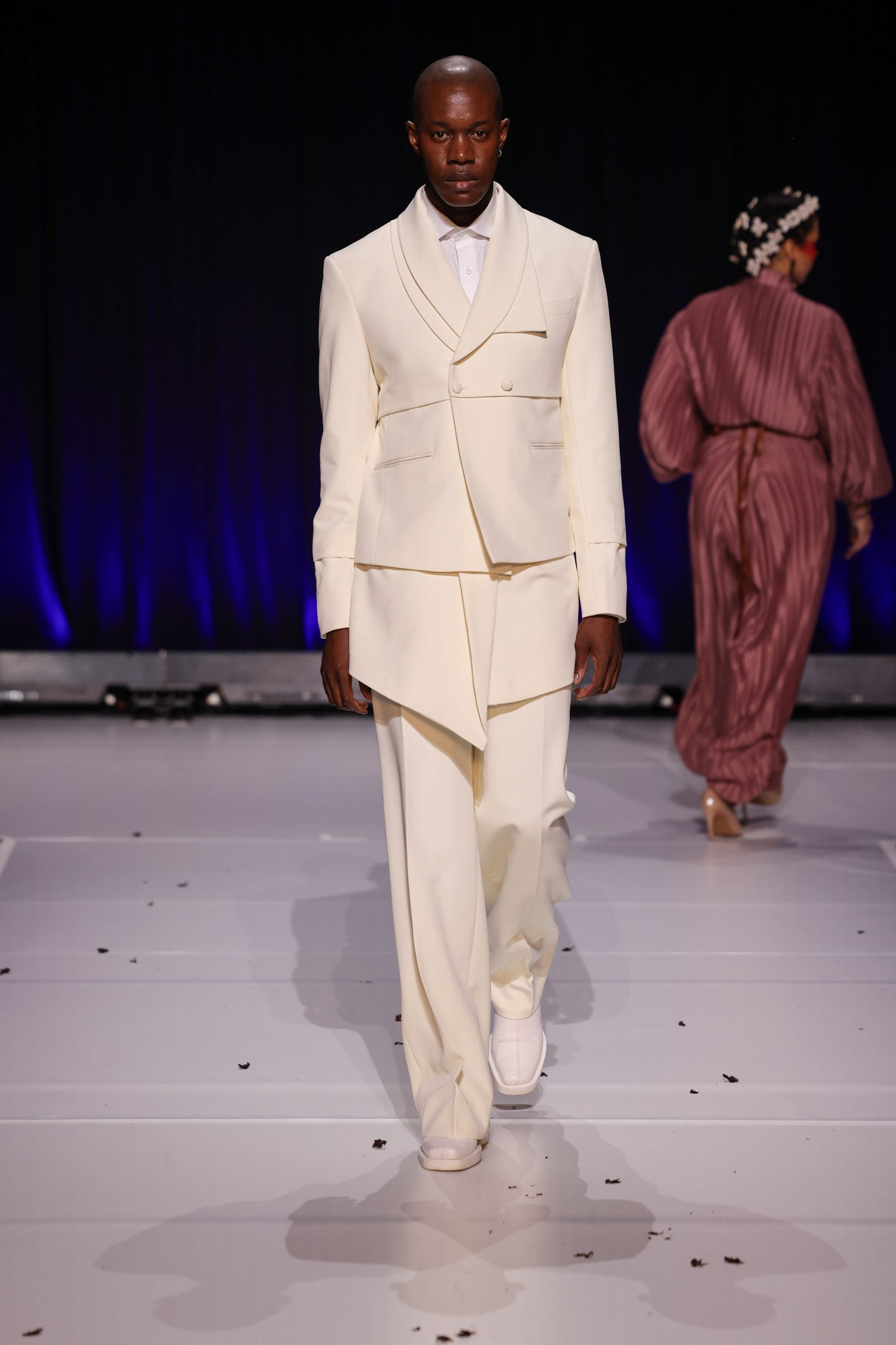
For the final act of the evening, guests were treated to a presentation from three Haitian designers: Atelier Ndigo, Daveed Baptiste, and LaTouché. Atelier Ndigo by Waina Chancy offered up an exuberant collection led by hues such as cherry red and deep blue. Her pieces consisted of geometric tops influenced by flowers’ natural designs and also modernized micro shorts.
“This time around we really wanted to show we’re diverse. I think we achieved that,” the designer shared. Chancy also expressed that she worked with specific trims by adding them to her coats and blazers; this was not done in the past.
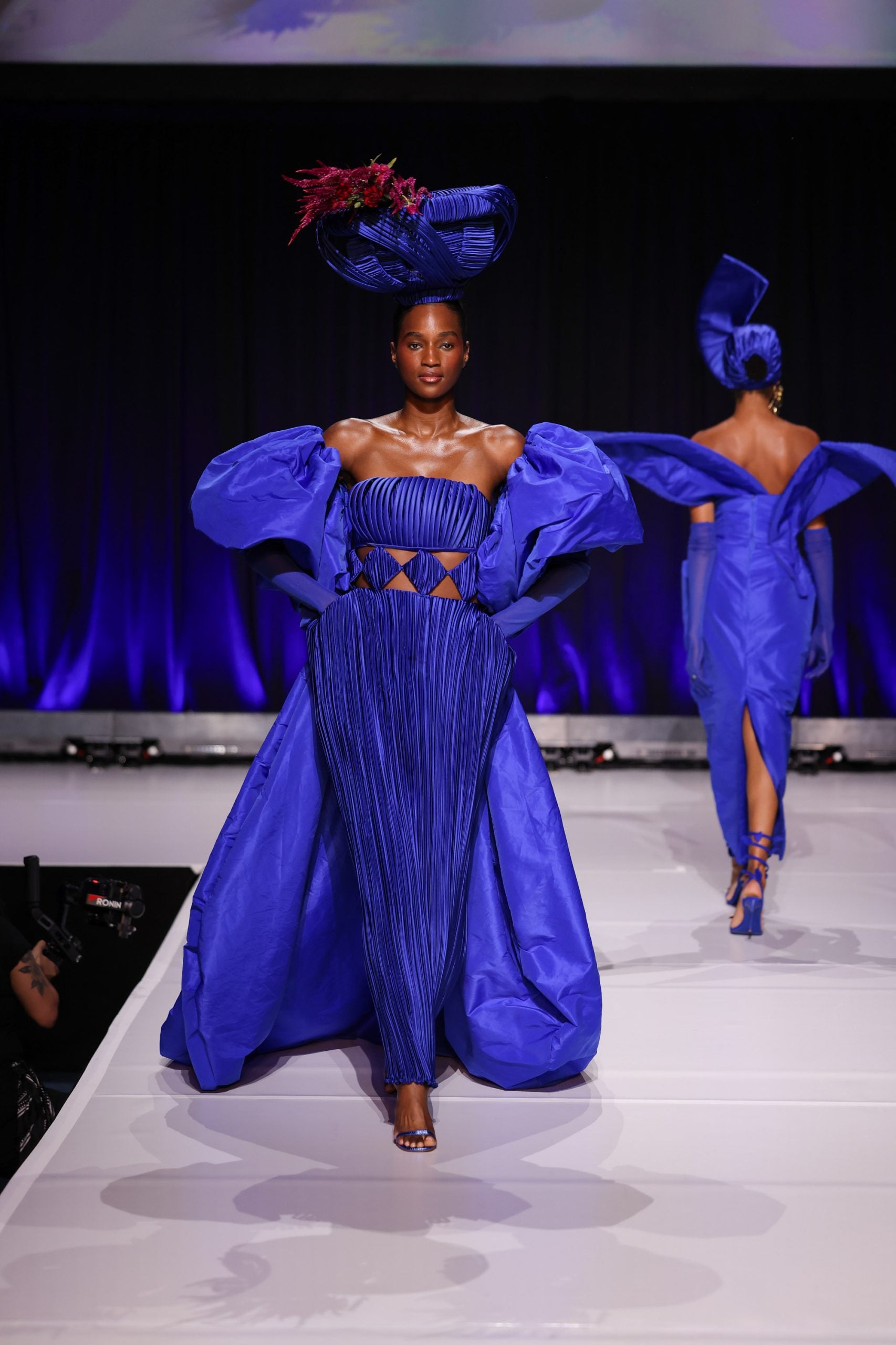
When I spoke with the designer behind LaTouché, Jimmy Latouche, he was fresh off debuting his latest collection. “I tapped into my culture and my dad,” he shared. The day following last September’s collection which was presented at the HFR Awards, he says he immediately began sketching the new pieces. His goal was to showcase the opulence of Jacmel, the city his father is from in Haiti. What transpired were innovative and somewhat futuristic trousers, blazers, and outerwear.
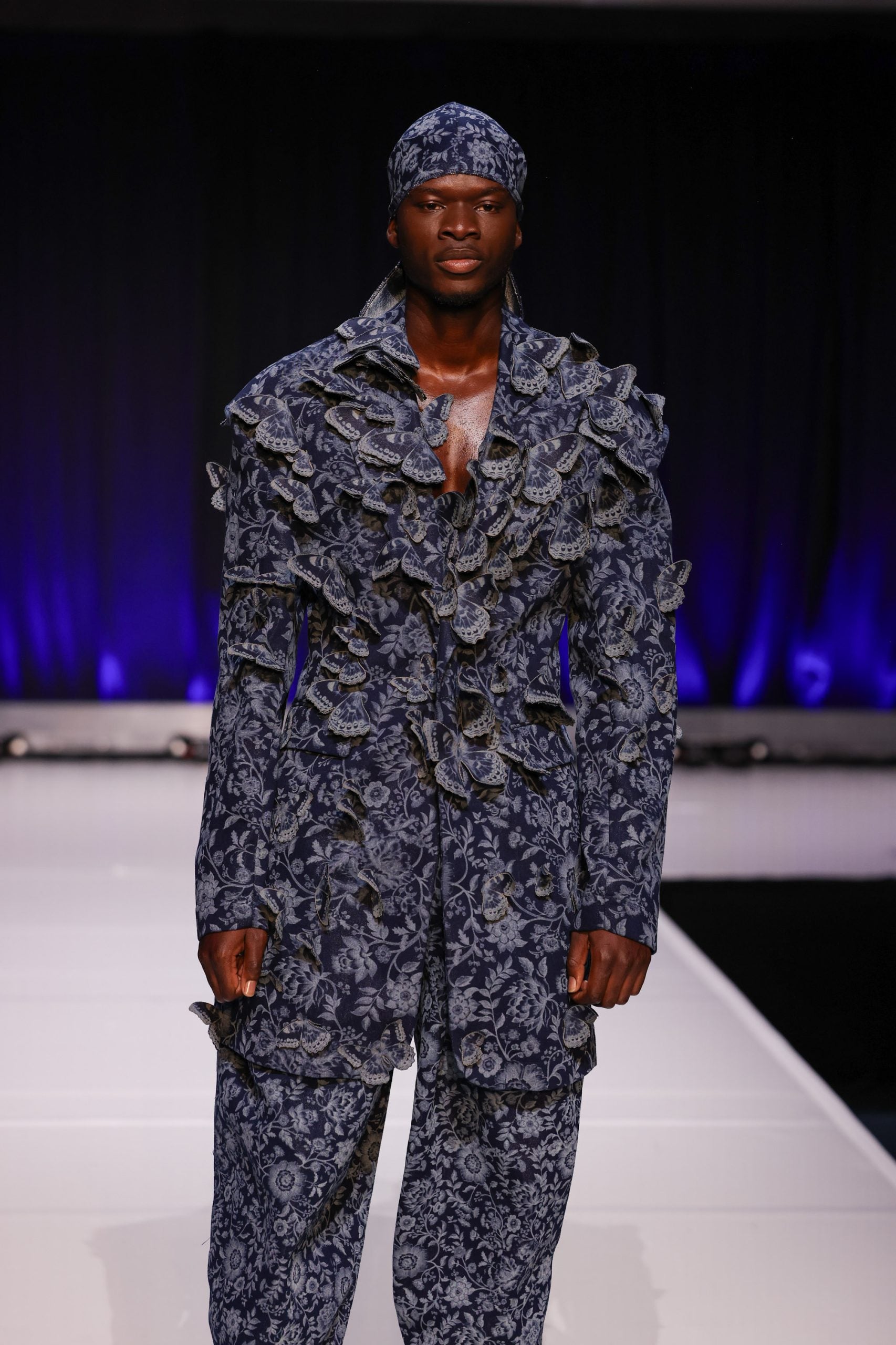
Daveed Baptiste closed the presentation. The designer’s namesake label delved into his passion for denim and also the sanctity of water. Denim was utilized on key jackets and outerwear that went down the runway. Quite a few designs featured striking swirls, which Daveed says speak to the ways that many Haitian immigrants must travel when heading into the United States for a better life.
“I’m into beautiful shapes. Some of these silhouettes were roadmaps that a lot of Haitian immigrants take to get to the U.S.,” according to Baptiste. “We [also] have a jacket that’s inspired by movement,” he adds.