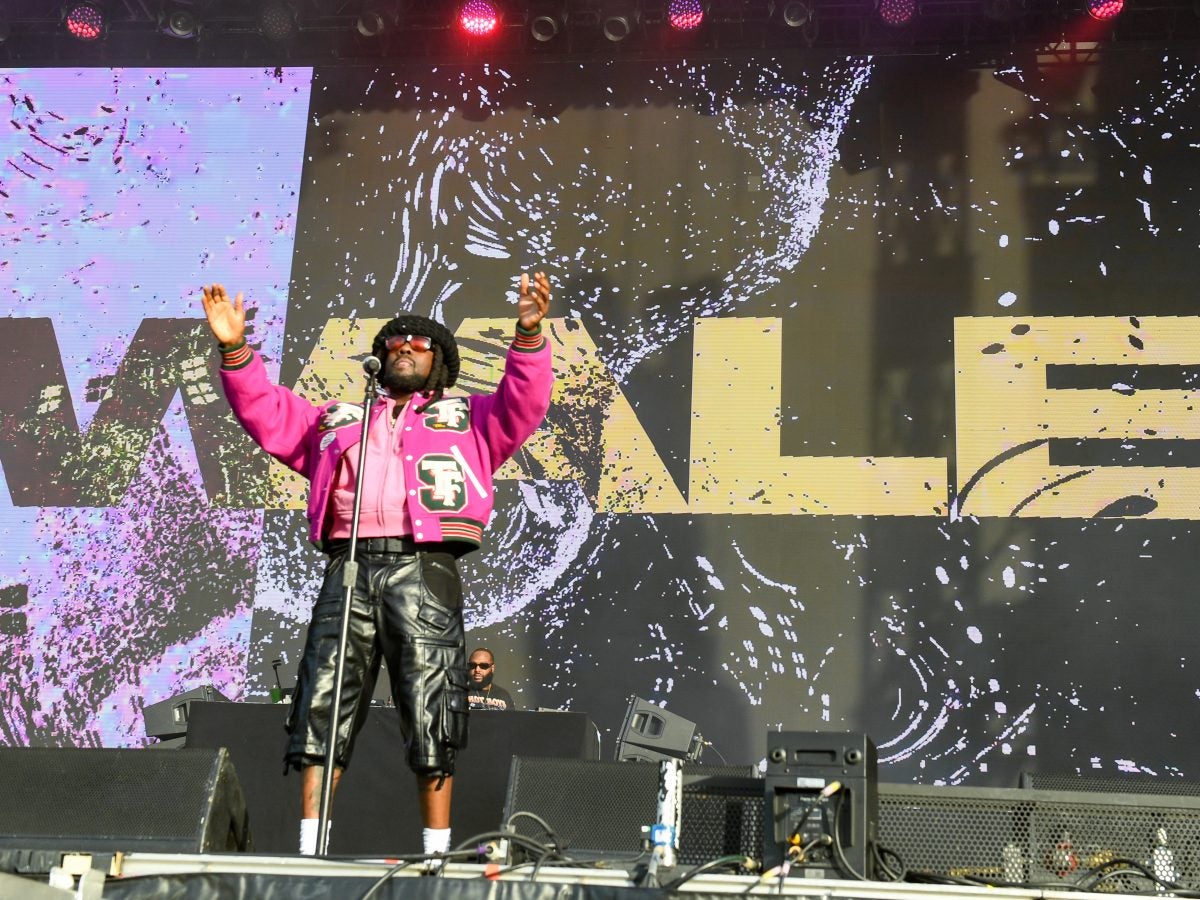

Wale has lived a career most artists could only dream of. He’s collaborated with Rihanna and Lady Gaga, earned Grammy recognition, won an MTV Award, delivered multiple cultural anthems, and built a discography that stands shoulder-to-shoulder with rap’s most skilled writers. And yet, in the ongoing conversation about legacy, impact, and commercial celebration, he remains—by his own admission—“misunderstood.” But what has never been up for debate is the music. For nearly two decades, Wale has stayed relevant by staying true to what matters most—being himself.
After an almost four-year hiatus, he’s returning with a sharper mindset, a new label home, and a renewed sense of clarity. everything is a lot., his first release under Def Jam following the close of his Warner/Maybach era, marks his rebirth. Sonically, it’s arguably his most diverse effort to date. Conceptually, it tackles topics such as love, fame, and the internal battle between who you are, who the world thinks you are, and who you’re still trying to become. With features from Shaboozey, Ty Dolla $ign, BNYX, Leon Thomas, Andra Day, Odeal, and more, the project is set to stand out as one of the year’s top offerings.
In the months that preceded the album’s release, Wale implemented a rollout that was second-to-none (with all due respect to Clipse, of course.) He dropped “Blanco” in March, hit stages at Dreamville and Atlanta’s ONEMusic Fest, released a string of sharp, unfiltered freestyles on Instagram, and partnered with Netflix for WaleMania in Las Vegas, turning wrestling’s biggest weekend into a cultural event. A longtime sneaker connoisseur, he also teamed up with Nike for a new ACG campaign; a full-circle moment for an artist who had a longstanding relationship with style and sport.
By the time we spoke this past summer, Wale was in a reflective space—open about burnout, success, “survivor’s remorse” from his time in Los Angeles, and the complicated evolution of an artist who has seen every side of this industry. What followed was an honest, layered conversation about why he’s finally ready to be heard again.
ESSENCE: Your last studio release was in 2021. This three and a half, four year period has been the longest amount of time between albums in your career. What have you learned about yourself since your last album?
Wale: Life’s just been life-ing. I would drop a project in a half a year. I’d drop a mixtape and an album, or a mix tape and an EP or two. But now, I’ve had no choice but to stay still because of management changes, industry changes, label changes. It’s been tough because my fans are used to a certain pace of my releases. So it’s been kind of frustrating. But I guess one of the things I’ve learned is just like there’s only so much that you can do.
everything is a lot. is going to be your first release on the iconic Def Jam imprint. What went into the decision to sign to that label?
The possibilities of what could be. I also felt that I could do a lot with that in this culture.
You were really early when it came to social media marketing in the Hip-Hop space. Most of the time I would hear your new music because you would post it on Twitter back in the day. You’re considered a vet in the game now—whhat part of the music industry has changed the most to you?
Everything. The whole thing. From top to bottom. Every single thing has changed—how we consume it, how we think, how we process it, how it’s marketed, what’s marketed, everything. It’s all different. Completely.
Do you feel that it’s been a challenge for you at all?
I mean, that’s all part of it. Part of longevity is adapting. It’s the part that keeps you up at night and it’s also the part that’s the most fulfilling. Keeping what you feel near and dear to yourself, but still being able to switch styles, being able to adapt and push yourself to new limits. But most importantly, staying true to what you do and still being able to stick and move is a fulfilling thing.
This album has a bit more of a global feel to it as opposed to previous releases. What type of music or musicians inspire you nowadays?
I think actually when the album drops, you can ask 10 different people what they feel the album is, and you might hear 10 different answers. Some people will say it’s bluesy, and some people will say it’s a hybrid of a lot of things, and that’s a testament to what I’m inspired by. I listen to Phil Collins, I listen to Whitney, Mike, Stevie, Marvin, Eminem, Jay-Z, Black Thought, Lil Wayne, and every Go-Go band under the sun. I have a whole lot of different inspirations, and I think I might get lost in the mix sometimes. I just have so many influences that aren’t really just strictly Hip-Hop.
Alongside this album release, another thing that makes this year special is that it’s the 15th anniversary of a personal favorite, More About Nothing. To me, that was your most important release because you were in between deals during that time, and you had so much to prove—and you executed. What does that project mean to you?
It’s crazy because I’m such a Virgo. I listen to it, and I’m always saying, I could have done this tape 10 times better. That’s how I think of it. But I think there’s a lot of nostalgia behind it with fans, and I appreciate that. But from a technical aspect, I could have just made it way better. But even at the time making it, I wasn’t really thinking too much about it. I was just like, “let’s just do what we got to do.”
Listening to the album, a song that really stands out to me is “Mirroronnabenz.” I was listening to the hook and you say you should have “never stopped listening to you.” Looking back at your career, are there any thing or things that you feel like you would’ve done differently?
A few things, actually. Sometimes I look back and say, “Man, I should have probably ignored that. I probably should have just let that slide or I probably should have just ate that.” But, the longer you’re in this game as a creator—any type of creator—you’re going to battle with yourself, with decisions you make, you’re going to overthink, you’re going to under think, etc. You might start adopting other people’s philosophies subconsciously, and then you may stop listening to yourself. Sometimes that happens. I mean, it happens to everybody for real. I’ve been in the studio with everybody under the sun. It might even get to the point where we don’t listen to ourselves and make the wrong decision, which is way worse.
So adding to that, what’s the best advice that you ever gotten in the game so far?
I can’t lie, there’s not much community in this Hip-Hop shit, man. If you’re not from one of the main cities, it’s not too much that you’re going to get. But the best advice? Just keep applying pressure. Don’t ever take your foot off their neck when it’s your moment.
I’ve always felt that you’re an artist that checks all the boxes. You’re a great lyricist, you can make songs, from a live performance aspect you’re got stage presence, everything. But some of your peers have reached a higher level of success in certain aspects than you have. Why do you think you’re so misunderstood?
Man, If I had a dollar for every time I’ve answered that question. Honestly, I can’t tell you. But it is a frustrating thing to think about from time to time. I’m not tripping off what anyone else does, but if a person can check all the boxes, it makes you feel like something outside is disturbing and the motion for real. But that’s a crazy topic because there’s so much to say and so much to not say. I would pose that question to everyone else for real. Y’all tell me why? People are going to say that I have a bad attitude. Oh, have you met me? Do you know why I’m upset about something? Do you know why I feel this way about something? So they might say that. They might say the records ain’t good enough. I’ve heard it all, but I’ve also heard that I check all the boxes, so I don’t know. I’ll leave that to the people.
Earlier you spoke about the difficulty of not being from a big city. How do you feel about the DMV’s rap scene, currently.
We’re here. We’re here for real. But a lot of people have seen unfortunate situations with the law. People get killed, people get locked up at a rapid pace that’s in the rap scene in the DMV. Also, the world is so small now that everybody kind of sounds the same. We’ve lost some of the sound that made us us, and we’re such a small city. So I think that has a lot to do with it. But there’s a lot of talent back there, but there’s not that many resources either. The studios aren’t great, and I’m not saying that you need that, but it sets a precedent. If there’s a couple nice studios in the city, it sets the vibe, it sets a mood. People want to stay there. Artists want to stay there longer. They want to come after the club and they want to record. We don’t really have that kind of vibe.
What motivates you to create nowadays?
Whatever is around me. I’m a true product of my environment. Dealing with the awkwardness of being around all these rich folks where I’ve been lately, and then going back to Landover, which is a completely different environment. Being around some of the athletes and seeing how they live and then being back around some people I grew up with. It gives me survivor’s remorse sometimes. That’s what I write about. Navigating through this madness of an industry. I mean that shit done sucked a lot of my joy, my optimism for humanity at times, but that’s where I get my inspiration from—wherever I am.
What’s one thing you want the world to remember about Wale?
Shit, that they can’t say I didn’t try.