
Scott Evans can trace the beginning of his dreams back to a single moment. As a child growing up in Indianapolis, he found himself immersed in a world that many his age could only imagine. Evans’ sister worked as a courtside reporter for the hometown Pacers, and one night, he found himself playing a young basketball phenom during an in-game segment in front of thousands of fans. The performance stirred something deep within him, marking the true beginning of his ambitions.
“I knew this was what I wanted to do for the rest of my life,” Evans says. From then on, he became a magnet for any situation that put him in front of an audience or a camera. “I loved doing talent shows, and I was on the news program at every single school that I went to,” he recalls. As he got older, that instinct evolved into something more structured through the Indiana Black Expo’s Youth Video Institute, which was a training ground run by Black professionals who gave young people a direct view of their own potential.
The way Evans explains it, The Indiana Black Expo was pivotal in his early development. There, he was able to hone his craft—learning camera work, interviewing skills, production basics, and most importantly, what it meant to see Black excellence modeled in real time. “We had a real infusion of excitement and a direct path to success because we were able to see Black people doing it at the highest level,” he says. “If you can see it or believe it, you can do it. I had that path, and because of Indiana Black Expo, I never doubted that success was going to happen.”
Following his initial experience with media, Scott has dedicated his life to fulfilling his childhood dream. From hosting home games for the Pacers and the Indiana Fever, to his years anchoring Channel One News, to becoming a correspondent and eventually co-anchor on Access Hollywood, his career has followed an upward curve fueled by preparation and persistence. He later took over hosting duties on NBC’s World of Dance and signed a major overall talent and development deal with NBCUniversal. But the turning point of his career came from something he truly made himself.
After years of pitching ideas and shepherding projects through the labyrinth of development, Evans reached a crossroads. One project in particular, a sports history documentary tied to the Paris Olympics, collapsed when the executives who championed it left the company. That kind of setback is common in the entertainment industry, but for Evans it triggered a fundamental question. “We can keep putting all of this in the hands of someone else—or could we just do it?” he remembers thinking.

From that, House Guest was born. The premise was simple: invite someone you admire to your home, sit with them, talk to them, and offer the audience the feeling of being in the room too. He describes the original idea as “Martha Stewart slash Barefoot Contessa meets Arsenio Hall,” which both sounds chaotic and somehow makes perfect sense. Evans and his team experimented with formats, tones, and structures until one style clicked. The very first episode, with KevOnStage, went viral. And then another episode did. Then another. Suddenly, what had started as a passion project became exactly what he was meant to do.
“It has become special in a really, really meaningful way,” he says. “Totally on accident and totally intentional at the same time.” Evans also doesn’t take lightly how he chooses his guests. “To me, it’s imperative that the impact they have had on the audience has been a positive one,” he explains. “Will people be blessed by this interaction? Will they be encouraged?” And on the occasions when House Guest features non-Black guests, there is a standard for that too. “If you’re a white person on the show, it’s because you have a direct connection to a Black audience or a Black and brown audience and have invested in it in some way, shape, or form.”
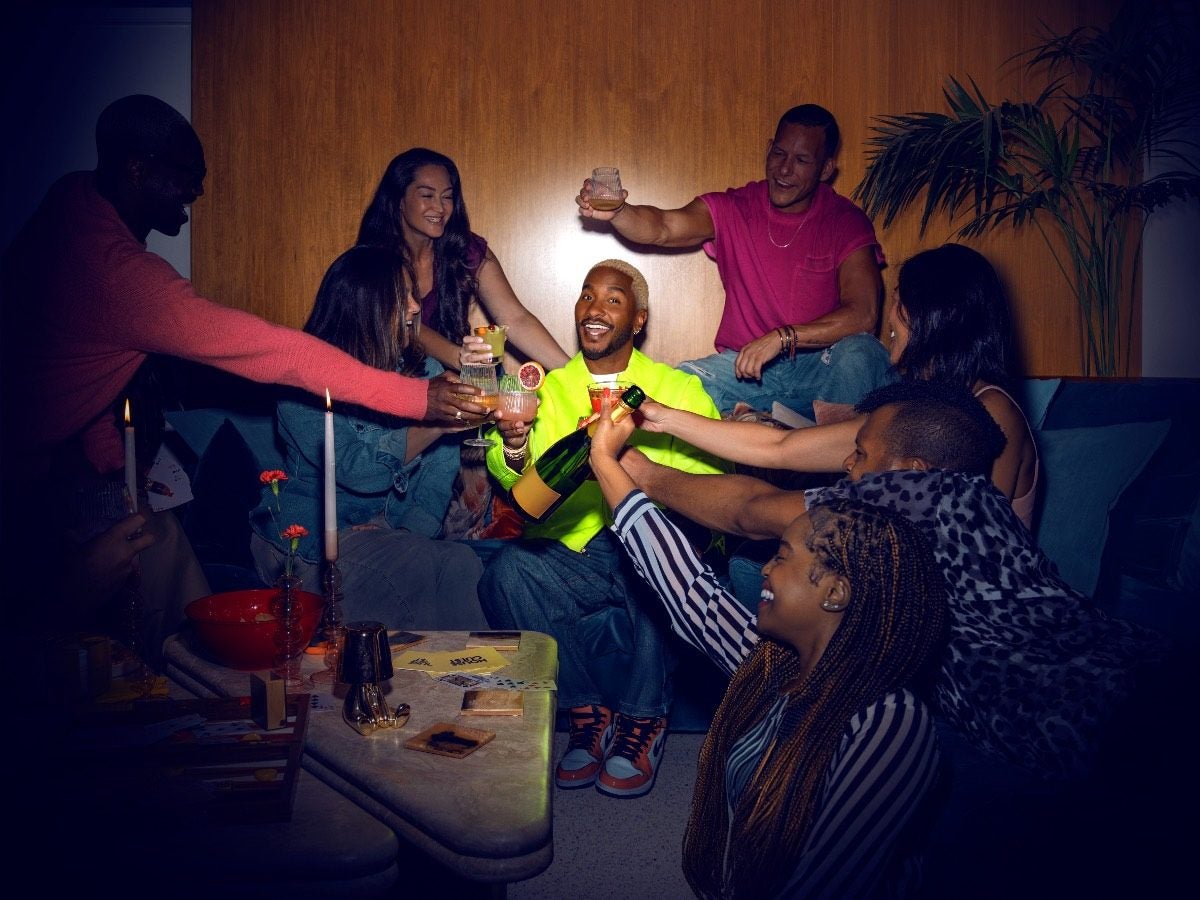
As many know, House Guest became a huge deal. In its first year his digital series earned a Webby Award, an L.A. Press Club honor for its Cynthia Erivo episode, a spot on Spotify’s Best Video Podcasts of 2025 list, and a place for Evans in Spotify’s RADAR for Creators Class of 2025, as well as being named to this 2025’s The Root 100. Now, he’s ready to extend his reach. The new show, House Party, builds on a special anniversary episode he released in 2025. It aims to recreate the feel of a holiday kickback, complete with an appearance from Niecy Nash-Betts, games, music, surprise guests, and a new tour on the horizon.
“We are always looking for opportunities to build on the foundation of House Guest,” Evans tells me. “While House Guest ain’t going nowhere anytime soon, we are expanding.”
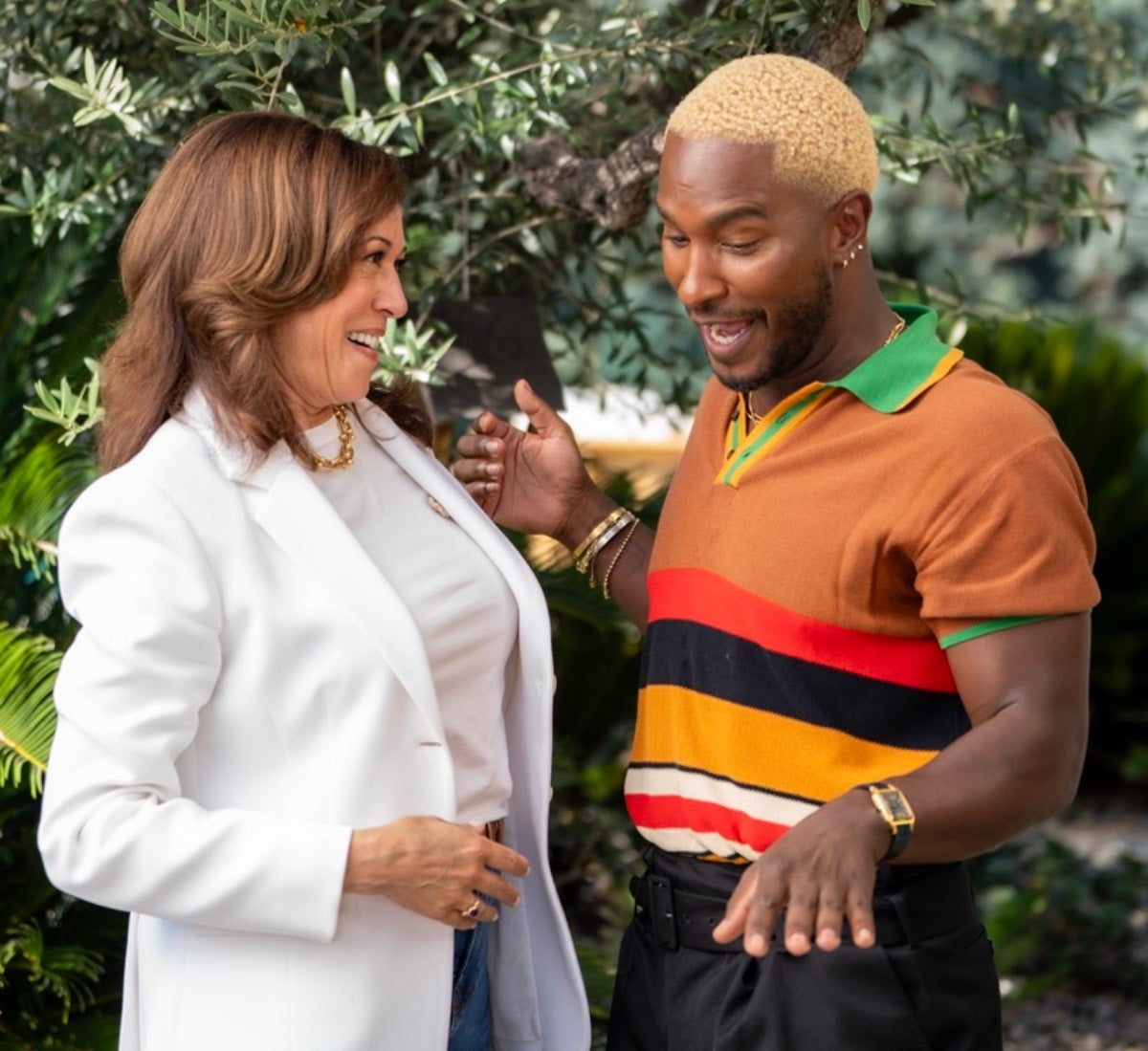
When I ask what he wants the next phase to look like, he doesn’t talk about celebrity bookings or production budgets. He talks about people. It’s something I’ve always admired about him, even long before this interview took place. “We just want to see this thing grow,” Evans says. “We want to be able to reach more people and be a bigger, brighter light for more people to recharge, and go back into this world rejuvenated.”
Evans has a reputation for radiating joy. Even in conversation, you feel it. “Where does that outlook on life come from?” In his response, his voice shifts into something fuller. “As Black people, there is a lot to be joyous about,” he says. “Joy is your responsibility. It’s a fire you stoke. It is something that you tend to.” He pauses for a moment as if hearing his own metaphor for the first time. “Gathering your little flame and their little flame makes a bigger flame. And now other people are drawn to that flame.”
“Right now, people are looking for light at the end of the tunnel,” Evans says. “People are looking for spaces where they feel safe, where they feel like they have community, and a sense of familiarity or comfort. And so the thought of joy being a flame is particularly powerful to me right now.”
During his reply, Evans pauses briefly, letting the moment settle around him as if he’s choosing his words with care. The topic of joy brings him back to someone essential in his story; a person whose influence, he hints, may have shaped his sense of purpose long before he was old enough to understand.
“Ironically, when I was being brought into this world, my grandmother was leaving this world,” he says. “Crazy enough, her name was Joyce. And I know now that I feel the prayers of her on my life every day. The protection that she prayed over my life, the purpose she prayed over my life as I was being born, and she was dying. That’s where a lot of the joy comes from.”