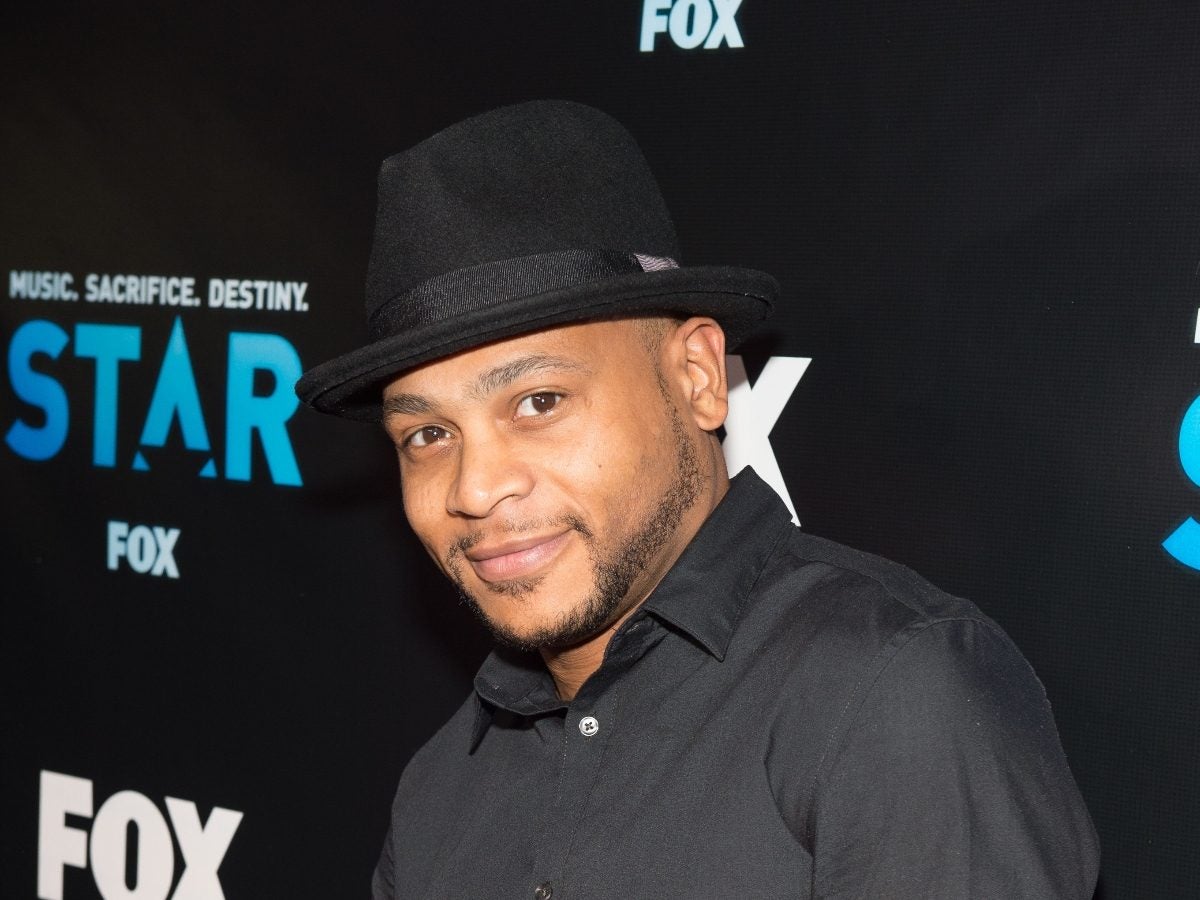

One might think that, being such a recognizable cultural figure like that of Darnell “J.D.” Williams, best known for his roles as Kenny Wrangler in Oz and Bodie Broadus in The Wire, there would be a chance of getting a bit weary of the constant callbacks to his first acting roles over two decades ago. That’s not the case for J.D., however. “I can’t see any other way but to appreciate it,” says J.D., when we asked him as much at the top of our interview. ESSENCE caught up with Williams in July over Zoom, right as his newest role on BMF as hustler J-Pusha was just starting to fire up fans as Season 4’s major villain.
Williams, a theater kid at heart, knows how important the audience is to the work of acting. Without an audience to perform for, the show can’t go on. For Williams, it’s been a journey of a lifetime. Being a part of two culturally classic television shows at the beginning of his career has allowed him to bring along his supporters as he moved deftly from role to role, always looking to improve upon the last, and wanting to put on the best performance for the audience as possible—and it’s safe to say he’s done just that.
Check out an abridged version of our interview as we talk with Darnell about his two-decade spanning career, highlighting his staying power in the industry, how he embodied his character J-Pusha on BMF, the power of costumes, what future roles he would like to play in the future, and more.
ESSENCE: How do you think working on Oz and The Wire at such a formative time in your life impacted your approach to acting?
Darnell “J.D.” Williams: That was my college years, you know? I went to an art high school for four years prior to that, which was just me studying drama and acting. Now obviously on the set, in that professional setting, with all of the writers, the directors, and the other actors. That thrust me headfirst into the professionalism aspect of it. I got a chance to study more.
I came out of school very hungry. So I would be under every director. I would always be standing next to the camera, whoever it was. Whether we had a guest director like Kathy Bates or Steve Buscemi. Or we had the staple director. We would have Jean de Segonzac or Terry Kinney, who was also an actor on the show. So, I would always be standing next to the camera, asking questions, watching, and talking to any and everybody around. My fellow actors would let me watch them get dressed and prepare themselves for their roles.
And I used to be able to also talk to the writers. Tom Fontana, or the other writers we had, like Brad Winters. Ask them questions. They would let me tear my script apart and write in pencil stuff that I wanted to change, or add, and give it back and get approval or not. I would get a chance to pitch ideas for my character sometimes. So I got a chance to learn, like this is the acting translating to this, from school. And now all of this technical stuff, I was able to be right up in there with it all that time.
What do you think were the biggest lessons you learned that allowed you to have this long-standing like two-decade career?
Going to The Wire, that was just more like an undergrad. So it was just honing. And kind of almost like doing a residency, you know? And it was great because it was like doing a residency at a top-tier hospital.
That’s kind of how I always kind of looked at it metaphorically. And that’s how I pretty much treated it. I really appreciated all of the experience and the education that I was around, especially since I didn’t continue my college career directly. It was just actually a continuation and a multiplication of what I was doing in high school.
I definitely appreciated it and loved it. Like you said, for [Oz and The Wire] to be my two first, you know, basically my two first series, it was great, a great environment, a very important environment for me to learn in. I don’t think there’s anybody like me out there who has that experience.
I saw you said in an interview that the role of J-Pusha was so out of the norm for you, but that the writers said they had you in mind from the beginning. How was that experience playing a character so different than your usual? He’s a character who is from the south, has grills, and has different swag compared to the East Coast.
Well, it was a lot of fun. Number one, with my characters, I’m the one finding the degrees. Like I’m saying, “Okay, does this character have a sense of humor? Is this character really smart?” So, there are degrees that you’re trying to find in your characters, but a lot of times, it takes specific things to get those points across.
With this one, it was obvious that it was just so many different things outside of the norm for me. The wardrobe, the costume, the grills, the accent. And I have a familiarity with all those things from one way or another. But just to be able to throw myself into that and have fun with that, it was great. I usually don’t get to do things like that in a long form. And I was eager to try it out. I know a lot of different people from different places, and one of my closest friends is from St. Louis, right? But he doesn’t have the accent, he doesn’t do the gold fronts or anything like that. He was the manager of Nelly and the St. Lunatics for a while.
So, I got to hang out with them throughout their whole initial run. I was with them when they were on top. So a lot of my St. Louis stuff, I’m just kind of copying them. And except for maybe Nelly, he’s the one with probably the heaviest accent out of them, just the way that they talked and the way that they moved around. So I’m emulating a lot of what I was getting from Nelly and the St. Lunatics.
I just wanted to represent them right. I’m getting mostly good feedback from my people up in [St. Louis]. I think they’re more excited about being seen and mentioned than it is even about me necessarily being super accurate, you know?
When you came in, did you know that it was being established as the last season? Did that impact the way that you brought the character to life?
No, I mean all of this stuff about this being the last season didn’t happen until after we had already filmed. I guess it would be up to 50 Cent and Starz to decide whether or not they want to continue. So I did not go into it thinking that this would be the last season of BMF and so I just gave it my all.
I really did just throw myself into the character. The writer’s name is Jasmine Darnell Brown. The way that he wrote it just gave me so much carte blanche, you know? And so I just decided to go all in and take full advantage of it and had fun with it. I started thinking more along the lines of The Joker for some reason. You know?
Absolutely. And I have to ask, which version of the Joker were you trying to emulate?
Well, let me clean it up. Not The Joker, but I was just kind of going with Heath Ledger’s process.
(Laughs) Yeah, I wanted to make sure you were talking about Heath Ledger because that was such a big part of his process. You give these villains so much charisma that we’re almost rooting for them, but they’re a villain.
Yeah, and I was thinking that as far as bringing realism to the character. But then, when it comes to the drama, because the show is pretty melodramatic. It’s a little bit over the top and stylized, and then it kind of started leaning more towards Jack Nicholson, where I’m like, “Okay, well now I’m really just having fun with it.” Where it’s just, the character being the character. I don’t have to outthink him. So then, it kind of ended up there. I think I started with the Heath Ledger gravitas, and then I kind of went into Jack Nicholson towards the later episodes.
I love that.
All just about the freedom that I had with the character to act, talk, walk, laugh when I wanted to make all the faces I wanted to make, and anything that I thought the character could do, and would do, I was free to do.
My directors, Russell Hornsby, who plays the father, and Tim Burton—not the Batman Tim Burton—but his name is Tim Burton also. The directors gave me all types of advice and let me know whether it was working or not. Most of the time, I had a great time. I had fun playing that character. I really did.
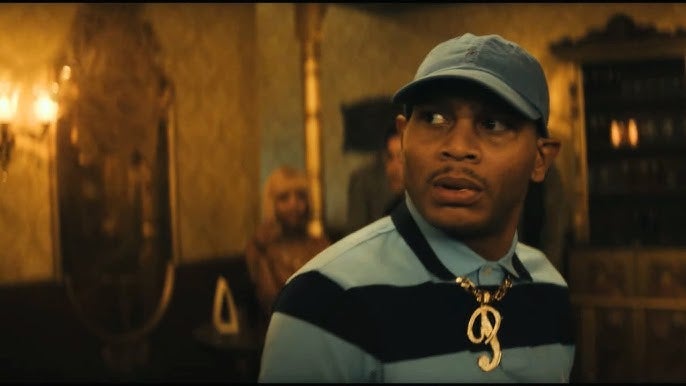
And with being the villain, I feel like you’re not usually playing that kind of character. I’m wondering, as J-Pusha is going to become more of a main character in the upcoming episodes, what can you share about what is to come the rest of the season?
I can tell you it’s going to be a war. A little war. When you have two people in that way just clash heads, everything has to end. Something has to come to an end. I’m feeling like this is going to be the strongest season, especially since the other actors are getting better and better every year. I know a lot of them didn’t have experience when they first started, and it’s their first show, and I think this is probably some of the strongest performances from the other actors, also.
You can expect to see J-Pusha causing a lot of trouble. Shooting a good amount of people. I’m trying to think of anything that I’m giving away, anybody else’s storyline. But it’s almost over. Everybody’s almost made it through this season, and I think everybody’s going to be satisfied.
Is it going to leave people shocked at the end? Say, if it is the final season, do you think that fans are going to feel satiated?
You know, it’s hard to say.
Yeah.
And then the thing is, even if you give them something really good, they;re going to want more. You know? So it’s kind of a lose-lose. Either way, they’re going to leave people thirsty. But I’m pretty sure it’s going to be a very strong finish. My character is going to have people very much invested. Cause it’s already people telling me they don’t like the character because he’s trying to cross Meech. And I didn’t know how much y’all like Meech. I was like, “Oh, y’all like Meech? I thought nobody liked Meech,” but I guess they do.
And to your point earlier, me getting to play a bad guy, so to speak. Usually, I’ll play somebody who’s kind of conflicted. He might be a good soldier, but he’s given a bad order, or something along those lines. This one is like, I’m just the boss, and I just decide to be mean.
So it’s that type of fun for me. I don’t need too much motivation. Other than money, and sadism. Or the adrenaline rush. Usually, the theater kid in me always wants to have some type of redeeming quality for my character. I don’t think J-Pusha does.
That’s very telling. And did you have to get into that mindset of “Oh, this guy doesn’t have any redeeming qualities”—how do you fully embody this character?
You know what? Bodie helped me deal with what traits the characters have. Because when I first started doing Bodie in The Wire, I would think, “Man, this kid is just horrible.” Like, I just came from Oz. Now I’m playing somebody worse than him. But then as the arc started, and I started to learn more about him, I was like, “Oh, it’s not that. It’s just that, you know, he has to be this way because of the environment.”
So, with J-Pusha, I didn’t have to do any of that breakdown within myself. It was just that simple. It was just more so, accepting this character. Just let it inhabit me, and just accept that the character’s just out for a very simple thing. And it just made it very easy. What helped me get into the role was when I put the grills in my mouth. That was most of the transformation right there. Because the grills would make me remember the accent, and keep it. It gave me a certain sound, like vocally.
A full transformation from the outside in.
Yeah, and then the clothes would get me back into my posture, and my style of wearing all of this Polo. Then adjusting the position of doing all of this hood stuff, and the $300 shirts just because. So the grills, the clothes, the jewelry, the glasses. Once I put on the costume of J-Pusha, that was pretty much him. He was there.
I can see what you meant by it being surprising that people who know you weren’t sure it was you on the show. You fully embodied that character and transformed, and I can imagine a lot of people have had a hard time distinguishing you from the characters you’ve played in the past.
Sure, right. A lot of the time.
So, I’m curious, you have had such a long career and a lot of past roles. Are there any roles you’ve played that you’re not usually asked about or like to get to talk about that really impacted you afterwards?
Well, I’m a rambler. And by that I mean, work-wise, I like to keep going from one project to the next project to the next project if I can. Of course, the ideal thing would be to elevate projects every time if you can, but that doesn’t happen for everyone. But everything I’ve done is kind of a building step for the next thing, almost all the time.
And I have to thank HBO and Alexa Vogel a lot for that. Because once I got Oz, that kind of fed right into The Sopranos, which fed into Sex And The City. And the creator of The Wire, he wrote the book Homicide: A Year on the Killing Streets, and the show Homicide: Life on the Street, is a cousin to The Wire. So, doing The Wire, a lot of us would end up on Homicide: Life on the Street.
It was a lot of things that kind of bleed over, and go into the next thing. Personally, I like to look for work that, number one, I would like to do. Number two, if it has standing power. If it can be classic. If it can be very well done, that’s great also. If you can challenge me a little bit, I don’t mind that.
Looking at your film list, it reminded me of all the other things I’ve seen you in. The Good Wife and Law & Order SVU. Then I saw The Following which l feel like not many people were big on that show and I was a big fan.
I forget that I was in The Following all of the time (laughs). And people are like, “What did you do?” I’m like, yeah, I had a fight with Kevin Bacon. I forget that all the time.
Casual.
You know that’s why I said, the work is important to me. So, just keep going on.
I wish a lot of time that I would just stop and reflect for a minute. So that I can organize this stuff. That’s a great example, even in The Following, it’s sometimes you’re there and you just move on. I was on All My Children for a while. The list goes on and on.
I’m so glad we’re talking about this because as I was preparing I thought, what can I ask him about that is going to be different than the usual question he’s being asked? I wanted to give you your flowers as someone who has been a part of such penultimate shows that are specifically iconic in the Black community, as well as Black culture. I’m wondering, having such a long-lasting legacy and fans that have been with you over these two decades, is there anything you’d like to say to your supporters and fans?
First of all, I want to say thank you to anybody who’s supported me and watched me. Whether it was commercials, to ads, all the way up to now. You took the time to like my characters, or remember my actual name, or talk to somebody else about me and my performance. I want to say thank you, and I can promise them that I will always give them my best foot, and always give them something interesting to watch. And just continue to improve on myself as much as I can. Because without them, it would be no point. I’m a theater actor first, so you always need somebody to watch, and those people watching, you want them to enjoy, so that’s number one.
And even to the other great people I’ve had a chance to work with, work around, you know, just being able to share that energy in those spaces with them. Ernie Hudson, or Rita Moreno, or Glynn Turman. Just getting to work with all of these legends that were here way before I was here, and me to absorb what they’re doing, to see their energy, get their energy from them, and the same for me. For them to be my fan, it’s like I get to be a fan of a lot of the people that I end up working with. So, I can understand the appreciation, and so I appreciate the appreciation, you know?
Before I let you go, I have to ask, are there any roles and work that you haven’t had a chance to do yet that you would like to see in the future come up for you?
Oh, for sure. I really would like to do a sitcom. Playing like a crazy father or a great uncle, a crazy uncle. I would love to work with David Alan Grier one day—I’ve had a chance to meet him very briefly. And of course, you know, you have Marvel and DC floating around and I know a lot of Black creators that are creating superheroes also. So, when it’s time to do an action movie or a hero movie, I’m down for those also.
And my daughter, she acts. So, if my daughter decides to go down this road, I would love to be on whatever show she’s on.