
When IT: Welcome to Derry premiered, it didn’t arrive with the usual expectations of a legacy horror project. Prequels tend to feel like homework, or worse, fan service stretched thin. Instead, the series became one of the most compelling surprises of 2025. By the time the season finale aired last night, it was clear the show had earned its place—not just within Stephen King’s universe, but as a standalone story with real substance.
Set in 1962, Welcome to Derry understands that fear doesn’t live in isolation. Pennywise may be the entity lurking in the shadows, but the show is just as interested in the very real dangers of American life. Racism, abuse, mental health, and institutional silence all sit at the center of the narrative, often with more weight than the supernatural horror itself.
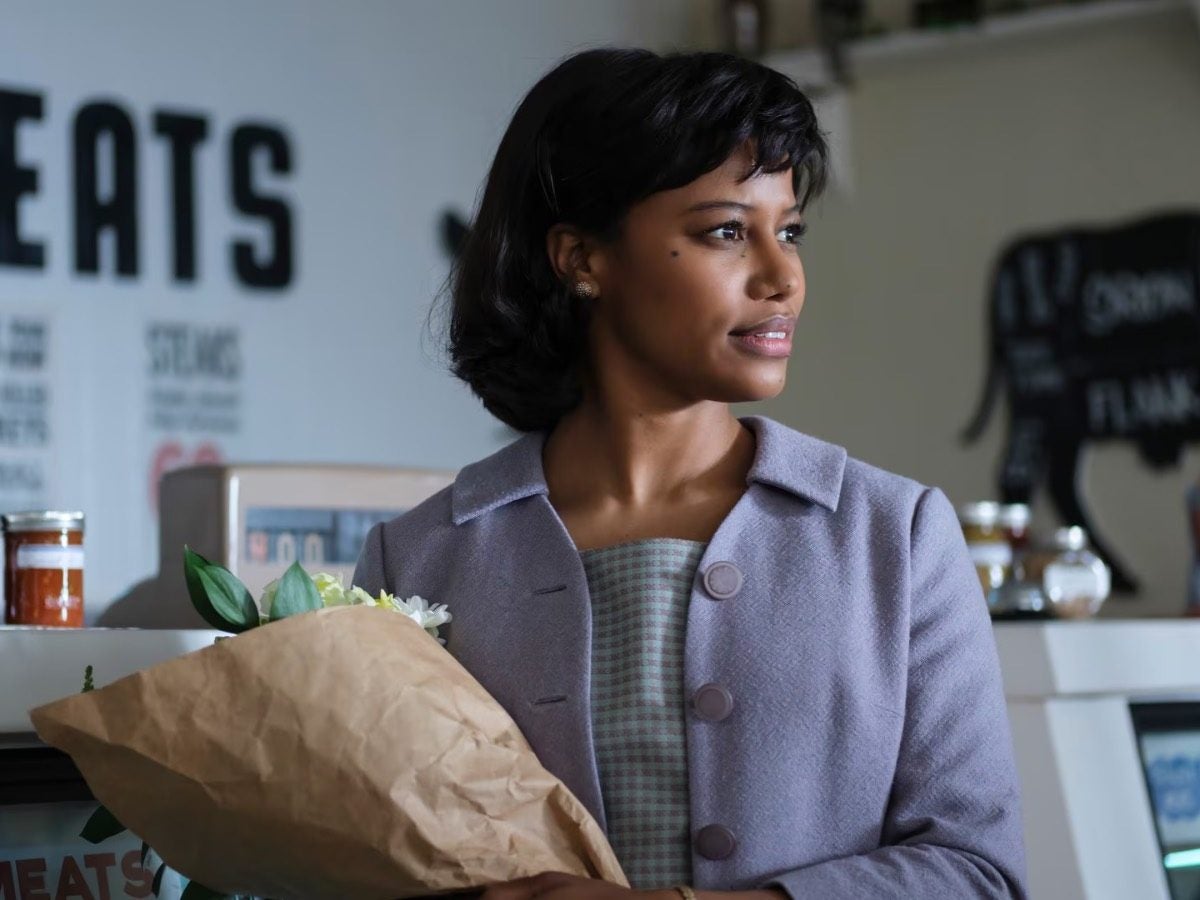
From my perspective, the Hanlon family serves as one of the emotional anchors of the season. Taylour Paige plays Charlotte Hanlon as a woman who refuses to bend, even when the town of Derry makes it clear that standing up will cost her. Alongside Jovan Adepo’s Leroy Hanlon, a decorated Air Force major, and Blake Cameron James’ Will, a curious and isolated kid struggling to adjust, the family becomes a lens through which the show explores how Black families were forced to survive hostile environments without protection. Their presence in Derry is constantly questioned, scrutinized, and even threatened.
One of the season’s most devastating storylines centers on Hank Grogan, the Black projectionist at the local movie theater who is blamed for the brutal murders of children in the pilot episode. The audience knows the truth: Pennywise is responsible. Derry does not care. Hank becomes a scapegoat, despite having an alibi, echoing a familiar American pattern where innocence offers little protection. Charlotte’s role in his survival is crucial. She challenges the police, protects his secrets, and ultimately helps him escape a town that would rather destroy him than admit the truth.
The series also weaves in a surprising connection to King’s larger world through Chris Chalk’s Dick Hallorann, a character longtime fans recognize from The Shining. For Paige, she sees the series as part of a larger artistic responsibility. “It’s exhausting,” she told ESSENCE, reflecting on how much of the show still feels relevant today. “But I think being an artist is such a privilege because we get to illuminate what was, what is, what we still need to confront.” As the season closes, the show leaves behind more than jump scares. It leaves questions that linger, long after the credits roll.
In this edited transcript of our conversation, Paige discusses what it was like entering Stephen King’s vaunted IT franchise, working with writing duo/couple of Andy and Barbara Muschietti, and the dark parallels between the town of Derry, Maine in the 1960s, and now.
ESSENCE: I want to talk to you about the character of Charlotte Hanlon. What was it about her that intrigued you?
Taylour Paige: Well, I really, really loved the filmmaker, Andy, first and foremost. But these siblings, Barbara and Andy, they just radiate such love and they know the material and they love Stephen and the meeting was just so good. They told me about Charlotte, but there was so much freedom in how she was presented. It was collaborative, and they told me it was a period piece, so I love that. She’s a Southern woman in 1962, so you already have so much texture. My grandmother was probably my age during that time—and I also think about women like Diana Ross and Betty Davis. I just felt like I got to take all these women that I love and admire and who were delicate and their presentation, and I just remixed who Charlotte was.
I imagined Charlotte ironing and watching things at home while she was home waiting for Will to get home from school and I just had so much fun just with specifics, just imagining her world and how she sees things, and a woman that had to suppress things, and was a homemaker—but she took pride in that. I worked from my feet up. I’m a dancer first, so I always think about how someone walks through the world. Again, there’s just so much texture when you’re a 1962 Southern woman. It’s a very specific time in America, a very specific time to be a woman, to be a Black woman. So that all informed it, informed my choices for Charlotte.
You brought up you being a dancer, and you said it “informs the way that you walk through the world.” Can you expound on that a little bit for me? I thought that was interesting.
Well, because I’m a dancer, I think I’m really conscious of the way that I walk because I was classically trained in ballet first, jazz, Dunham and flamenco. When you’re walking as a human being, not a dancer, I don’t think people are as conscious of the way that they walk. When I approach a character, it’s always something I think about, if I need to undo a little bit, if I need to loosen up a little bit. I think dance really informs how I work, but in this case, I literally thought about Charlotte’s clothing before I even put on her clothing, like starch and the brassieres are pointy and the heel size and the tights or the pantyhose and the skirts. Women were just starting to wear pants during that time.
There’s so much symbolically happening. There’s so much unsaid, but so much being said. There’s so much that goes all into the way someone would walk, someone would take up space, someone would not want to draw attention, someone who’s polite, someone who’s careful with how she pronounces things, depending on the space. When she’s going to order meat for her family to cook and she’s in a white establishment, what that looks like, “I don’t want to draw attention. I’m just here to do what I have to do and I’m going home,” and then what that’s like when she’s marching in the street because she’s this activist and teacher and has these dreams of just offering something to her world. All of that is in the way someone walks, or so I thought.
No, that’s beautiful because you’re right. Same thing with breathing. You don’t really pay attention to your breath cadence, but it’s still happening. That’s a very, very interesting point. I never thought about that.
Thank you.
In IT: Welcome To Derry, Charlotte goes through a whole lot in this series as a wife, a mother, and as a Black woman as well/ Is there any part of her journey that resonated with you the most?
I think it would be just unraveling quietly and feeling like you have no outlet. I’ve had these moments in my life where I have an intuition or a sacral sense that something is not right or that I’m right about something and people around me are making it so that I doubt myself or doubt what I feel. That’s a really weird dissonance, a really weird place to live with people that you trust and love, basically making you feel like you’re crazy and you deep down feel and know that you’re not crazy. You feel something and you don’t know exactly what, but you just have an instinct, and that is such a lonely place. I’ve been there where it’s just really lonely. It’s very isolating to feel so much and be made to feel like you’re crazy, and I guess in many ways just gaslit, what that does to the psyche, your confidence, to your self-trust, and figuring out the ways in which to bring something up when you really can’t. You can’t stop ruminating, and when you just are quiet to keep the peace.
I related to Charlotte in this sense. There’s this scene in episode four where her husband is like, “Why were you in town? You promised you wouldn’t cause a ruckus,” and she gives pushback because she feels passionate and she feels like she has so much to offer, which she does. He basically is like, “Please, stop with the bullshit.”
She has this moment where I feel like if she could, she’d probably throw all of the plates, scream and run out of the room, but instead has to be like, “You don’t have to worry about me,” and then goes back to setting the table. Between what is said and what’s not said, there’s just so much, and it’s heartbreaking.
You spoke about Andy and Barbara Muschietti earlier. What was it like working with them on this particular project?
Terrific people. They’ve got integrity and morale and they’re funny and they care so much about people. I just really love being around people who care. They make it feel like a family. They’ve spent a lot of time in this universe and with Stephen [King]. There’s a sense of trust, and they’re elevated in the way they work. It’s inspiring.
I’ve always admired your versatility in the roles that you’ve played. I recently watched Magazine Dreams, which you were great in, as well as Beverly Hills Cop. How do you go about picking your roles and what roles work for you at this time in your life?
I love that question. Honestly, it’s just a feeling. I think for a long time, or at least recently it’s been, “I really love this script.” Then, it’s, “I really love this role.” Once I’ve read it and I’ve read the entire thing, I like the message, I like what it made me feel, but I think overall it’s just a feeling. I think now, where I am now, I think that it is filmmaker-driven. It’s like, “okay, this filmmaker has a through line of intentions, a through line of these things that inspire me.” I guess I go off of what I’d like to see in the world.
I like when I leave a film and I’m still thinking about it. I like that I’m still writing about it. I like that I’m praying about those same questions. I like when there’s resonance in that sense. That’s how I go about it. I also like to challenge myself and try to keep things different. So it’s all of that, but it’s really just a feeling.
The series is based in the 1960s—and watching it, it’s disheartening to see how many things remain the same today. How does that make you feel?
Well, it’s the human condition. It’s exhausting, but I think being an artist is such a privilege because we get to illuminate what was, what is, what we still need to confront. Obviously, I wish we lived in a world where this wasn’t it. I just think I’m in resistance and I’m in acceptance at the same time all the time, because this is the world we live in, this is the realm we’re in.
I know what’s right and I move in a way that, at least I try to move in a way that’s for what’s right. I move to put beautiful things into the world. Sometimes the process is ugly, but I always pray, keep my intentions pure. I keep my thoughts pure, and my work pure to just put good things into the world. I think that as we go towards the light, there’s always going to be more darkness. That’s just the equilibrium of the world we live in. Though it’s frustrating when you get material that reflects where we’re at in 2025, where we’re at, where you’re like, “Really? We’re still doing this?” But as we continue to go towards consciousness, what is unconscious will also show itself.
So that’s where our work lies. That’s what we write about. That’s what we sing about. That’s what we act about. I’d like to think that the human spirit is so resilient that people before us, that came before us, it’s all for something good eventually, and it’s maybe not in linear timing, but in a quantum sense. I like to think of things going on like it actually in a multidirectional sense that we’re doing good work for our past, for our present, for our future, for the sideways, for all. Hopefully one day it just pops. It just clicks. And then I don’t know what we’ll sing and write and act about. It’ll be the glory and the joy, I guess, which sounds pretty good to me.