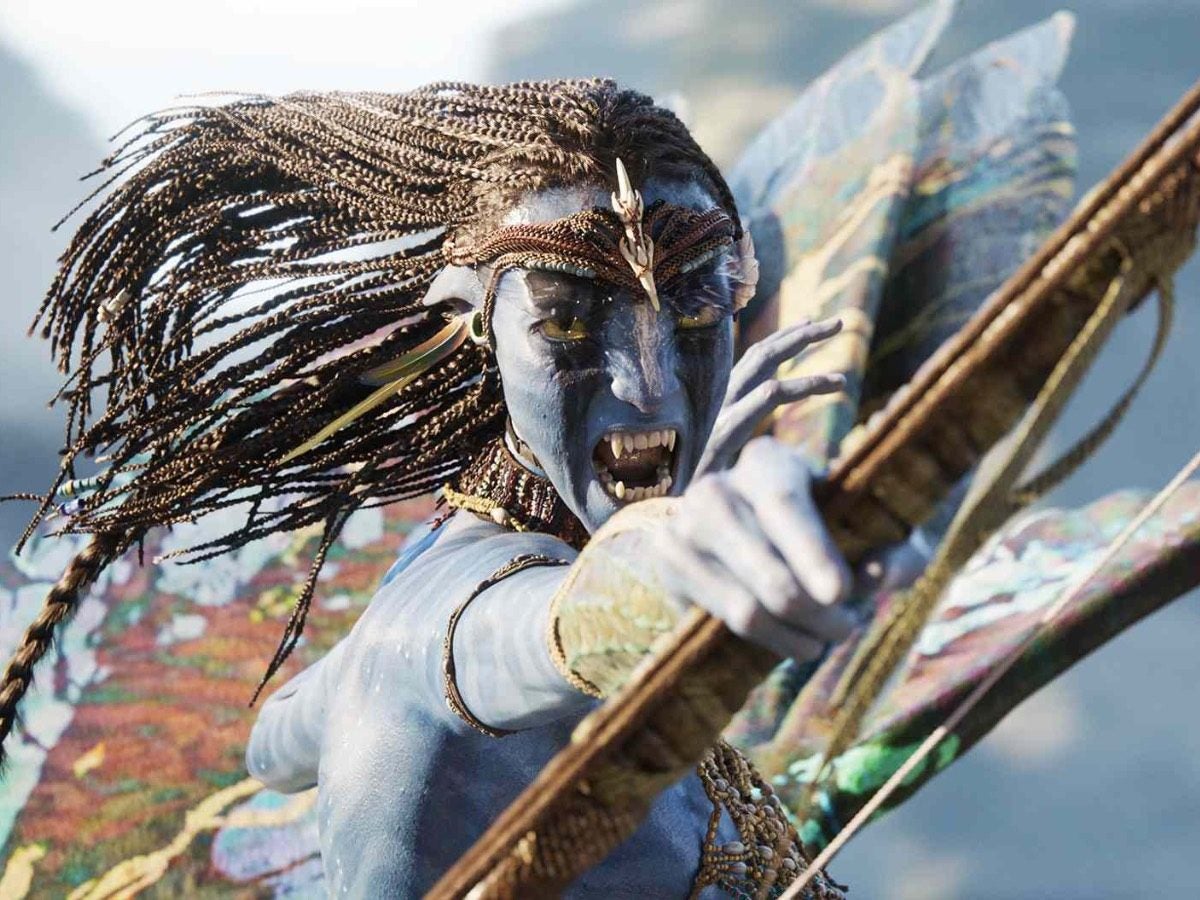

Since the digital age came to be, it can be argued that the industries of television, film, and music have been most affected. As far as movies go, you really have to want to see something to get up, go to the theater, and pay your hard earned money (and downright disgusting prices for candy and popcorn) to sit in front of the big screen for a few hours. Because of which, there hasn’t been as many huge films at the box office, especially in recent years. That’s something you can’t say about the Avatar franchise. The first film became the highest-grossing film ever as far as pure dollars, and the second was met with rave reviews. Now, James Cameron is expanding his record-breaking series with Avatar: Fire and Ash.
The third installment of the Avatar universe arrives with a different kind of weight than its predecessors—it opens in grief. When the film begins, Jake (Sam Worthington) and Neytiri (Zoë Saldaña) are still reckoning with the death of Neteyam, and their world feels a bit more dangerous because of it.
For Saldaña, returning to Neytiri at this point in the story meant stepping into unfamiliar emotional terrain. “It was heavy and heartbreaking,” she admits. “She’s experiencing a devastating sense of loss and she just doesn’t feel like she’s going to recover from this. Her heart is completely poisoned with hate. She’s just so unhappy and something that’s very unrecognizable, even to me.” Neytiri’s rage—particularly toward humans—becomes a central tension of the film, especially in how it fractures her relationship with Spider (Jack Champion), who reminds her of what she’s lost.
This time around, the emotional split between Jake and Neytiri is what drives much of the film’s plot. When their family crosses paths with the Mangkwan clan, also known as the Ash People, the conflict escalates fast. Led by Varang, the Ash People are brutal and merciless, burning human ships and killing survivors without hesitation. The violence forces Jake and Neytiri back into survival mode, while Quaritch resurfaces with his own agenda, blurring lines between enemy and uneasy ally.
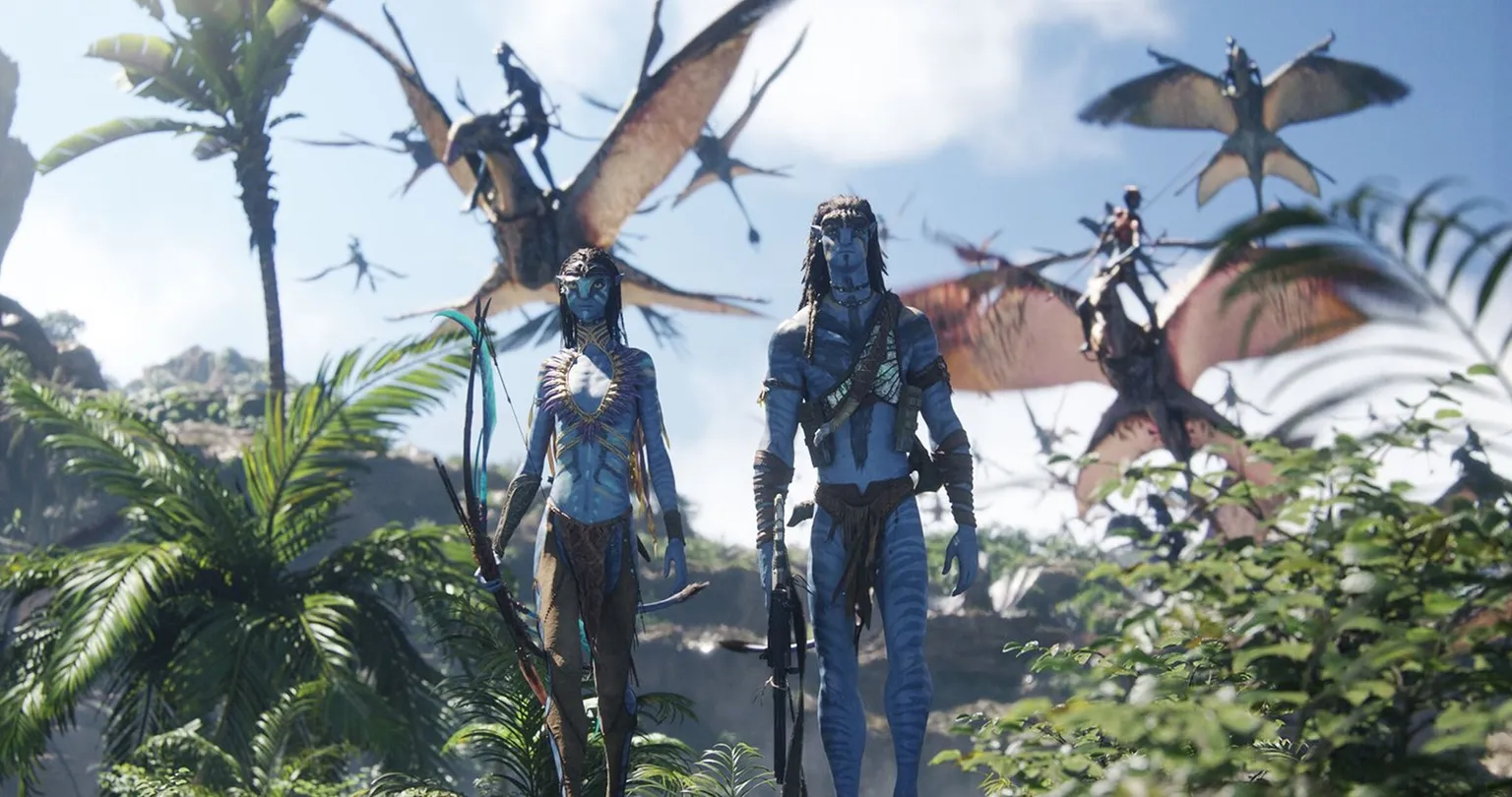
Despite the scale of the world, Saldaña says the work itself never feels overwhelming. “The enormity of what it ends up being in post is so not the feeling when you’re shooting it,” she explains. “Performance capture gives us the ability to be intimate, to only focus on the acting and the connection with each other. So if we fail—we fail forward, and you leave work with this deep sense of appreciation that you were part of a group willing to experiment to reach something special.”
For the younger cast, the environment curated by Cameron shaped how they approached their characters. Bailey Bass, who plays Tsireya, remembers the director’s presence. “He’s really authentically himself,” she says. “People see James Cameron as this huge figure, but we got to see him on a personal level. He told me, ‘Feel like nobody’s watching.’ That stuck with me.”
Trinity Bliss, who has grown up alongside the franchise as Tuk, credits the Terminator II creator with teaching her to trust her instincts. “He really taught me how to go for it,” she says. “To trust those impulses and your creative voice. When I was younger, I didn’t have a filter, and that helped. I think growing up, you forget that sometimes.”
As alliances shift and war looms, Avatar: Fire and Ash builds toward a massive final battle. Yet, the film’s most striking moments are led with emotion. Neytiri confronting her hatred, Jake choosing mercy over revenge, and Spider finding belonging in a world that never fully claimed him. Now, Pandora feels larger than ever, and as always, Cameron gives cinema that much-needed feeling of old. This is a film that invites audiences to show up, sit down, and experience it, together.