
Reading is fundamental. And for Black children? Not only is reading fundamental, it is also necessary. In a world where our youngsters are too often ignored, underappreciated or misunderstood, Black children’s books offer a welcoming sense of pride, assurance and the ability to freely dream for our babies.
The urgency to provide Black children’s books to our youth is even more apparent in light of recent book bans and DEI cuts. Wife, mother of two and children’s book author Victoria Scott-Miller recognized the situation firsthand and decided to proactively do something about it. In June 2023, Scott-Miller opened her brick-and-mortar bookstore, Liberation Station, in the downtown section of Raleigh, North Carolina—an intentional selection, because Black people were once forbidden from checking out books in the area’s library.
But in September 2023, Scott-Miller began receiving death threats coupled with online harassment and threatening phone calls—all related to Liberation Station. Understandably terrified, she closed the store to protect her and her family’s safety and peace of mind. The multihyphenate creator explains, “I want to be clear: we didn’t close because we were defeated. We closed because we were strategic. Because rest is resistance. Because sometimes you have to step back to step forward with more power.”
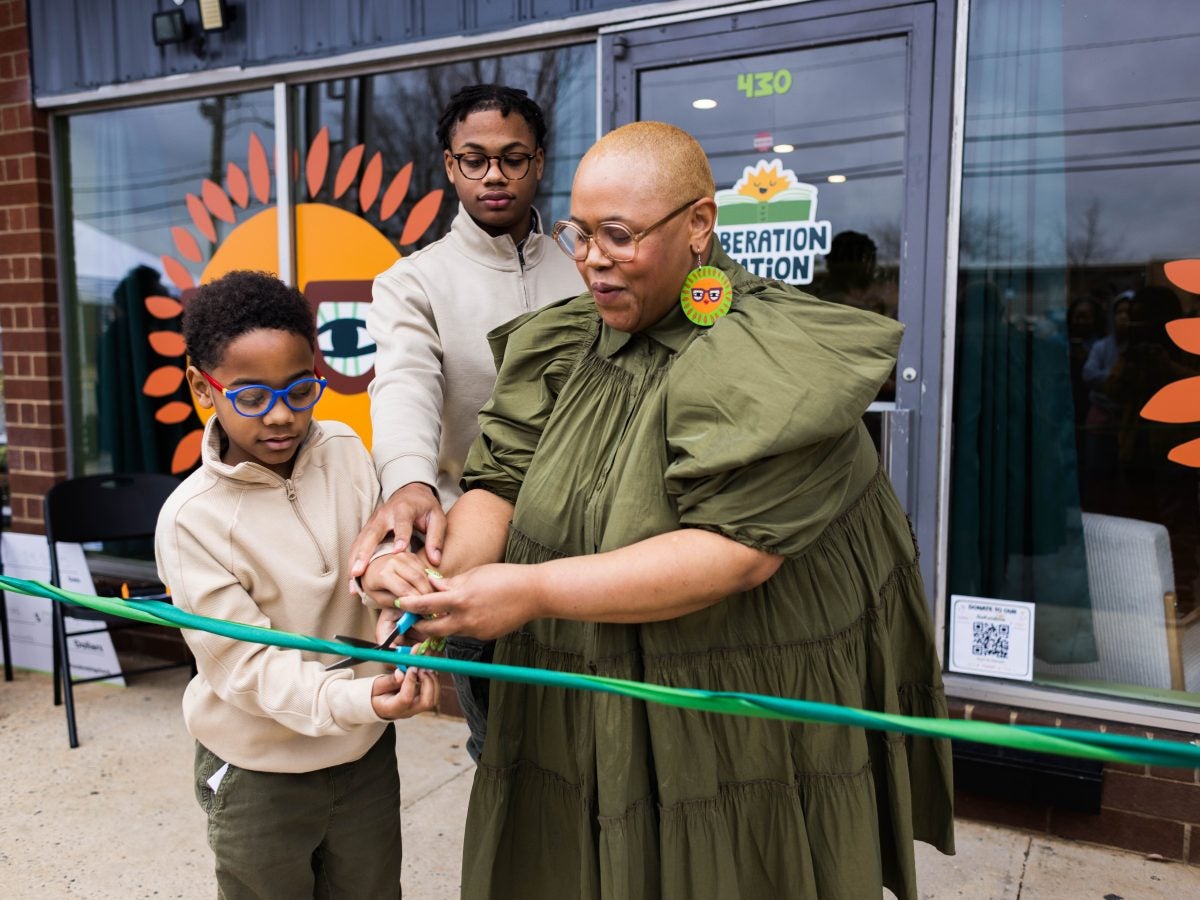
Last week, on the fourth day of Kwanzaa, Liberation Station officially reopened in Raleigh, North Carolina! We caught up with Scott-Miller to get the tea on what it took to reopen her doors, how her sons motivate her, and why Black people not only need and deserve books that reflect them and their experiences but also beautiful spaces to experience joy.
ESSENCE: What was your catalyst for opening Liberation Station?
VICTORIA SCOTT-MILLER: Liberation Station started in 2019 with a conviction that wouldn’t let me rest. The catalyst was a four-hour search through a national bookstore chain where my sons and I could only find five books that reflected us. Five. After four hours.
In that moment, I decided something: the love letter my children would inherit would be one of being seen always. Not occasionally. Not if they search hard enough. Not as an afterthought. Always. I refused to raise Black boys who had to beg for their existence to be validated in literature.
ESSENCE: So many Black parents experience this!
SCOTT-MILLER: We started as a mobile bookstore operating out of a 2011 Chevy Cruz. In 2021, I became the first Black woman to develop programming for the North Carolina Museum of Art in its 80-plus year history. That work deepened my conviction that we don’t just need access to existing spaces; we need to create our own.
In June 2023, we planted ourselves permanently on Fayetteville Street in downtown Raleigh—a deliberate choice, because Black people were once forbidden from checking out books at that very downtown library.
ESSENCE: It seems like it was and is more than a bookstore.
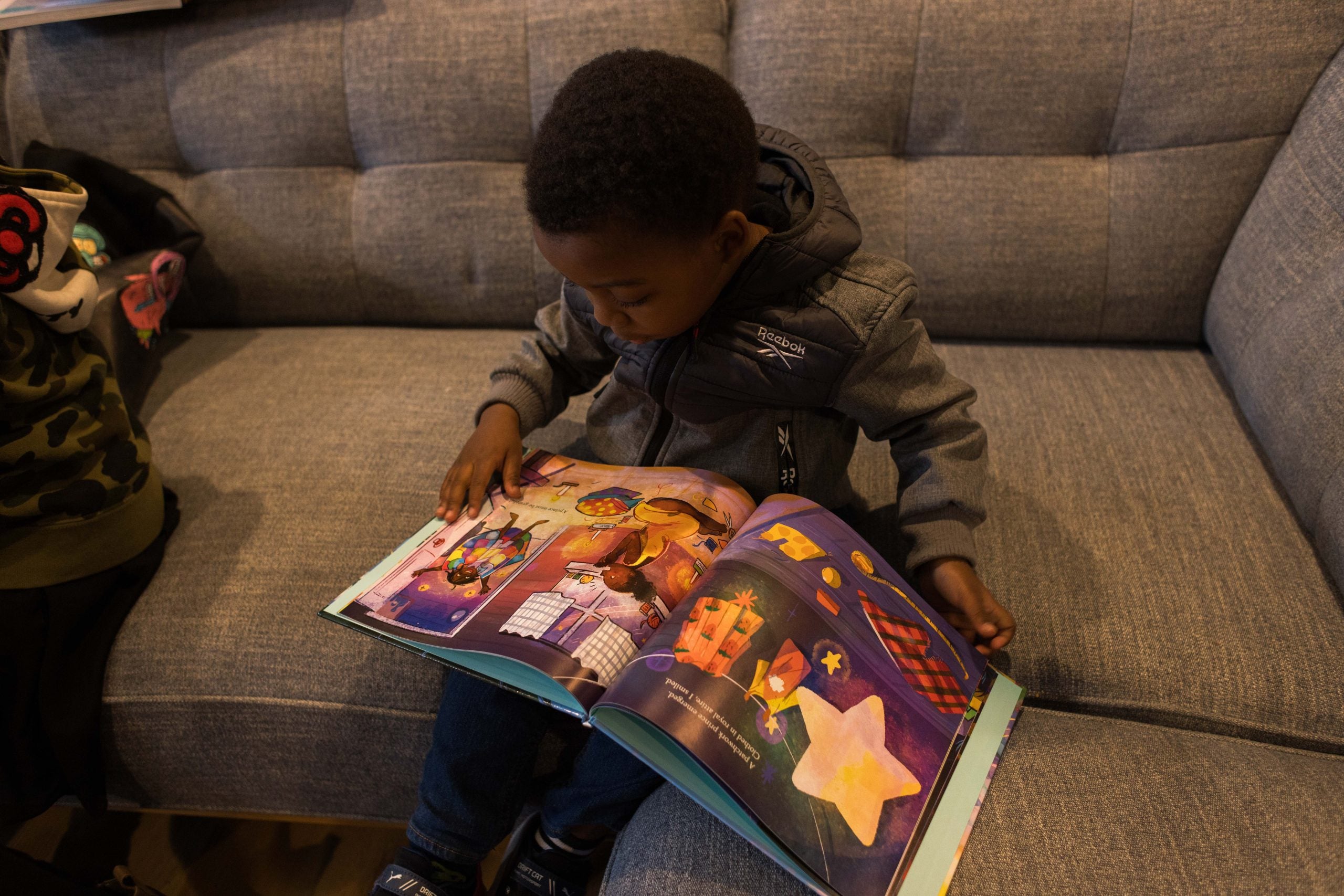
SCOTT-MILLER: Our community didn’t just need more bookstores. We needed—and deserved—more beautiful spaces. Spaces where Black children don’t have to search for four hours to find themselves. Spaces where representation isn’t optional but foundational. Spaces where every detail, from the sage-colored walls to the Braille affirmations made of mustard seeds, says: You belong here. You are art. You are seen.
ESSENCE: So, explain why it closed.
SCOTT-MILLER: We closed in April 2024 because Black liberation will always face opposition. Once someone called and described exactly what my son Langston was wearing while he was alone at the shop. We had to change our hours constantly, take turns at the store, live in a state of hypervigilance just to keep our family safe.
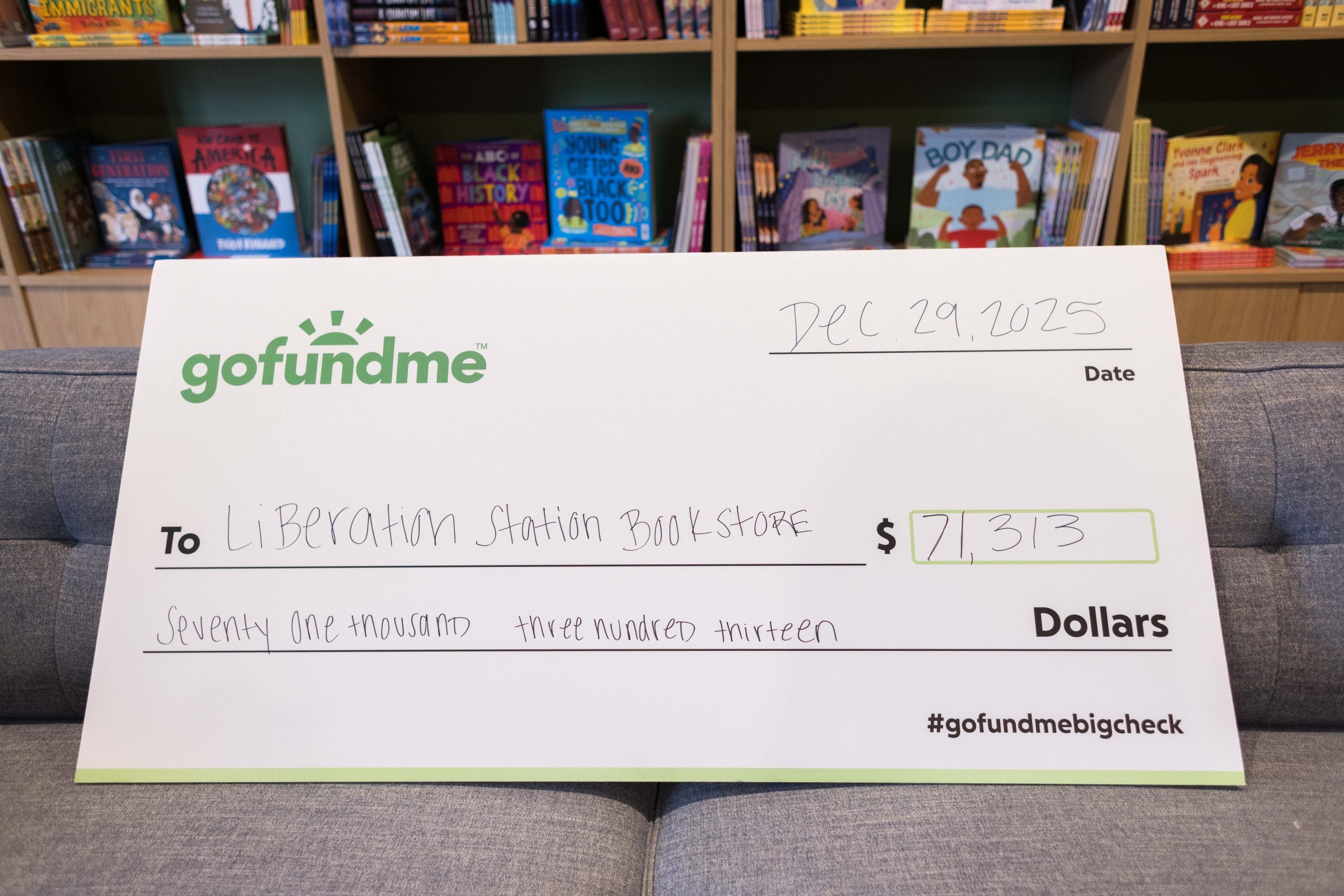
The Authors Guild condemned the harassment. Media outlets covered it. And our community refused to let Liberation Station die. They raised over $70,000—including a $10,000 donation from Tabitha Brown—to bring us back. That’s when I knew: this isn’t just my bookstore. It’s our resurrection.
ESSENCE: How have your sons impacted Liberation Station?
SCOTT-MILLER: My sons Langston, 15, and Emerson, 9, are my North Stars. Liberation Station literally exists because of them. That four-hour bookstore search in 2019? They were with me. When we opened the brick-and-mortar in 2023, they hand-selected books for the shelves. They’ve always known: this isn’t my bookstore. It’s ours.
Emerson was diagnosed with autism and had significant speech delays. I didn’t hear him speak until he was 5 years old. But I learned he loved trains, which is why we’re called Liberation Station—because stations represent mobility, movement, possibility. Emerson reminds me every day that representation includes disability justice. He needs books that honor how he experiences the world.
My sons taught me that this work isn’t about what I think children need. It’s about listening to what they’re telling us they need. And what they need is to see themselves—fully, joyfully, complexly—in every story.
ESSENCE: What can we expect next from Liberation Station?
SCOTT-MILLER: 2026 is our year of “Through Our Lens”—a theme that centers Black perspective, Black storytelling, Black authorship of our own narratives.
We’re launching programming that includes intergenerational storytelling sessions in our podcast studio, where elders and children archive family histories together; author events and book signings; Black Lit Libraries in partnership with schools, museums and community organizations; Braille literacy programming; monthly prayer circles (third Sundays at 6pm); and a youth curators’ program where young people select inventory and design displays.
We’re also deepening our community care work—providing not just books but resources, refuge and radical hospitality through our pad pantry, food pantry and diaper pantry. You can’t focus on literacy if you’re worried about your next meal. Liberation is holistic.
ESSENCE: Amen! Now we must know: What are your favorite Black children’s books?
SCOTT-MILLER: Anything by Derrick Barnes, Jacqueline Woodson, Jason Reynolds, Kwame Alexander, Vashti Harrison and Ibi Zoboi. I’m also an author published by Simon & Schuster (At Night They Danced, Miss Edmonia’s Class of Wildfires, and The Museum Lives in Me® series). Writing children’s books and running Liberation Station are the same work—ensuring Black children see themselves as protagonists in every story.
ESSENCE: Anything you want to add?
SCOTT-MILLER: Liberation Station sits in Raleigh’s Oakwood District—land that carries the full weight of our history. We are literally on former plantation land. That’s not incidental—that’s intentional. Where there was once bondage, there is now liberation.
We’re surrounded by Black-owned businesses that anchor this community, among them are White’s Barbershop, which has owned their property for the last 100 years and has been a Raleigh institution since 1967. This is what love looks like when it refuses to be silent. This is what community looks like when it chooses itself. This is liberation work.
And we’re just getting started.