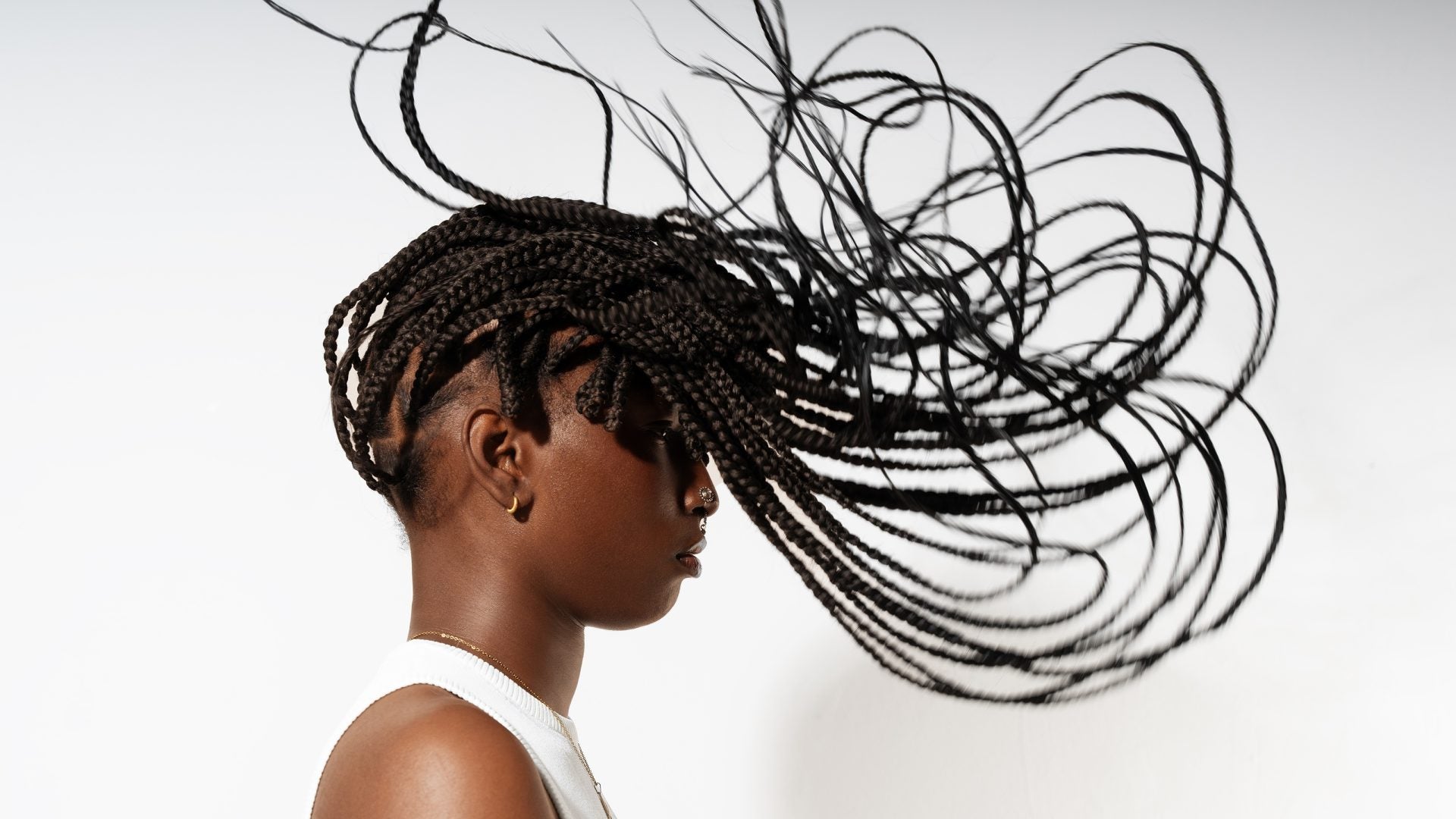

Sitting at the kitchen table getting your hair braided is a tradition that doesn’t end when you grow up. But, the pain associated with it finally can. “[We] do any and everything we can to eliminate pain from the Black hairstyling experience,” says Abigail Opiah, co-founder of Unruly, a platform bringing braiders to you. “People don’t think it’s possible, but we think it is.”
How Black women feel about our hair is often established in the exact moment we start to grow it. But, when yanking dry hair is how we “detangle” it, relaxers burning our scalps is how we “manage” it, and getting traction alopecia from braids is how we ‘protect” it, our relationship with our hair ends up being defined by pain more than beauty.
“There is absolutely no reason your braids should be too tight that you have to take Tylenol after getting your hair done,” Opiah tells ESSENCE. For the past 10 years, Unruly has been growing as a platform that makes it easier for Black women to book hairstylists, find the best products, and all the right information for their hair texture.
But now, taking the pain away from getting your hair done is their new mission. In a 2020 short film with L’Oréal’s Dark & Lovely called Pretty Shouldn’t Hurt, Opiah spoke out about the effects of protective styles on Black women, like pain and traction alopecia. “People don’t realize if they’re not done correctly, you very well can lose your hair,” she says.
According to a study, 82 percent of Black women wear protective styles with almost half (39 percent) reporting they’ve had hair loss or thinning, and 72 percent knowing someone else who has. While you may deal with the pain to avoid wasting your money or because you grew up learning tighter braids last longer, Opiah says they no longer have to. And, better yet, you don’t even have to leave your home.
“What makes us different is we’re a closed platform,” she says. Unlike StyleSeat which requires you to comb through reviews to find a hairstylist often working in a salon, Unruly exclusively offers at-home appointments with every stylist licensed, vetted, and sourced by the platform. “When you book an Unruly stylist you know whoever you’re getting is good,” she says. “They do a phone interview, they have to do demos, they do test appointments, all before they’re invited onto our platform.”
Training almost 30 hairstylists across NY, NJ, DC, and LA, investing in painless hair braiding doesn’t end with just the braider. According to a Consumer Reports study, cancer-causing carcinogens were found in 10 of the most popular braiding hair brands. With the rise of non-toxic braiding hair, like Rebundle, Ruka, and Dosso Beauty, “we launched a hypoallergenic braiding hair line which is bundled when you book a style,” says Opiah.
Turning the tradition of home hair braiding into one without pain, the culture of Black hair can finally be easy. Because of Unruly, “the future of braiding is going to be more responsible.”