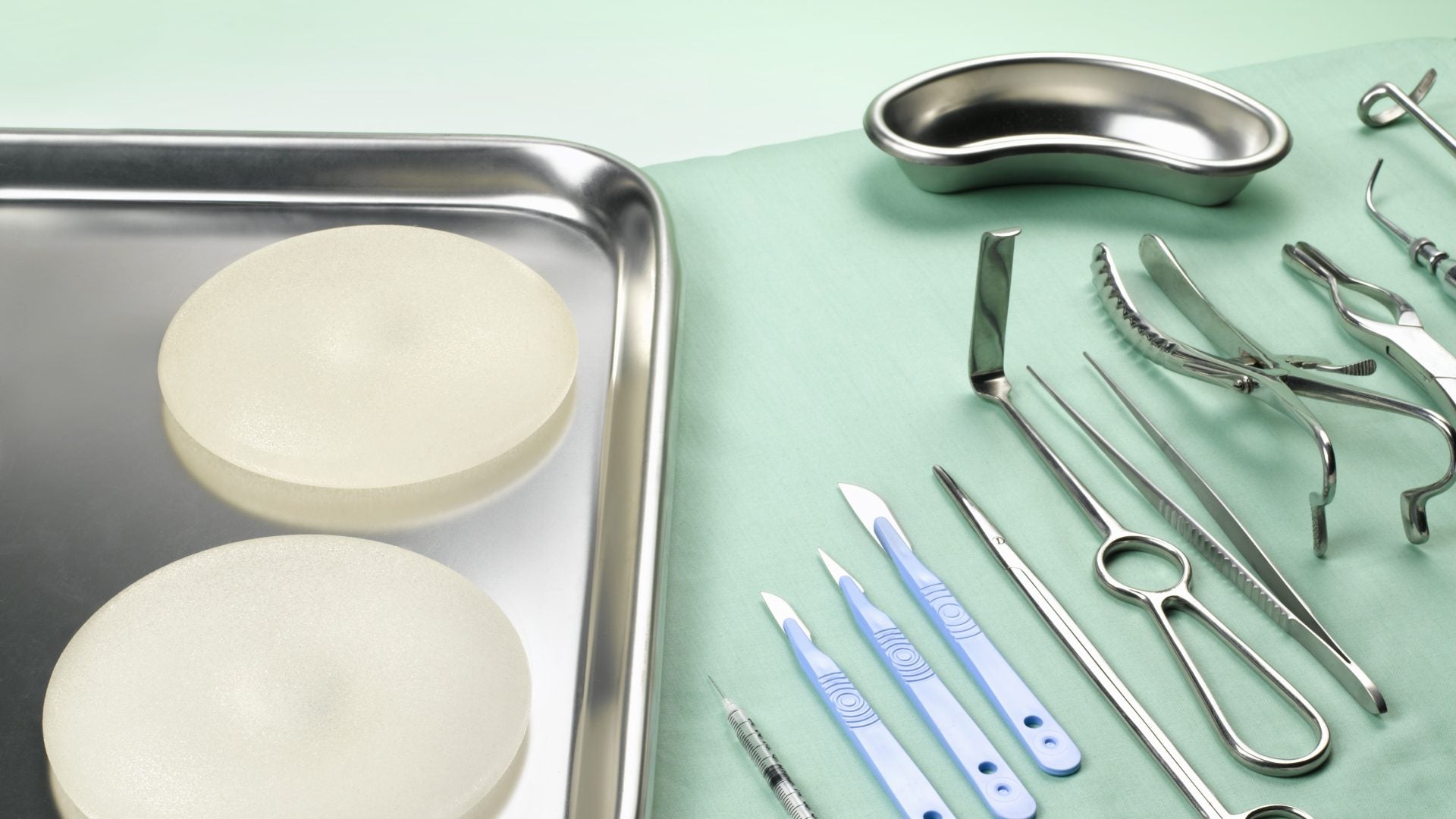

In 2025, everyone started being more honest about their plastic surgery. In part, because it’s getting harder to tell who’s had what done. Women are getting a rise out of being able to plausibly deny getting anything done at all, but instead, choosing to deliver the shock that they’ve actually been under the knife multiple times. And, breast implants are now at the center of it all.
Will they feel real? Will they look fake? Too big? According to Dr. Ashley Steinberg, board certified plastic surgeon and Natrelle partner, these are the most pressing questions patients ask to make sure their breast implants look as natural as Kris Jenner’s facelift. This is because, in 2026, facelifts aren’t the only major surgery reaching into the undetectable deep plane.
“Just like the ‘deep plane facelift’ took over facelifts, the ‘deep plane breast implantation’ is going to take over breast augmentation,” says Beverly Hills plastic surgeon Dr. Daniel Gould, MD, PhD. “They didn’t just redesign the implant; they reinvented the entire breast-augmentation process.”
Ahead, plastic surgeons break down the deep plane breast implant and why it’s considered breast surgery’s “greatest innovation” in the last 20 years.
What are deep plane breast implants?
To understand what a deep plane breast implant is, we first must understand what “deep plane” even means. “The ‘deep plane’ of the breast is like the deep plane of the face,” Gould says. In the face, it’s a term used to describe the lifting and repositioning the deeper layers of muscle, fat pads, and connective tissue, instead of just the skin.
If you think of your face like a bed, traditional facelifts pull and tighten just the skin (or “duvet”), while the underlying structure (or “mattress”) of the face still sags. This is what causes that “pulled” look in traditional facelifts. Deep plane facelifts, on the other hand, target the foundation or “mattress,” which lifts and repositions the face on a deeper layer, resulting in a more natural look.
Similarly, deep plane breast implants are placed on a deeper level than other implants. “The implant is placed inside the breast above the muscle and beneath the breast gland—essentially in the natural plane where the breast is designed to sit,” explains Gould. “I like to call this the deep plane of the breast, because just like in facial surgery, it’s a natural anatomical plane where tissues glide freely. That’s why it’s such a good location.”
How are deep plane implants different from other implants?
With over 210 new patents and several dozen innovations that helped it receive FDA approval, “deep plane implants differ based on their composition, shape, outer shell, and internal silicone material,” he says. But, “one major advancement is the improved outer shell” he says of the implants engineered by Motiva technology.
According to Gould, the outer shell has six layers (compared to the usual three), making it much more resistant to fracture over time and the mandrel—the “stamp” used to form the shell—is beveled so it’s less likely to rupture.
As for what gives it its natural appearance, “the implant is ergonomic, meaning that once inside the body, it naturally settles into a teardrop-like shape,” he says. “They also created a new type of silicone that flows freely while maintaining its natural shape. This makes the implant both durable and extremely natural in feel.”
What are the benefits of deep plane breast implants?
Although plastic surgeons are moving towards smaller, move natural-looking implants, the position of the deep plane means patients can get more visible volume with a smaller implant. “The space is tight and supportive, which pushes projection forward,” he says. But, the benefits are more than just cosmetic.
“Placing an implant in a space that is naturally resistant to scar tissue helps reduce complications,” he says. “Positioned under the breast gland and above the muscle, the implant doesn’t move when the muscle contracts. It moves naturally with the breast.” It’s also worth noting the deep plane is also a bloodless plane, so bleeding is minimal.
“There are no nerves in this area, which allows for significantly less pain and enables patients to have the procedure awake or with light sedation,” he says. “Overall, the space itself allows for a better, faster, and less traumatic surgical experience.”
What to Expect During Consultation and Surgery
“A consultation for this procedure is very different from a traditional consult,” Gould says. In fact, you won’t even talk about “implant size” at all. Instead, “we speak in terms of ‘final breast volume’, which is far more accurate,” he says. “This avoids outdated conversations like comparing one patient’s implant size to another without accounting for starting tissue.”
In a deep plane breast consultation, there’s also no need for traditional intra-operative sizing, sitting the patient up, or even extensive adjustments. Instead, using computer-guided imaging so patients can see their bodies in 3D, they digitally try on different breast implants to help guide volume based on the patient’s anatomy.
“Most women want to be around 480–500 cc total breast volume, which is about a full C cup,” he says. “If a patient already has 200 grams of native breast tissue, we plan accordingly to reach her goal volume.”
Then, the insertion process begins:
- We start with ultrasound to identify the precise plane.
- We inject local anesthetic to numb the area so the patient is comfortable.
- We use a trocar — a purple tube with a pointed tip — to create a pathway.
- We then insert a balloon dissector, identical in diameter to the implant’s base.
- The balloon is inflated to about 160 cc or more, gently spreading the tissue without cutting.
- After the space is created, we insert the implant through a 2 cm incision using a Keller funnel or colored funnel.
- The incision is closed with just a few sutures.
How does deep plane recovery compare to other implants?
Back in November, Simone Biles detailed her difficult recovery after getting below-the-muscle breast implants. Although Biles, who says she couldn’t even get up to use the bathroom after, had a harder time than most due to her muscular build, Gould says deep plane recovery is much more casual.
“Some patients get a pedicure right after surgery or fly home the next day,” he says. In general, “patients can resume most normal activities immediately and can begin working out in 1–2 weeks” with the implants full settling in at about three months.
Recovery is also less painful than other implant techniques because “the muscle is not manipulated and local anesthesia is used, so patients avoid the typical pain associated with muscle-based augmentation,” Gould says. “Many return to work or daily life the same day.”
However, Steinberg notes “it’s important to remember that [breast implants] are a surgical procedure with associated risks and a healing period.” So, even if you opt for deep plane, you should still expect to ease back into the fold—not rush.
How much do deep plane breast implants cost?
“Breast augmentation without any lift can cost anywhere from $6,500 to $8,500 in my practice,” says Steinberg. “This depends on the type of implant, and whether it’s a first surgery or an exchange.” However, Gould points out traditional high-end augmentations in Beverly Hills can reach as high as $12,000 and $15,000 dollars.
But, if you upgrade to deep plane breast implants, the price will cost you a pretty penny. “They cost more than traditional implants—typically around $20,000, especially in high-end markets,” says Gould. This is because the procedure uses a pricier implant, advanced materials and devices, highly precise technology, and a surgeon with specialized training. (Only about 36 plastic surgeons in the U.S. currently perform the procedure, which makes it high demand.)
What are the risks of deep plane breast implants?
“These implants are considered among the best options available today, but like all surgical devices, they carry risks,” says Gould. “Even with low rates of capsular contracture or rare conditions, risks are never zero.”
Like other implants, infections, bleeding, and other complications can lead to having your implants removed. Meanwhile, life changes like pregnancy, weight fluctuations, and aging, may necessitate lifts or revision surgery later. “Thorough discussion, informed consent, and choosing a qualified board-certified plastic surgeon are essential,” he says.
Steinberg also notes implants aren’t lifetime devices. “On average they last about 10 years, but there are reasons where you would need to get them changed sooner,” she says. “There’s also a chance of complications like capsular contracture, rupture, or changes in sensation.”
Who should avoid breast implants entirely?
While cosmetic surgery patients are only getting younger, Steinberg says there are obvious age restrictions. With traditional implants, like Natrelle, “saline implants are indicated for women 18 and older, and silicone gel implants for women 22 and older,” she says. “They’re [also] not recommended for patients with active infections, untreated breast cancer, or for those who are pregnant or nursing.”