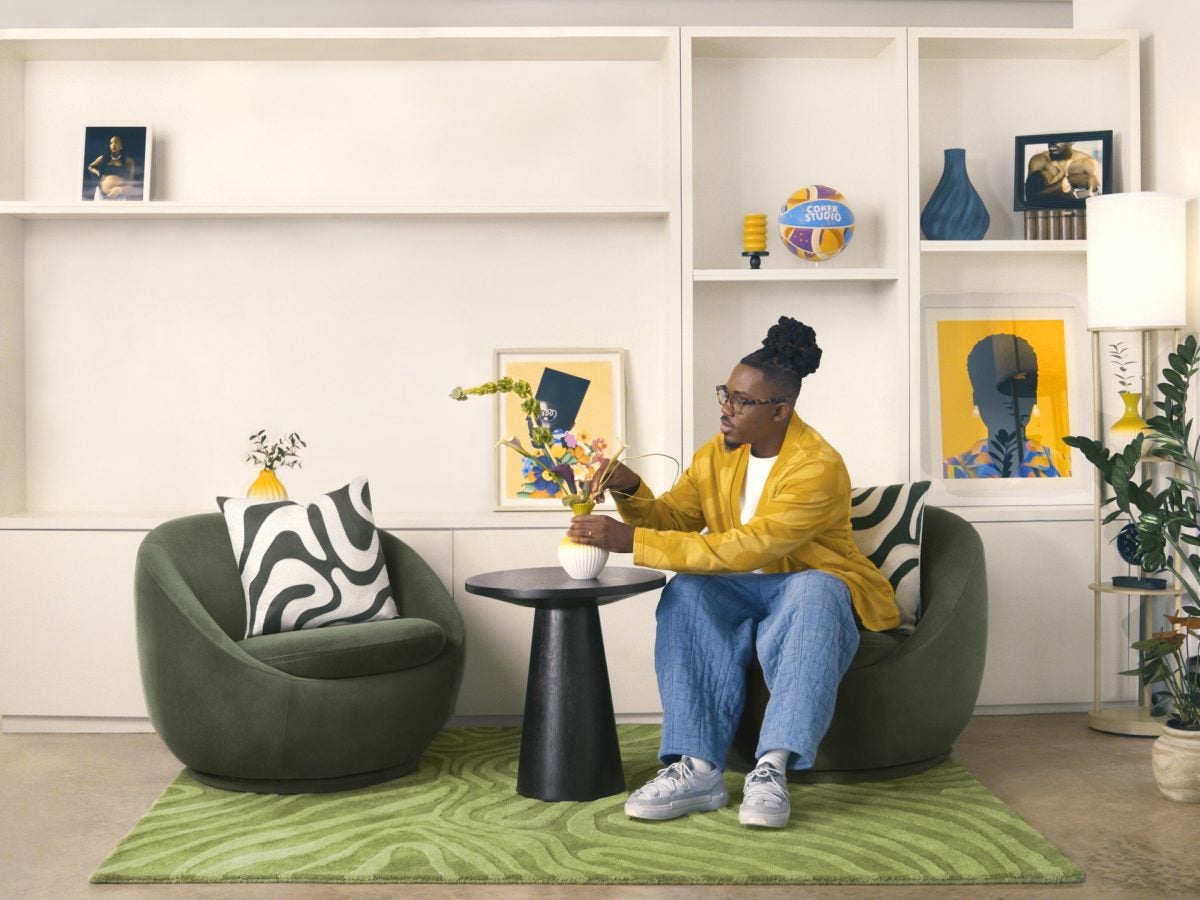

Artist Temi Coker is expanding his practice beyond the wall with his first home collection. The 18-piece debut, launching January 21, 2026, brings his visual language into everyday objects designed for daily use.
For Coker, moving into home design was a practical extension of his work. His art has long drawn from personal history, whether applied to illustration or commercial projects. With this collection, the format changed. Plates, vases, and sculptural objects replaced prints and murals, designed to exist in use rather than on display.
Growing up in Lagos, Coker was surrounded by color, texture, and pattern that carried meaning beyond decoration. Now living in Dallas, he views the home as a place where those histories can shift and overlap. Elements inspired by Nigerian textiles appear throughout, but the forms remain simple, made to fit into modern spaces without requiring context.
“This collection honors the vibrant textiles, colors, and culture of my Nigerian childhood while embracing my wife’s African American heritage, creating pieces that speak to both identities,” Coker said. “The living room is the heart of our home, where the majority of our family memories happen, so I designed these pieces to live in that sacred space and be accessible to every family. Partnering with Walmart feels full circle; my first pair of shoes were from Walmart, and so many people in my community shop there—so being able to launch my first home collection with them is extremely special.”
“My children are the product of two cultures—African and African American,” he added. “I wanted to create heirlooms that celebrate the beauty in that duality.”
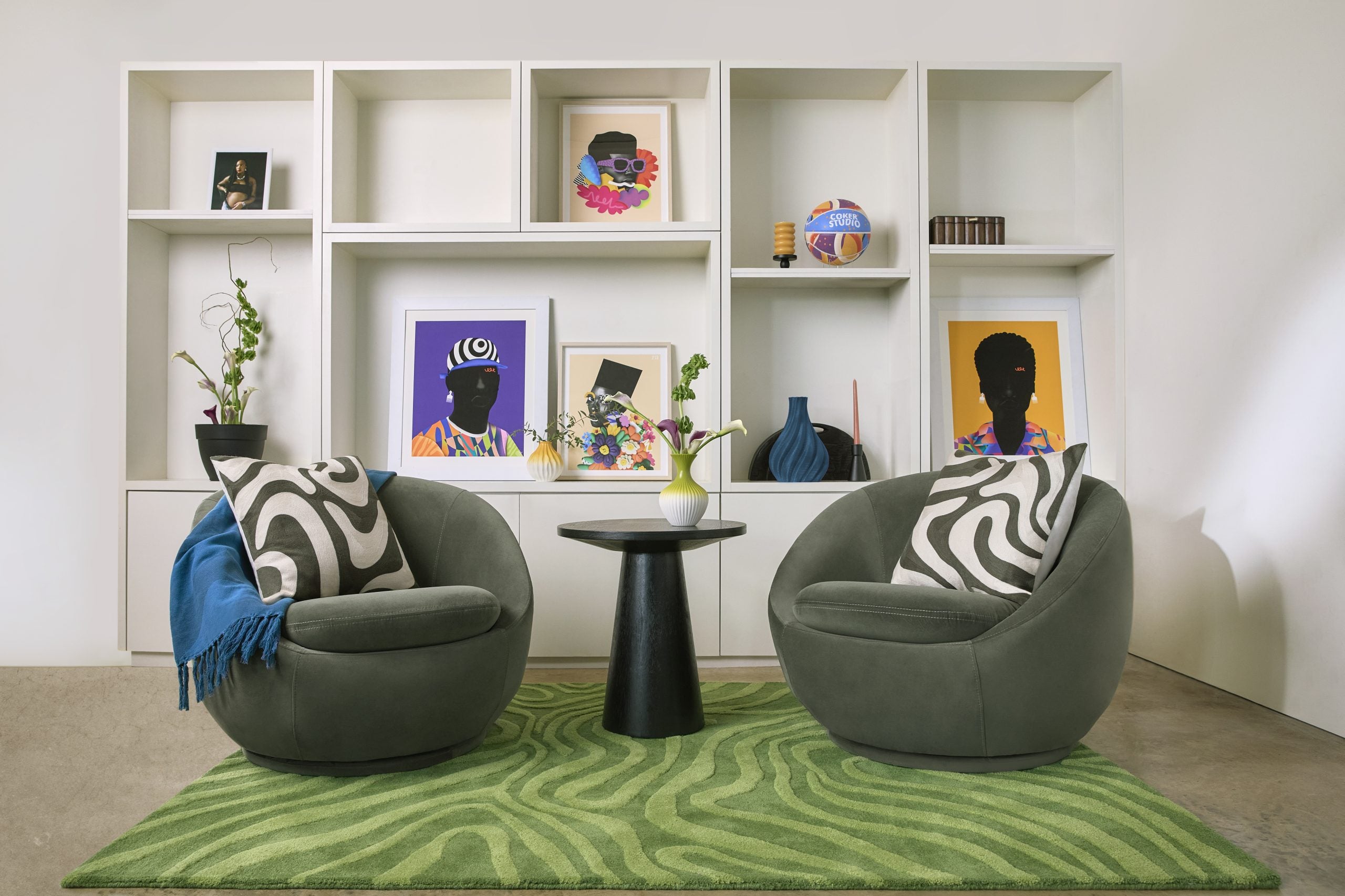
The vases reference braided patterns and natural hair, motifs Coker has explored before. He describes them as functional containers first. What they hold, or whether they hold anything at all, is left to the owner. Also, several pieces were developed through 3D printing and manufactured in the United States, allowing the artist to stay closely involved.
Priced from $14 to $320, the pieces were made for everyday homes, not limited releases. Coker wanted the objects to be used regularly and kept over time, not treated as collectibles. The collection is available exclusively at Walmart, and a short film released with the launch traces his path from Nigeria to Texas.
“We are on a journey to democratize style, and our new Temi Coker collection is an exciting opportunity to bring his authentic perspective and bold, beautiful designs exclusively to Walmart customers,” said Creighton Kiper, Senior Vice President Home, Walmart U.S. “Partnering with artists and creators like Temi Coker allows us to uniquely deliver style and joy to every space, effortlessly and affordably.”
Coker’s career has included collaborations with Google, Nike, Netflix, Adobe, and The New York Times, but this project feels a bit more personal. In the below conversation, he speaks candidly about timing, family, and why now felt like the moment to move beyond the wall and into people’s lives.
What made now feel like the right moment to step into home décor with The Temi Coker Home Collection?
This moment felt right because my life has shifted. Becoming a husband and a father changed how I think about space, legacy, and what we surround ourselves with every day. Home became more than a place to land. It became a place where memories are formed, where identity is shaped, and where love lives. I have spent years telling stories through posters design , creating campaigns for brands, designing clothes etc. Stepping into home felt like a natural evolution. It was time to create work that lives with people. Work that holds space for their everyday lives.
You’ve described these pieces as heirlooms—what does that word mean to you when you think about your own family?
An heirloom is something that carries memory. It is not about perfection or rarity. It is about meaning. It is something that has been lived with, touched, cared for, and passed down. When I think about my family, heirlooms are the things that hold story. The objects that remind you of who came before you and the life that was lived around them. I wanted these pieces to feel like that. Objects that grow more valuable over time because of the memories attached to them.
How did growing up in Lagos shape the colors, patterns, and textures we see throughout the collection?
Growing up in Lagos shaped everything. Nigeria is bold, expressive, and layered. My love for color and texture comes directly from Yoruba culture. For celebrations, families would sew their own Aso Oke, mix patterns, and show up fully expressed. Weddings, birthdays, funerals, and gatherings were filled with color. At first glance it might feel chaotic, but when you zoom out, it is harmony. A rich palette moving together. That feeling lives in this collection. I wanted the pieces to carry that same warmth, movement, and life into living rooms here.
In what ways did your children influence how you approached this project, especially around identity and legacy?
My children changed how I think about identity in a very real way. They are growing up with both Nigerian and African American heritage, and I think often about how they will come to understand themselves. I know what it feels like to live in that “in between” space. I want them to experience that duality with pride, not confusion.
This collection became a way for me to honor that. I want my kids to grow up in a home where both cultures are present and celebrated. Where they can feel that duality living side by side. Where the objects around them quietly tell them they belong to all of it. Legacy, for me, is not just about what we pass down, but how we make our children feel. I want them to feel rooted, seen, and deeply connected to who they are.
Many of the designs reference migration and continuity. Why were those themes important for the home specifically?
Migration is part of my personal story. I moved from Nigeria to America at eleven, and that experience shaped how I see the world and how I define home. Even though I live in Dallas now, Lagos is always with me. That duality shows up in how I move, how I create, and how I build a life for my family.
Home is where all of that settles. It is where different histories, memories, and identities live together in one place. I wanted the home to hold that story because it is where continuity happens. Where culture is passed down quietly through everyday life. Through what we see, touch, and live with. These pieces reflect movement and connection, but also grounding. A reminder that even when we come from different places, or carry multiple identities, we can still create a space that feels whole, rooted, and deeply ours.
What drew you to partner with Walmart for this launch?
Walmart has always been part of my story. When my family came to America, Walmart felt familiar. It was a place where we saw people who looked like us. Where my mom connected with other African parents. It felt like community. Partnering with Walmart felt full circle. It allowed me to create work that is accessible to families at every budget level. Everyone deserves beauty, intention, and culture in their home. This partnership made it possible for more people to experience that.
When someone brings one of these pieces into their living room, what do you hope it adds to their home or their story?
I hope it makes them feel seen. I hope it feels intentional and personal. I want these pieces to add warmth, meaning, and space for self expression. Over time, I hope they become part of people’s lives. Part of their memories. Something that holds laughter, gathering, and love. And above all, I want people to know that this work was created with care. It is for us. By us. And meant to live on.