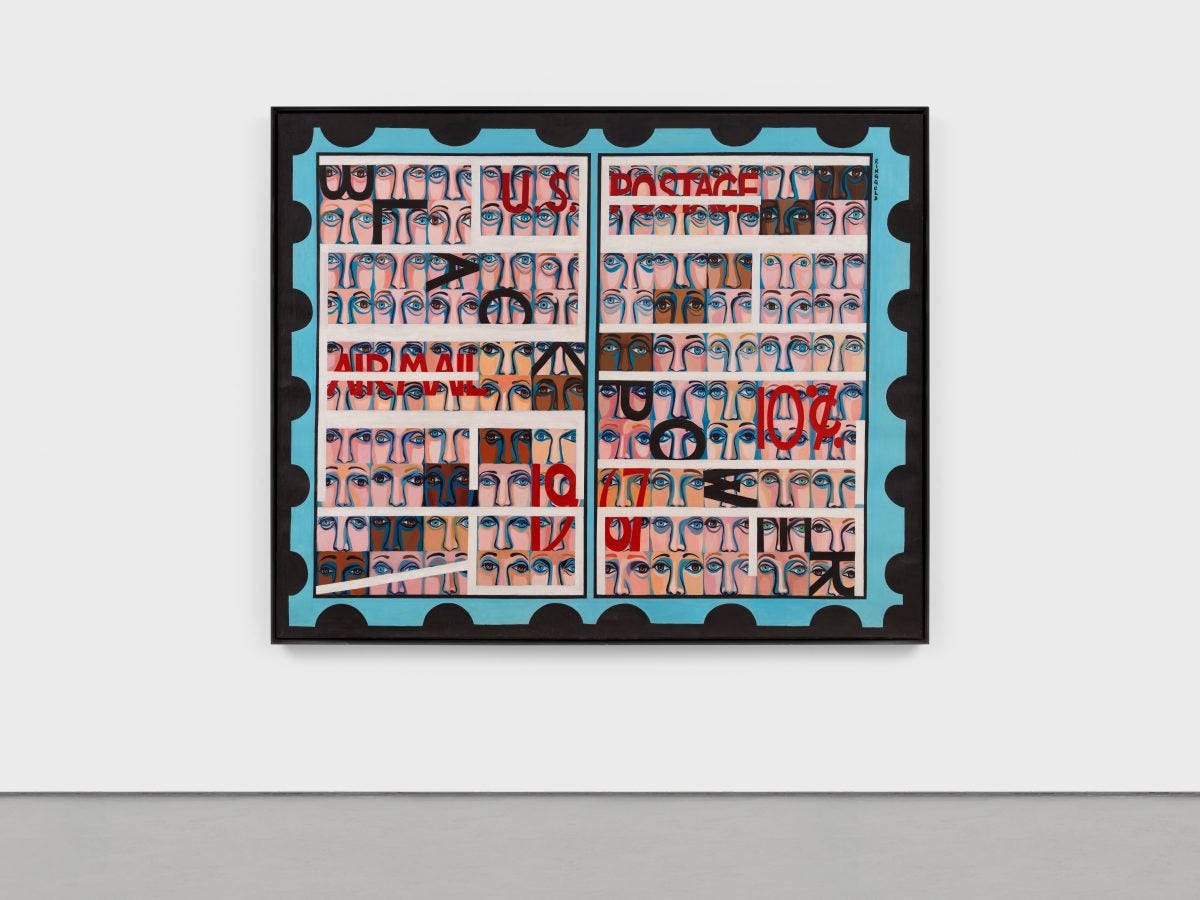

Jack Shainman Gallery’s inaugural career survey of Faith Ringgold allows the artist’s practice to remain what it has always been: a site of confrontation, memory, and Black feminist refusal. In the space, her work presses, indicts, and insists.
The exhibition is erected in a continuum of urgency challenging the chronological order. Ringgold’s paintings, textiles, soft sculptures, and story quilts do not line up neatly into phases of aesthetic development; they circle one another. The show understands that her career was never about formal evolution alone, but about cultural, political, and spiritual survival.
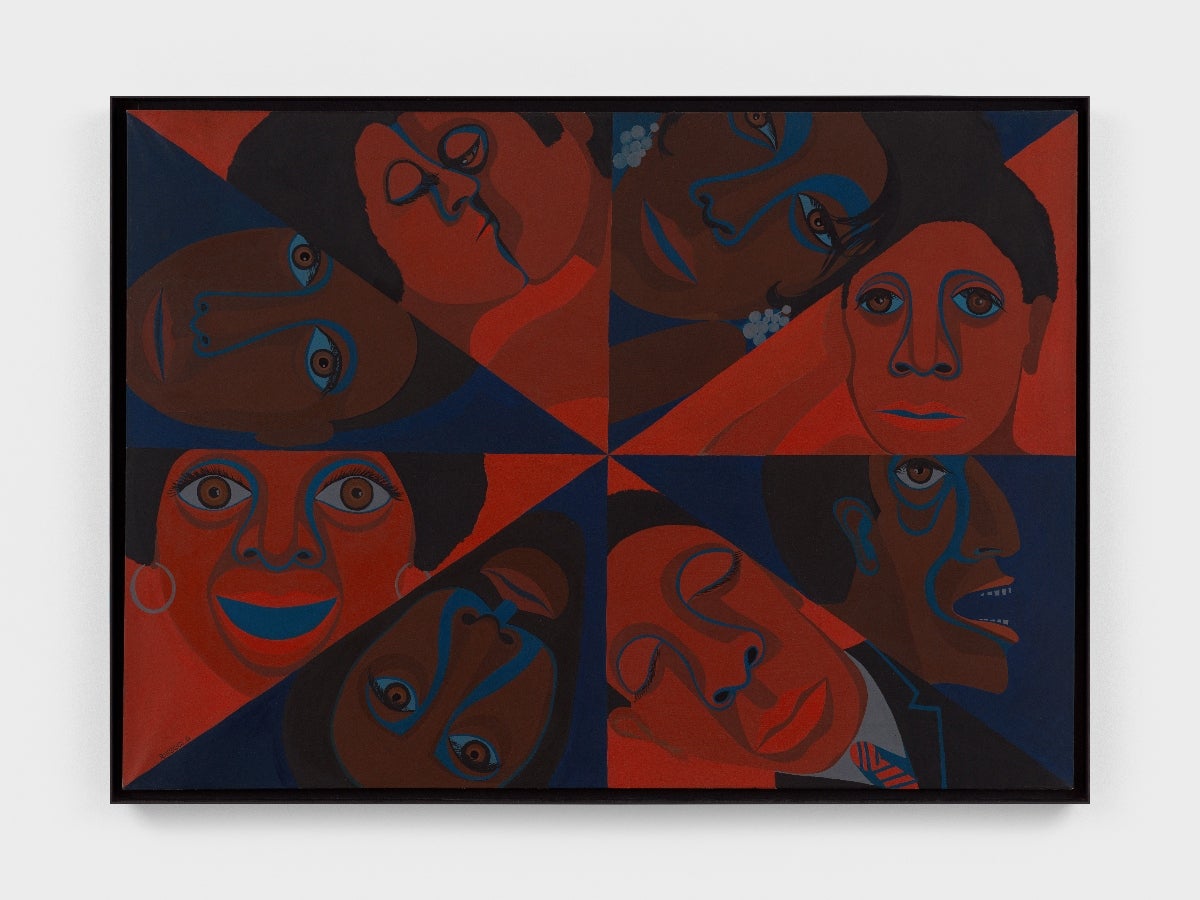
Her early paintings from the American People series crack with compositional tension. Figures press against one another geographically, and against the polite abstractions of mid-century modernism. Whiteness is interrogated and Blackness is structural. These works feel like visual essays refusing the neutrality of form.
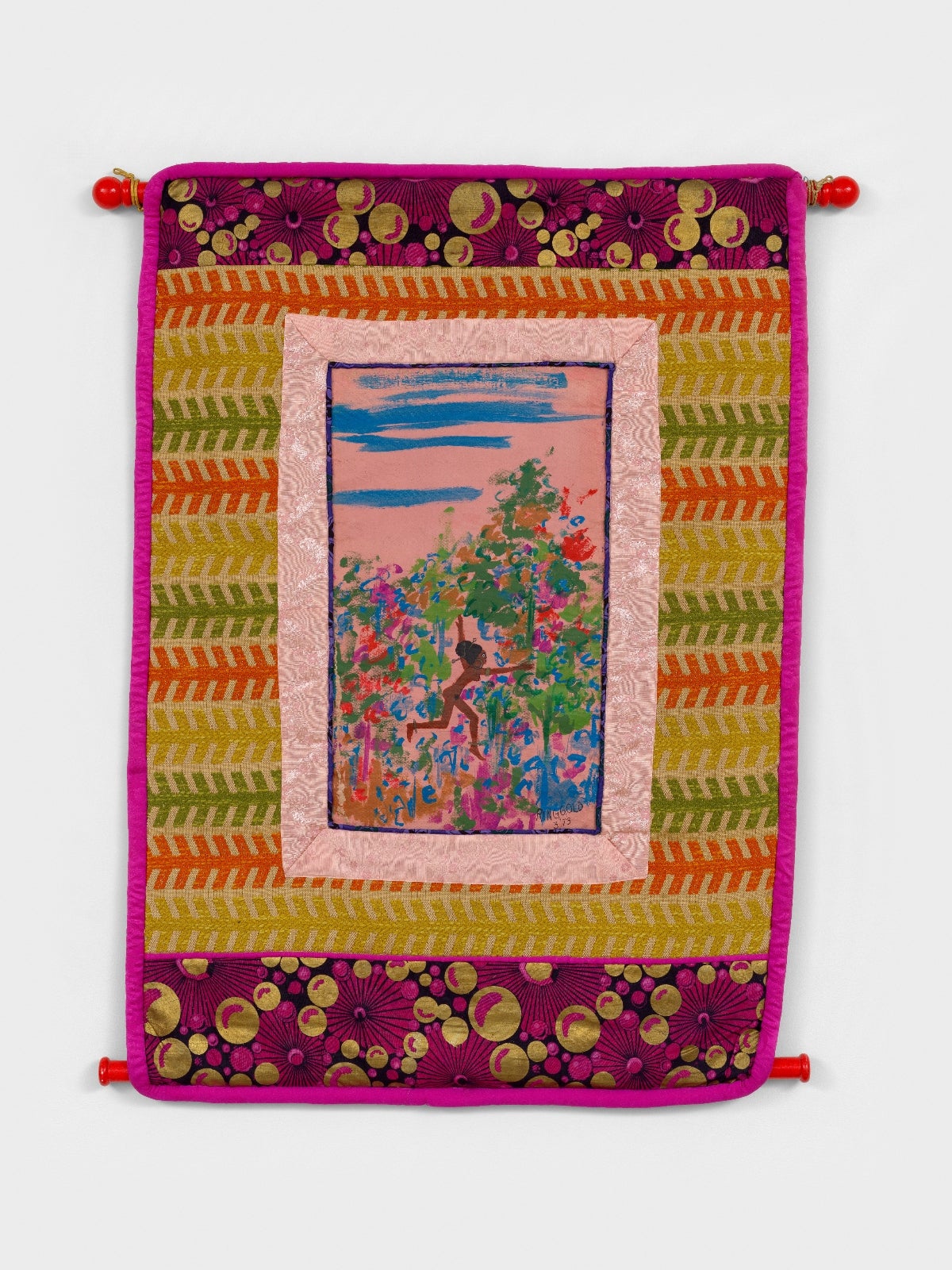
The introduction of Ringgold’s tankas marks a conceptual pivot that the exhibition handles with precision. Inspired by Tibetan Thangkas, her painted canvases bordered with fabric stitch together African diasporic traditions, European painting, and domestic labor long dismissed as “craft.” The sewing is methodological, and Ringgold understood portability as power in this form.
Her story quilts arrive not as a departure from painting, but as an expansion. They hold autobiography, folklore, and political critique in equal measure. These quilts function as living records for Black women’s voices excluded from institutional memory, insisting that narrative itself is a material practice.
The Slave Rape Series emerges as a gravitational center. These works are devastating not simply because of what they depict, but because of how Ringgold collapses distance. By inserting her own body—and those of her daughters—into scenes of enslaved women’s violation, she refuses the lie that history is past. Ringgold positions Black womanhood not as subject to be studied, but as the lens through which American history must be re-seen.
Jack Shainman Gallery approaches this survey with restraint and respect. The installation resists spectacle, allowing Ringgold’s intellectual clarity to lead. What emerges is a continuation that does not close her work into legacy; it opens it outward.
In her decades-long practice, Faith Ringgold had come to be known as a world-builder. This survey reminds us that those worlds are not complete—and that we are still being asked to enter them with honesty, courage, and accountability.