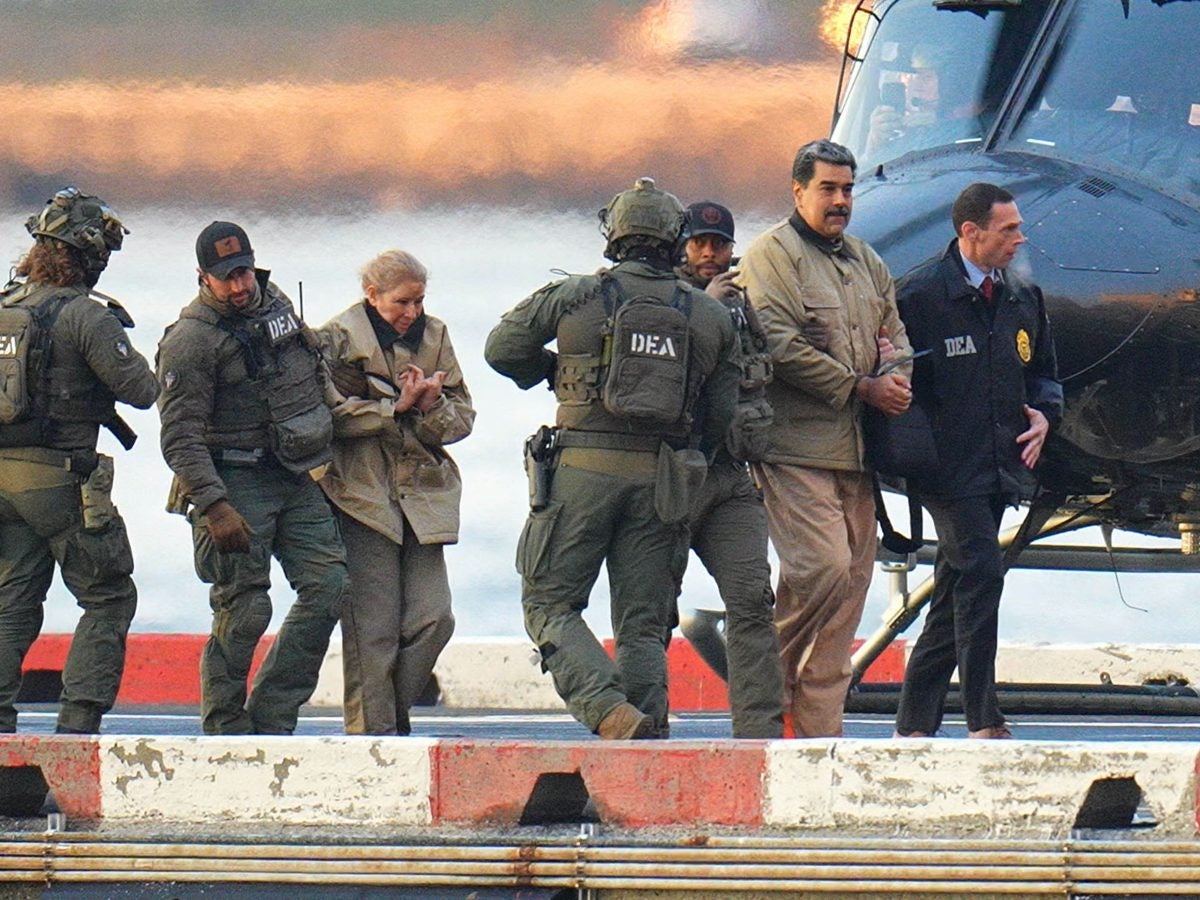

Over the weekend, the U.S. captured Nicolás Maduro and his wife Cilia Flores, the president and first lady of Venezuela, and flew them both to the U.S. to face charges of drug-trafficking and gang-related activities. This occurred after years of intervention from the U.S., leaving in its wake government instability and a continuation of the economic and humanitarian issues that have besieged the country for years.
If you think of Venezuela like the Titanic, there were early warning signs, but hubris, mismanagement, and American intervention have left those not in power to scramble and fend for themselves.
For background, Venezuela has the largest oil reserves in the world, but their crude output remains only a fraction of what the petrostate is capable of producing. Maduro became president of Venezuela in 2013, after his predecessor, Hugo Chávez, entreated his supporters to vote Maduro into office after his death. Per the CBC, Maduro’s tenure has become almost synonymous with “allegedly rigged elections, food shortages and rights abuses, including harsh crackdowns on protests in 2014 and 2017. Under Maduro’s watch, Venezuela’s economy shrank 71 per cent between 2012 and 2020.”
In January 2025, Maduro was sworn into office for his third term as president, which was cited as illegal due to his challenger Edmundo González Urrutia winning over 67% of the popular vote. Many, including the Carter Center, declared this a threat to democracy and an illegitimate election; meanwhile, the U.S. amped up pressure on a variety of fronts under the guise of hampering the country’s illegal drug trade.
Of note, the first African American to lead the U.S. Southern Command (SOUTHCOM), Adm. Alvin Holsey, retired from his post two years ahead of schedule last December over the U.S. military strikes of boats along the Venezuelan coastline, which the Trump administration claimed contained drugs bound for the U.S. According to The Hill, this occurred in the midst of tensions between Defense Secretary Pete Hegseth and the four-star Navy admiral, who was “reportedly concerned about the tenuous legal authority for the campaign.”
Now, Delcy Rodríguez, the vice president under Maduro, is the new leader of Venezuela after being sworn in as interim president, and has indicated a willingness to work with the Trump administration.
But with the U.S. effectively taking control over Venezuela’s oil reserves, community advocate John Beard believes this will be problematic for Black communities along the Gulf Coast in the U.S., Capital B News reports. “[T]hat’s going to be more pollution and cancer,” Beard said. “This is an extenuation of the problem the industry has already created and a fight to make sure there is no way out.”
Indeed, the events unfolding in Venezuela cannot be viewed as simply another foreign policy maneuver or just another headline signaling regime change. For many in the African American community, this should be reminiscent of patterns from the past, including the use of state power without the necessary accountability, communities being forced to deal with the accompanying fallout, and ordinary citizens having to pay the price for the political dealings of their elected representatives. This shared historical reality is why this moment resonates so acutely.
“The current situation surrounding the extraction of Nicolás Maduro carries a symbolic and political impact on the African American community in the United States,” Norimar Pino, Venezuelan lawyer and paralegal for the Angel Alvarez Law Firm in New Jersey, community leader of the National TPS Alliance in New Jersey, tells ESSENCE. Viewing these events through a human-rights lens, Pino explains, there is a “shared legacy of struggle between African Americans and Venezuelans rooted in resistance to oppression, systemic injustice, and the denial of basic rights.”
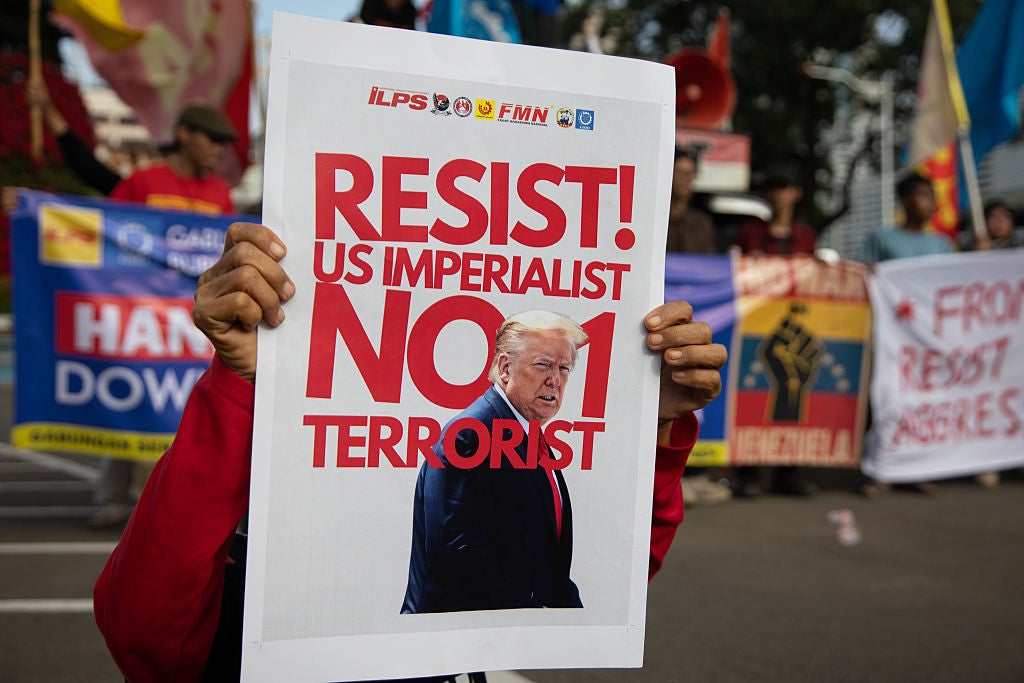
This is not an abstract legacy either. Presently, it is visible in the lives of the millions of Venezuelans who were forced to flee their home country, many whom are now living and working in the U.S. under Temporary Protected Status (TPS).
Natalia S. Navas, Ph.D, sociologist and immigration scholar at the ILR School, Cornell University, underscores the enormity of this crisis. “We know that the Maduro regime has been brutal for the people of Venezuela, causing the mass exodus of 8 million Venezuelans, about one quarter of its population,” she tells us. “In the U.S., Venezuelans currently represent the largest immigrant group granted TPS, which is a designation of protection for people who are unable to safely return home due to humanitarian crises or political instability. But unfortunately, these protections are not always guaranteed.”
“This status has benefited people of many countries previously, including Haiti, Sudan, Somalia, Honduras, El Salvador, Nepal, and Nicaragua,” Navas adds. But she also warned that TPS has, in recent years, become little more than a political bargaining chip. “The Trump administration has attacked this protection and has been stripping it from different countries since its first administration in 2016.”
In short, this is not only about Venezuelans. It is about the legal precedent that is being set, and it could have deleterious effects on the TPS status for many people of color in this country. “Should the government decide that Venezuela is now safe to return, it may mean that TPS may be stripped not just for them but for all countries,” Navas explains. Because when the U.S. intervenes, it rarely provides stability for nations in the immediate, oftentimes leaving migrant communities stranded between borders in a legal limbo and vulnerable to deportation and other forms of criminalization.
Pino emphasizes the parallel experiences of both African Americans and Venezuelans as it relates to the absence of receiving meaningful protection from state action, political persecution, and structural discrimination. “In each case, these abuses transformed entire sectors of society into vulnerable minorities, exposed to state violence and deprived of meaningful legal safeguards,” she says.
While Maduro’s extraction might signal accountability, it does not demolish the same system that enabled him. “It sends an important message: authoritarian regimes are not immune to accountability or international scrutiny,” acknowledges Pino. “However, it is important to understand that Maduro is just one person, and his extraction does not imply the automatic fall of the regime that governs Venezuela. The corrupt and criminal authoritarian structure is still active, and its dismantling will require long, hard, arduous work.”
For Black Americans whose history has been plagued with struggles for civil rights, dignity, and safety, this message carries an enormous weight. “This development may resonate as a reminder that sustained resistance is not futile,” Pino notes. “Even when justice arrives slowly, it can reaffirm that no regime is beyond judgment — and no struggle for human dignity is meaningless.”
She cautions against misplacing narratives that criminalize Venezuelans. They “have been the principal victims of this regime,” Pino concludes. “They have suffered persecution, forced displacement, scapegoating, and violence … [yet] narco-trafficking infrastructures have allowed for the criminalization of all Venezuelans in the United States, even though the majority of Venezuelans are hardworking people who are fleeing a criminal system themselves.”
This is the reality and the clearest reasons why Black communities should be paying attention: because history has repeatedly shown that when governments are able to evade accountability at the national and international levels, marginalized people are the ones who are forced to bear the consequences of their decisions.