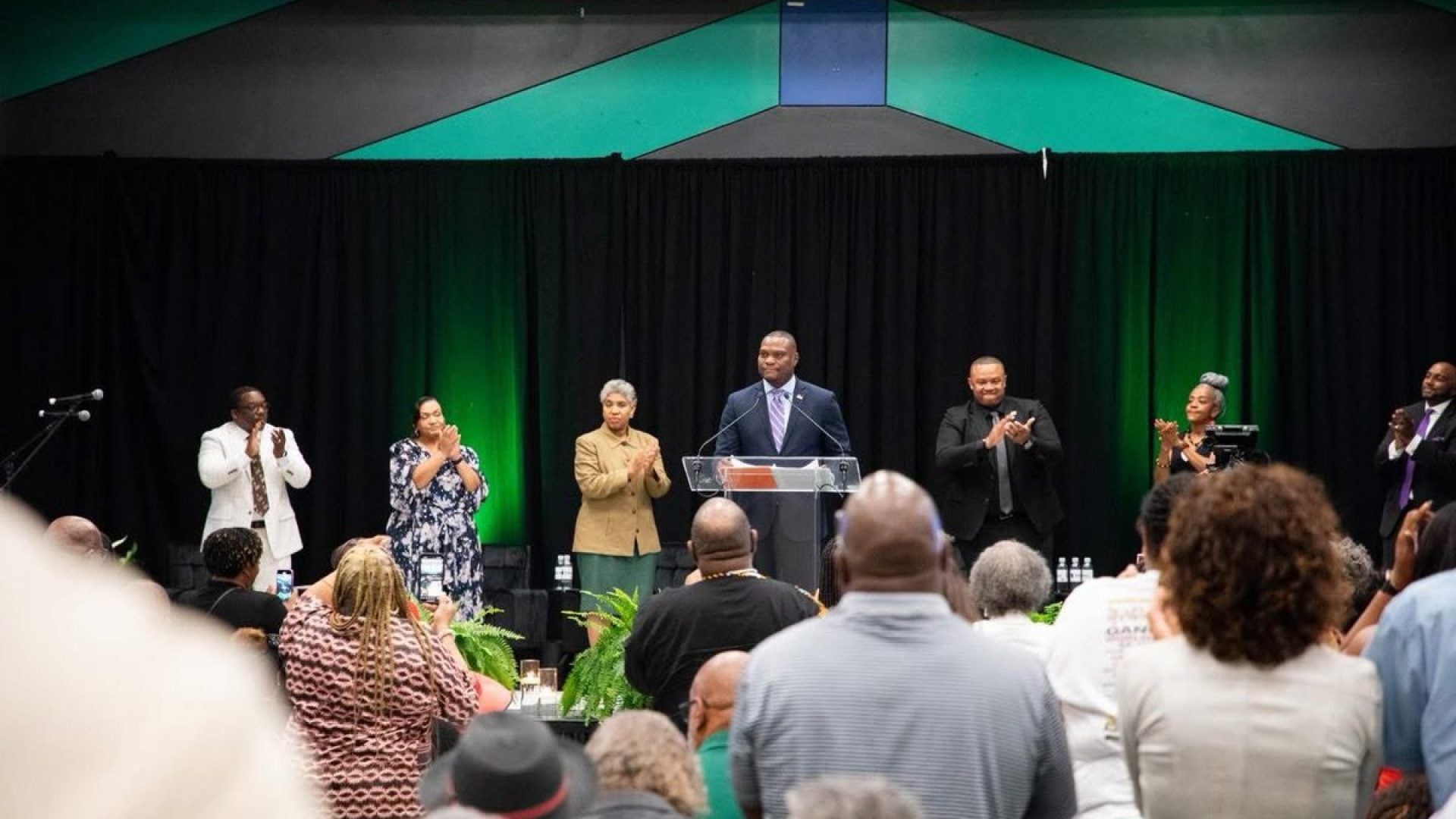

More than a century after the Tulsa Race Massacre—one of the deadliest instances of racial violence in U.S. history—Tulsa’s first Black mayor has announced a $105 million reparations initiative. It marks the first substantive attempt to repair the generational harm inflicted by the 1921 attack.
Back in 1921, Tulsa’s Greenwood District neighborhood was so prosperous it was called Black Wall Street. From May 31st to June 1st, a violent white mob descended on Greenwood and torched more than 1200 Black businesses and homes across 35 blocks. As many as 300 people were killed, 800 were injured and thousands of Black people were displaced. The wealth lost during the massacre is estimated to be about $32 million—when adjusted for today’s economic value.
The community never recovered.
Today, according to a report on Tulsa’s racial wealth gap, half as many Black Tulsans own homes as white Tulsans, while in 1920, homeownership rates were equal. The massacre has also impacted Black poverty and unemployment rates, which are much higher than the rates for white people, as measured by Human Rights Watch.
Mayor Monroe Nichols does not use the term reparations as he considers it politically charged—but the goal of the initiative, which he dubbed the “Road to Repair,” “is clear. “The massacre was hidden from history books, only to be followed by the intentional acts of redlining, a highway built to choke off economic vitality and the perpetual underinvestment of local, state and federal governments. Now it’s time to take the next big steps to restore,” he said.
The Road to Repair’s key component is the Greenwood Trust, a private charitable trust which will collect $105 million in assets from multiple sources including property transfers, private contributions and potentially, public funding. The goal is to be fully funded by the 105th anniversary of the massacre next June.
The $105 million will be divided across three major areas: $21 million for scholarships, small business grants and land development; $24 million for housing assistance and homeownership; and $60 million for cultural preservation and revitalizing the north side, where Greenwood is located.
Previous efforts, including the 1921 Tulsa Race Riot Reconciliation Act, offered no monetary compensation. The last two living survivors, Viola Fletcher, 111, and Lessie Benningfield Randle, 110, have repeatedly had their reparations claims denied by the courts.
While this plan doesn’t include direct cash payments to Fletcher and Randle, Michelle Brooks, a city spokeswoman, told The New York Times that the trust’s board of Trustees could consider payments. This initiative, therefore, is a potential game-changer in the reparations movement, and it was welcomed by Tulsa Massacre descendant Seth Bryant, whose great-grandfather was the founder and owner of the Tulsa Star.
“It’s really exciting that in his [Mayor Nichols] first year, he pushed forward something that so long overdue and so important to Tulsa’s image around the country frankly and the world,” Bryant told News on 6. “I think history at least will recognize that 104 years later, some level of justice can be weeded out, so that’s important,”he said.
Across the country, recent efforts to provide reparations for slavery and racial discrimination have taken varied forms—and often met resistance. In Evanston, Illinois, the first U.S. city to implement a reparations program, eligible Black residents have received $25,000 in housing grants aimed at increasing homeownership. The program faced a legal challenge from Judicial Watch, a conservative group that filed a class-action lawsuit claiming the grants discriminated against non-Black residents. The case was ultimately dismissed.
In California, the National Reparations Task Force outlined concrete ways the state could provide reparations and how much it could cost—by one estimate, it would amount to $1.2 million per person. However, Governor Gavin Newsom signed a reparations bill of just $12 million last year—which does not include direct cash payments. California has also issued an apology for slavery, an important first step in reparative justice.
In contrast, Maryland Governor Wes Moore vetoed a bill to create a commission to study and recommend reparations—preferring action to yet another study. In a letter explaining his decision, he wrote, “Now is the time to focus on the work itself: Narrowing the racial wealth gap, expanding homeownership, uplifting entrepreneurs of color, and closing the foundational disparities that lead to inequality – from food insecurity to education.”
The halting approach to reparations indicates that the country still has a long way to go—especially in a political climate hostile to racial justice. But Tulsa residents like Chief Egunwale Amusan, a member of the activist group Justice For Greenwood and a Tulsa massacre descendant, are embracing Mayor Nichols’ plan.
He told Public Radio Tulsa, “I” (my grandfather) had been here today, it probably would have been the most restorative day of his life.”