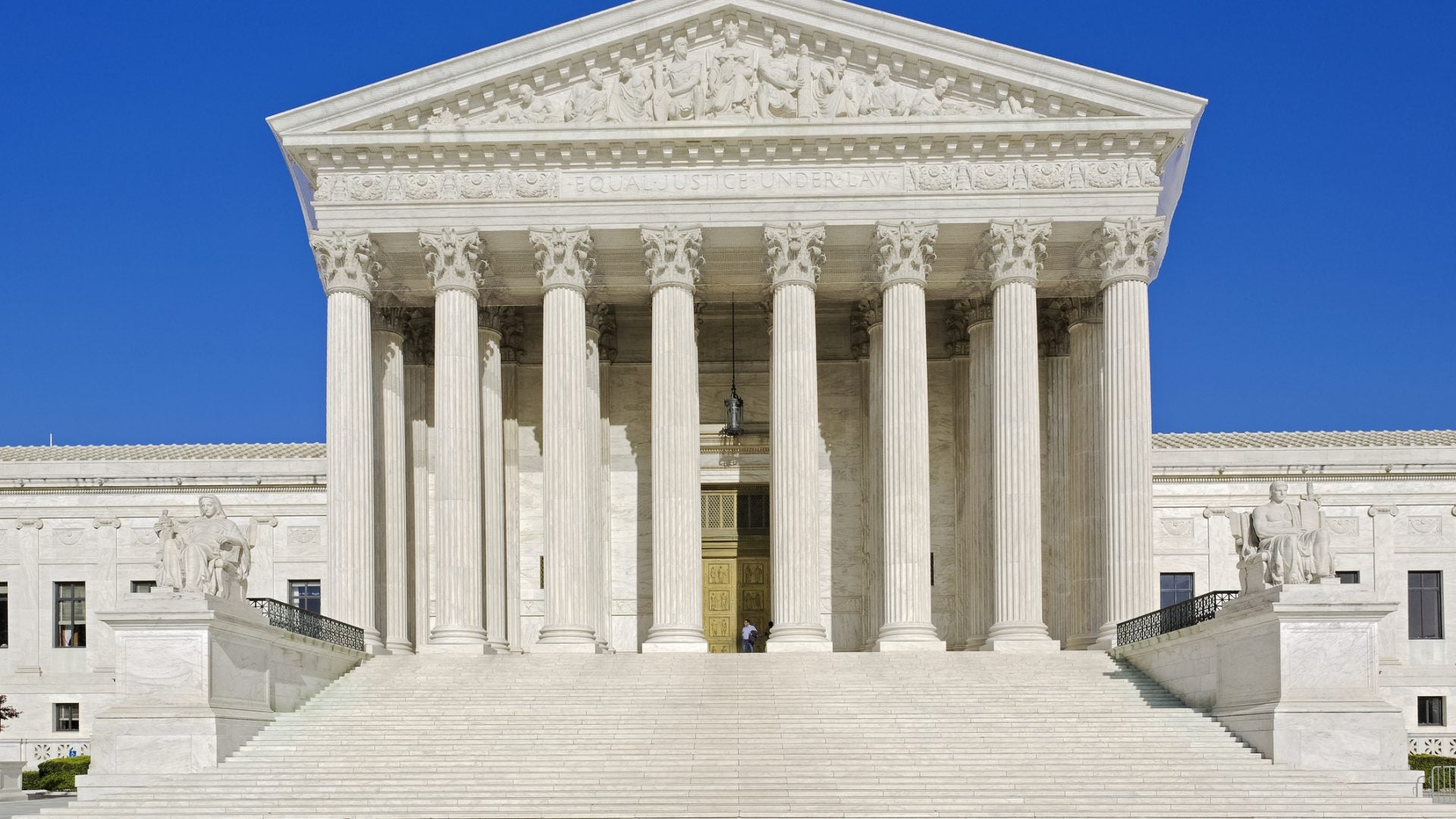

The U.S. The Supreme Court wrapped its term this week with a wave of consequential rulings, including decisions on birthright citizenship, LGBT+ rights, age verification on adult sites and access to Planned Parenthood.
Many of the cases that the Supreme Court heard this year were launched to challenge President Donald Trump’s myriad of executive orders when he returned to office. Here’s what you need to know:
Birthright citizenship
One of Trump’s key campaign promises was deporting undocumented immigrants and limiting immigration. He has made restricting birthright citizenship—which, under the 14th Amendment, guarantees citizenship to anyone born on U.S. soil—a hallmark of his immigration policy. Specifically, his executive order signed on his first day in office says that children born in the U.S. whose parents are undocumented, as well as those whose parents are in the country on a temporary visa (student, work, visitors, etc.) are not citizens.
The executive order had been blocked from implementation nationwide by a federal judge in Washington State who called it “blatantly unconstitutional.”
However, the Supreme Court handed Trump a limited victory today by ruling that a judge’s ruling in one jurisdiction can’t apply to the entire country (known as nationwide injunctions.) To be clear, they didn’t rule that birthright citizenship no longer applies to everyone born in the U.S.. Still, it does mean that states will now have to bring individual challenges to Trump’s executive order to protect those who may be facing deportation under the order. As it currently stands, only 22 states have challenged Trump’s executive order, leaving children of the undocumented in 28 states without citizenship. Critics of the ruling, including immigrant rights groups, say this will create a chaotic situation where a child could be considered a citizen in one state but not another.
The repercussions of the Supreme Court ruling — decided 6-3 by the conservative justices — extend far beyond birthright citizenship, as reported by The New York Times. Federal judges will no longer be able to enact nationwide pauses on the White House’s actions, affecting everything from relocating transgender women to men’s prisons to the firing of civil servants. This gives President Trump even more power to upend norms—and lives—without passing laws through Congress.
Advocates have already pushed back. CASA, Inc., the organization that brought the original lawsuit, certified a class-action lawsuit on behalf of all babies who would lose their citizenship once Trump’s executive order takes effect, reports the AP.
LGBT+ Rights
Revoking transgender rights was another one of President Trump’s key campaign promises—and he made “keeping men out of women’s sports” a rallying cry for the cause. The latest Supreme Court ruling on medical treatment for transgender minors will make it harder to begin transitioning before age 18.
The conservative wing of the Supreme Court upheld a Tennessee law that prohibits medical practitioners from providing gender-affirming care to minors; these include prescribing puberty blockers and hormone therapy to transgender children. In explaining the ruling, the Supreme Court said the Tennessee law doesn’t violate equal protection principles. This potentially affects 26 other states which have similar laws on the books.
Another ruling allows Maryland parents to opt their children out of classes in which LGBT books are shared due to their religious objections to the books.
Planned Parenthood
The Supreme Court also dealt a blow to Medicaid recipients trying to access Planned Parenthood services. South Carolina had denied Medicaid funding to Planned Parenthood and a lawsuit was brought to overturn that decision. However, the Supreme Court ruled that lawsuits to compel states to enforce Medicaid law—a federal statute—aren’t valid. While abortion wasn’t at issue in the case and the plaintiffs were merely suing to allow coverage of other services provided by the organization, specifically contraception, it makes it much easier for other states to deny funding for Planned Parenthood.
Lawsuits have remained a powerful tool for checking presidential overreach during President Trump’s second term, and by limiting their scope it threatens the rule of law, says Justice Ketanji Brown Jackson. In her fiery dissent in the birthright citizenship case, Justice Jackson wrote, “It is important to recognize that the Executive’s bid to vanquish so-called ‘universal injunctions’ is, at bottom, a request for this Court’s permission to engage in unlawful behavior,” Jackson explained. “When the Government says ‘do not allow the lower courts to enjoin executive action universally as a remedy for unconstitutional conduct,’ what it is actually saying is that the Executive wants to continue doing something that a court has determined violates the Constitution— please allow this.”
Justice Jackson went on to warn in the strongest terms the danger this poses to democracy. “Eventually, executive power will become completely uncontainable, and our beloved constitutional Republic will be no more.”
President Trump, for his part, cheered the Supreme Court’s rulings, calling birthright citizenship in particular a “big decision” that he was “very happy about.”