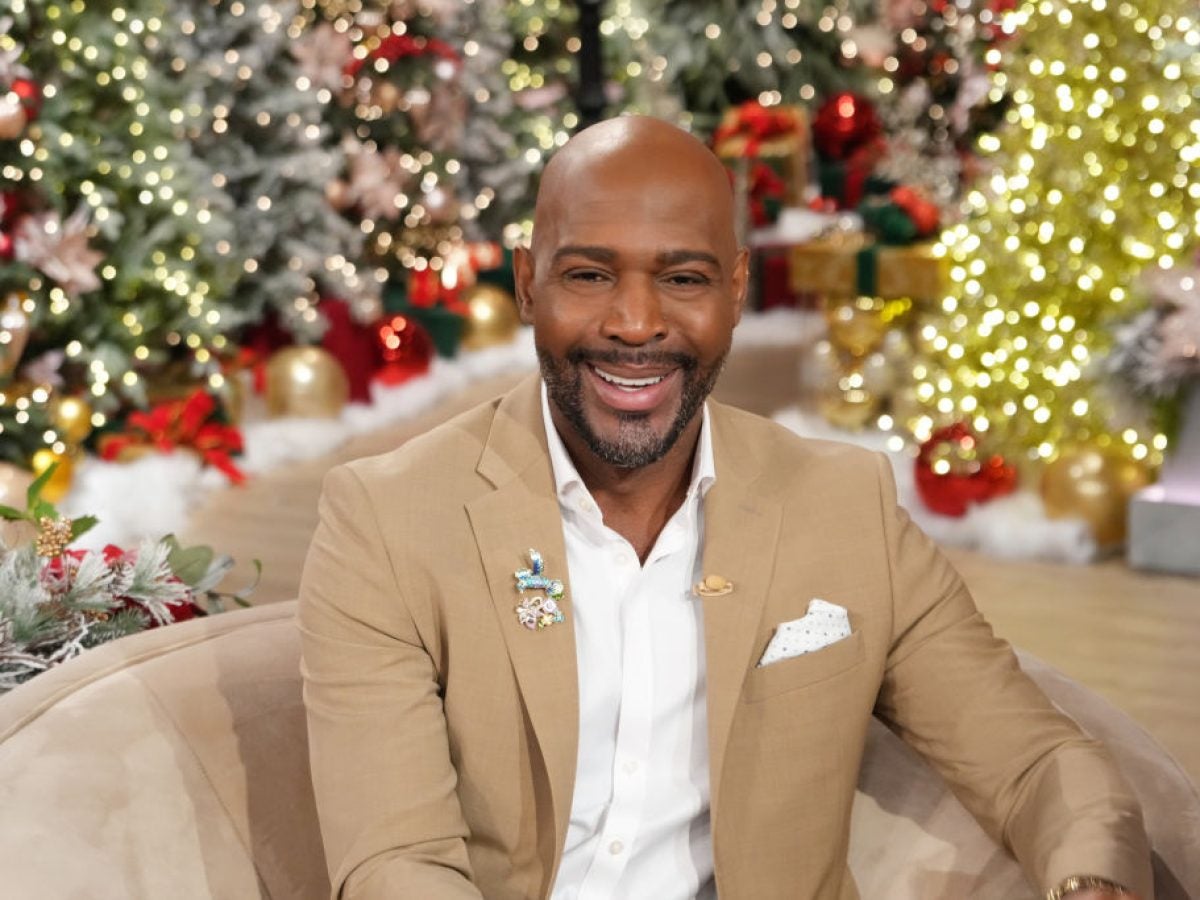

Karamo Brown, one-fifth of the Queer Eye for the Straight Guy cast, didn’t report to work last week and wrote the out-of-office message heard around the world.
Brown declined to participate in the press tour for the final season of Queer Eye for the Straight Guy after reportedly enduring years of a hostile work environment and workplace bullying.
Instead, his communications team sent emails and recorded videos to CBS Mornings and Today with Jenna & Sheinelle, which were read live on air on his behalf in front of his four castmates. Gayle King of CBS Mornings read: “I hope everyone remembers the main theme I have tried to teach them over the past decade, which is to focus on and to protect their mental health and peace from people or a world who seek to destroy it; which is why I can’t be there today.” His assistant added in an email statement that he was “worried about being bullied.”
The message was clear: after consulting with his therapist, Brown chose peace.
The internet praised Brown for his courage, his boundaries, and his emotional intelligence. Many Black women recognized the pain beneath the moment—the isolation, the power dynamics, the quiet erosion that happens in toxic workplaces.
But beyond applause, the question remains: what can Black women actually learn from this moment if we don’t have Brown’s public platform or resources to simply walk away?
Workplace Bullying May Be Toxic, But Not Illegal
“From a legal standpoint, there is no standalone definition of workplace bullying under federal law,” says Brian Aquart, employment attorney and host of the Why I Left podcast. “In many cases, what employees experience is not ‘illegal,’ even when it is harmful. Bullying becomes actionable only when it crosses into protected categories like race, gender, sexual orientation, or disability.”
Even within this legal framework, challenges remain. “In 2025, the Equal Employment Opportunity Commission (EEOC), the agency responsible for enforcing workplace discrimination laws, rolled back guidance that helped employees understand what harassment looks like in today’s workplaces—making it even harder for workers to know when harmful behavior crosses a legal line,” says Candace McLaren Lanham, former prosecutor and founder of The 40Mom Movement.
This loss of guidance leaves Black professional women in a precarious position because of the general nature of our mistreatment. “Workplace harm for Black women rarely presents as overt slurs; it more often appears as heightened scrutiny, isolation, credibility attacks, unequal discipline, or retaliation after speaking up,” says Lanham. “Without clear federal examples addressing these cumulative and power-based dynamics, legally cognizable harm is more likely to go unrecognized or unaddressed until it escalates.”
Organizations Need An Eye for Intra-Marginalization, Not Just Inclusion At Work
When legal protections fall short, internal workplace systems often become the first line of accountability. “The path to accountability is often organizational or cultural before it becomes legal,” says Aquart, because “the law is designed to respond to clear violations, not cumulative harm.”
Brown, a queer Black man and culture expert on Queer Eye for ten years, later accused his all-queer but non-Black castmates of bullying. His experience underscores an uncomfortable truth: harm doesn’t disappear with shared marginalization, even in oppressed communities, and overlapping identities can deepen power dynamics.
“So many DEI frameworks fail because they teach marginalized identities as a monolith,” says Madison Butler, employee experience expert and author of Let Them See You: Empowering Change Through Authenticity. “We talk about Asian Americans, LGBTQIA+ communities, Black people, veterans—but we rarely talk about when someone is more than one of those identities,” Butler explains. “Navigating intersectional dynamics is key to understanding true inclusion, and intersectional frameworks are mandatory when educating on psychological safety and power dynamics.”
According to Butler, human resources teams must also be trained to understand power dynamics in order to effectively resolve conflicts. “Without proper training, everything defaults back to basic handbook policies,” she says. “But handbooks aren’t designed for nuance or employee safety—they’re organizational cover-your-assets tools.”
To address these dynamics responsibly, HR teams must be trained to understand that: shared marginalization does not mean shared power; anti-Blackness exists across many marginalized communities; and proximity to whiteness still shapes credibility, protection, and outcomes.
“Without that awareness,” Butler says, “we are not neutral—we side with power. And history tells us that is the wrong side.
You Are Not Crazy—and You’re Not Powerless
Brown’s experience shows us that many professionals—including celebrities—experience real damage to their health, confidence, and careers without ever crossing a legal threshold. “That gap leaves employees feeling gaslit,” says Aquart. But we still hold power and recourse, even when leaving immediately isn’t an option.
Aquart and Butler recommend a plan of action that protects your reputation, your peace, and your future job prospects while you plan your next move:
- Name the harm—even if the system won’t. Workplace bullying often gets dismissed as “conflict.” But conflict is not constant. Bullying is persistent. If the behavior feels repetitive, eroding, and targeted at your identity rather than your work, it’s not just a disagreement—it’s a pattern. Naming it clearly is the first step toward reclaiming your power.
- Protect performance optics. Continue meeting expectations. This reduces the risk of retaliation and limits opportunities for your professionalism to be questioned.
- Build a private record early. Document dates, witnesses, exact language, and impact. The goal is to establish a consistent pattern over time, not a single incident. Early escalation without documentation often backfires.
- Identify allies quietly. If HR isn’t reliable, that doesn’t mean you are alone. Lean on trusted coworkers, mentors, and professionals who can help validate patterns and assess risk. External perspectives—like an employment attorney, coach, or advisor—can help you think strategically before taking action.
Remember To Keep It Cute And Casual With Coworkers
Lanham also advises shifting your mindset about workplace relationships as a preemptive move.
Share less than you think you should. You are not obligated to disclose personal details at work. Share only what you would feel comfortable sharing in a strictly professional, arms-length relationship. The more personal information that circulates in the workplace, the more vulnerable it becomes if dynamics shift or relationships sour.
Remember, coworkers are not automatic friends. Establishing boundaries early makes them easier to maintain later. Allow relationships to earn deeper access over time, rather than assuming goodwill simply because you work together.
Keep your home life off the clock. Not everyone at work needs to know where you live, who lives with you, or how to reach you outside of business hours. When possible, keep home addresses and personal phone numbers private, especially in environments where boundaries already feel blurred.
Lock down your social media. Consider making non-professional social media accounts private and limiting coworkers’ access. LinkedIn is often the exception—but even there, professionalism should guide what you share.
Karamo Brown And The Cost Of Being Black At Work
Karamo Brown’s story is not solely a celebrity problem—it’s a workplace reality many Black women know too well. It reminds us that anti-Black harm can exist in any environment, even those that brand themselves as progressive. It also proves that success does not insulate Blackness from cost.
Whether millions are watching or no one is, we still deserve safety, dignity, and peace at work. And while we don’t volunteer to be unnecessarily strong, problem-solving or clever, it remains abundantly clear that we must remain clear-eyed enough to protect ourselves—and brave enough to name our truth.
Corporate America will try to play in our faces, but when we know our worth and our rights—we will reclaim both.
Without question.
Kara Stevens is founder of The Frugal Feminista and author of heal your relationship with money and Unmasking the Strong Black Woman.