
There’s always that moment that becomes a turning point for discovering your purpose.
For Michael Burns, it was while he was on a call with his Fortune 500 company’s CEO and CFO, discussing real estate downsizing during the height of COVID-19, when the George Floyd video played continuously on the news behind him.
In his New York City home office, photos of his two young Black sons stared back at him from the walls. The moment sparked a painful question: “How is this conversation going to ensure that what’s happening on this TV behind me never happens for my two little boys?”
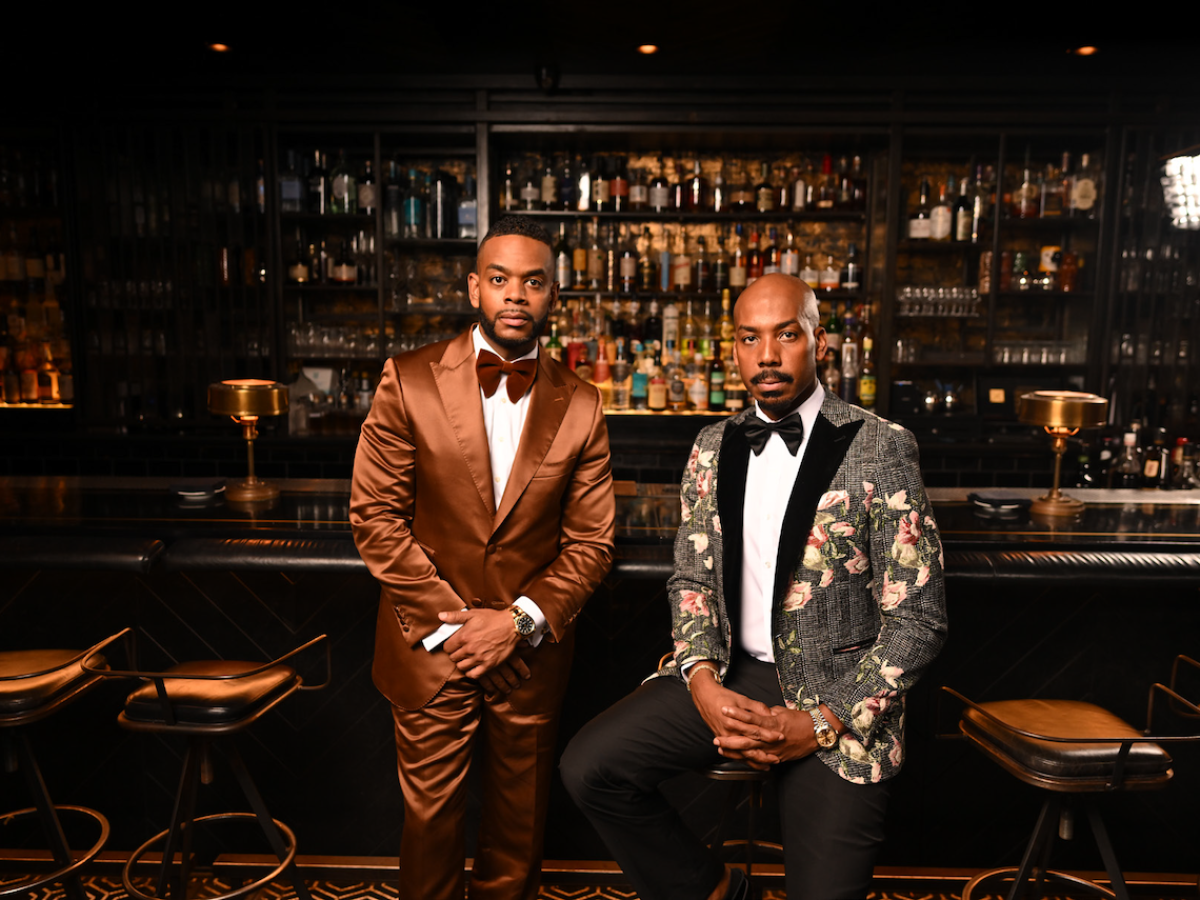
He hung up the phone and called his brother John, a partner at a D.C. law firm. “Do you want to go out and change the world?” Within a week, both brothers gave their notice, walking away from lucrative corporate careers to start “The Burns Brothers” in the middle of a global pandemic.
Talk about going big, or go home right?
Well, four years later, that spontaneous decision has evolved into a business spanning hospitality, marketing communications, events, and talent development, with a footprint that stretches from Washington D.C. to Kenya. As a DMV resident, I’ve seen firsthand how the brothers have stamped their influence on the city, with only growing influence in this city and beyond.
But for Michael and John Burns, success has always been about more than building businesses, but instead creating spaces where Black professionals can exhale, connect, and be themselves, while building bridges back to Africa.
“We always grew up in a space where we saw the ability to kind of create your own destiny through creating your own business,” Michael explains, crediting their mother, who built one of the largest pediatric practices in Texas as a Black woman from Mississippi. Even with that entrepreneurial foundation, neither brother initially planned to start a family business. Both were climbing corporate ladders when George Floyd’s murder changed everything.
The genesis of The Burns Brothers came from Michael’s unique position as former head of diversity for Citi Group’s institutional businesses. He knew corporations would struggle to make authentic connections with their Black employees in the aftermath. Their first client was Citi itself, where they interviewed every single Black employee for one hour to gain genuine insights.
“We ended up creating this business that all we did was go in and help companies better understand their Black employees,” Michael recalls. “We could actually create solutions that would be not only authentic, but affected because they came through the real lens of problems sets that this population had versus somebody in talent or HR developing what they thought was right.”
That initial consulting work naturally evolved into four distinct business lines. When they saw companies struggling to communicate with employees, they launched Manchester Park, a marketing communications arm. When they realized real progress needed face-to-face connection, they moved into events. And when they noticed that after events ended, people who looked like them had nowhere to go, they created HQ—a membership club deliberately designed as a “house” where Black professionals could feel most comfortable.
“[We] oftentimes are the “onlys” in any room,” Michael explains. “And those people need a space where they don’t have to wear an armor or they don’t have to wear a facade.”
Now you may be thinking (because I did): brothers and business partners? Obviously, mixing family and business can sometimes be tricky. Not for these brothers. The partnership works because their skills complement each other effectively. Michael, a former Army officer with extensive corporate experience running billion-dollar P&Ls and managing 22,000 employees, handles operations and business strategy. John, with his legal background and natural charisma, focuses on business development and innovation.
“John really flees into the business development and the growth, and then how do we innovate and continue to pivot as an organization,” Michael says. “John’s like the front man, so he’s out there hugging and kissing babies and doing all that stuff. But then I sit more in the background, just making sure that the business runs effectively and efficiently.”
The brothers, who have already accomplished so much (and if you’re unfamiliar and need proof, just look up photos from the White House Juneteenth concert back in 2023 and 2024 — during the other administration) are particularly focused on Africa as the next great frontier for Black entrepreneurs. They’ve already established HQ Kenya and are planning Resonate Africa, a summit-concert hybrid launching this fall that will bring American talent, investors, and entrepreneurs to the continent.
“Africa is going to be 25% of the world population by 2050, has the youngest populations in the world, the most highly educated populations in the world,” John emphasizes. “If you’re not even a Black entrepreneur, if you’re not an entrepreneur and you have no focus on engaging the continent in some capacity, then I think you’re completely off.”
Their concern is pointed. While Chinese, Ukrainian, and Russian investors are heavily investing in Africa, Black Americans are largely absent from these opportunities. “That’s incredibly concerning to us because we’re there so often and we see this gold mine of opportunity, and us as people of color are not even close to partaking in it.”
The Burns Brothers have successfully navigated the recent corporate pullback from diversity, equity, and inclusion initiatives by building their talent and culture business around behaviors rather than traditional DEI frameworks. “We never taught classes on privilege or classes on how do women work in the workplace,” Michael explains. “Our talent and culture business was always built around behaviors. So what are the behaviors that create a diverse environment?”
This approach has allowed them to maintain clients even as many companies retreat from DEI commitments. “The behaviors are the same behaviors that are what makes you a good leader, what makes you a good manager,” Michael notes.
Their upcoming book, “The Continuum of Change,” launches September 16th and outlines their proprietary framework for creating sustainable change through listening, understanding, connecting, acting, aligning, assessing, and adjusting. Each chapter includes personal vignettes and reflection questions for readers.
They’re also launching The Nomad next month, a coffee lounge-to-cocktail bar concept on the second floor of HQ that celebrates cultures from around the world. Looking ahead, the Burns Brothers are exploring a Marriott-style expansion model for hospitality—leveraging their brand and community without taking on additional real estate risk.
But perhaps their most ambitious dream involves politics. Michael hopes to play a role in potentially supporting Maryland Governor Wes Moore should he pursue the presidency. “If we could say, and my little boys could look at a screen to see another Black president and we had something to do with that, for me, that would be a dream.”
The Burns Brothers want their legacy to center on creating authentic spaces where people can be themselves, and serving as a bridge between Black America and Africa. “I want our legacy to be that we were able to drive awareness and education engagement and create opportunities people never thought they could partake in,” John reflects.
As Michael puts it, “I want someone to say that we were so successful, but yet they still saw themselves in us and they saw us in them.”