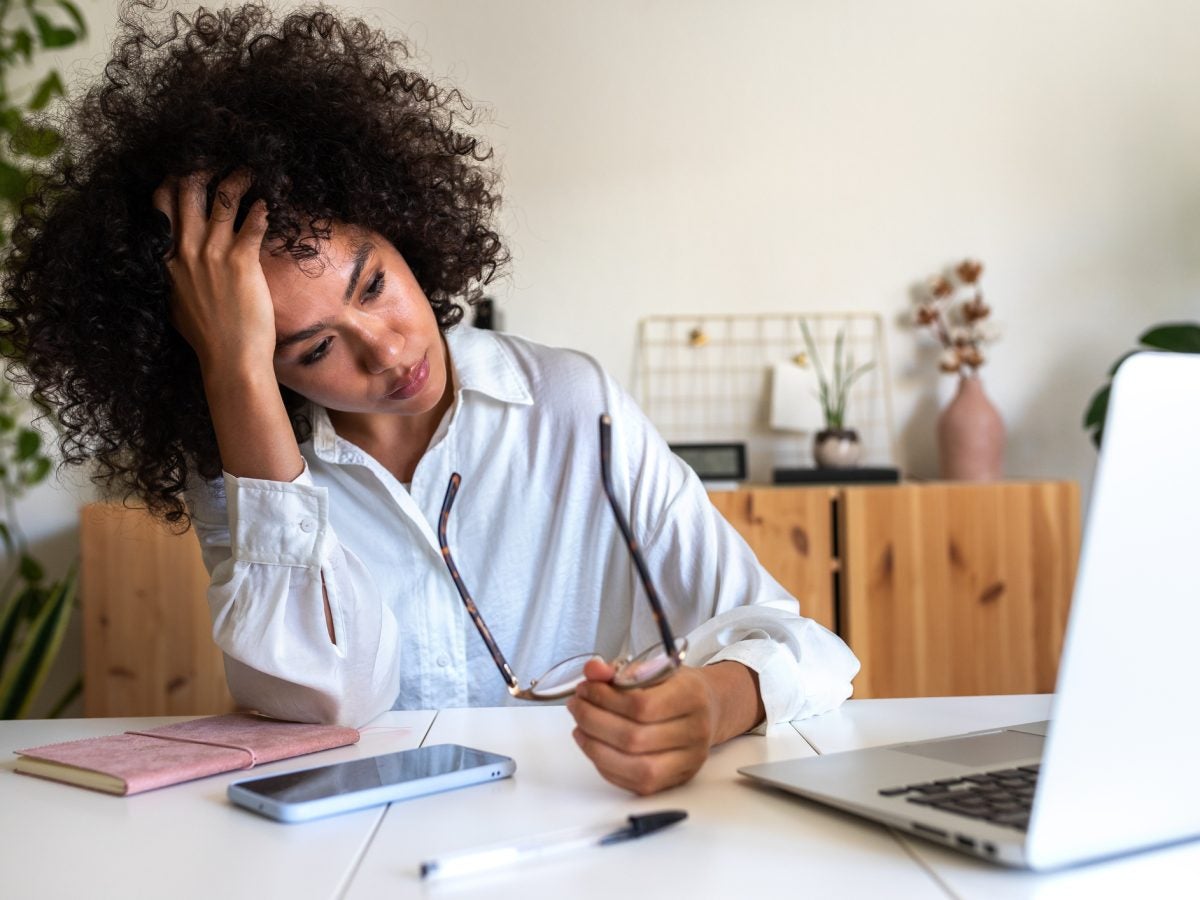

At the intersection of ambition and adversity, Black women entrepreneurs are carrying a heavy load. Tasked with overcoming funding gaps, racial and gender bias, and the pressure to succeed at all costs, many are navigating what feels like a relentless grind. And as the mental health conversation grows louder across industries, Black women in business are naming what’s been true for years: burnout is real—and it’s costing them.
“I want us all to stop faking. We don’t all have it together. No one is perfect. No one is always happy,” said Melissa Butler, founder of The Lip Bar, in an interview with Authority Magazine. “There’s beauty in being real, in showing vulnerability.”
For Butler and so many others, the pursuit of excellence isn’t just about success—it’s also about survival. In a world where Black women entrepreneurs are often seen as exceptions, not the norm, the stakes of failure feel crushingly high.
The “Strong Black Woman” Myth and Its Toll
The expectation to always push forward without complaint—the “strong Black woman” trope—remains one of the most damaging cultural scripts Black women face. According to the National Alliance on Mental Illness (NAMI), this archetype can hinder emotional expression and lead to untreated mental health struggles.
“The resilience we celebrate so often comes at the expense of rest and care,” said Dr. Joy Harden Bradford, licensed psychologist and founder of the popular Therapy for Black Girls podcast. Her platform has helped normalize therapy for thousands of Black women who have historically been shut out of—or stigmatized by—mental health spaces.
Burnout Is the Norm, Not the Exception
The numbers tell a sobering story. A 2021 report by the Harvard Business Review revealed that Black women are among the most likely to experience “high-effort coping” burnout—feeling the need to constantly overperform to prove themselves in environments that question their competence.
Samia Gore, founder of Body Complete Rx and FoundnWell, understands that pressure well. “I was suffering from PMDD [premenstrual dysphoric disorder], and it took years before I was even diagnosed,” she previously shared with ESSENCE. “My business was thriving, but I was struggling. I had to learn how to separate my value from my productivity.”
Her health scare ultimately inspired her to launch FoundnWell, a mental wellness platform designed to serve Black women with culturally competent care providers and community support.
Karen Young, founder of the inclusive body care brand Oui the People, similarly recalls the emotional labor of leading during collective crises like the COVID-19 pandemic, 2020 racial uprisings and the recent election.
“There were days I cried before meetings,” she said. “We were expected to keep selling products while mourning—and I was running out of energy to pretend I was okay.”
Redefining What Success Looks Like
Instead of chasing traditional business blueprints rooted in overwork and hustle, many Black women are carving out a new model—one that centers sustainability, wellness, and self-preservation.
“Wellness is not optional,” said Cassandra Hill, founder of Holistic Living Consulting, in an Authority Magazine feature. “On our road to success, we neglect ourselves. But the most important asset we have is this: us.”
For Hill, true empowerment comes from helping women prioritize healing through a blend of faith-based coaching, herbal remedies, and accountability.
Even among more public-facing entrepreneurs, the need for boundaries is becoming non-negotiable. Butler—whose brand is now carried in over 1,000 Target stores—says transparency is one of her greatest tools. “I’d like to start a movement for us all to stop faking; no one is perfect,” she told Authority. “There’s nothing wrong with saying, ‘I’m tired.’”
Building Better Ecosystems
Beyond personal coping strategies, the conversation is shifting toward structural change. Communities like Black Girls Breathing, founded by breathwork practitioner Jasmine Marie, offer safe spaces for Black women to process stress and trauma. Through accessible virtual sessions and partnerships with global wellness brands, the collective has reached over 16,000 women.
Another vital organization, Sad Girls Club, founded by filmmaker and mental health advocate Elyse Fox, helps Gen Z and millennial women of color connect to therapy, tools, and peer support. Fox’s goal? To make conversations about anxiety, depression, and trauma feel as natural as skincare routines.
Even tech founders are stepping in. Platforms like InnoPsych, launched by Dr. Charmain Jackman, aim to dismantle the barriers that keep Black and brown people from accessing care—whether that’s cost, stigma, or lack of representation.
Moving Forward: Rest as Resistance
As more Black women redefine the meaning of success, there’s a growing acknowledgment that rest is not laziness—it’s liberation. And community—whether found in group chats, group therapy, or group breathwork—is the balm.
“There is no badge for suffering,” said Gore. “And no amount of burnout is worth your peace.”