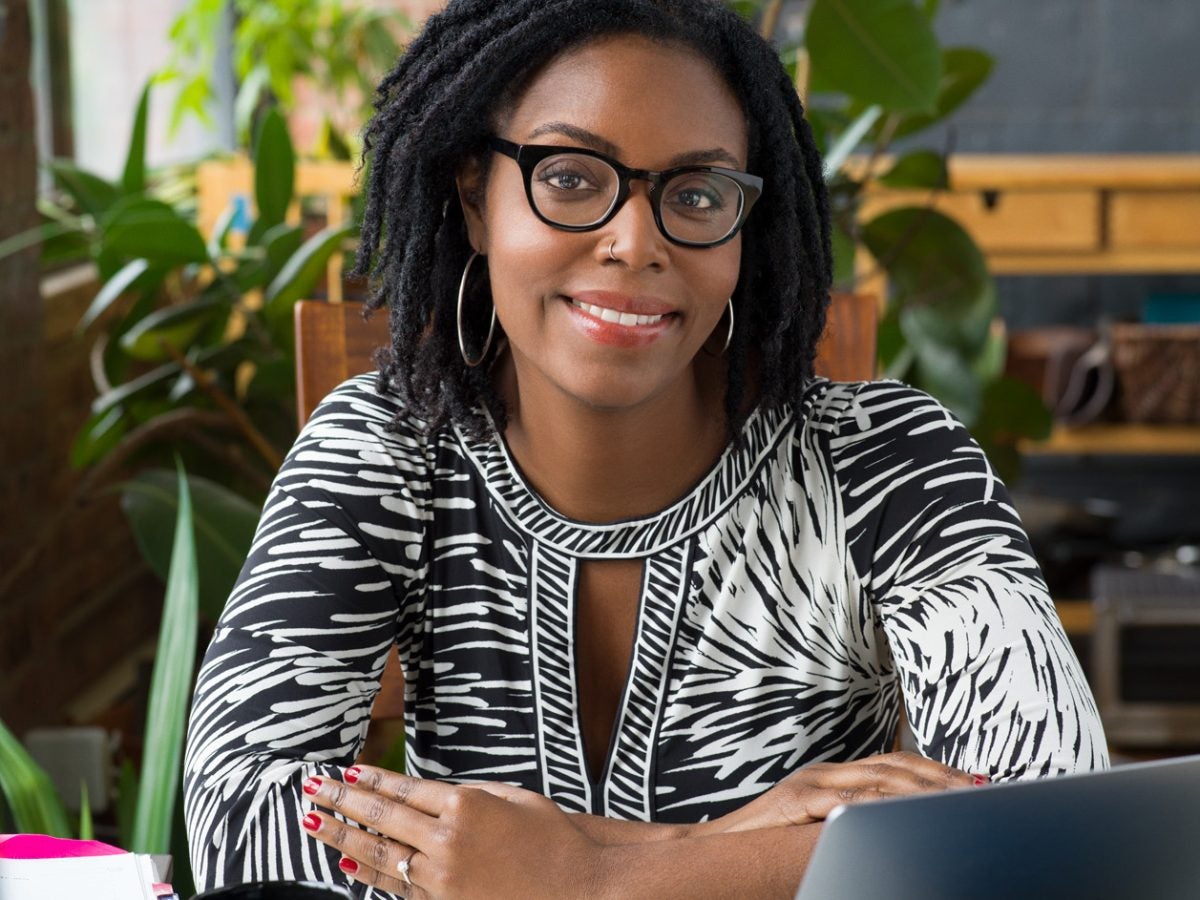

The world was initially introduced to Reniqua Allen-Lamphere as an award-winning journalist, scholar, author, senior television producer, and noted director. However, more recently, she has taken on a new challenge, becoming the founder of Oshun Griot. This wellness app and platform, which just launched last month, supports people of color navigating infertility. She’s also a proud wife and mother to two rainbow babies, a boy named George and a girl named Charlie. She was in her early 40s when she gave birth to both of them.
Allen-Lamphere, like many women, hasn’t been a stranger to infertility issues, as she’s been dealing with reproductive health challenges since she was 13 years old and can recall herself often lying on bathroom floors, due to excruciating cramps, which she had later learned were caused by multiple fibroids (some of them the size of grapefruits) and endometriosis. Unfortunately, Allen-Lamphere’s bout with infertility isn’t an uncommon story, as 1 out of 6 American families face infertility, according to the World Health Organization.
“I’ve been in hospitals often, and no one had any answers for me. I was given birth control pills way before I even started having sex, and when I was in my late 20s, I had a myomectomy for fibroids, like so many other Black women do, and was told I had endometriosis. It was the first time I’d even heard of the term endometriosis,” Allen-Lamphere says to ESSENCE, reflecting her infertility journey. “I just thought that everything was broken. I thought I was broken. I felt like my uterus had long been broken, and it was continuing to fail me.”
Years later, happily married and eager to have children, she received word from her doctors that she was infertile, which was alarming. On a quest for answers and solutions, she began to do research (like any good journalist), joined Facebook groups, downloaded every possible fertility app available, interviewed doctors, and even embarked on an IVF journey, which didn’t result in success. What she discovered was a lack of diversity within in-person support groups, which in turn birthed Oshun Griot, the first infertility wellness platform explicitly designed for people of color, based on real-life experiences and the understanding that fertility decisions shouldn’t be siloed.
The name of the wellness platform has African origins, as Oshun is the Yoruba goddess of fertility and love, and “griot” refers to a storyteller in African culture. “I was inspired to name it that, because I realized that for so long, especially for Black and other communities of color, our stories of our fertility weren’t told in the way we would’ve wanted them to be; instead, it’s been controlled by other people. This platform is designed to help us share our own stories, because they’re powerful. The Black family is important. Black children are so centrally important. However, the story of how we build our families is also important. And for too long, we have not been in control of our fertility, and it’s felt like it’s been in the hands of other people,” she says, which is why Allen-Lamphere wants Oshun Griot to provide a safe space for people to feel empowered to share their story of infertility. “One of the biggest things I hear when I talk to people is that they’ve felt like they couldn’t talk about infertility. The words “stigma” and “shame” frequently appear. Oshun Griot is a place to erase all that,” she states.
Although there are plenty of infertility apps currently on the market, Oshun Griot stands out because it doesn’t just offer a directory for medical experts or trackers, it provides resources that inspire community, like culturally grounded content: expert Q&As addressing fibroids, PCOS, medical bias, and providing support for partners witnessing their loved ones going through infertility. Additionally, Oshun Griot offers healing rituals, including meditations, yoga, and affirmations rooted in cultural traditions, as well as real-life stories from individuals of color navigating their fertility journeys, and helpful yoga videos.
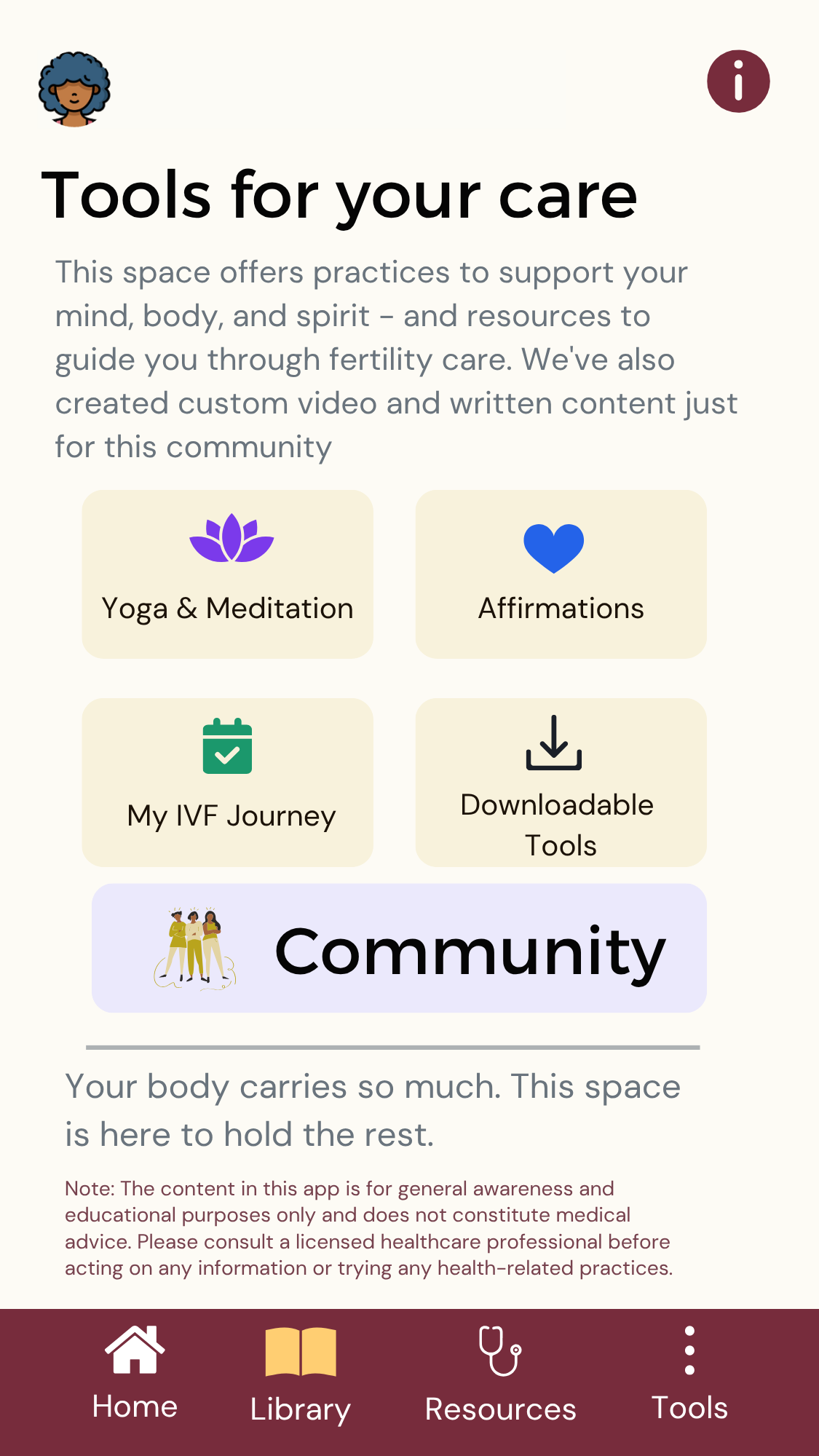
Lastly, the platform is offering healing boxes for hopeful parents, which are carefully curated for difficult moments during the IVF process, like the two-week wait (which is the time between your embryo transfer or IUI (intrauterine insemination) and when you return to the clinic for a pregnancy test) and failed cycles, to support the hopeful mom-to-be and her partner. While the app doesn’t solely focus on providing medical experts, Allen-Lamphere is proud of the experts and advisor they have available, which are mainly persons of color: Dr. Kecia Gaither, medical advisor, OBGYN and maternal-fetal medicine specialist, Dr. Ashley Elliott, mental health advisor and licensed therapist and wellness educator, Mel Douglas, yoga and wellness expert and founder of Black Women’s Yoga Collective, Namrata Rohack, fertility yoga educator and more.
“It was important that this platform wasn’t just another tracker, or not just be a place that simply has a directory, although those things are significant. However, in the political times we’re in, where we’re not sure if we can even access fertility care, it felt like a time when we needed something more. We’re also launching healing boxes in the next couple of weeks, so people can have something physical to hold on to. We understood that this app needed to feel like a more comprehensive package, as a lot of apps don’t deal with the nuances of infertility at all,” she says.
You can download Oshun Griot on the App Store and Google Play or access their website here.