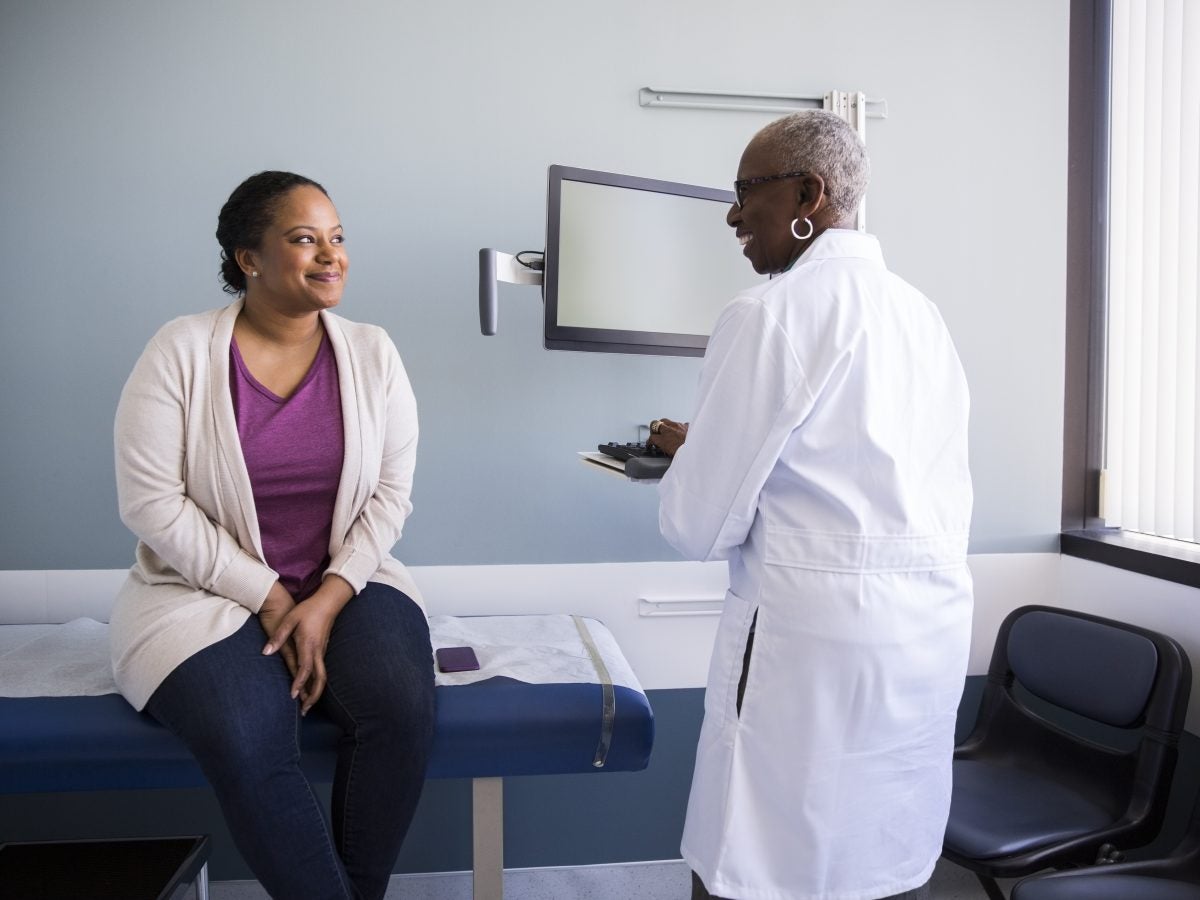

Fibroids have plagued our community for far too long. According to a recent study, 40% to 80% of women are most likely to develop fibroids by the time they reach 50 years old, with Black women three times more likely to get fibroids.
Unfortunately, Black women are often underdiagnosed and undertreated when it comes to fibroids. There’s no exact cure outside of medication to shrink uterine fibroids and surgeries, which include a myomectomy (removal of fibroids while preserving the uterus), hysterectomy (removal of the uterus), and uterine artery embolization (UAE). There are some additional procedures like hysteroscopic myomectomy, which is the removal of fibroids through the cervix, and endometrial ablation (which does not remove fibroids but can help with heavy bleeding).
Although many have been diagnosed with fibroids, they are not sure how to advocate for themselves in the doctor’s office. Dr. Kameelah Phillips, trusted OBGYN, suggests the following: “Women can advocate for themselves in dealing with fibroids by first of all, not ignoring symptoms that may seem like red flags. I can’t tell you how many times women present far along in their fibroid journey because they either didn’t prioritize their health, or didn’t think it was anything, or were in some level of denial about symptoms,” she states.
Phillips continues, “We mustn’t be in denial, because we drive our healthcare, and if you don’t say something, there’s a chance that your doctor is not going to ask. Therefore, you must recognize and acknowledge the symptoms. The second thing is to know that if we are evaluating fibroids, you need imaging, either an ultrasound or MRI, and then, you need to follow up on that imaging with a visit to understand the real estate of the fibroids and how location influences your symptoms and how location also influences your approach to treatment strategies.”
So, what are uterine fibroids?
Uterine fibroids are essentially non-cancerous tumors, also known as fibromyomas, leiomyomas, or myomas, which are growths of muscle within the uterine wall. The size of a fibroid can typically range from a small nickel to a grapefruit before it’s discovered, and it’s possible to have multiple fibroids all at once. These fibroids can be located on the surface of the uterus, in the wall of the uterus, or the uterine cavity. While there are hormonal medicines for fibroid treatment, like oral contraceptives, gonadotropin-releasing hormone agonists, and progestins, some women are leaning on eastern medicine, including acupuncture and herbal remedies, for relief and care.
Elix (Elixhealing.com), the first wellness platform to scale Traditional Chinese Medicine (TCM) through clinical research and personalized herbal care, is proud to announce the launch of its first clinical study focused on uterine fibroids. This July, in recognition of Fibroid Awareness Month, Elix is amplifying the voices of those affected by sharing powerful stories, evidence-backed resources, and free consultations with doctors of Chinese Medicine to offer root-cause support for those who’ve struggled to find answers through traditional care.
To advance education and advocacy around fibroids, Elix is:
Launching an IRB-approved independent clinical study evaluating the efficacy of personalized and organic herbal formulas for fibroid symptom support.
Offering free health coaching for the rest of July to support individuals navigating fibroid symptoms or diagnoses.
Publishing a Fibroid Resource Guide, answering top questions sourced from women nationwide—covering topics like how to advocate for yourself in the doctor’s office, identify early warning signs, and incorporate evidence-backed diet and lifestyle modifications from a holistic East meets West perspective to support fibroids.
Uterine fibroids are non-cancerous growths that develop in or around the uterus, affecting up to 80% of women by age 50, yet remain critically under-researched, stigmatized, and systemically neglected. Despite their prevalence, there are currently no long-term, noninvasive treatment options, mainly due to gaps in understanding their molecular origins.
The burden is even greater for women of color and especially Black women, who are more likely to develop fibroids earlier and experience substantial health issues, including heavy menstrual bleeding, chronic pelvic pain, infertility, pregnancy complications, and are the leading reasons for hysterectomy.
We’ve tapped Elix Healing consultant Dr. Sarah Viducic, a licensed acupuncturist and clinical herbalist with advanced training in Traditional Chinese Medicine (TCM), for her thoughts on fibroid healing.
What are some clear signs that a woman might be suffering from fibroids?
- Heavy or prolonged periods, often with clotting
- Pelvic pressure, cramping, or lower back pain
- Bloating or visible abdominal swelling
- Frequent urination or difficulty emptying the bladder
- Painful periods/cramps or pain during sex
- Fatigue due to blood loss or anemia
- Constipation or changes in digestion
- Fertility challenges
Many women normalize these symptoms, but they can signal an underlying issue like fibroids.
What steps should someone take if they suspect fibroids?
- Track your symptoms over a few cycles (3-6 cycles is ideal!)
- Visit a gynecologist and request an ultrasound or MRI
- Ask about the size and location of any fibroids and how they may affect fertility or quality of life
- Explore treatment options that align with your values and goals. From medical to holistic, or a combination, including Traditional Chinese Medicine (TCM) support like Elix’s personalized Cycle Balance formula
What can women do to manage fibroids without surgery?
Lifestyle and nutrition support
- Focus on warm, cooked, anti-inflammatory foods like root vegetables, ginger, turmeric, and leafy greens.
- Reduce sugar, processed foods, and alcohol, which can disrupt hormonal balance.
- Prioritize sleep, stress management, and regular movement to support liver and hormone health.
Acupuncture
- Helps improve circulation, reduce pelvic congestion, and regulate hormones naturally
Herbal support
- Elix’s customized Cycle Balance formula is rooted in TCM and personalized based on your hormonal patterns, assessed through Elix’s free Online Health Assessment. Cycle Balance is designed to support a healthier cycle and a lighter, more balanced flow using herbs traditionally used to manage fibroid-related symptoms:
- Angelica Sinensis (Dang Gui) helps regulate hormones and reduce menstrual pain
- Poria (Fu Ling) eases bloating, supports relaxation, and reduces inflammation
- Moutan (Mu Dan Pi) promotes healthy circulation and relieves cramping
Are there medications or supplements that can help?
Yes, and combining approaches can be especially effective! It doesn’t have to be an either/or situation, western conventional care and TCM work better together.
Herbal and integrative support
- Clinical studies show that combining Chinese herbal medicine (CHM) with Western medications like GnRH agonists can improve outcomes while reducing side effects. Elix’s Cycle Balance uses herbs studied for their ability to support hormone balance, improve uterine circulation, and reduce symptoms like cramping, clotting, and prolonged bleeding.
- Clinical trials show that CHM can:
- Reduce fibroid size
- Improve regularity of menstrual cycles
- Ease heavy bleeding and pelvic pain
- Lessen side effects when used alongside Western treatments
- They do this by: Lowering blood viscosity and reducing blood clots, regulating hormone levels and supporting endocrine balance, reducing inflammation and provide natural pain relief, improving immune function, and offering anti-tumor properties that may help shrink fibroids
- Elix is conducting its third independent IRB-approved clinical study—making it the first wellness platform to scale Traditional Chinese Medicine (TCM) with personalized herbal formulas backed by research.
- This study explores:
- How personalized Chinese herbal medicine can relieve fibroid symptoms like heavy bleeding, pain, and bloating
- Whether herbal formulas can improve overall quality of life
- Symptom improvement using validated questionnaires
- This study explores:
- Elix formulas that support the symptoms associated with fibroids (they can be layered together for a complete holistic approach):
- Cycle Balance: Customized herbal blend, based on the results from Elix’s free Online Health Assessment, that targets the root causes associated with fibroids, what TCM calls your pattern diagnosis.
- Herbal Digestif: Regular elimination helps detoxify excess hormones. Elix’s Herbal Digestif is a great digestive ally to have on hand.
- Elix’s Daily Harmony: Stress impacts hormone balance, Elix’s Daily Harmony is a helpful herbal blend for anyone whose symptoms worsen with stress—it supports calm and balance in the face of everyday stressors.
- Yin Time: Alcohol may worsen fibroid symptoms. Try Elix’s Yin Time to wind down—97% of users reported feeling more relaxed within an hour.
- Ginger Aide: Many Elix community members with fibroids love pairing their custom Cycle Balance formula with Ginger Aide to provide extra support for bloating
What are the surgical options?
Surgery may be recommended in more advanced cases or when fertility is not a concern.
- Myomectomy removes fibroids while preserving the uterus, ideal for those wanting to maintain fertility
- Hysterectomy removes the uterus and is considered a permanent solution
- Minimally invasive procedures like laparoscopic myomectomy may offer quicker recovery
- Fibroid ablation: For those not trying to conceive, it is a non-surgical option. This involves blocking blood flow to fibroids, causing them to shrink by 30–60%.
- There are many methods of ablation, one being radiofrequency ablation – a minimally invasive treatment that uses heat to shrink fibroids individually, helping to reduce their size and ease symptoms.
Why is there still no cure for fibroids?
- Fibroids are driven by a combination of hormones, inflammation, and genetic factors
- They often return even after removal, which makes prevention and management essential
- Fibroid research remains underfunded. In 2019, the NIH allocated only about 17 million dollars to fibroid research despite its widespread impact and annual economic burden of over $41.4 billion in 2022
- Just $0.58 per patient is spent annually on fibroid research.
How can women with fibroids advocate for better care?
- Keep a journal to track symptoms like bleeding, pain, and cycle length
- Be proactive and ask for imaging to confirm or rule out fibroids
- Use Empowered Language & Ask Questions, Instead of “What do you recommend?” try:
- “Can you walk me through all my options—not just surgery or birth control?”
- “How will this affect my hormones, fertility, or long-term health?”
- “What are the risks and benefits of doing nothing right now?”
- Let your doctor know what matters to you:
- “I want to preserve my fertility.”
- “I want non-hormonal options.”
- “I want to avoid surgery if possible.”
- Seek second opinions, especially if surgery is the only treatment offered or you’re not feeling heard and validated
- Ask about holistic and integrative options like herbal medicine and acupuncture
- Connect with Elix for personalized education, community support, and clinically backed herbal options:
- Elix offers access to a team of Doctors of Chinese Medicine – schedule an Herbal Consult to discuss how Cycle Balance and Elix can be a partner in your fibroid journey.