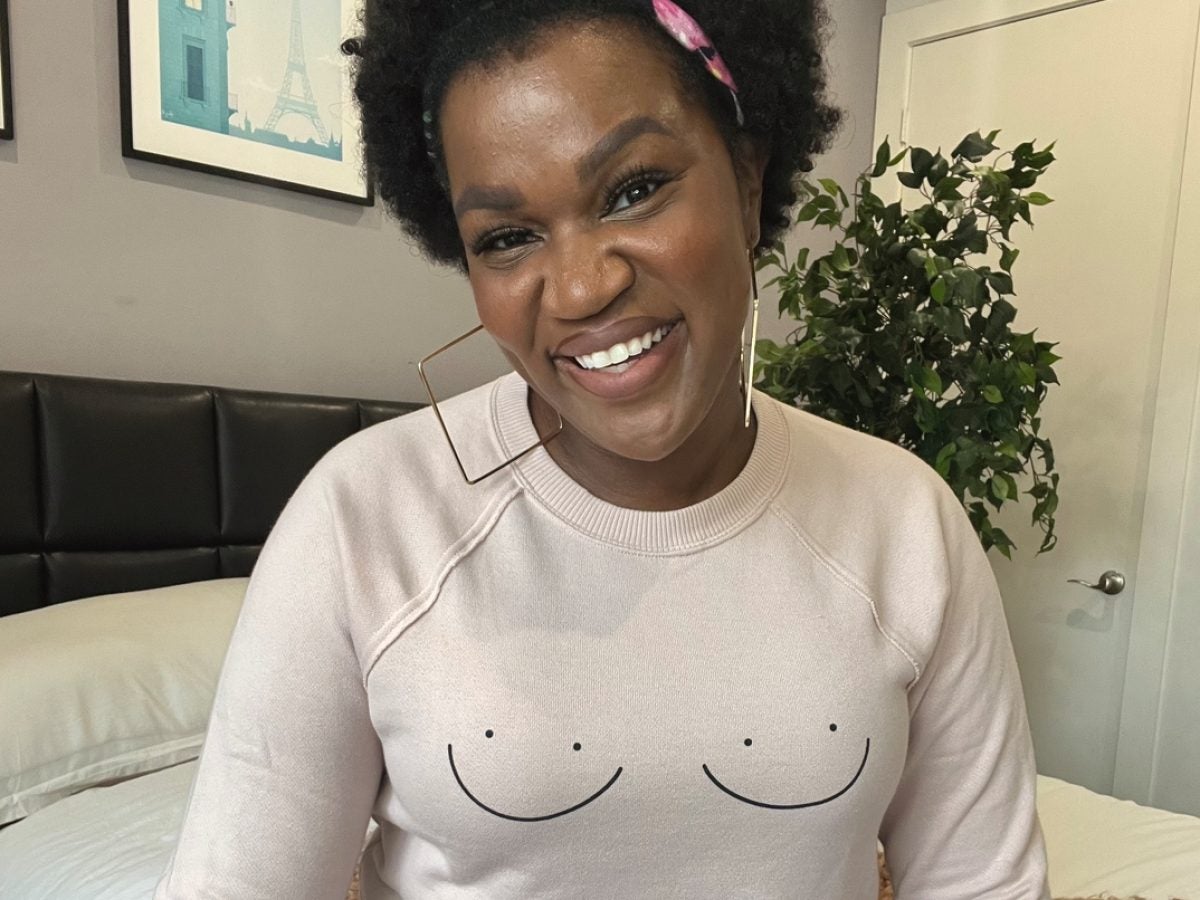

Navigating a cancer diagnosis can be both a devastating and empowering experience. Having a village to help you move through doctors’ appointments, excruciating pain, treatment, and the unnerving fears can contribute to it being the latter. Not everyone chooses to have the support of a village, though. Brooklyn Olumba’s aunt kept her diagnosis a secret for almost three years. She didn’t reveal her cancer diagnosis until she had only a few months left to live.
“It was very shocking because to our knowledge, this was the first person in our family who had breast cancer,” Olumba says. “Little did we know that [it] actually had been throughout our family.”
Olumba felt sad that her aunt felt she couldn’t talk to their family about her diagnosis, especially since she was under the perception that they all had a close-knit relationship with her.
“We just felt bad we couldn’t support her when she was going through some of the hardest times in her life,” she says.
The sudden passing of her aunt lit a fire under Olumba. At 22, she decided to go on a quest to learn about her family’s history with cancer. Her fraternal twin sister chose to do BRCA2 gene testing, which analyzes your blood or saliva to identify inherited mutations linked to various types of cancer, breast cancer included. Olumba got tested a few years later. The cost of genetic testing can range from $100 to $2,000, according to MedlinePlus.gov.
“I found out when I was 25, my sister found out when she was 22, that we both carried that same genetic mutation,” she says. They had an increased lifetime risk of up to 75% for breast cancer, so as a result, Brooklyn began getting annual breast cancer screening mammograms with her care team at Penn Medicine’s Basser Center for BRCA. Prior to that, she would do exams once every three years when she saw her gynecologist.
Those annual tests may have saved her life.
A few days before the pandemic started, at the age of 28, Brooklyn was diagnosed with Stage 1 breast cancer. “I was stressed a little bit myself. I felt worse about having to tell my family this, having to tell my mom, who just witnessed her sister pass away from breast cancer,” she adds, also noting that she worried this news would lead to the end of her three-year relationship with her now husband.
Deciding to take a different approach than her aunt, Olumba broke the news to her loved ones and allowed them to support her through cancer treatment. Both her mom and twin sister moved in and took care of her, thanks to their ability to work remotely during COVID.
“They were taking me to chemo, my mom was making me food. I wasn’t doing much, so they were keeping my apartment clean and just being a source of company, so it didn’t feel so isolating,” she says.
After getting diagnosed, Brooklyn became an advocate for women going through breast cancer via social media and plans to spread her reach to impact policy. For now, she continues to emphasize the importance of learning your family history, which was a critical step that led to early diagnosis for her.
“I want people to know that it’s really important to know your risk. And knowing your risk means talking to your family,” she says. “It means getting a true family history of what all kinds of chronic conditions people in your family have, especially with cancer.”
This advocacy work is transformative for Olumba. Talking about her health journey publicly was healing, despite the pushback she received from some family members who think it should be “private.”
“I think it’s equal parts healing for me, as I think it is for other people, seeing a young person who is a person of color going through breast cancer treatment at 28,” she says.
She recommends addressing minor issues promptly and not putting off getting concerns checked out. It could turn out to be cancerous and be detected too late in some instances. People who are diagnosed and treated while breast cancer is localized (hasn’t spread beyond the breast) are also about 90% as likely to live for at least five years after being diagnosed. Additionally, Olumba reminds us that age is no longer a factor when it comes to getting tested.
“We’re seeing younger people diagnosed, and people have to start paying attention to their bodies and being informed and being more aware of what’s going on with the breast cancer space.”
Now that Olumba has overcome this chapter, her view of health and wellness has evolved. She’s become her own biggest advocate and is much more mindful about what she consumes.
“I try to pay way more attention to the foods I eat, the things that I consume, the different products that I use,” she says. “Like I’m looking at ingredient labels now, which I was not doing before.”
Olumba’s journey has reshaped not only how she cares for herself, but how she sees the importance of being proactive in wellness. What began as a hidden family diagnosis has become a powerful motivator for change. Now, with clarity and confidence, she’s committed to staying ahead of her health and empowering others to do the same.