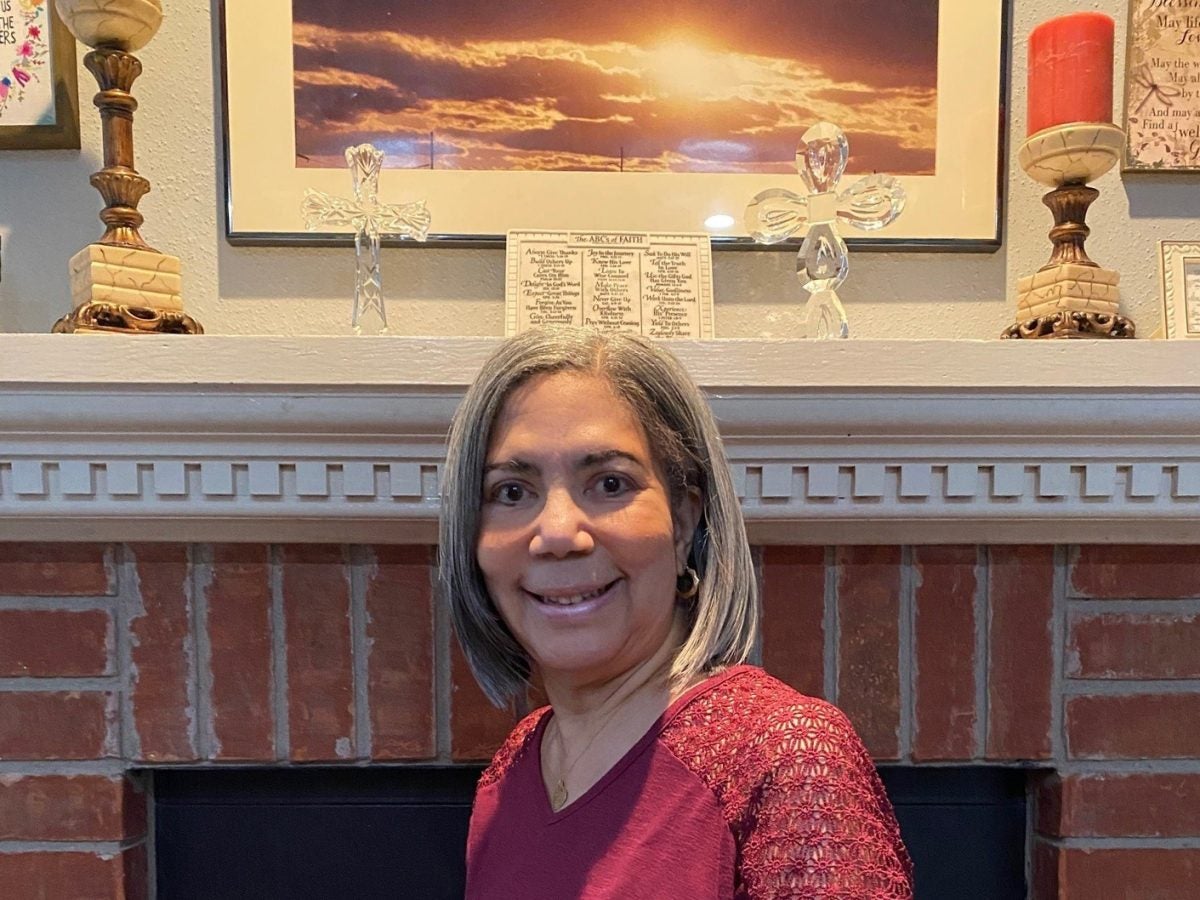

In the heart of Houston, Texas, Lynce Lucas stands as a testament to hope, strength and determination. Her battle with multiple myeloma—a complex and often misunderstood blood cancer—began in 2017 with a life-altering moment. “I hadn’t been feeling well for a while…and then, one day, I woke up and found I was losing my ability to walk,” Lynce recounted.
For Lynce, and countless others within the Black community, the burden of cancer is especially heavy. Multiple myeloma is twice as common in Black Americans compared with other ethnicities and twice as deadly as it is for white patients [i],[ii] —a troubling statistic that reflects deep-rooted health disparities in cancer. The picture is no better in other cancers: Black women face a 41% higher mortality rate from breast cancer than their white counterparts, and Black individuals are more often diagnosed with late-stage colorectal and lung cancer, dramatically impacting their chances of survival.[iii], [iv]
Despite these serious statistics, Lynce has emerged as an advocate and voice of resilience. Throughout her journey, which included surgery, chemotherapy, radiation, grueling physical therapy, immunotherapy, a stem cell transplant and most recently CAR T-cell therapy, she found strength in adversity. “Living with cancer gives you a heightened awareness of life,” Lynce shared candidly. “I know what it’s like to lose the ability to walk on my own, and today, I’m still standing.” Surrounded by the unwavering love of family, friends and her community, she is filled with gratitude and a determination to give back. “I’m just grateful to be alive…and to have the chance to help others.”
Her desire to make a difference led Lynce to become an advocate, volunteering her time to support others with blood cancer and joining the Pfizer Multiple Myeloma Patient Steering Committee. This steering committee plays a vital role in helping to ensure Pfizer’s efforts supporting multiple myeloma patients are informed by those living with the disease. Active participation, like Lynce’s, is crucial in driving these initiatives forward. Rob Ruckman, Director of Advocacy & Professional Relations at Pfizer, noted the value she brings: “Lynce has been a critical part of our Multiple Myeloma Patient Steering Committee since its inception. Her insights and enthusiasm make every conversation a delight.” For Lynce, it’s about community engagement, sharing her experiences and empowering others on the same journey she has faced. “I find as I give back, I get more in return,” she shared, reflecting on the deep sense of purpose her advocacy brings.
Lynce’s journey highlights not only her personal resilience but the broader need for systemic support and community involvement in addressing health disparities. For Pfizer, the Multiple Myeloma Patient Steering Committee is only the beginning. Pfizer has strategic partnerships with advocacy organizations to help promote health equity and provide community support. One such example is Pfizer’s collaboration with HealthTree for Multiple Myeloma, a nonprofit dedicated to empowering the relapsed and refractory multiple myeloma community by providing personalized support, education and guidance. Pfizer’s partnership with HealthTree aims to elevate awareness of educational programs and develop resources that meet the unmet needs of people living with relapsed and refractory multiple myeloma. HealthTree Coaches, who are experienced patients and caregivers, offer invaluable support, while HealthTree University empowers patients with the knowledge needed to help promote better outcomes.
Lynce’s story, while uniquely her own, is also a powerful reminder of the pervasive impact of cancer. And behind the statistics are real people, like Lynce, with lives impacted by cancer. This is why, in addition to community support efforts, Pfizer has partnered with the American Cancer Society to include the American Cancer Society CancerRisk360 assessment on PfizerForAll.com. This tool can help empower individuals to better understand their cancer risk factors and take proactive steps to manage their health.
Take control of your health today—visit www.PfizerForAll.com to access the American Cancer Society CancerRisk360™ assessment.
[i] Multiple Myeloma Research Foundation, (2023, December 17). Multiple Myeloma in Underserved Populations. https://themmrf.org/multiple-myeloma/underserved-populations/. Accessed 11 Apr. 2025.Accessed June 27, 2024.
[ii] SEER. National Cancer Institute. Myeloma – Cancer Stat Facts. https://seer.cancer.gov/statfacts/html/mulmy.html. Accessed August 28, 2024.
[iii] ACS Medical Content and News Staff. (2022, February 14). More Black Women Die from Breast Cancer Than Any Other Cancer. American Cancer Society. https://www.cancer.org/research/acs-research-news/facts-and-figures-african-american-black-people-2022-2024.html
[iv] Cancer and African American People. Centers for Disease Control and Prevention. (2025, February 13). https://www.cdc.gov/cancer/health-equity/african-american.html
PP-UNP-USA-5697