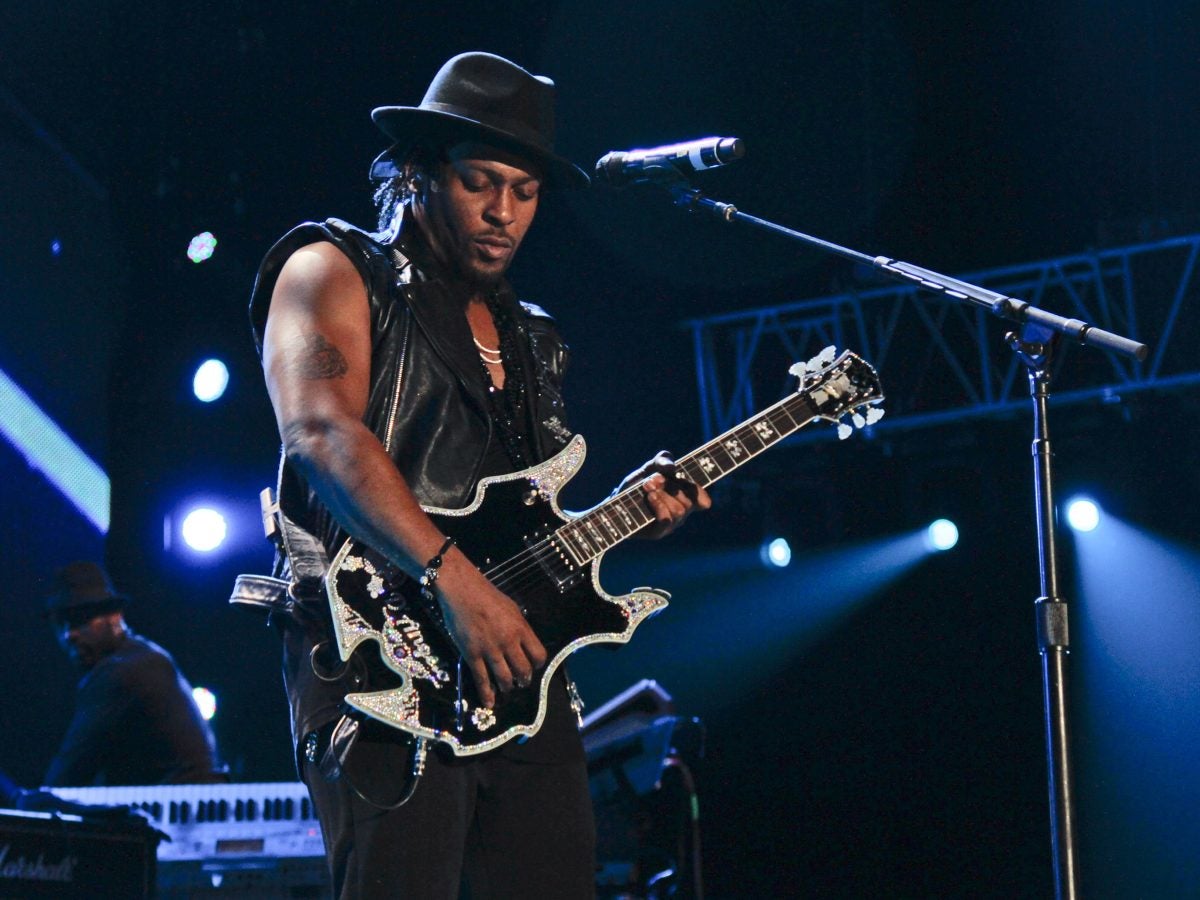

51.
That’s how old Michael Archer was when he passed away on Oct. 14, 2025. The artist, better known to fans all over the world as D’Angelo, had been privately dealing with pancreatic cancer. An incomparable talent, whose work I’d come to adore during college, is gone, and to make it all the more jarring, he was only 51 years old. It sounds too familiar.
Fatman Scoop was just 53 years old when he died of heart disease, collapsing on stage during a show in Connecticut in 2024.
Rapper Magoo, famously known for his work alongside superproducer Timbaland, was just 50 when he passed away from a heart attack in 2023.
Irv Gotti, producer and music executive behind Murder Inc. Records, cited for helping to spotlight talents like Ja Rule and Ashanti, even Jay-Z and DMX, was 54 when he passed from a diabetes-related stroke in February 2025.
David “Trugoy the Dove” Jolicoeur of De La Soul fame was 54 when he passed away in 2023. And while no specific cause of his passing was given, outlets recalled his previous openness about battling congestive heart failure.
The Wire and John Wick actor Lance Reddick, 60. Heart disease.
Famed DJ, radio personality, and record exec Mister Cee, who discovered the Notorious B.I.G., was 57. Diabetes-related coronary heart disease.
“Walk It Out” creator DJ Unk, 43. Cardiac arrest.
I could go on, and I hate that that’s possible. We all remember the heartbreak of learning about actor Chadwick Boseman’s abrupt passing in 2020 due to colon cancer at 43. And DJ Clark Kent, beloved hip-hop producer, also battled colon cancer before he passed in 2024 at 58.
What is going on?
So many of our Black male talents are abruptly passing, and while we hear of tragedies that are caused by violence, others from drugs, a great deal aren’t reaching elderly age because of health conditions that have become familiar antagonists within our community: heart disease, cancer.
According to the Office of Minority Health, with colon cancer, or colorectal cancer, from 2019 to 2023, Black men were found to have a five-year mortality rate that’s 37% higher than the overall population of American men.
Per VCU Health, Black men have a 70 percent higher risk of being diagnosed with heart failure than white men.
While music artists may seem different, their fame leading to them feeling out of reach and perhaps unrelatable, these disparities are present in their circumstances just as much as in those of everyday Black men. Because they are public figures, the prevalence stands out even more.
“This is really tragic, and what I would consider an epidemic currently,” says Leanne Woods-Burnham, Ph.D., assistant professor in the Department of Surgery at the Morehouse School of Medicine in Atlanta, where she focuses on prostate cancer health disparities and resides on the ZERO Prostate Cancer Medical Advisory Board.
“Prevention and early detection are the keys to healthy outcomes. So, the first step is actually going to the doctor. But we have a documented problem in the U.S. where clinicians often don’t talk to Black men, in particular, early enough about cancer screening options,” Woods-Burnham continues. “There’s a lot of reasons for this, but one major reason is that, unfortunately, our national screening guidelines do not factor in high-risk populations when it comes to blanket screening recommendations. And when I say ‘high-risk,’ I mean Black men and women.”
She notes that the U.S. Preventive Services Task Force suggests conversations about the benefits and cons of men being screened begin at 55, but Black men are often more likely to be diagnosed with prostate cancer in their 40s. “This is what happened to my dad. He received a diagnosis of aggressive prostate cancer at age 50, which means that the cancer was growing in his 40s. And we’re talking about a man who eats healthy, works out, and goes to the doctor. But if your doctor is not having the conversation and not screening you for treatable diseases, then you likely won’t realize you have an illness until you have symptoms, which is often too late,” she says. “I have published in a previous study that 54.8% of Black men reported their doctors not discussing prostate cancer screening during their appointments. This is a problem. And it is not isolated to prostate cancer.”
In addition to these failures, genetics also plays a role. “We can’t change our DNA. So, even if you do everything right in terms of your health, you need to stay on top of preventive measures and take advantage of screening tools offered in the clinic, which can detect cancers when they are early and curable,” she says.
And one can’t forget about systemic barriers that increase the likelihood of mortality. As Woods-Burnham explains, “Lack of insurance, lack of access to cutting-edge treatments, lack of inclusion in pivotal clinical trials, these all accelerate a snowball effect that lead to worse outcomes.”
There is a great deal, as Woods-Burnham notes, that is out of one’s control. However, there are still steps Black men can take to protect themselves, including being mindful of their health. Annual visits are essential. “Diseases don’t pop up overnight. They build up over time,” she says. That’s why it’s critical for men to advocate to receive prostate cancer screenings via a PSA blood test as early as 40 if they have family history and 45 otherwise. “They need to begin colon cancer screening at age 45, and there are different screening options. Lung cancer screening should start at age 50,” she adds. “Not all cancers have effective early screening tools, but these particular cancers do, and they are curable at early stages. These are cancers that are more prevalent in Black men than other men, so we need the men in our lives to stay on top of their health.”
Status is great, but it doesn’t guarantee a clean bill of health. Like the rest of us, celebrities can struggle to prioritize their well-being. In addition to health disparities, the constant grind within the industry of recording, touring, filming, traveling, and lack of rest, are not a far cry from the hustle of everyday men who work tirelessly. From entrepreneurs to heads of households, these demands can keep many from regularly seeing their doctors and obtaining regular screenings, and the stress of it all can lead to a decline in one’s health, including damage to the heart.
While we value men like D’Angelo and the many dear brothas mentioned for their talent and their contributions to the culture, they are so much more. They, like the men in our own lives, were fathers, partners, sons, brothers, and friends. In D’Angelo’s case, his eldest child, Michael Jr., lost his father and his mother in a matter of months this year. Their deaths are heartbreaking because fans will no longer be able to hear the music, watch the films, and enjoy the work. But this epidemic impacting some of our most extraordinary Black male talents is an alarm; a reminder that our Black men, and Black people in general, no matter their status level, are at risk. Therefore, the need to be vigilant about our bodies, our minds, and our spirits, our overall well-being, is greater than ever.
“All of the success in the world means nothing when you are staring death in the face,” Woods-Burnham says. “So, maximize your legacy and your impact by protecting your body and protecting your health. We need our Black men now more than ever.”