
Berlin Fashion Week has emerged as an important platform for African brands looking to grow their brand abroad. Nigeria’s Orange Culture, Uganda’s Buzigahill, and Ghana’s Palmwine Icecream each brought a taste of contemporary African fashion to the German capital, showcasing the range and multitude of creativity and craftsmanship emerging from the continent. The four-day event took place from June 30 to July 3, packed with runway shows, showrooms, and pop-ups, as fashion enthusiasts gathered to see BFW’s Spring/Summer 2026 offering. Also on the schedule were buzzy Berlin-based brands like Ottolinger and GmbH.
Historically, African designers have had limited representation at European fashion weeks due to factors such as the high costs of international showcases and a smaller international fan base. However, ongoing efforts by Berlin Fashion Week and Fashion Council Germany offer designers the chance to present in Berlin and engage with a new European audience—something many emerging designers have long desired. Last year, Palmwine Icecream, founded by Ghanaian designer Kusi Kubi, became the first African brand to win the Berlin Fashion Week concept competition in the Berlin Contemporary category. That meant the organization provided financial backing that enabled Kubi to present his Autumn/Winter 2025 collection in February. “I wanted to show in London, but the opportunity just wasn’t there, and the support you get as a new designer is not the same. Berlin and my brand complement each other in a way,” he said, pointing to the frequent use of leather across his collections.

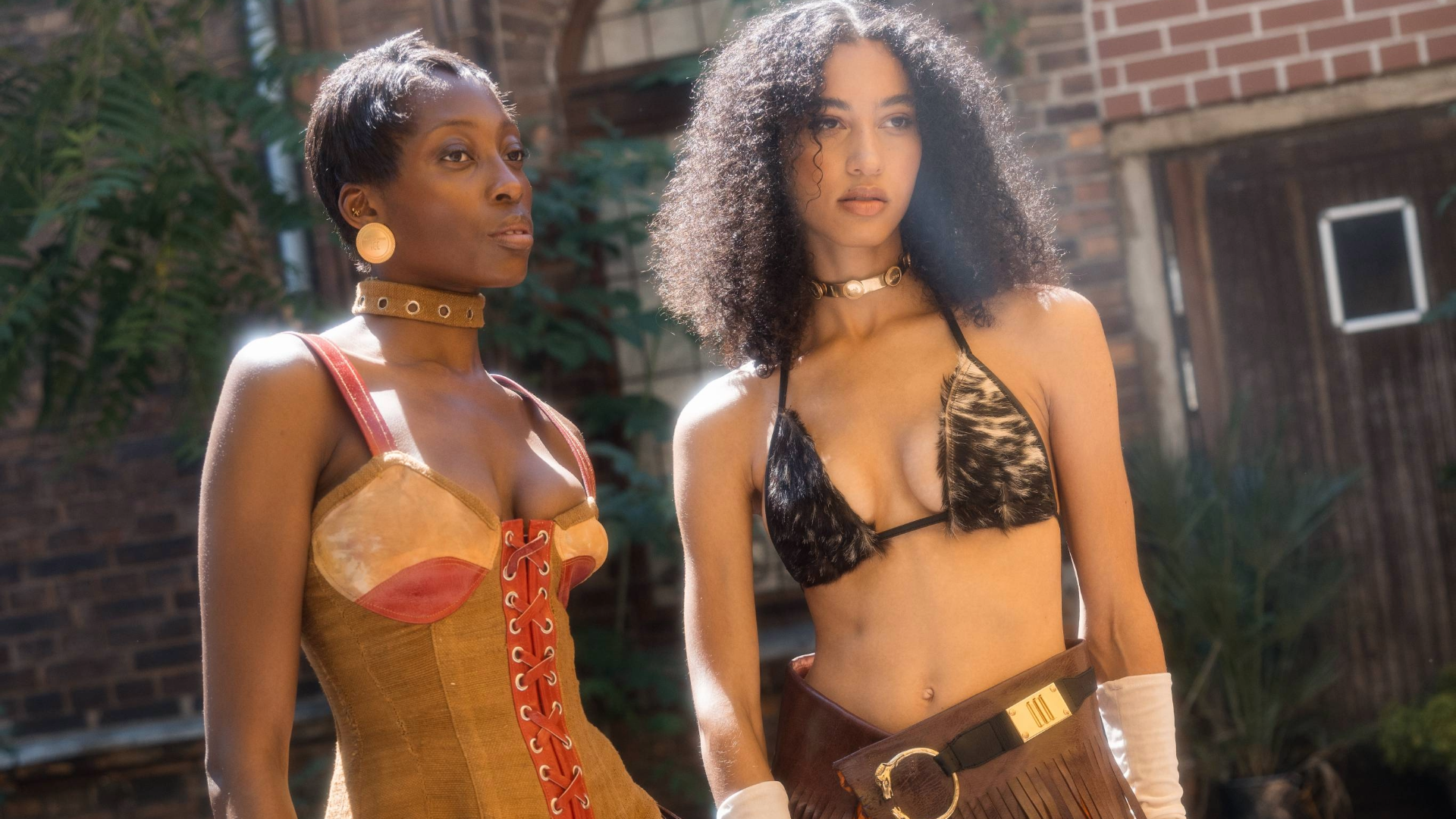
For Kubi, his return to BFW signified a broader commitment to womenswear. His collection was inspired by time, transformation, and memory, as well as a nod to the women who surround him in Accra and London. Silhouettes were shorter, cropped, and sexier this season, he explained. This also pushed Kubi to be more daring as a designer and explore new techniques. He highlighted a brown mini dress made from upcycled leather sourced from Ghana and 100 percent woven cotton dyed using part of the Ceiba tree, found commonly in tropical climates and across West Africa. Every piece in the collection is handmade in Ghana using upcycled and deadstock materials with techniques that honor both tradition and innovation, Kubi explained.
The collection saw a prominent use of colors such as red, yellow, and green, mirroring the colors of the Ghanaian flag—though this was unintentional. “The more I designed, the more I realized I love certain colors,” he said, mentioning subtle references to his Ghanaian heritage, like a round bag crafted from a Calabash, a gourd that can be dried and used as a container or utensil. “It’s very subtle and I like that.”
Buzigahill, a Kampala-based label founded by Bobby Kolade in 2022, was also among the designers supported by BFW. His collection, “Return to Sender 11,” was a vital conversation around textile waste. As with all his collections, Kolade creates garments from secondhand waste sourced from Uganda’s largest second-hand market, Owino. These pieces are then deconstructed, redesigned, and sold back to the Global North. His creations include a reversed denim jacket dismantled and reassembled; a fringe dress made from 18 black shirts knotted together; and a patchwork maxi dress made from six blue and black shirts, all selected and purchased from vendors. “We try to make sure we have as little cut-offs as possible. And how can we design new pieces using the leftovers that we generate?” Kolade explained, citing a skirt made from denim trousers and waistbands.
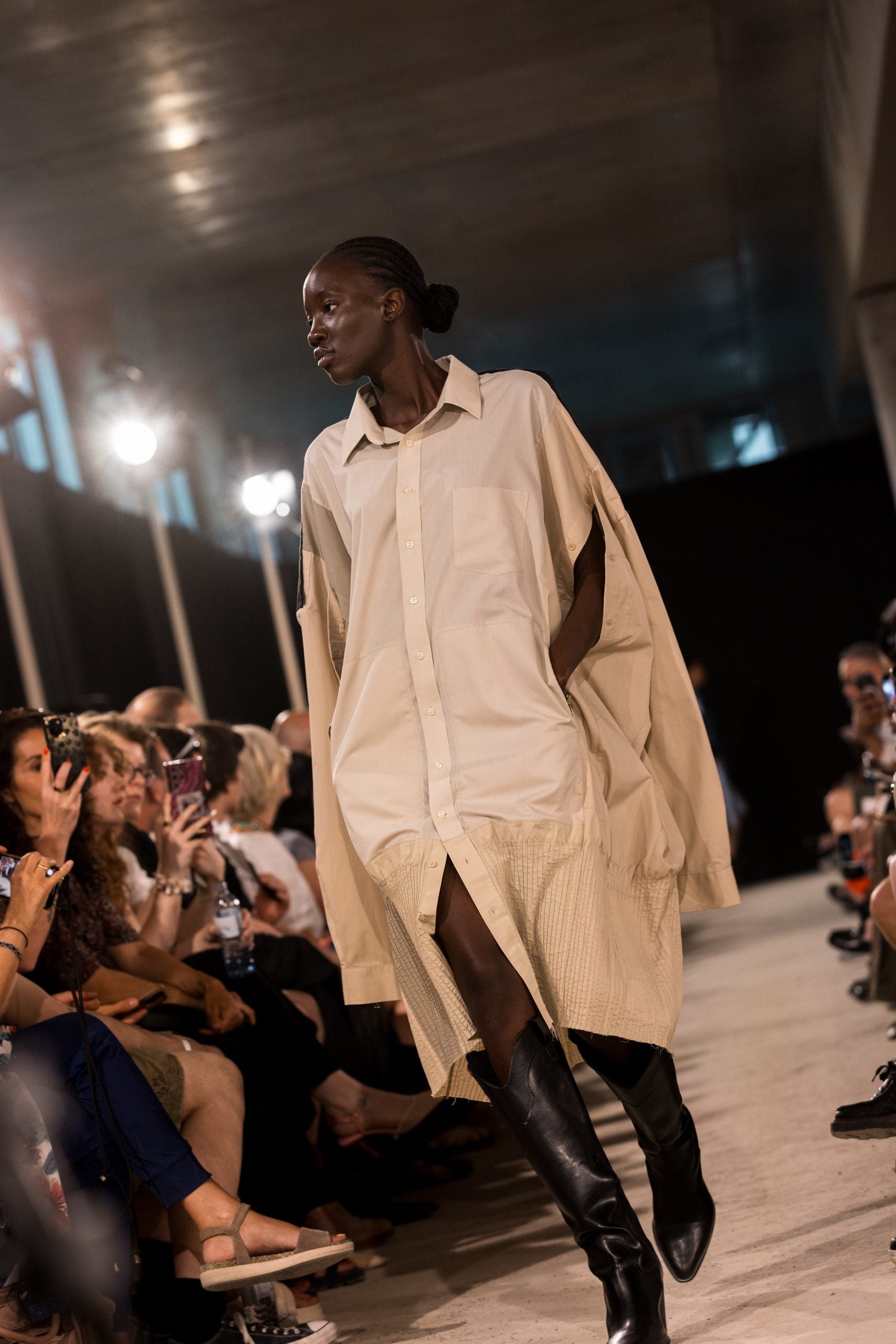
Creating new silhouettes every season is not the goal. Working with secondhand fabrics means inspiration comes from previous work, shaping the design language. “This is our 11th collection. Almost every single piece you see here has been something that we have been working on [and] improving over time,” Kolade said. “I don’t come up with crazy ideas. It’s all based on pieces that we already have, and we just want to develop further.” Consequently, consumers should not expect eccentric silhouettes in upcoming launches, as Buzigahill’s creative direction is to refine its existing framework and iterate.
One of the last shows of BFW was Orange Culture, which showcased its Spring/Summer 2026 collection, “In the Shadows”. The collection was a romantic and tender exploration of mental health. Sometimes that conversation was evident in the smaller details, whether that was in the experimentation of layering two contrasting textures together or exaggerated shoulder pads, founder Adebayo Oke-Lawal created pieces that told a story through non-verbal forms of communication. “I wanted the collection to reflect this idea that your heart will eventually tell the truth. People will see through the smoke and mirrors, the facade,” he explained. “ [At Orange Culture we] play more with details, fabrics, and shapes. If you look at our clothes, you’ll find stories in the details, the colors, the prints, the styling, and the music.” For Oke-Lawal, he wanted all these elements to come together to make his Berlin debut a true and honest reflect of the brand as it enters it’s 15th year.
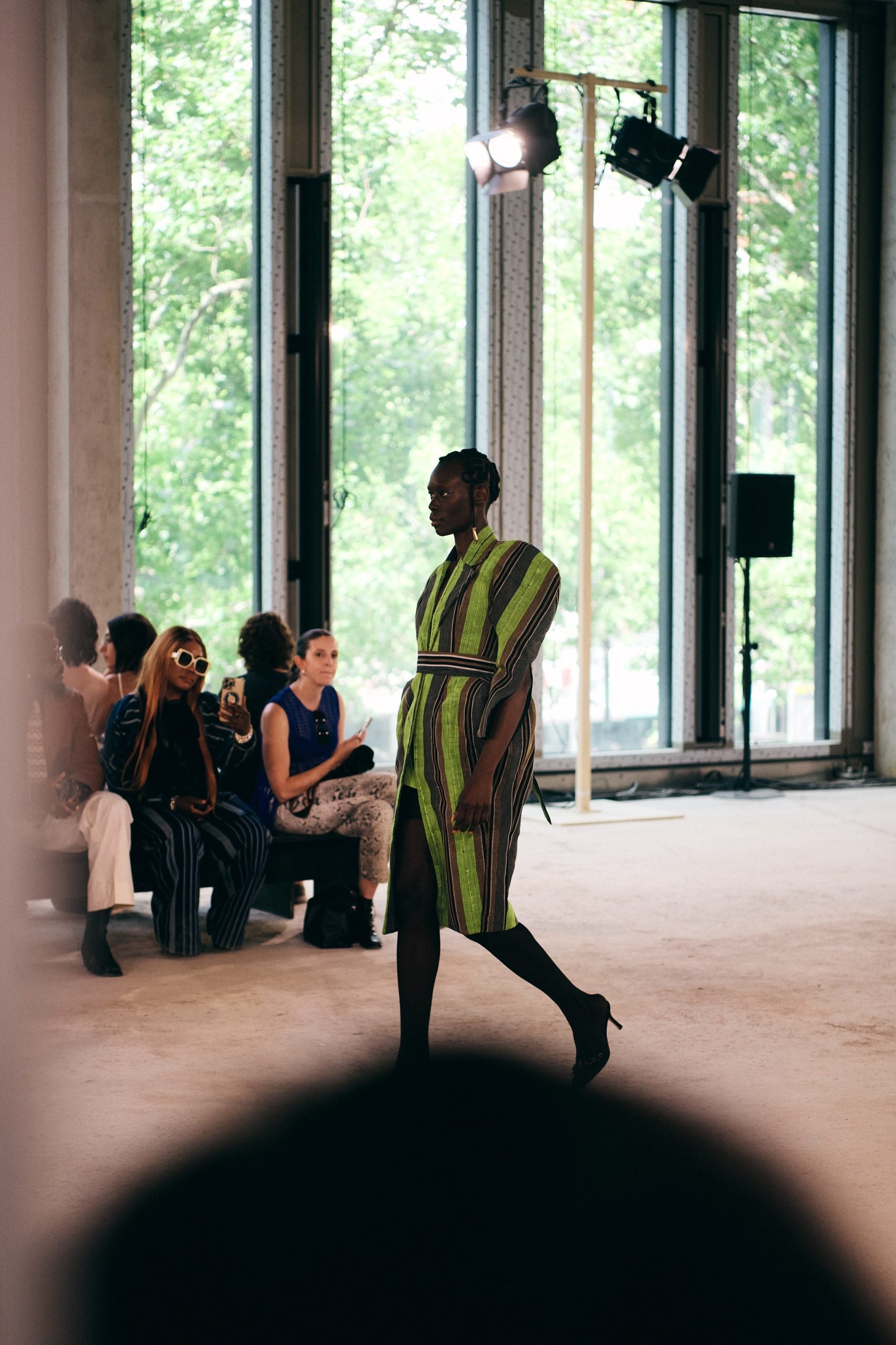
Showcasing in Berlin was “one of the best decisions I’ve ever made,” he said, adding that it was a reminder to keep going and pushing the brand into new places and spaces. “It was nice to see that they are open to all these different stories. It doesn’t have to be exactly what they know. They’re open to new experiences, new stories, and new people. Berlin left me feeling happy and excited for the future.” He added that the positive reception and feedback to his brand could make BFW a regular destination for Orange Culture, as it highlights the opportunity to meet new audiences and engage with the city’s burgeoning fashion scene.
Each designer highlighted the nuance and range of fashion from the African continent. Participating in smaller, more emerging fashion weeks is an avenue to find customers in Europe, designers say. Many are eager to build a presence across the continent, but with the Paris calendar becoming increasingly more saturated every season and Milan’s lack of diversity, it can often feel like an impossible goal to achieve. However, Berlin Fashion Week presents a new and exciting opportunity springboard for emerging talent.