
As the oldest form of art, storytelling has existed since the very beginning of time across culture, and at the crux of many creative disciplines. Its tenets subside as the foundation of literature, film, music, photography, fine arts, and even fashion. Those lucky enough to possess the gift of storytelling have the ability to truly connect and puncture the human soul. Enter, Leona Anastasia Walton, otherwise known as the high fashion model Binx. Heralded as a standout muse by Bethann Hardison she’s become an irrefutable force in the modeling industry cemented as a star in the world of visual narratives–opening and closing the runway shows of Alaïa and Givenchy, starring in Saint Laurent campaigns photographed by Juergen Teller and captured on the covers of i-D, The Wall Street Journal, Vogue Italia, Vogue Brasil and an assortment of other sectors of esteemed Condé Nast publications.
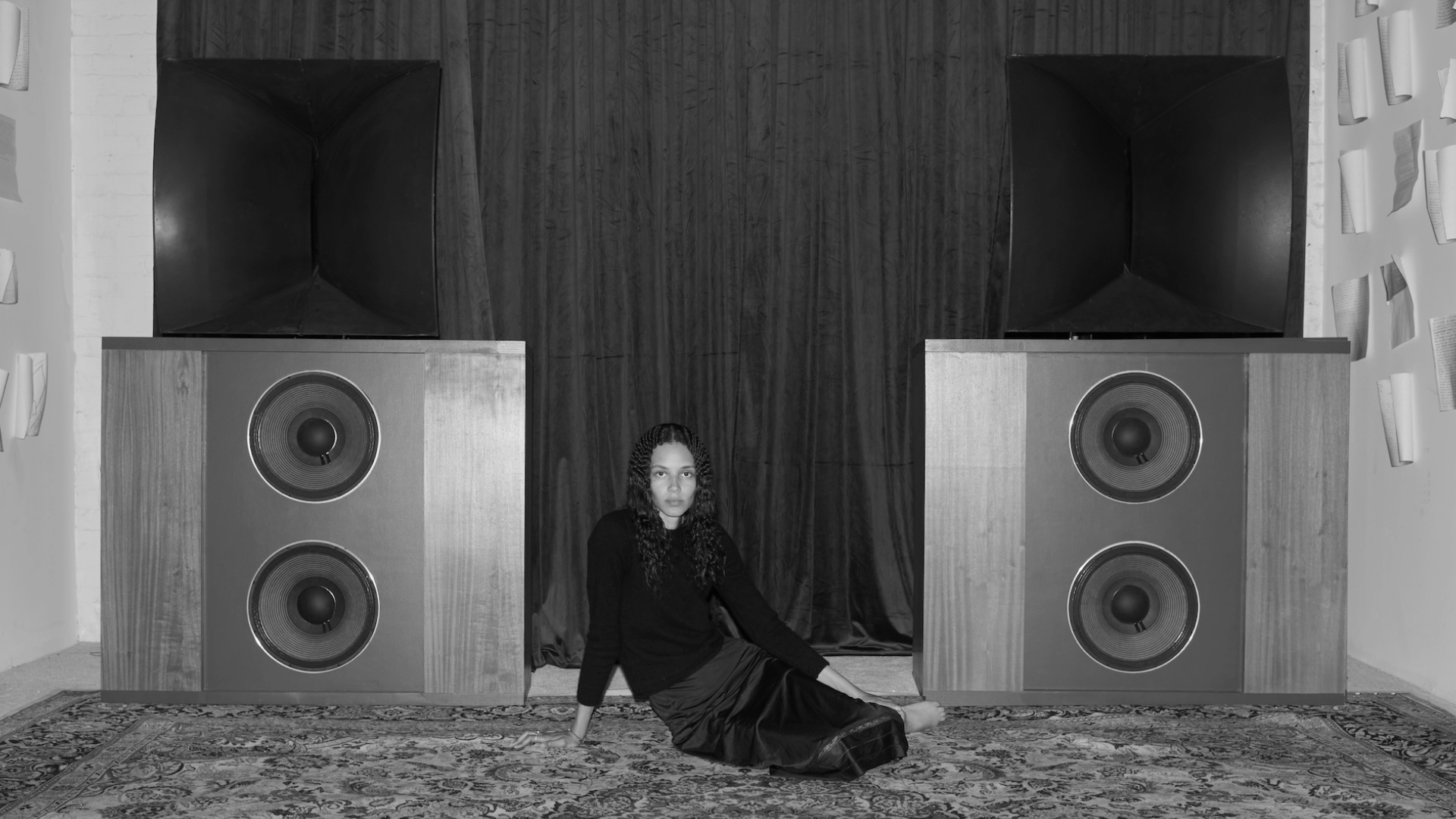
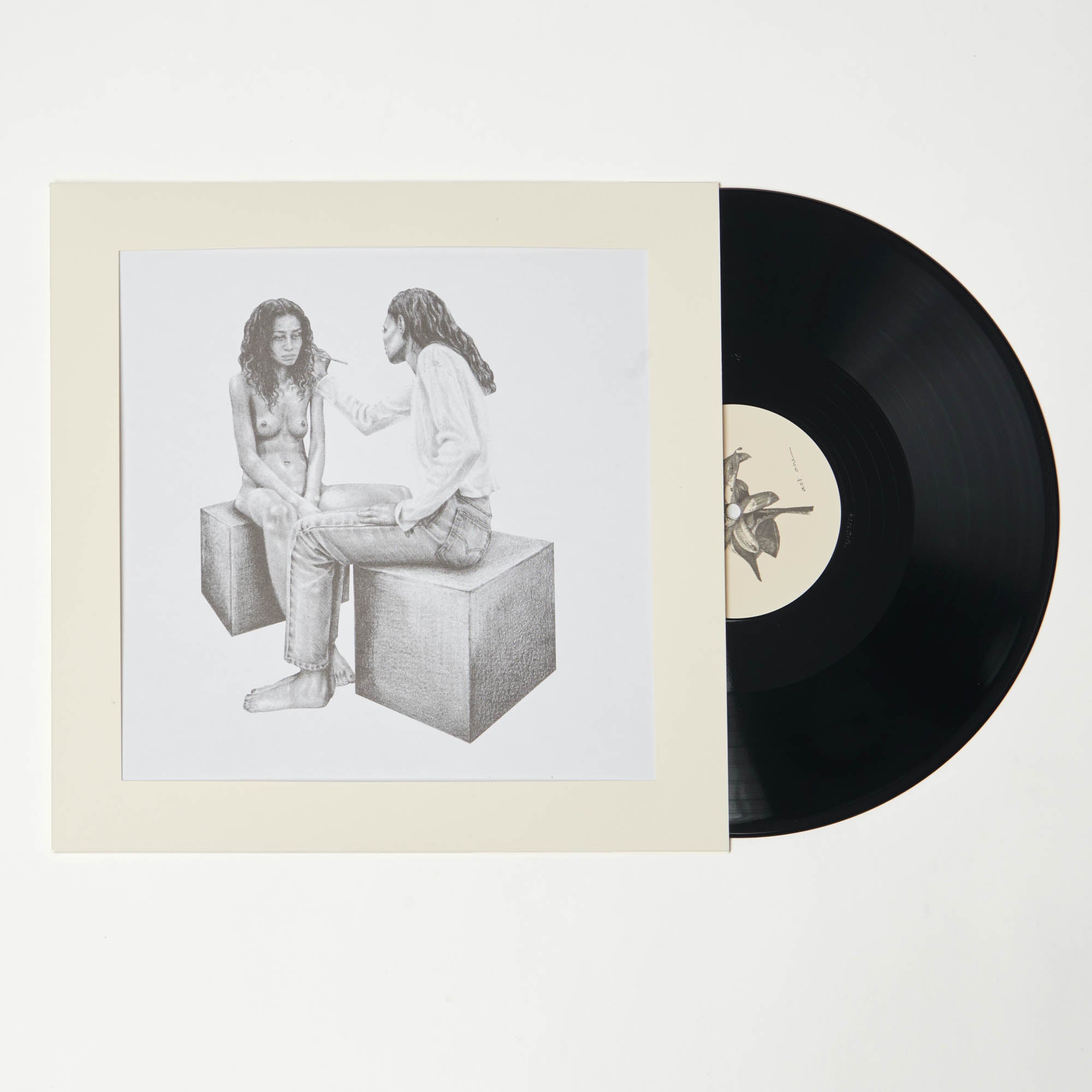
Expanding her repertoire, Walton is introducing the newest addition to her storytelling prowess through the release of a three-part multimedia project, “Landscapes of The Mind.” Encompassing a written book, vinyl recording, and custom sound system to perfectly accommodate the sonic experience, the project will be released under the pseudonym “Lee Walton,” a name that relates to the muse-creator on a deeply personal level. For one night, “Landscapes of The Mind” will showcase on Thursday, June 12, starting at 5:30 p.m., at the Beck Cultural Exchange Center in Knoxville, Tennessee.
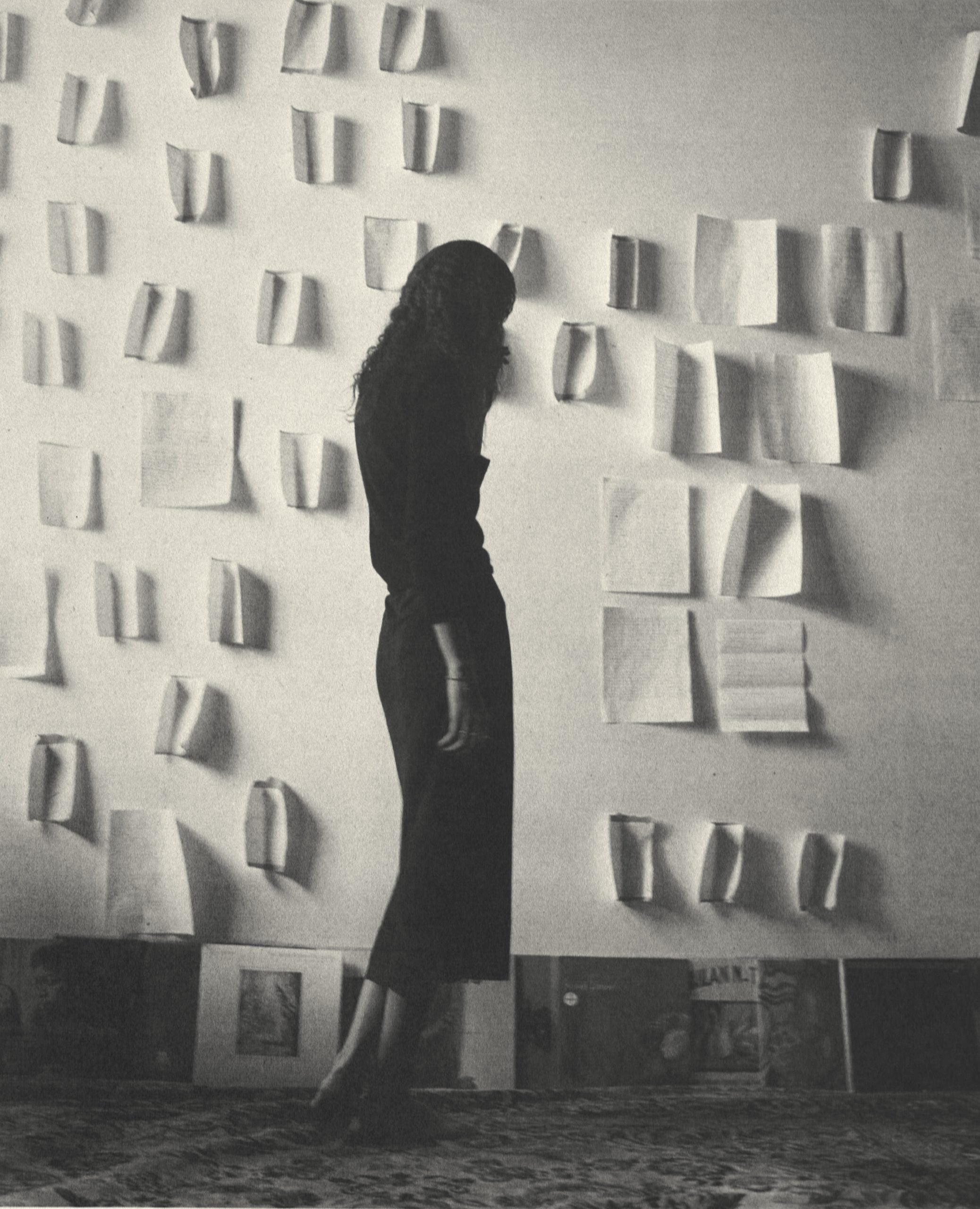
Born in Inglewood, California, and largely raised in Tennessee, Walton realized the power of storytelling early on. As a four-year-old, she publicized lore surrounding herself telling children that Hermione Granger was her sister and that a horse lived under her bed. When she’d gotten older she enjoyed telling scary stories during sleepovers, enthralled by the impact stories had on human emotions.
One story in particular happened at school when she saw a group of students standing at a glass door watching a thunderstorm. Somehow she convinced the students that her father was a weatherman, earning credence to lie and scare the children into thinking they all may die. Although she received repercussions for evoking fear within her schoolmates, that experience taught her how effective storytelling could be–and made her realize that often children can’t tell the difference between storytelling and a lie.
These days, Walton is foretelling stories of love expressing that “Love’s evolution—whether parental, romantic, platonic, or sentimental—shapes self-representation,” Walton shared on the topic of love and her latest happenings. Through her debut multimedia project, she aims to explore the emotional cycles we suppress and the parts of ourselves we often leave unacknowledged in the name of image or societal expectations.
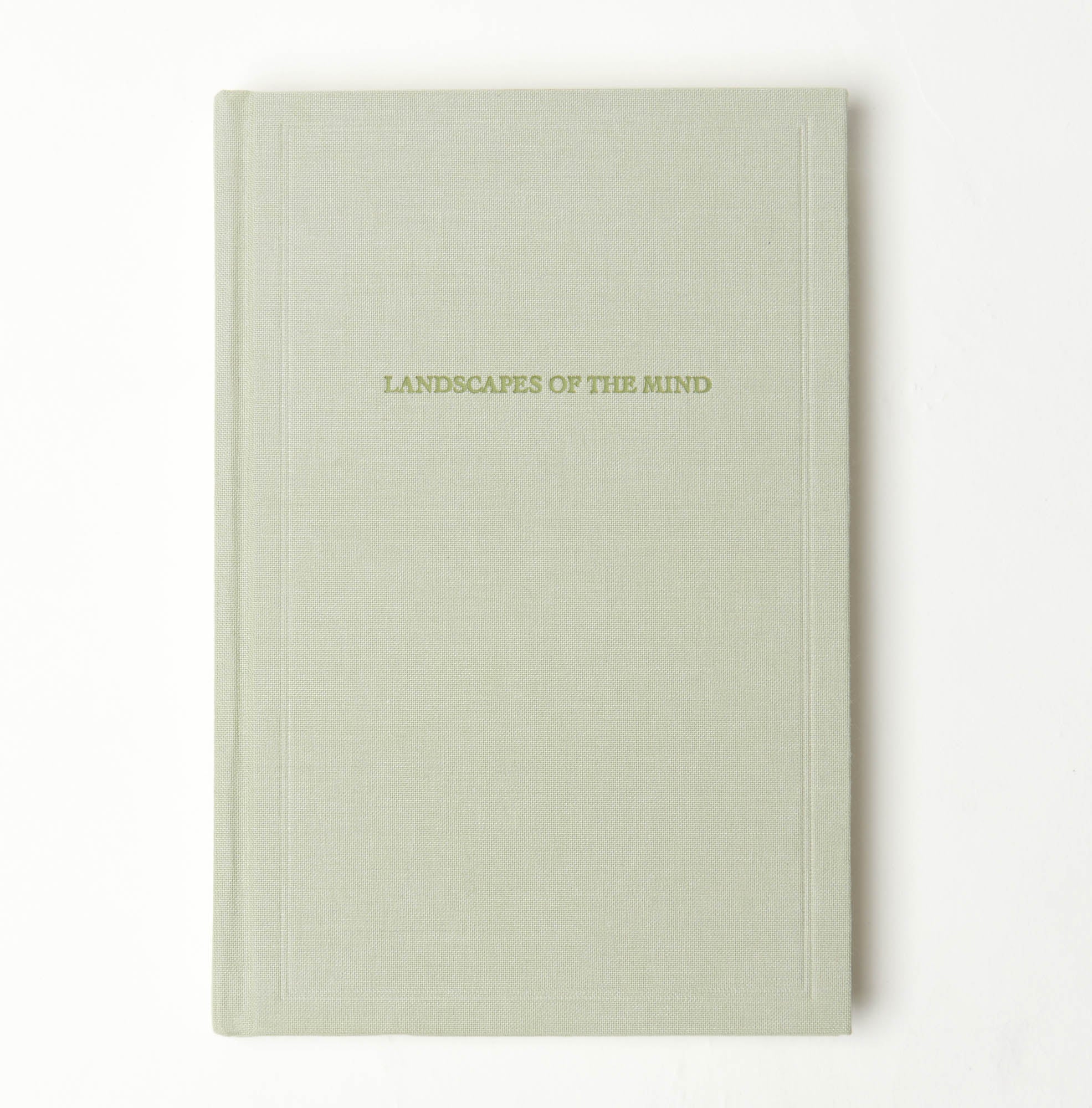
“Landscapes of The Mind” is a culmination of writings generated four months prior to Walton’s 26th birthday with some writings generated years ahead, but the author asserts that the project took her whole life to create. Developing the project felt spiritual, and was an act of learning to nurture her relationship with process. Over an afternoon Zoom call, she tells me she felt emotionally suppressed as a young person in the industry, spending time partying and using harmful coping mechanisms—but then something clicked.
“There was a moment where I wanted to look at myself and the effects the world was having on me and my perception of the world and that in itself developed my process,” she says. “I did some work with script analysis, spent time studying acting, and started writing a lot during that process,” she added. The artist went on to share that she’s often found that as of late it’s just themself and a piece of paper. This allows her time to express herself wholly while no longer fixating or worrying about judgment and condemnation. In Lee’s words, the book features four different cycles filled with what the psyche clings to when experiencing heartbreak or disappointment.
Much of the research behind the project entailed understanding production needs from sourcing binders, to editors, proofreaders, and mixing and mastering. The writing process allowed her to reveal another aspect of her creative expression, confront herself, and sit with who she was at the moment. For Walton, the creative process starts off as an internal relationship one has cultivated with the self, and then it inevitably manifests into the external.
Amongst her collaborators, Walton is lauded as an Industry Icon via models.com and while one would assume that the work of a muse is inactive, for the artist it’s a collaboration embedded in reciprocity, intimacy, and honest connection. This is an aspect she hopes to bring to her experiential work, citing plays as a source of inspiration. “With the play you have to sit through the whole thing and take the time to acknowledge that [it’s] put out for a reason and creates a space where whatever you went through to get there or may do after, it’s a time to spend together.” Nevertheless, “Landscapes of the Mind” is an opportunity for attendees to experience art in an active rather than passive way, relishing in the art of listening.
Throughout her work and life, Walton has been inspired by an amalgamation of poets, writers, playwrights, and musicians: Lynn Nottage, Nikki Giovanni, Eugene O’Neill, Woody Guthrie, Amiri Baraka, Eldridge Cleaver, and Gucci Mane. Though, the most influential artist in the ideation process of her multimedia project is saxophonist Pharoah Sanders. While writing the book she was listening to his work and upon completing the writing component she’d decided to recite her words over the twenty-minute track “‘Harvest Time.”
After hearing how well her voice complimented the piece she was inspired to include an opus of her own, one that would be a conversation among the instruments and her voice similar to Sanders’ approach to composition as a means of narrative. In searching for a composer for her recording, she eventually asked an ex-partner to record a twenty-seven-minute piece documenting the moment they met each other up until the year after they parted. While steeped in self-actualization, Walton emphasizes that at the heart of the record is a conversation between two lovers.
At the moment Lee Walton is a self-published artist, but releasing the project at the Beck Cultural Exchange Center in tandem with Black Mass Publishing in Knoxville reflects her love of cultural institutions and archives. She emphasizes the importance of supporting such institutions as history has become a common matter to discard. In addition to the release of “Landscapes of The Mind,” the event will host a live discussion and Q&A with Yusuf Hassan of Black Mass Publishing, deepening the conversation around emotional transformation and artistic process.