
I imagine that fast fashion is appealing due to the relatability that comes with buying and wearing trends quickly. Other than that, I am unsure why many customers seeking to constantly refresh their wardrobes have chosen to normalize the Chinese ultrafast fashion retailer Shein. Affordability has also become aligned with cheaply made clothing, in my opinion. As someone who has invested in pieces by brands like Black-owned label Locale European or The Line By K by Karla Deras, this is an ideal that has crossed my mind in recent months. I still recall when brands like Fashion Nova entered the cultural lexicon around 2013 following the launch of its website.
By the time Shein was on my radar, it had entered conversations with either friends or family members in a manner that felt off-putting. Both Shein and Fashion Nova are widely accepted–and it’s become quite clear that Fashion Nova’s swift shipping is a part of its appeal: same-day shipping is available in Los Angeles, and for those seeking one-day shipping that is also available, according to the brand’s site.
These labels, which allow folks to feel fashionable with minimal effort, speak to the marketability of the respective businesses that drive them: the business of waste. According to McKinsey, as of 2023, Shein churned out up to 10,000 new items a day–the average price at the retailer is $14. Last year, Shein reportedly made $38 billion a figure based on internal projection by the Financial Times. Many curvy customers lean on Fashion Nova for denim due to the mainstream market’s refusal to ideate and create affordable denim. (This is always what I’ve heard from friends who have purchased from the brand.)
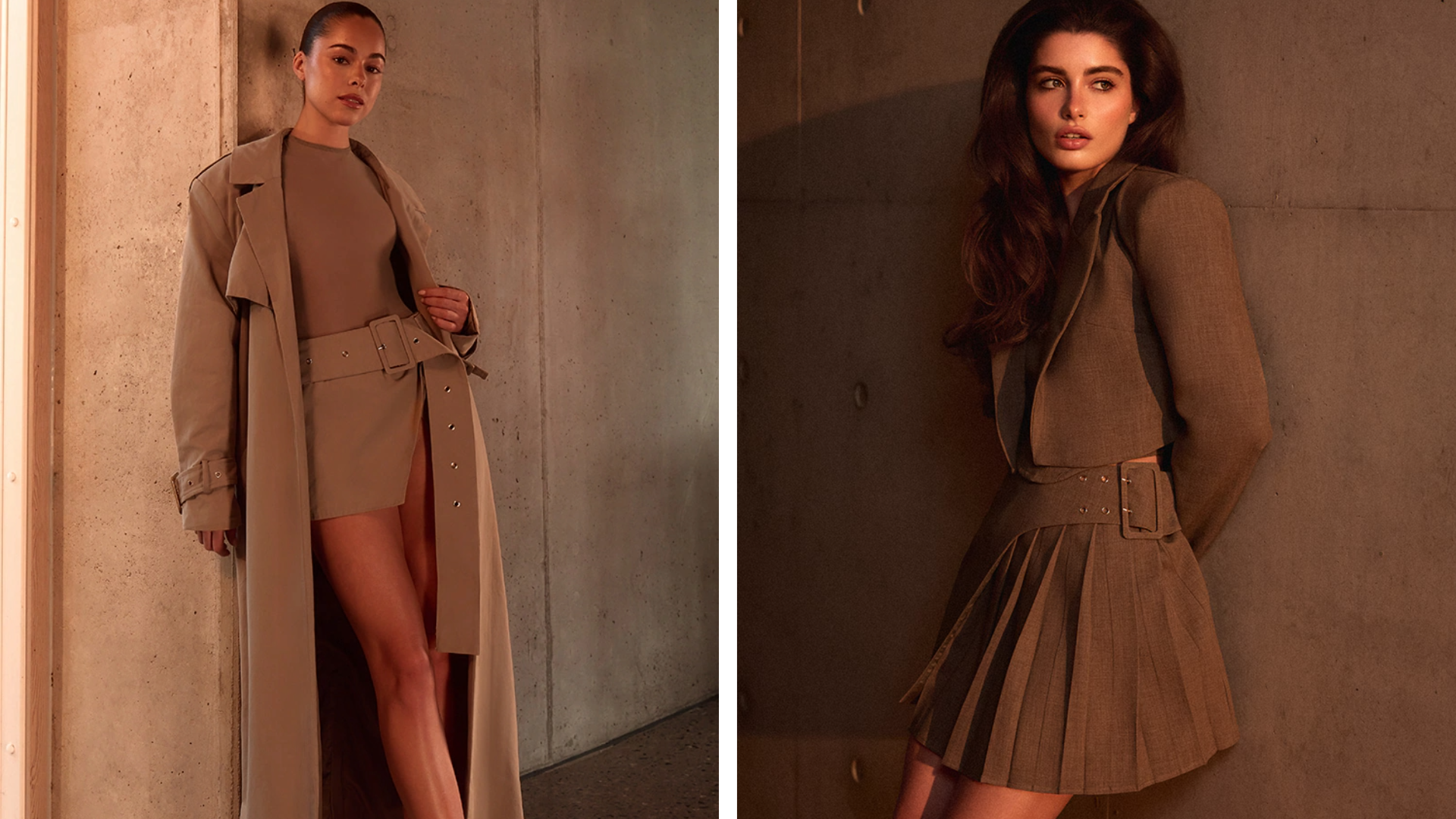
With the trend cycle constantly spinning, it’s become evident that marketing a cheaply made brand is intrinsic to how to showcase products, even if it might be considered wasteful to feed into trends. This might’ve been the logic behind PrettyLittleThing’s 2025 rebranding. In March, the U.K. fast fashion retailer chose to rid itself of its pink and white logo and the aesthetics that accompanied it. Instead, it ushered in an awakening that aligns with the omnipresent “trad-wife” and “quiet luxury” trends. The Cut published an article titled “What’s Going On With PrettyLittleThing’s Rebrand?” And that offered a well-needed call-out.
Clubwear of the 2010s leaned on brands like PrettyLittleThing and Nasty Gal. The former offered attire not limited to polyester skirts and trendy crop tops–sequin numbers that you could throw on for varying occasions were a part of their bread and butter, too. The core of the brand was snatched away seemingly overnight in an attempt to dupe its customers into coming along for a revamped ride. By circumventing and nearly eradicating its roots, the brand was met with positive and negative responses. Followers who seemingly fell for the switch-up could envision themselves in the pieces that are now being offered. On the site, you’ll be able to see a vain attempt at refreshing its identity: beige essentials that arguably are not essentials. (Notably, models on PrettyLittleThing’s site are now non-Black and quite thin.)
There’s something eye-opening about a brand attempting to grasp for relevancy through marketing efforts. The previously mentioned rebrand was just that. Reading between the lines, I was able to signal that this may also be an attempt to relinquish the core audience of PrettyLittleThing. This switch-up points to brands and their willingness to present themselves as “new-ish” and updated to garner sales and newer audiences. Will the quality of fabrics change? That’s unlikely. Will immense waste still happen? Absolutely. Even with these signifiers looking customers squarely in the face, they drive the cyclical nature of fast fashion.
Even Zara has fallen under the guise of a gentle rebrand. Over the past few years, the Spanish fast fashion retailer has been hard at work shooting high-end lookbooks. In 2021, the brand commissioned legendary photographer Steven Meisel to shoot a campaign. If you take a look at Zara’s website right now, you’ll see a clean aesthetic in its women’s section. Balloon pants, cutesy accessories, and bandanas are available currently. These offerings allude to how the Spanish brand always has its fingers on the pulse of what’s trending globally.
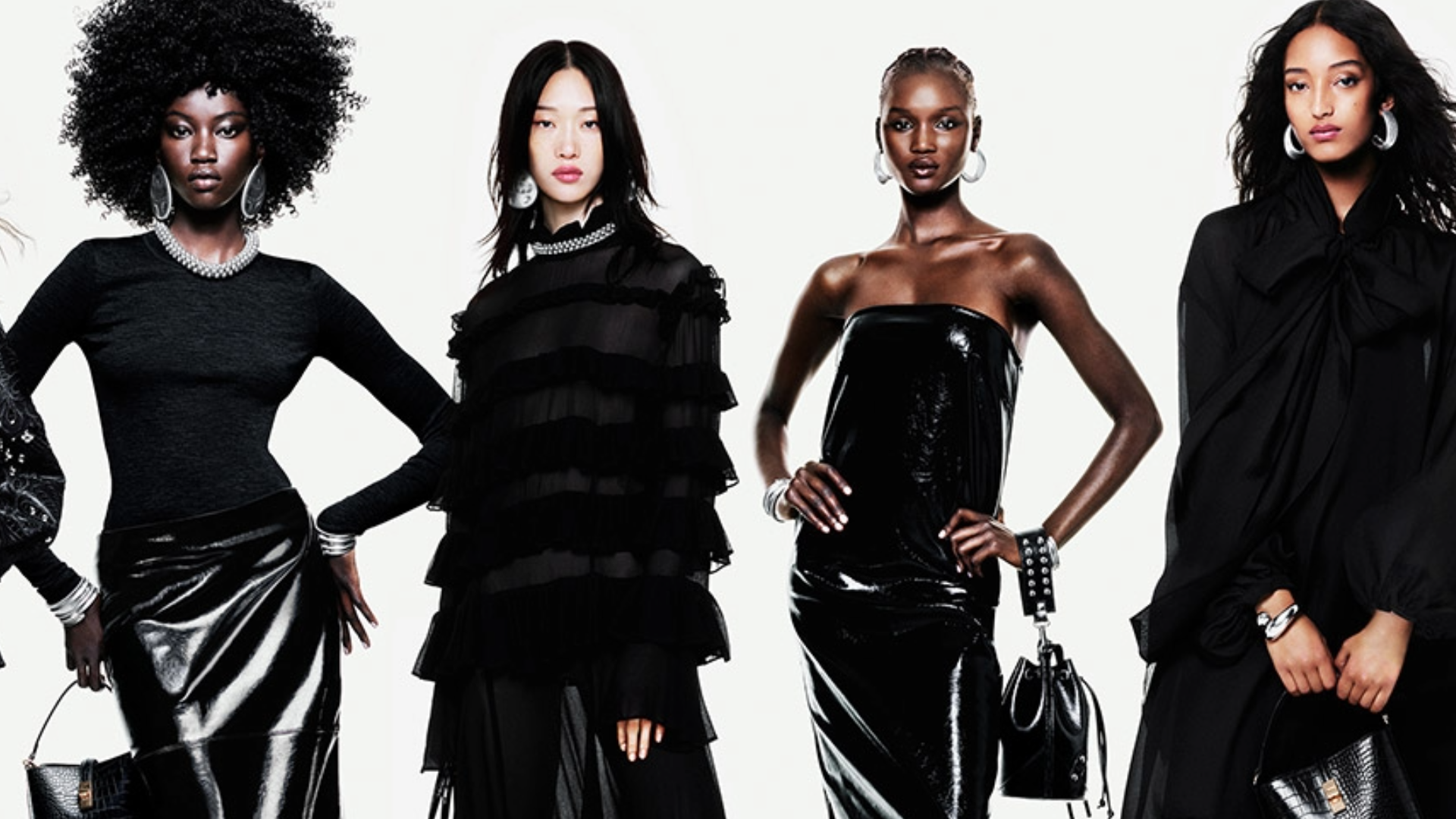
H&M also utitlizes marketing tactics to get its customers to spend considerable amounts of money. Many of its campaigns feature elevated aesthetics. Back in Fall 2023, their “Fusion of Eras” campaign starring Anok Yai, Sora Choi, Mona Tougaard shot by Rafael Pavarotti was made up of chic all-black outfits. However, H&M Group, the parent company of H&M is committed to sustainable practices. “In 2024, 84% of H&M Group’s packaging materials were either recycled or sustainably sourced, an increase from 79% in 2023, with paper and cardboard continuing to be the primary materials used,” according to H&M Group’s 2024 sustainability report.
For those of us who refuse to give in to the marketing tactics of fast fashion, being online is becoming considerably tougher. Taking one glimpse at Instagram might lead you to click into an unboxing of your favorite influencer who just did a haul at Zara. (That happened to me recently, and I went to look at the marked-down items–everything she’d chosen was sold out.)
Or perhaps you might be perusing a vintage shop and come across items from Shein. It took me a few times seeing this to realize fast fashion was a mainstay. Swiftly designed clothing is not dying–it’s just gotten better at hiding in plain sight. Its appeal is the affordability factor, and it also relies on customers yearning for a plethora of accumulated pieces. If you need figures to prove how much of a hold fast fashion has on customers, last year alone, its market size was $148.23 billion, according to Fortune Business Insights. If that’s not widely alarming, I suggest you take a look at your closet to see if it’s your forever wardrobe. Or has fast fashion creeped into your closet too?