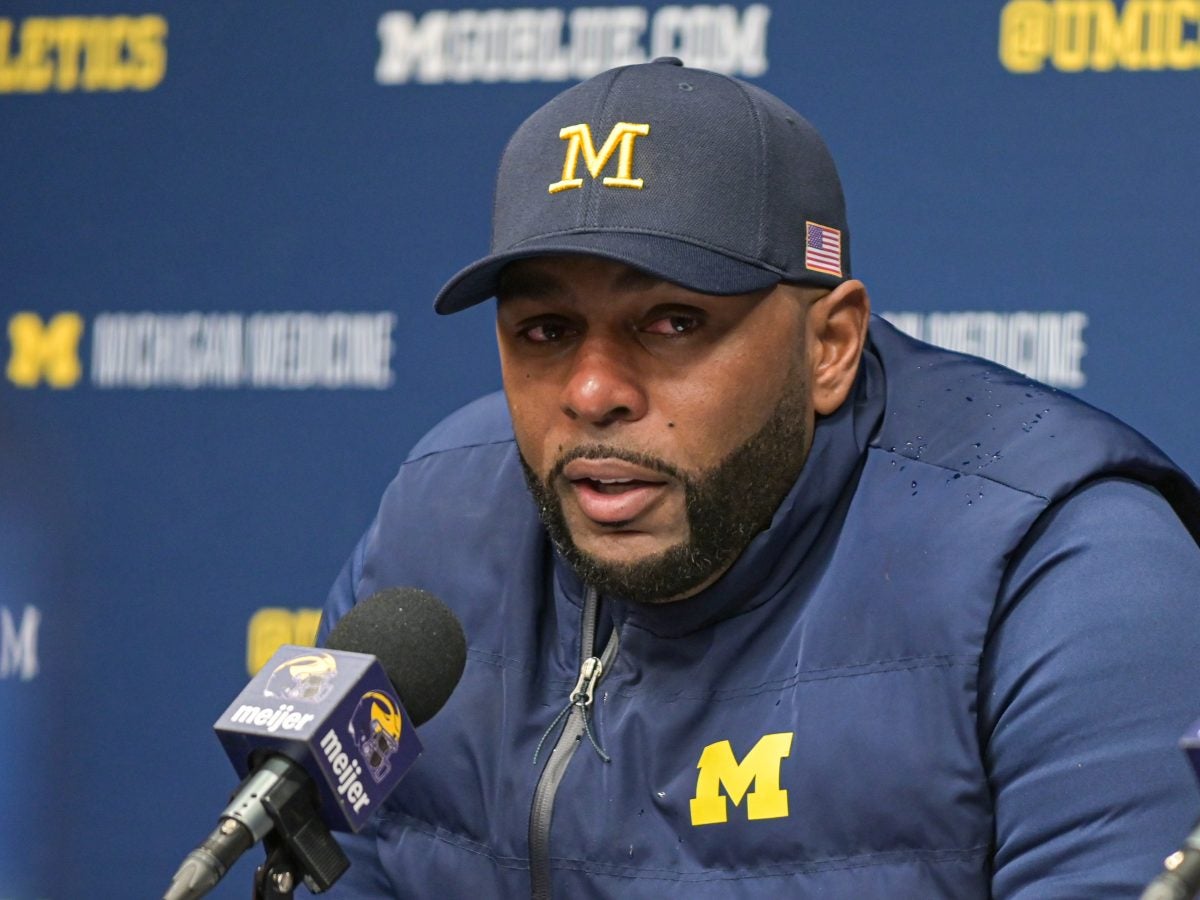

Sherrone Moore’s decline becomes crazier by the day. Less than two years after taking over one of the most prestigious programs in college football, Moore was fired with cause by the University of Michigan, accused of engaging in an inappropriate relationship with a staff member. Hours later, he was arrested following a police response to an alleged assault near Ann Arbor. By night’s end, a man who had inherited a national championship-caliber program was sitting in jail, his future suddenly unclear.
Moore is only 39 years old, and reports had the value of his coaching deal near $30 million. With a future that once seemed bright now likely closed, this story sounds all too familiar, especially in recent years: The pattern involving Black men, white women, and professional collapse.
Take Shannon Sharpe. Few athletes have transitioned into media with the kind of success he’s had. Two Super Bowl rings, a gold jacket, and then a second act that somehow became even bigger. After nearly two decades on television, a breakout run on Skip and Shannon, Club Shay Shay, Nightcap, several awards, and a stint on ESPN, he had arrived. By early 2024, Sharpe was richer, louder, and more visible than ever.
Then, it all went down the drain.
Sharpe was accused of sexual assault by Gabriella Zuniga, an internet model he met when she was 19. The lawsuit sought more than $50 million. Sharpe denied the allegations, calling the relationship consensual but “rocky.” A settlement was reached, and the case was dismissed—but ESPN moved on without him. Just like that, the biggest platform of his media career disappeared.
With Sharpe’s situation, it’s particularly saddening because he had finally reached his peak. Years of credibility, relevance, and goodwill evaporated almost instantly. The relationship itself became the headline, and whether the legal case ended quietly or not, the damage had already been done.
And of course, there’s Ime Udoka, whose story is still talked about (at least within my friend group; fumbling Nia Long is insane). In 2022, Udoka had the Boston Celtics on the doorstep of an NBA title. He was widely respected. Young, sharp and one of the few Black head coaches in the league. The kind of hire franchises claim they want to make more often. Shortly thereafter, he was suspended for an entire season after violating team policies by engaging in an “improper relationship.” Udoka lost his job, and his relationship with Long ended. His reputation took a hit that followed him even after he was hired by the Houston Rockets, and could last for the rest of his career.
What makes these stories really disheartening is imbalance between what these men had and how quickly it all slipped away. Black men in positions of authority already operate under tighter scrutiny. Their mistakes are magnified, and their second chances are fewer. When a white coach messes up, there’s context. When a Black coach messes up, it’s over.
Moore and Udoka may have irreparably damaged themselves, and they also made it easier for institutions to hesitate the next time a Black candidate comes up. However, none of this should absolve personal responsibility. Self-discipline matters, because power requires restraint. These men had everything they worked for—legacy, influence, financial security, or even all three. But they didn’t lose it because of talent or effort. They lost it because they couldn’t sit still when it mattered most.
And the cost, as always, extends beyond them.