
The 2025 Formula 1 season closed on a note that felt less like a finish line and more like a cultural turning point.
After a year where the Las Vegas Grand Prix infiltrated mainstream entertainment—streaming feeds, fashion weeks, festival circuits—one thing has become undeniable: F1 is no longer a niche European pastime. It’s pop culture now. It’s America now. And increasingly, it looks like us.
I felt that shift the moment I stepped into my first race weekend in Vegas. The Strip wasn’t just hosting a sporting event—it was staging a spectacle. Fans showed up like they were walking into a concert, brands pulled out Super Bowl–level activations, and the paddock buzzed with the kind of energy that says everyone wants in.
For decades, Formula 1 in the U.S. was coded as exclusive, expensive, and inaccessible. This year shattered that myth. A new wave of fans—Black fans, women, young Americans—are not just attending. We’re reshaping the culture.
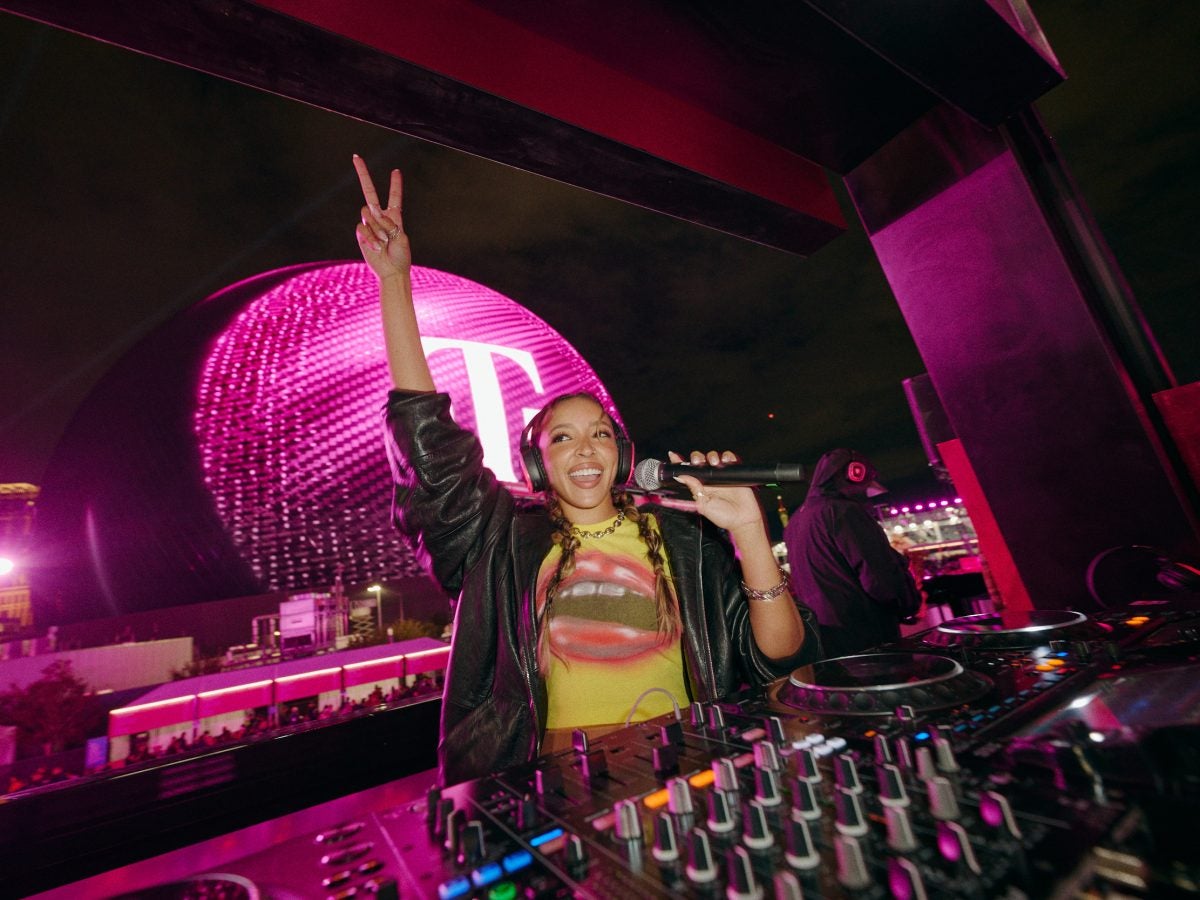
I caught up with pop star Tinashe after her silent disco set inside T-Mobile’s Club Magenta, a fan-first space designed to bring talent and guests together through exclusive moments powered by Magenta Status perks.
When I asked what surprised her most as someone outside the traditional fan demographic, she didn’t hesitate:
“Seeing the way the culture is expanding—new audiences, new faces, new places,” she said, still glowing from the set. “It’s my first F1 experience so it’s super fun that I’m able to be a part!”
Her excitement echoed what I saw all weekend: F1 isn’t just a sport anymore, it’s a cultural stage, and Black fans are claiming our place on it.
When We Enter a Space, We Transform It
This was the year F1’s celebrity draw rivaled fashion week. Beyoncé, Naomi Campbell, Cynthia Erivo, Jay-Z—the culture showed up in the paddock, and not quietly.
The neon-pink Club Magenta—designed less like a brand activation and more like a cultural playground—sat inside the T-Mobile section at The Sphere, where live concerts blurred the line between race weekend and music festival. By closing night, an iconic performance from T-Pain turned the space into its own headline event.
But the real story isn’t about celebrities dipping into the paddock; it’s about the fans who finally see themselves reflected in a sport where they were never expected to show up. When Black women enter a space, we don’t simply participate. We shift the center of gravity.
Building Community, One Race at a Time
That shift was personified at a Belvedere after-party where I met Nina Meyers. A Forbes 30 Under 30 honoree and CEO of The Meyers Group, Meyers grew up watching races with her late father—Sundays anchored by open-wheel speed, debate, and the shared joy of following Lewis Hamilton’s rise. For her, F1 isn’t just entertainment. It’s legacy.
This year, she turned that legacy into action by launching Full Throttle, a platform dedicated to opening the doors of motorsport to new fans—Black women, Americans, and women of color.
As interest in the sport surged, her network kept asking her to break down the rules, the teams, the strategies, the drama. Meyers realized something major: the sport was growing, but the pathways into it were not.
So she built one.
Full Throttle isn’t about passive fandom. It’s about access, education, and economic opportunity—lifting the hood on a multibillion-dollar industry and empowering fans to understand the sport from the inside out.
The Rise of the New F1 Fan
The fan demographic shift wasn’t an accident. Steamrolling popularity from Drive to Survive humanized the sport, and Liberty Media’s expansion into the U.S. finally aligned F1 with American sports culture. Women 18 to 25 are now the fastest-growing fan segment. STEM-minded, global, curious, plugged-in—these aren’t casual observers. They’re the future of the sport.
As Meyers reminded me, many women grew up with fathers or uncles who adored racing. “We’ve always been here,” she said. “We’re just coming out of the shadows.”
Her vision extends beyond the fanbase: building pathways for young Black drivers, expanding engineering opportunities through HBCUs, spotlighting the strategists and mechanics who rarely get attention, and partnering with major corporations—and one day F1 itself—to authentically connect the sport to the communities fueling its growth.
A New Era on the Horizon
As Formula 1 looks toward its next season, one truth stands out: the future of the sport isn’t being shaped solely on the track. It’s happening in the stands, at Club Magenta, in group chats, at viewing parties, and in the emerging communities claiming space in a sport that long felt out of reach.
So the question isn’t whether F1 will continue evolving.
It’s where you’ll be when it does. Miami? Austin? Vegas again? Or maybe Monaco or Singapore?
Because next season, when we show up at the track, we won’t be the exception.
We’ll be the norm.