
For years, the entertainment industry—Hollywood, in particular—has always had a complex relationship with faith. Too often, religion rarely reflects how belief actually shapes people’s daily lives. Moses the Black approaches the subject differently, placing spirituality inside the inner city, and filtering it through the eyes of a flawed man seeking to walk the righteous path.
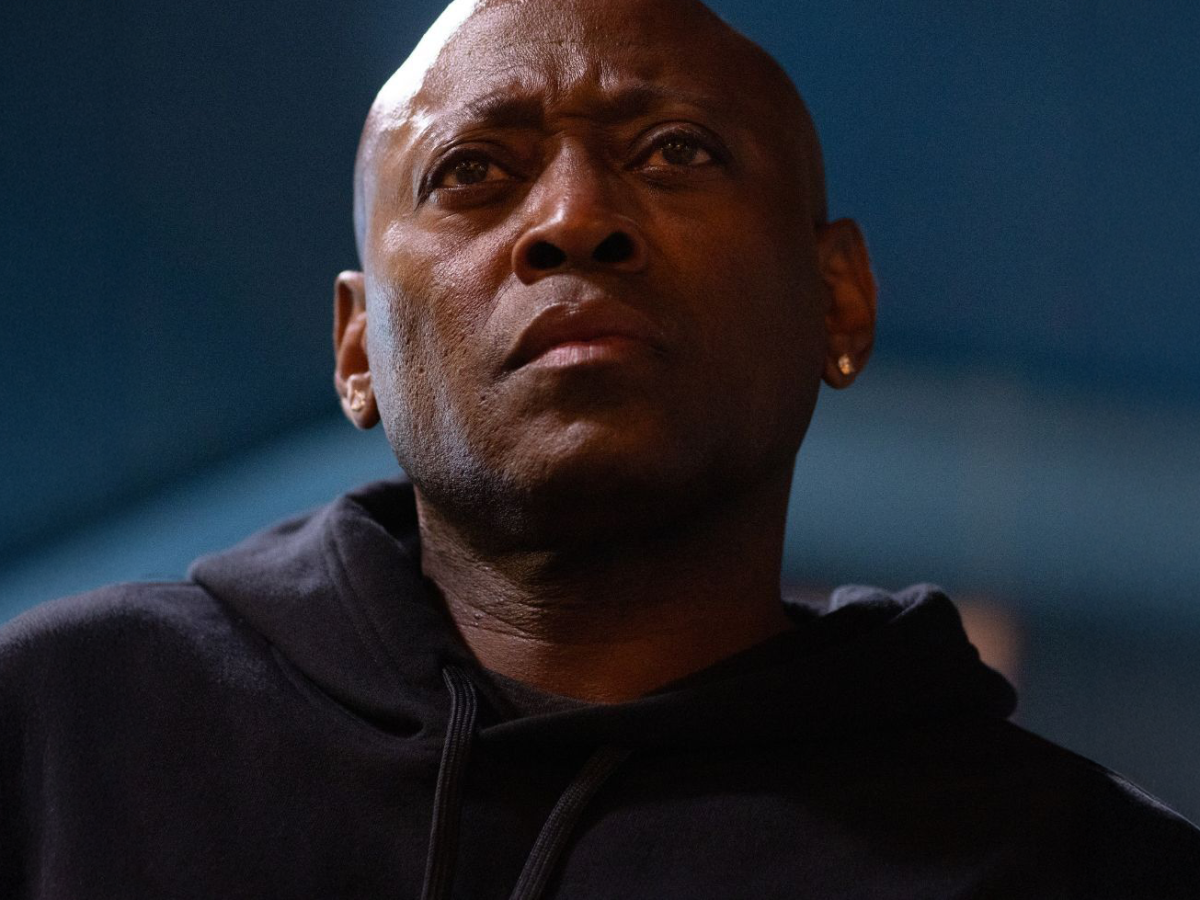
Omar Epps stars in the 50 Cent-produced film as Malik, a feared gang leader returning to Chicago’s West Side after serving time, but freedom doesn’t always bring peace. His closest friend has been killed, younger members of his crew want retaliation, and rival factions are waiting for the next spark to ignite a war. Mike, his steady right-hand played by Corey Hendrix, tries to keep everyone level, while impulsive figures like 2wo 3ree (Wiz Khalifa) and Meechie (Skilla Baby) lean toward revenge. A corrupt cop keeps pressure on the block, and a competing boss, portrayed by Quavo, watches for any signs of weakness. Although Malik’s demeanor remains calm throughout the majority of the film, there’s always a heavy sense of urgency with every decision he has to make.
Not unlike many young Black men, Malik’s moral compass is his late grandmother, the woman who raised him. Before he steps back into the chaos, she hands him a small icon of St. Moses the Ethiopian, a former criminal who turned toward faith and eventually became a saint. The story begins to follow the film’s lead in unexpected ways, surfacing through memories and visions that force him to question the life he’s lived and if redemption is still possible.
For Epps, the connection to the material was almost immediate. “The story of Moses the Black was a story that I wasn’t familiar with, so, I researched it, and the story itself spoke to me as an individual,” he says. “But the theme of it in the context of the film, it was just so powerful, and the idea of redemption was fueling the message here. But it’s also about sacrifice. I was excited to come aboard and bring it to life.”
Directed by Yelena Popovic, she keeps the world recognizable, allowing the language and behavior to feel true to the neighborhoods that the film takes place in. Malik’s journey towards redemption exists parallel to that of Moses, as the viewer sees both men leaving behind their old ways in real time, regardless of the outcome. The visuals of violence, grief, regret, and morality gives the story credibility and makes Malik’s internal struggle much more relatable.
Epps, who was born and raised in New York, sounded noticeably different in the film. Capturing Chicago’s voice required careful preparation. “I definitely studied,” he explained. “I worked with a phenomenal dialect coach, Denise Woods, and just tried to find a lane where it just came off organic. Chicago is a great city, but their accents are all over the place. So I just tried to find a little nook in between that, and so it gave it that flavor.”
Perhaps the most poignant part of Moses the Black is the way that its larger message is conveyed. Films tend to shy away from unfortunate endings, or they try to find the silver lining in tragedy, but Popovic moved more towards reality—however harsh it may be. “We saw how the film ended, but it was sort of symbolic,” Epps said. “We would all like to think that we can sit down, come to the table, and come to a positive agreement, but it doesn’t always happen that way. So, we really wanted the film to land in a grounded way, in a way that if you were to mirror what happened to Moses the Ethiopian, and entertain the story in real life; how would the story turn out?”
While the film doesn’t possess the scale of a big-budget studio release, its focus on character and detail makes it worth the watch. By the time the credits roll, Moses the Black leaves viewers considering how faith, accountability, and second chances hold up even when faced with the inevitable.
Moses the Black is in theaters now. Running time: 1 hour 50 minutes.