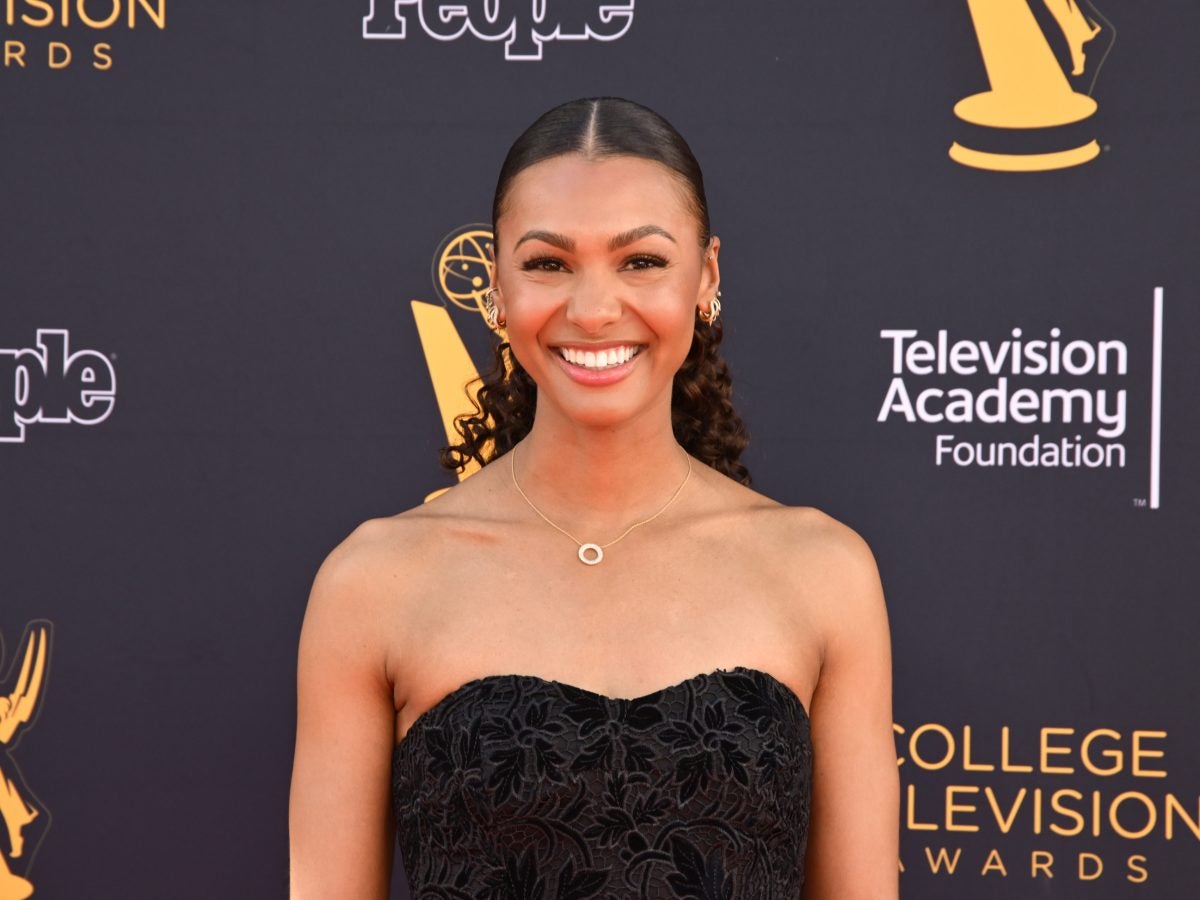

When Malika Andrews sat down to chat with ESSENCE, she was seated in her car. There was no rush in her voice, just an ease that showed how thoughtful and open she was to the experience. That balance of composure and candor is exactly what’s made her one of the most respected names in sports journalism.
At 30, it’s clear that Andrews has carved out a commanding lane in her field. As the host of ESPN’s NBA Today and the network’s lead NBA reporter, she’s become one of the most trusted voices in a space where few Black women have been given consistent visibility. She anchored coverage of the NBA Finals, conducted high-stakes post-game interviews, and led conversations around some of the league’s most pressing moments, and she does it all while building a reputation of empathy and poise.
But that polish, she says, isn’t about hiding who she is—it’s about honoring it.
“So much of my job is about being composed in live moments, and that’s something that I’ve had to grow into,” Andrews says. “I think there’s a discipline to being present, to listening deeply, and to know when to assert your own voice.”
Raised in Oakland, California, Andrews started out as a writer, and after becoming the editor-in-chief of her college student paper, she gained a reputation for sharp storytelling and fearless reporting, even prompting safety changes on her campus. Before joining ESPN in October 2018, Andrews landed a prestigious James Reston Reporting Fellowship with The New York Times, where she further honed her skills. Just months later, she was reporting from the NBA bubble, making her one of ESPN’s youngest sideline reporters ever.
She laughs when reflecting on her first day at ESPN, admitting she often looks at her employee photo ID, which still bears the image of her 23-year-old self. “I literally look at myself as I wave [her ID card] into the building every day. I was eager. I was wide-eyed. I was just trying to keep up. I didn’t know everything or much of anything, but I cared.”
In professional spaces, Black women are often expected to move with grace, regardless of the weight of the room or scrutiny they may face, which for some can be a silent burden. Andrews, however, makes it clear that composure and vulnerability aren’t at opposite ends of the spectrum.
“I think you can be both, and that’s something that I’ve really tried to lean into in recent years. Being composed isn’t being perfect. It’s about being anchored and being vulnerable, unraveling as your whole self—that’s what I try to bring to my work in television.” She says emphatically. When asked how she responds to constant commentary on her composure, she shares a metaphor rooted in her California upbringing. “I think about the earthquake that happened last summer. Whether it’s fans or natural disasters, you have these ground-shaking moments that try to throw you off balance—whether physically or emotionally.”
That sense of intentionality is something Andrews holds close. She’s aware of how “trying hard” is often reframed as inauthentic or performative, particularly for women in high-profile roles. She jokingly brags about being the front-row student in school, “I think that has always been authentic to me,” she laughs. “My friend Andraya Carter and I talk about this a lot, like we’re both in air quotes, people who “try hard” but since when did trying hard and putting effort into something get seen as negative?”
For Andrews, sports has always been about connection. From fans to interviewing star athletes, she is deeply passionate about the culture sports brings. “What I love about sports fans is our shared passion and opinions,” she notes. “So many people have to go to work and there’s things you love about it as well as things you have to contend with. But, what a privilege I have to be able to talk about sports.” Andrews continues, “There is a community in sports that’s unlike anything in the world right now. It used to be that, on a Tuesday night, you’d come together to watch the new episode of your favorite show with everyone else for the first time live. That’s not the way that we consume television anymore, but it is the way that we consume live sports. That’s really special. So how could I see that as anything but as a privilege?”
Still, navigating a high-pressure job in the public eye requires Andrews to safeguard her personal peace. She shares that in her free time she can mostly be found reading a book or horseback riding, and firmly sets boundaries with the time she has with herself. “Making time for yourself is not a weakness,” she explains. “I’ve found that’s been an important ingredient for me.”
Growth is no longer about chasing the next big assignment or accolade for Andrews either. It is measured in how she shows up for herself and others. “I’m focused on telling stories I care about in new and meaningful ways—staying true to myself and treating others with kindness,” she says. “Thats how I measure growth: being rooted in purpose and integrity, not just accomplishments or checking boxes. Though, I do love a good to-do list.”
She’s also mindful of the digital noise that comes with visibility. “Doris Burke once told me, ‘The people in your orbit will tell you everything you need to know.’ I’ve learned to separate feedback from noise. I hear fans, I listen to meaningful critique, but I don’t let it define me.”
Looking back at her early days at ESPN, Andrews graciously reflects on how far she’s come. “I’m proud of that girl—She laid the foundation, even if it was messy at times,” she says.
As for the next generation of journalists, Andrews is clear about her mission. “I want to hold open the kind of doors that allow people to lead in their fullness, especially for black women. Whether you’re told you’re exactly what people are looking for or you’re an acquired taste, I want everyone to feel like they see a piece of themselves. I think that’s important.”