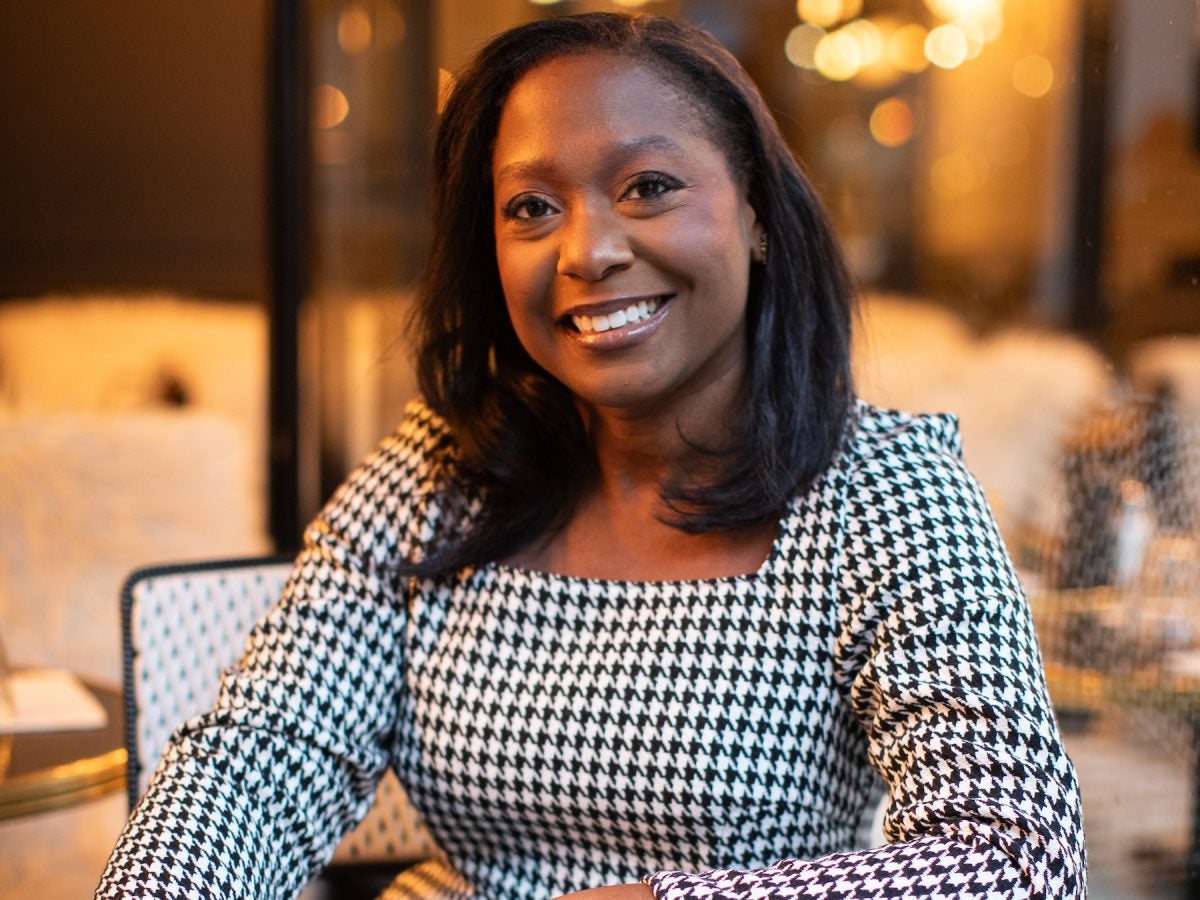

When Emmy Award-winning journalist Robin Allison Davis moved to Paris in her early thirties, she anticipated a new life abroad that would be even slightly comparable to the lavish tales in which the lauded city serves as a backdrop. Instead, she collided with an unexpected fate: not one, but two breast cancer diagnoses. The second time she was diagnosed, she was dealing with the disease in the city during the COVID-19 pandemic, but was determined to stay put, citing her trust in their healthcare system and more.
“Being an expat in Paris is not all baguettes, berets and French kisses—sometimes it’s hard, scary and lonely,” she wrote of her experience for ESSENCE in 2020. “But I’d rather be here, scars and all, than anywhere else.”
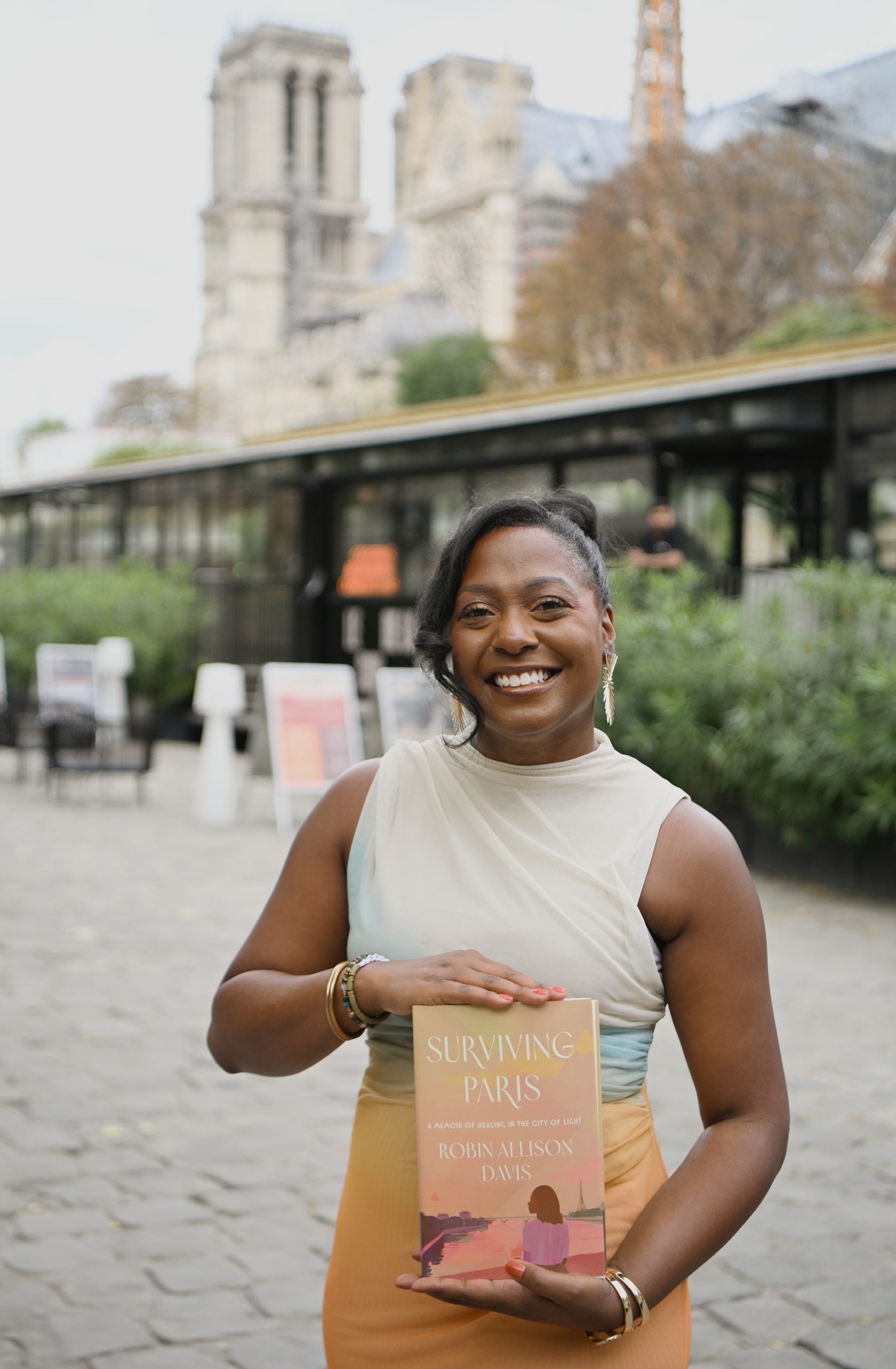
Five years later, Davis details her unique story in her first book, Surviving Paris: A Memoir of Healing in the City of Light. From a bleak job hunt upon her arrival in 2016 to undergoing treatment for her second bout with breast cancer during the uncertainty and fear of COVID, Davis recalls her journey through raw vulnerability and splashes of humor. We chatted with Davis shortly after the release of Surviving Paris, where the author opened up about why she chose to tell her story and what she has learned through it all.
ESSENCE: Congratulations on your memoir! How are you feeling now that it’s out in the world?
Robin Allison Davis: Thank you! Honestly, it’s still very hard to believe because it was so many years in the making. I started writing it in 2018 after my first [breast cancer] diagnosis, and to be here now in 2025 with the book out, I don’t think it’s really even hit me yet.
Why did you decide to write about your experience in Paris as you navigated your breast cancer journey?
I read a lot of books about Americans who moved to Paris, and it was all very cute. They moved – either for love or they met someone immediately – and after meeting Pierre in a boulangerie they had French kids and life was great. I was like, okay, this sounds cool, but I don’t really see myself in these stories. When I was diagnosed with cancer the first time, I thought, Well, maybe I should write the book that I wanted to read. I started writing it then and I put it down because I thought, no one really cares. Then, when I was diagnosed the second time in the middle of COVID, I said, Okay, all right, this is a story.
You explore so many universal themes in this memoir – relationships, career, moving to a new city, trauma, resilience, grief, joy, humor, and more – in addition to your being diagnosed with cancer twice. You pull apart the layers of these experiences and get really vulnerable with readers. Why was that level of candor important to you?
My whole cancer journey was from 2018 to 2021, and I did hold some things back. There are some super dark moments that don’t make it into the book, but I thought it was important to be vulnerable because readers can tell when you’re not being honest with them. I’m not trying to sell a book of falsehoods. I wanted to be very honest and just put it out there. And it was important for me because I’ve had people come up to me and say, “This part really resonated with me,” or “I felt like that, but I was afraid to say it,” and so it was good to hear that my honesty is resonating with people. I am out there for people to judge, but I’m hoping that the judgment will be much less than how much it will actually help people.
Speaking of vulnerability, the book pretty immediately dives into a moment of tension, as you await biopsy results. Amid the waiting, though, you paint a beautiful image of walking the Parisian streets. Why start the story there, with the brightness of Paris juxtaposed with the darkness of your personal life?
I really wanted to paint a picture for the reader in terms of what I’m seeing, what I’m doing, but also what I’m going through. I want them to drop into that moment because that’s how I felt. I was dropped into that moment of waiting for my diagnosis. As jarring as it can be for them, it was just as jarring for me. To have them dropped in, they understand all the confusion and all the different emotions that I was feeling at that time, while also still walking through one of the most beautiful cities in the world. I think that dichotomy was important to put at the beginning of the book, so that the reader sees what’s ahead.
It’s clear that your experience as a journalist has influenced your approach to writing your book. I’m curious: did you find it easier or harder to tell your own story compared to helping tell someone else’s?
It was a lot harder! A lot of times when you’re trying to have someone do an interview with you, you say, “It could be cathartic for you to talk about this.” When I’m sitting down writing my story, I’m like, I was telling people this was cathartic? But there were some parts that were easier than others. Because I really went full steam ahead in about 2021. It was easier for me to write about my first time having cancer because I was farther away from it. But there are a lot of moments from my second bout with cancer that are very difficult for me. There were certain things that I was holding at arm’s length that I had to really dig deep and fight myself to get on the page.
Although there are heavy moments in the book, there are also lighter, humorous moments throughout. Were you offsetting what you were experiencing at the time with moments of levity, too?
I was definitely trying to bring as much levity as I could to the situation. And if I wasn’t doing it, my family was trying to do it by roasting me about not having eyelashes or eyebrows. But it was important for me to have the levity [in the book] because it did exist during that time. I lived by that expression that you have to laugh to keep from crying because I had to. As much as I was fighting for my life, physically, I was fighting for my life mentally and emotionally as well. I struggled with depression in the past, and I knew that if I didn’t do things to keep some levity in my life, it would not be a good situation. So, it was something that was important to me to have, both in my real life during that time and in the book.
What advice would you give to someone who is maybe considering a move to France?
I definitely recommend doing things the right way, in terms of getting a visa, and trying to save money. A lot of times, people will talk about how low the cost of living is in France, which is true, but also, the salaries are quite low. So, if you’ve got student loans or credit card debt, make sure you’re making enough money or saving enough money so your quality of life doesn’t dip. At the same time, I will say, the quality of life in France is incredible. It’s the one thing that’s definitely keeping me over there. So as long as you just do your research, learn French, save up some money, then you can make it work.
Looking back on Surviving Paris, what are the lessons you have learned that you’ll carry with you forever?
Everyone says that line, “The only thing constant in life is change,” and I truly believe that. My life today is not what it was two years ago. It’s not what it was five years ago or seven years ago. Life is short, but life is also long. So, whatever I’m going through, it doesn’t have to be the entirety of my life. I can make it through to the other side. Change can come. Constantly having to keep the faith and keep hope is something that I’ve learned because when I look back at all these various periods of my life, they were so different. I feel like I’ve lived so many different lives, but that’s a good thing.
Surviving Paris: A Memoir of Healing in the City of Light is available now wherever books are sold.