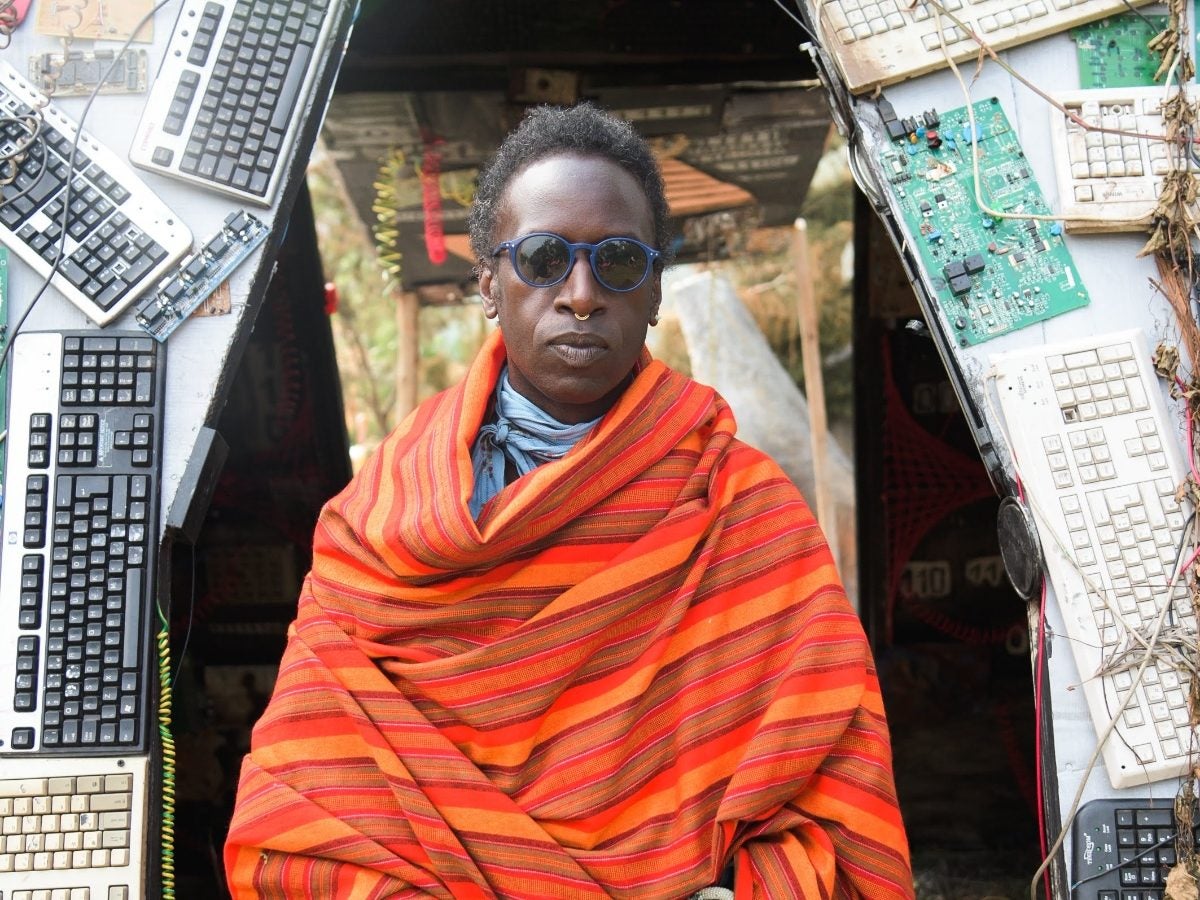

Saul Williams has never followed a linear path. Whether through poetry, music, film, or performance, his work defies convention and interrogates systems with rhythmic force and radical clarity. Now, with his upcoming graphic novel debut Martyr Loser King, the multidisciplinary artist offers his boldest vision yet—a cyberpunk epic that fuses mythology, activism, and Afrofuturism to challenge our relationship with technology, power, and each other.
Set in Burundi, the novel revolves around a hacker and a cosmic being—Martyr_Loser_King and Neptune Frost—who rise from the ruins of global exploitation to launch a digital insurrection. The East African nation, rich in coltan (a mineral vital to tech manufacturing), becomes ground zero for a confrontation between capitalist greed and collective consciousness. Williams began crafting this narrative more than a decade ago.
“Actually, it was 2012 when I first conceived of Martyr Loser King as a multimedia—multidisciplinary—project,” Williams tells ESSENCE. “I conceptualized the project as a graphic novel and a musical for the stage. The musical eventually became Neptune Frost… but they were always conceived as different wings of the same project.”
The project’s inspiration is deeply rooted in real-world issues. Williams began researching extractive industries after a 2011 trip to Senegal with co-creator and partner Anisia Uzeyman. There, the couple encountered stories of e-waste dumps and communities ravaged by global tech’s hidden costs. “It was clearly a continuation of the imperial forces countries rich in resources like the Congo & the continent in general have now faced for generations,” he says.
Choosing Burundi as the story’s setting wasn’t accidental. “I was interested in science fiction and didn’t want people’s imaginations to be immediately squatted by any ‘tragic’ sense of history or reality,” he explains. “Bujumbura, the capital, is known throughout the region for its beauty, great music, food, and lively atmosphere.” Williams also cites personal connections—Anisia’s time there and stories from her mother—as key inspirations.
Through characters like Frost and Martyr_Loser_King, Williams dives into the tension between analog resistance and digital evolution, crafting a world where rebellion takes shape through code, sound, and spirit. The graphic novel format gave him the freedom to imagine without limitation—unbound by the logistical constraints of filmmaking. Instead of calculating production budgets or coordinating effects, he could lean fully into the surreal. This creative liberty helped expand the scope of his story, pushing the boundaries of what storytelling can look like in a future shaped by technology and ancestral memory.
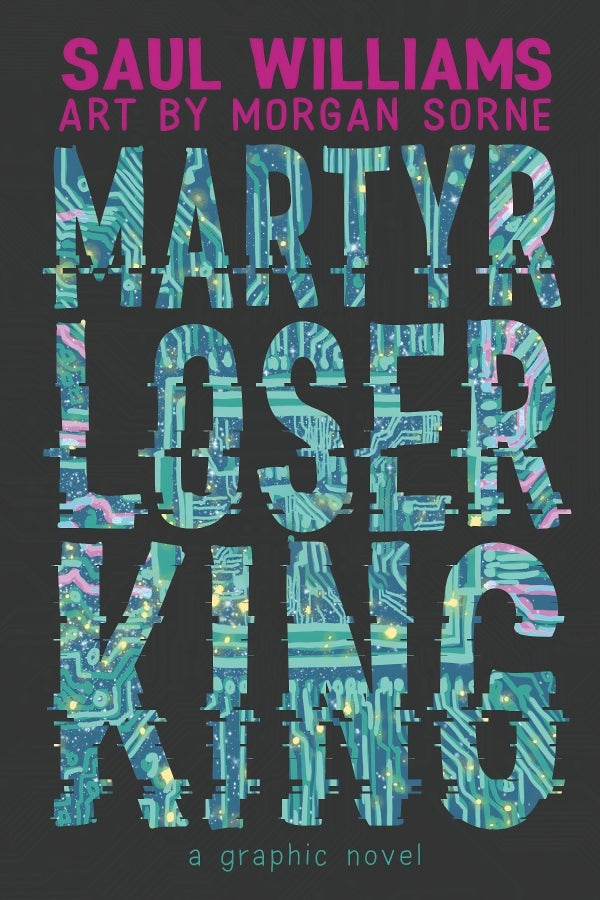
But this novel is more than a sci-fi adventure. It’s a deeply philosophical meditation on surveillance, identity, and survival in the face of dehumanizing systems. Williams balances social commentary with mythic storytelling, without softening either edge. “We are living in a moment where the socio-political realities feel, in many ways, ‘overpowering,’” he says. “Art serves a purpose to highlight, and explore in ways that can challenge us to grow beyond or confront the realities we face.”
Williams sees his upcoming release in the lineage of the Harlem Renaissance and Black Arts Movement—moments where art became a tool of both resistance and celebration. “The balance is life itself,” he says. “Art on the other hand, is a vehicle and platform meant to enrich the dialogue… The power of the imagination is stretching beyond the confines of lived experience and exploring possibilities that may shed light on our shared human condition and conditioning.”
As someone who built his career through various mediums, Williams approached the graphic novel form with both curiosity and intention. While the structure of sequential art presented a new challenge—requiring a clear narrative arc from beginning to end—it also offered a canvas for continuity, pulling from years of conceptual experimentation across his earlier works. Albums like The Inevitable Rise & Liberation of Niggy Tardust and poetry collections such as Said the Shotgun to the Head served as foundational exercises in thematic storytelling, preparing him to transition into longform narratives. The graphic novel format became the next step in his multidisciplinary journey.
At the core of Martyr Loser King is a meditation on technology, and a reflection of who we are and what we value. The story suggests that technological tools are neutral by nature; it’s how we wield them that determines their impact. True change, it argues, doesn’t lie in digital disruption alone but in the systems we build around it. Williams underscores the importance of collective action and creative resistance, urging readers to recognize that transformation starts not with the machine, but with the mind, and the communities willing to reimagine what’s possible.
Ultimately, Williams hopes readers come away from Martyr Loser King with more than aesthetic awe. “We will need to be ‘firing from all engines’ if we are to pose any true resistance against the reigning powers,” he says. “But we are masters of creative rebellion, and it continues to be a necessary facet of resistance.”
Martyr Loser King is set for release on April 7, 2026, via 23rd Street Books.