
Having the audacity to pursue truth is a courageous act. And, when studying historical texts or reading for leisure, it is important to examine the written word comparatively. Because the question often remains: whose truth, experience, or history is being told and from what perspective? On a recent trip to Oklahoma City, Oklahoma, I had the opportunity to experience the culture and food and to gain a beautiful glimpse into the lives of the people. However, what made the biggest impression on me was a visit to the First Americans Museum. It was the most beautiful, comprehensive, and unbiased depiction of Native American history that I had ever experienced. The museum provides an in-depth history of the 39 native tribes in Oklahoma and beyond. The entire museum was presented from a dual perspective. One of which is from a traditional perspective on America’s interactions with the Natives, and the other shares the perspective of those who were colonized forcibly and displaced—and the visual representation was quite effective, because it clearly depicted how perception truly shapes how one sees reality.
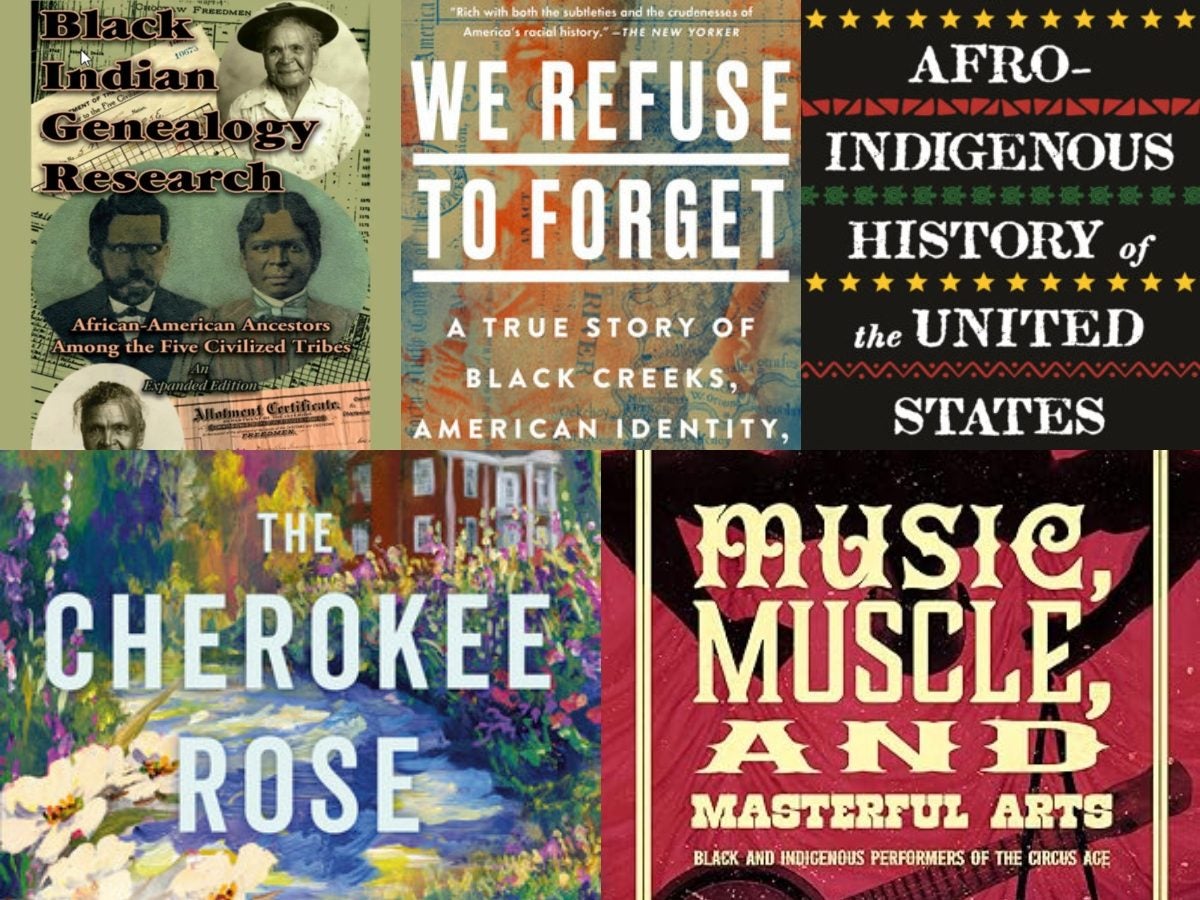
For Native American Heritage Month, we wanted to shine a light on books that offer deeper insight into the lived experiences of Indigenous Peoples, the history of Afro-Indigenous people in America, and the Afro-Native experience. The books on this curated list are either written by a Black author or an expert scholar on Native American studies. Some of these books feature Black and Native American lead characters, or depict the parallels and intersections that existed between Black people and Native tribes. With knowledge and awareness comes confidence and action. Knowledge of self and awareness about others teach us to love and listen better. Below is a diverse range of books for your reading pleasure. And in the words of historian, educator, and cultural knowledge keeper, Dr. Henrietta Mann (Cheyenne), “Let us continue to share this expansive place of dreams and promise, where we live and walk together on good red earth. Let us remember to live as good relatives. You are earth. So am I.”
The Cherokee Rose: A Novel of Gardens and Ghosts by Tiya Miles
In The Cherokee Rose, the hidden history of the past is unearthed as three women visit Hold House, a Georgia Plantation originally owned by a Cherokee chief. Jinx is a Creek columnist doing research for her history column, Ruth writes for a magazine, and she’s on assignment, and Cheyenne is a wealthy Black debutante looking to acquire the estate. When they discover a diary at the property, they are all left grappling with their own perception of things. Cheyenne is forced to further examine who the rightful owners of the property really were, Ruth has to confront her own family trauma, and Jinx comes to learn more about her tribe’s racial history, and they all must come to terms with the consequences of this newfound knowledge. And with the spirit of Mary Ann Battis, an Indigenous woman, hovering in the house, there’s powerful messaging on the notion that hidden history never truly sleeps or dies; it hovers from generation to generation until someone else discovers it.
Afro-Indigenous History of the United States by Kyle Mays
Within the pages of Afro-Indigenous History, Mays takes a deep dive into the intersectionality between Black and Indigenous peoples, their histories of resistance, and their fight for freedom, “sometimes together, and sometimes apart.” With this book, Mays compels each reader to reconsider contemporary debates about historical depictions of both Indigenous and Black people while centering solidarity. This book is a great choice for readers who like to study history and culture alongside other texts while gleaning knowledge from the parallels that exist within different texts. This book also does a good job of encouraging the reader to re-examine texts like the Declaration of Independence alongside the musings of contemporary pop culture figures and activists.
Black Indian Genealogy Research: African-American Ancestors Among The Five Civilized Tribes by Angela Walton-Raji
Black Indian Genealogy provides valuable first-person accounts and records of the lived experiences of the former slaves of the Five Civilized Tribes around the early 1900s. This book provides valuable information on how to use historical records like the US federal census, the Final Rolls of the Civilized Tribes, and shares information from case studies about the lives of the Cherokee, Creek, Choctaw, Chickasaw, and Seminole nations. This is an intriguing read for history buffs, educators, and those with a passion for genealogy.
We Refuse To Forget: A True Story of Black Creeks, American Identity and Power by Caleb Gayle
History is never quite finite, because just like beauty, perception is in the eye of the beholder. What I appreciated most about reading We Refuse To Forget is the way in which Gayle diplomatically and transparently tells the rich history of the Creek Nation, a people that “Both owned slaves and welcomed Black citizens.” This book gives a glimpse into the legacy of “Cow Tom,” provides historical context about the stripping of citizenship from Black Creeks, and provides a deep analysis of racial and ethnic identity, while sharing interviews with Black Creeks.
Music, Muscle, and Masterful Arts: Black and Indigenous Performers of the Circus Age by Sakina M. Hughes
Many have heard about the “Chitlin Circuit” and the “Harlem Renaissance,” but one does not often hear about the “Black Bohemians” that thrived approximately from the time period of 1900-1920. It was a time of creative expression and freedom for Black performers who carved a space for themselves performing in “circuses, Blues tents, and Wild West Shows with Native Americans.” These entertainers traveled, made a good living, and some even acquired fame. Music, Muscle, and Masterful Arts delves into a very unique moment in time where Black, as well as Native American peoples, who were creatives, artists, and performers, had autonomy over their artistic careers.
Africans and Native Americans: The Language of Race and the Evolution of Red-Black Peoples by Jack D. Forbes
As a scholar, educator, and historian, Forbes is credited with forming one of the first Native American Studies departments in the country, and as a descendant of the Lenape tribe, his life’s work was committed to bringing awareness to the Native-American experience. In his book, Africans and Native Americans, Forbes examines the color classification system established by European colonists, and also provides evidence that Native American and African contact happened before America. Having a large breadth of work on the history of Native Americans, Forbes is considered one of the most prolific voices on the topic. His works often depict a legacy that is not commonly discussed and transcends the norm when it comes to discussing Native Americans and beyond.
For those who want to continue learning about the intersection of the Black and Native experience, a few documentary selections are below.
Documentaries That Showcase Allyship Between Black Americans and Native Americans
Native or Black? How America Drew The Line