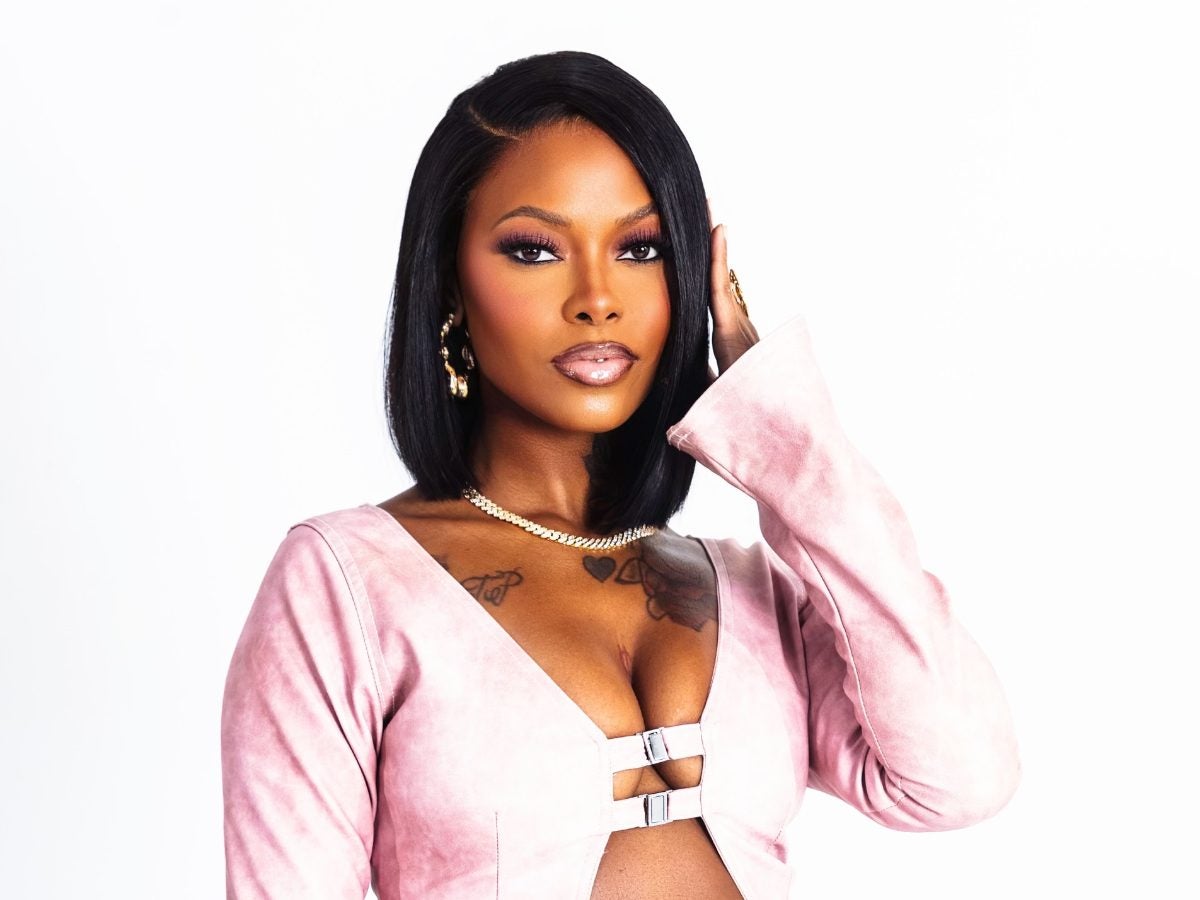

Life is full of uncertainty. It’s not easy, but it can be extremely fulfilling when done right. If you’re lucky, you’ll be able to love, laugh, and live out your dreams. For Big Boss Vette, 2025 looked like her best year yet. From the outside, she was in the prime of her career. Songs like “I Look Like,” “Still Outside,” “Bad Bih,” and “Talk Yo Shit” kept her name circulating across playlists. After first catching attention in 2014 with a viral freestyle and later building a following through YouTube and TikTok, the St. Louis native had grown into a Billboard-charting, RIAA Gold-certified artist; which is no small feat. Then August arrived, and everything changed.
For a while, Vette experienced lingering sinus issues, which doctors initially brushed off as an infection. But when antibiotics didn’t help, the rapper decided to get a second opinion. “I went in for an MRI, and that’s when they found the tumor,” she said. “It was seven centimeters, and it was sinonasal carcinoma, Stage 4B. When they told me, I was devastated.”
Societal pressure can be heavy for most women, especially Black women, to stay strong and keep moving, regardless of the obstacles that life throws at you, and Vette felt that weight in real time. Still, she turned to her faith, her family, and the small circle she calls her village, choosing survival without letting go of her dream. Although her music had to take a pause for a moment, her purpose never did.
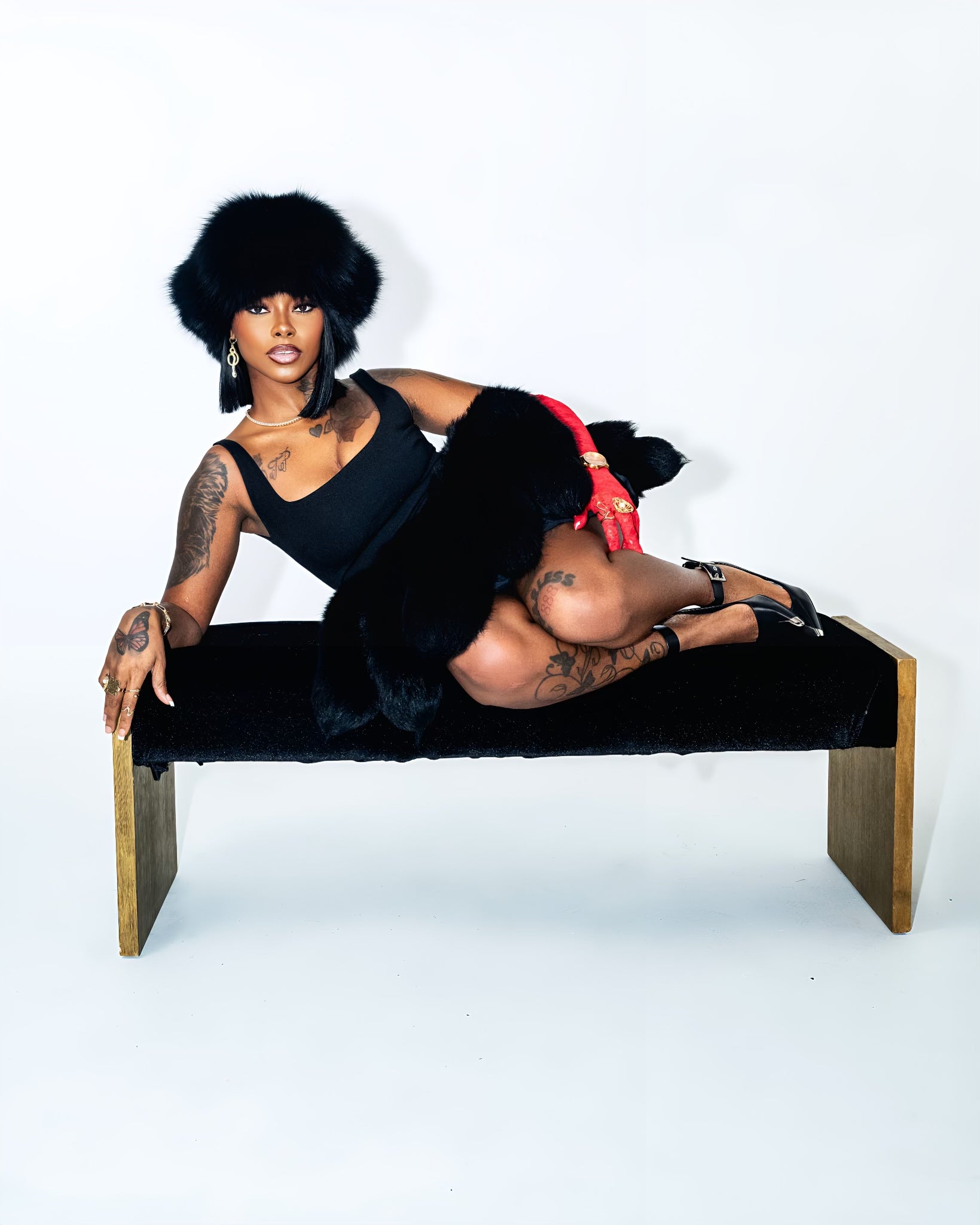
“I know that God did not bring me this far to only bring me this far,” Vette said. “I feel like I live life with a better direction. Everything I do is with intention. From the things I put in my body to the people that I have around me, to the knowledge that I post about. Everything is more intentional now.”
In the conversation that follows, Big Boss Vette meets her defining moment head-on. She talks about pushing through treatments between creating, about the pride that made it hard to ask for help, and about the shift that happens when survival becomes the only thing that matters. For the first time, she’s telling the full story in her own words, looking ahead with a renewed focus on what she still wants to accomplish.
ESSENCE: Vette, when you first received your diagnosis, what was your immediate thought?
Big Boss Vette: When I first received my diagnosis, they first thought that it was a sinus infection because the type of cancer that I had was very rare. It was Sinonasal carcinoma, stage four. So when they first told me that I had a sinus infection, they gave me the medicine and the steroids and I was on it for 12 days. But then something just kept feeling off. I was like, “this is not working, it has to be something deeper.” So I went to get a second opinion and my doctor scheduled me for an MRI, and as soon as I got it, they found the brain tumor and it was seven centimeters. At first, we just thought it was a regular tumor. We didn’t know that it was cancerous or anything like that. When I first found out that I had a tumor, I was devastated. I was like, “Where did this come from? How did this happen?” I was actually lost for words. I just didn’t know—I was emotional. I dunno. I was scared. I didn’t know what was going on.
This happened at a really critical point in your life and your career, and a lot of people didn’t know either. How were you able to continue building momentum in your music career while still dealing with this diagnosis?
Shout out to my village, but at that moment I just felt like that I still had to show up. I still had to work, and in times where I was feeling up to it, so I made sure that I did just that because I still had to be an artist. I couldn’t just stop my life. It was very hard. I worked up until the point where I couldn’t because the radiation and the chemotherapy was catching up to me. But overall, I was just rolling with the punches and I had an amazing village that was helping me throughout this whole process as well. I didn’t do any of this by myself alone.
There’s always this expectation for women, especially Black women, to always be strong. Did that pressure affect you at all during this process?
Absolutely. Black women are known to just keep on going, keep on fighting, keep on pushing through. Black women are known to experience burnout because it’s harder for us to ask for help or just be vulnerable in the moments that we need to be. But in those times, I just leaned on my village. Honestly, it was hard for me because I went from doing everything by myself to having to have help during this process. So I was having seizures so I wasn’t able to drive myself around, dress myself, or even feed myself sometimes. And it was hard. It was very hard. But it was my village that got me through in those times of me not knowing how.
Can you talk to me a little bit more about that from a psychological standpoint? You said that you’re used to doing everything by yourself, but then it got to a point where you couldn’t anymore. Was that more difficult than dealing with the diagnosis itself?
Well, psychologically it was draining going through this diagnosis. At first I was actually going to hide it from everybody, including my family. But once I realized I can’t do that, I actually need my family at this time. I need my village at this time, and having to actually step back and allow people to help me, that was kind of hard because I’m very independent and the medicines that I was on, it was causing me to be drowsy, causing me to be sick. I was even on a anti-seizure medicine because of the way that the tumor was hitting my brain and it was causing me to have suicidal thoughts. I was very angry. I was very irritable. It was an uphill battle, but God got me through it. My village got me through it. I always knew that I was going to beat it no matter what. I just had to instill that within my brain, within my mental, and within my thinking.
For a lot of artists, musicians specifically, music can be cathartic for them. They use it as a journal or outlet. Did your music help at all during this process and if so, how?
During this process, I actually took a step back from creating new music and I was just putting out the music that I already had going while I was going through chemo and radiation. It was very hard for me to actually be in a studio and work through this process. So I wasn’t doing that. But the music that I already had pre-recorded, I was just shooting content to it and I was shooting videos to it and doing things like that. But other than that, I wasn’t in the studio during this time.
What went into the reason why you didn’t want to disclose your diagnosis to your friends and family?
I did not want them to worry about me. It was very hard for me to come to terms that I was just told that I had Stage 4B cancer. So Stage 4B, it’s like the stage before it hits the incurable. So it is like a 50/50 chance that I beat it and it’s a 50/50 chance that I don’t, so I didn’t want anyone to worry about me. I didn’t want to become a burden to them because I had to go through this fight. But then I had to realize, no, you actually can’t. So when I finally told them, it was a very vulnerable moment for me. I was just like, “I’m sick and there’s nothing that I can do about it.” I chose to keep it private from the world because I just wanted to heal. I just wanted to be intentional with the energy and the people that I had around me during this time. And I just felt like privately it was better until I beat it.
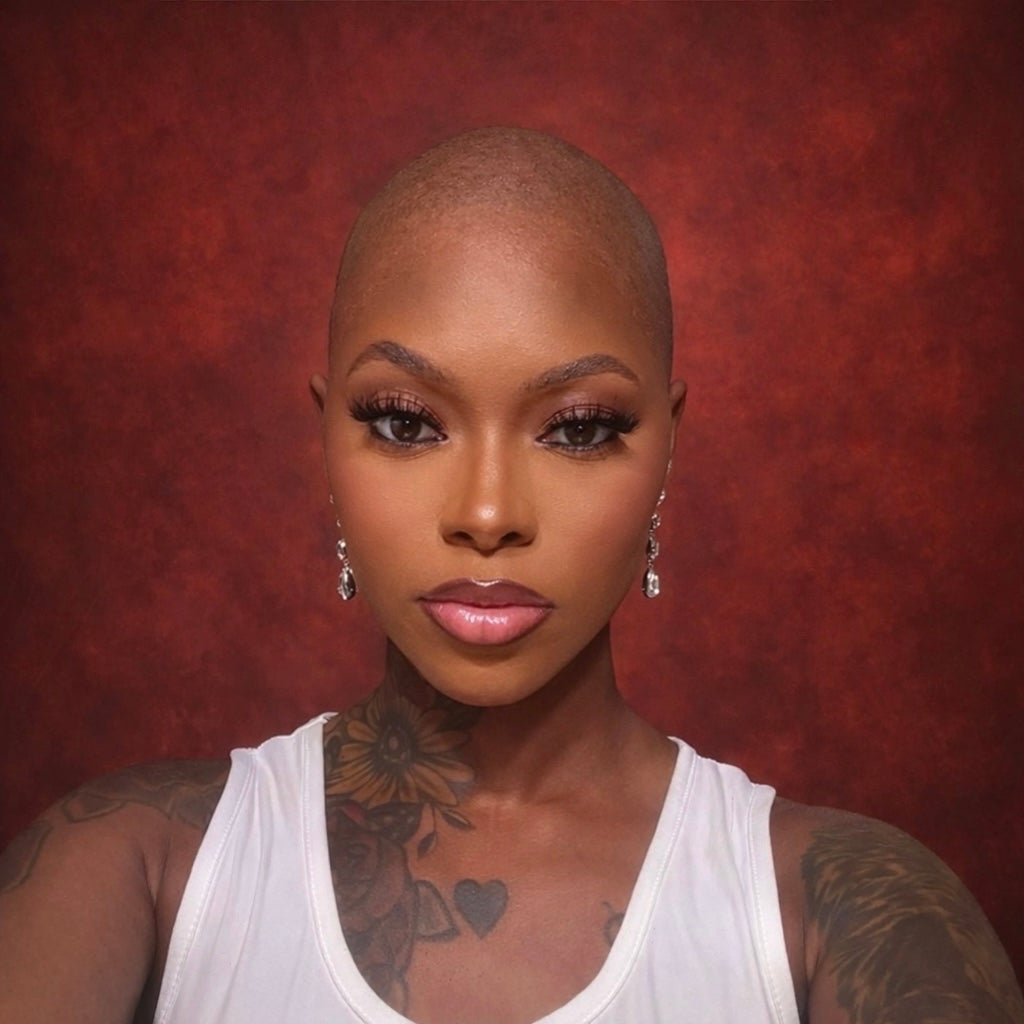
Last month, you rang the bell. What did that moment represent for you?
That moment represented everything for me. The moment represented strength, it represented resilience. It represents that I made it. It really, it represented that I beat this. To me it’s like all of this hard work, all of this trial and tribulation that we went through during treatment didn’t go to waste. We did. It represented how strong that I truly am.
During this time, what have you learned about listening to your body that you wish more people took more seriously?
I’m so glad that you asked me that. I have always been one of those people that was scared of the doctor. What I’ve learned is that it is better for them to tell you. I am so glad that we caught it when we did. If I would’ve ignored the signs, I don’t know if I would’ve been here today. I just feel like we as humans really need to make sure that we stay in touch with these doctors, especially if we feel like something is off. I want us to start doing the due diligence to go get a second opinion because they told me that I had a sinus infection and that was it.
When I went to get my second opinion, the doctor said “A sinus infection does not cause your face to go numb. A sinus infection does not cause the severe headaches that you are experiencing. The sinus infection does not cause your eye to bulge out.” So it was a lot of things that could not have been a sinus infection that the doctor overlooked at first. So, what I would say is no matter how scared you are of doctors or how much you just feel like that you are all right, you still need to go.
How has this experience reshaped your understanding of purpose outside of being a musician?
When I was first diagnosed, they told me that I might lose my eye. I was terrified at first. I was like, “what am I going to do?” The more that we went into treatment, my faith grew stronger. Now, I just know that God has a calling on my life. I just know that there’s a purpose. The way that I walked this down, at first I didn’t know whether I was going to come out on the other side of this. So, I went into a deep depressive state because I just didn’t know.
I started praying. I started journaling and now I know that God has a plan for me. I know that my village that he has surrounded me with was part of the reason that I got through this, and it was part of the reason that I stayed positive throughout the times where I couldn’t get myself out of bed, or I didn’t want to go through treatment. I feel like now I live life with intention. Everything I do is with intention.
With every going on in your life now, is music something you’ve been thinking about? Is that a priority still at this point?
Right now, I’m actually focused on healing. I do have music lined up that should be dropping in the near future. Also, I’m focusing on my nonprofit Pretty Girls Walk Strong. So, my goal with that is to create a platform where we are fostering a community of people who have the rare cancers, and we can provide resources, vendors and tools and a sense of sisterhood to let them know that they’re not alone in this fight. I’m still in the early stages of this, so I’ll have way more information coming once we get it all together. I think music will always be my passion. Honestly, I love music, but we are focusing on more things.