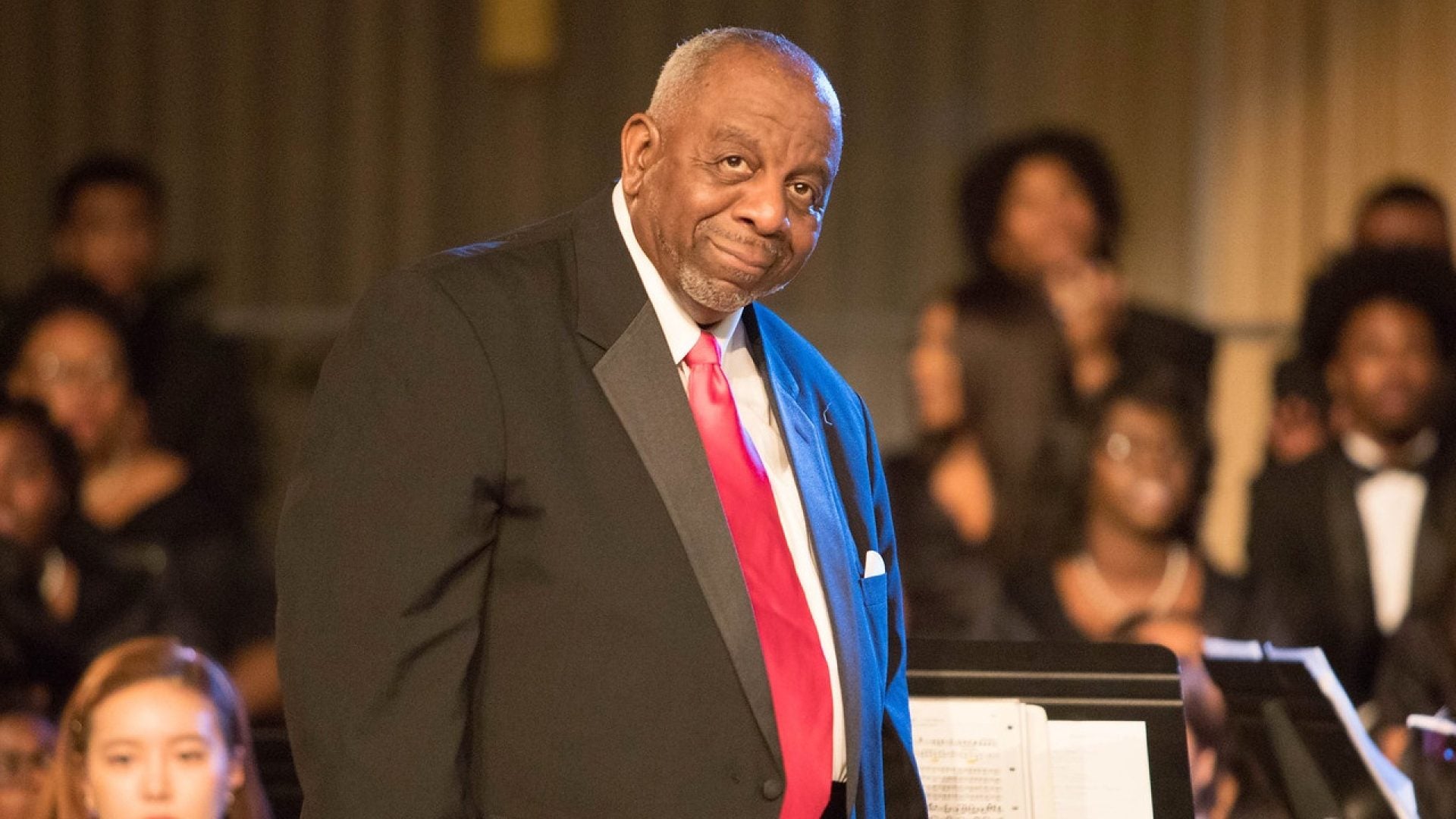

Among all historically Black colleges and universities (HBCUs), the longest-reigning choral director is celebrating fifty years of educating and training the vocal abilities of thousands of students through Dillard University’s music program.
Dr. S. Carver Davenport, associate professor of music and director of concert choir, began his tenure at the university in 1975. Since then, his teachings have helped to preserve music education in New Orleans while also embracing the 156-year history of Dillard University.
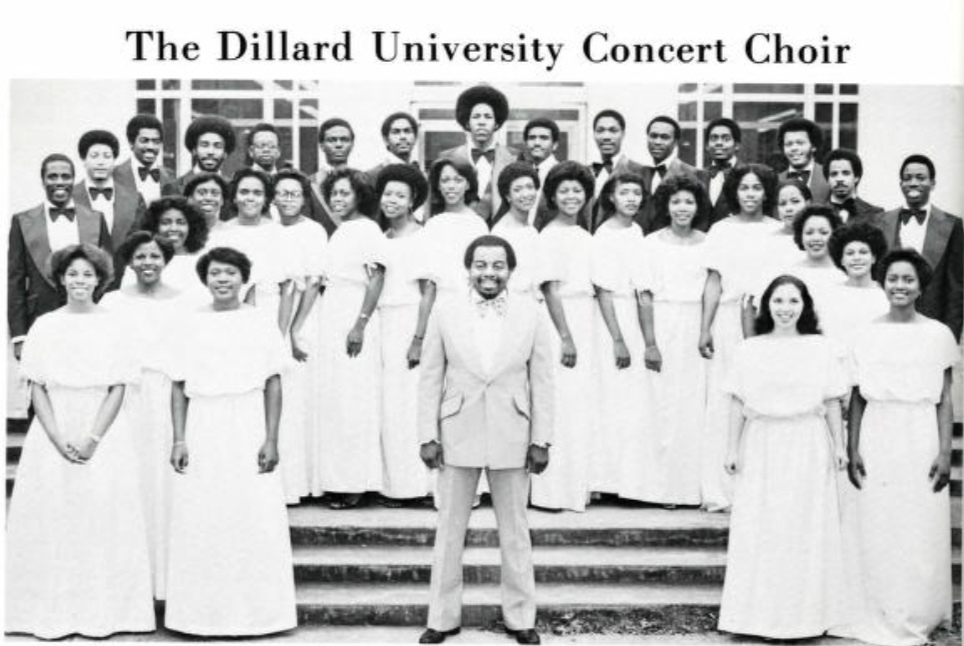
The university’s Concert Choir dates back to 1935 with a long history of traveling across the South and Midwest to perform on tour and during several notable occasions. Under Davenport’s leadership, the choir earned national distinction with performances for President Gerald Ford and later at the White House for President Barack Obama. Davenport was also appointed by the National Football League to serve as the music director of the 1990 Super Bowl Halftime Show.
“Dr. Davenport represents the very best of the HBCU legacy and all that these illustrious institutions have bestowed upon our country and our world,” said Dr. Monique Guillory, President of Dillard University. “He is ‘old school’ in the very best sense—upholding the highest standards of professionalism and integrity, with no excuses, only expectations. Those expectations have helped shape students’ character and prepare them for success well beyond their responsibilities to the choir.”
The Hampton University, then Institute, graduate brought his conducting and arranging techniques from his years as a college student under the direction of his mentor Dr. Roland M. Carter, another highly acclaimed composer, conductor and music educator.
While shaping the musical training of Dillard students, Davenport’s first decade of teaching unfolded as America was trying to find its footing after desegregation.
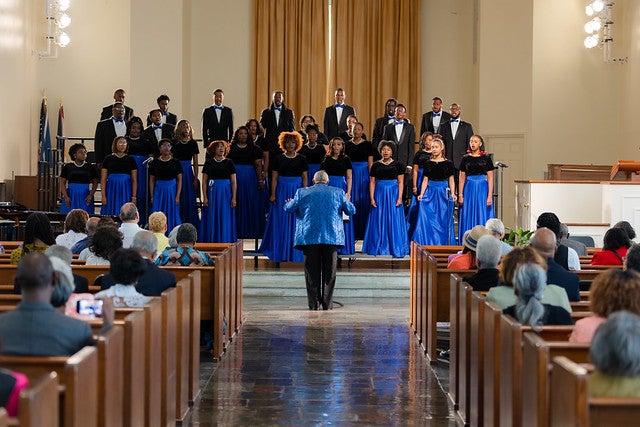
The students during this period of Davenport’s early career came with a deeper understanding. “We were second or third generation Dillard students,” said Courtney Carter, a member of the choir from the late 1980s. “We still had parts of our parents’ experiences from the Civil Rights Movement. While singing, we represented the children of the future.”
Paired with the leadership of the university at the time under President Dr. Samuel DuBois Cook, Davenport set a foundation that would position the music department and the choir apart from the expected gospel musical selections. During his first five years, “we exceeded the standard,” Dr. Valerie Anne Jones Francis, a 1979 member of the choir and award-winning vocalist, told ESSENCE. “We learned classical music and understood the importance of singing negro spirituals in its original dialect.”
As today’s students reflect on his teachings, Davenport is constant in sharing that “this is not a gospel choir,” said Makiya Hill, a senior vocal performance major and vice president of the choir. “This is a concert choir who sings a selection of gospel arrangements, classical music and hymns.”
Many of the students come from singing in high school, seeking to experience Dillard’s choir. “The level of professionalism from him is unmatched,” said Jessica Harvey, a 2009 member of the choir and vocal music teacher. “The diversity of the song selections I teach to my students today are based on what was taught to me.”
The music relationship between Davenport and Moses G. Hogan, a renowned composer and arranger of choral music, helped to give new experiences and training to Dillard students. “He makes sure that we understand the history of spirituals,” said An’Drèus Lowry, choir president and assistant choir director. Davenport carries forward Hogan’s mission to uplift spirituals by continuing to teach his own interpretations of many of the late composer’s arrangements to the choir.
Regardless of the generation of students, his instruction and techniques remain the same and are embedded in how they learn music.
“He taught us to broaden how we sing,” said Shirley J. Williams-Kane, Dillard University alumna who sang in the choir in the early 1990s. “He gave us stories and personal accounts of what these songs meant.” She also shares how Davenport’s approach to teaching was student-led, giving music majors in the choir the ability to practice classroom instruction during rehearsals and on tour.
Davenport has continued the tradition of the choir traveling on tour for almost two weeks to cities like Shreveport, Houston, Memphis and Chicago. “We sang at churches and stayed in the homes of church members, alumni and hotels,” recalled Shirlean McEwen-Law, a 1998 choir alum. “We heard stories from alumni on their Dillard experiences and it inspired us to relocate to these cities after graduation.”
His career has navigated many cultural and social shifts, from the expansion of Black music expression in hip hop, R&B and gospel to the aftermath of Hurricane Katrina, the election of the country’s first Black President, the rise of the Black Lives Matter movement, the COVID-19 pandemic, and now during the introduction of artificial intelligence generated music.
After the 2005 storm, “the choir was a major deciding factor for quite a few people coming back to Dillard,” said Christopher Stewart, a 2008 alumnus of the choir. “We held rehearsals at the Hilton and with the relationships that we had with each other, and as well as with Dr. Davenport, it brought us back together.”
Davenport has trained generations of singers, songwriters, producers and music educators whose careers extend from New Orleans to stages and classrooms around the world.
“Every musician and singer I run into in New Orleans has either experienced or knows about Dr. Davenport’s impact,” says Keith R. Tillman, Sr., coordinator of the university’s music program and a 2012 choir member. “They have the utmost respect and reverence for him. I aspire to reach even a portion of the impact he has made on people’s lives as I grow older.”
As modernization comes with teaching music, current students emphasize that Davenport continues to be solely focused on the foundation of music, ensuring that history is always taught.
Alumni of the choir seek to come together once again to celebrate Davenport on this new milestone, exceeding their 40th celebration held in 2014.