
One hundred years ago, the Afro-Puerto Rican bibliophile and archivist Arturo Schomburg donated his personal collection to the Division of Negro Literature, History and Prints at the 135th Street branch of the New York Public Library in Harlem. That gift became the foundation for one of the most important repositories of Black history and culture in the world: The Schomburg Center for Research in Black Culture
Today, the Schomburg has a collection of 11 million items including the official archives of luminaries such as James Baldwin and Malcolm X. It continues to serve as a vital hub for Black creative and intellectual life.
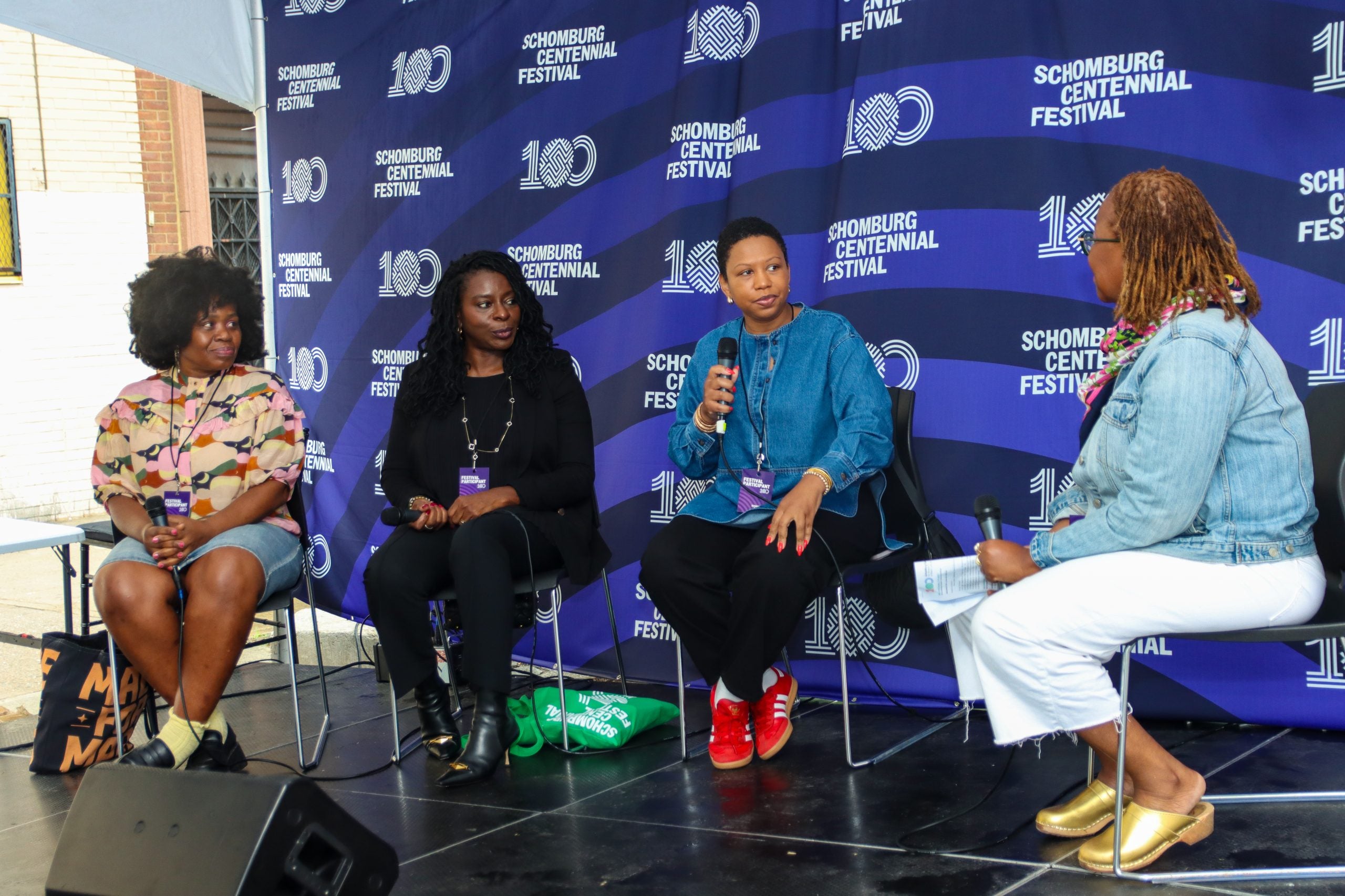
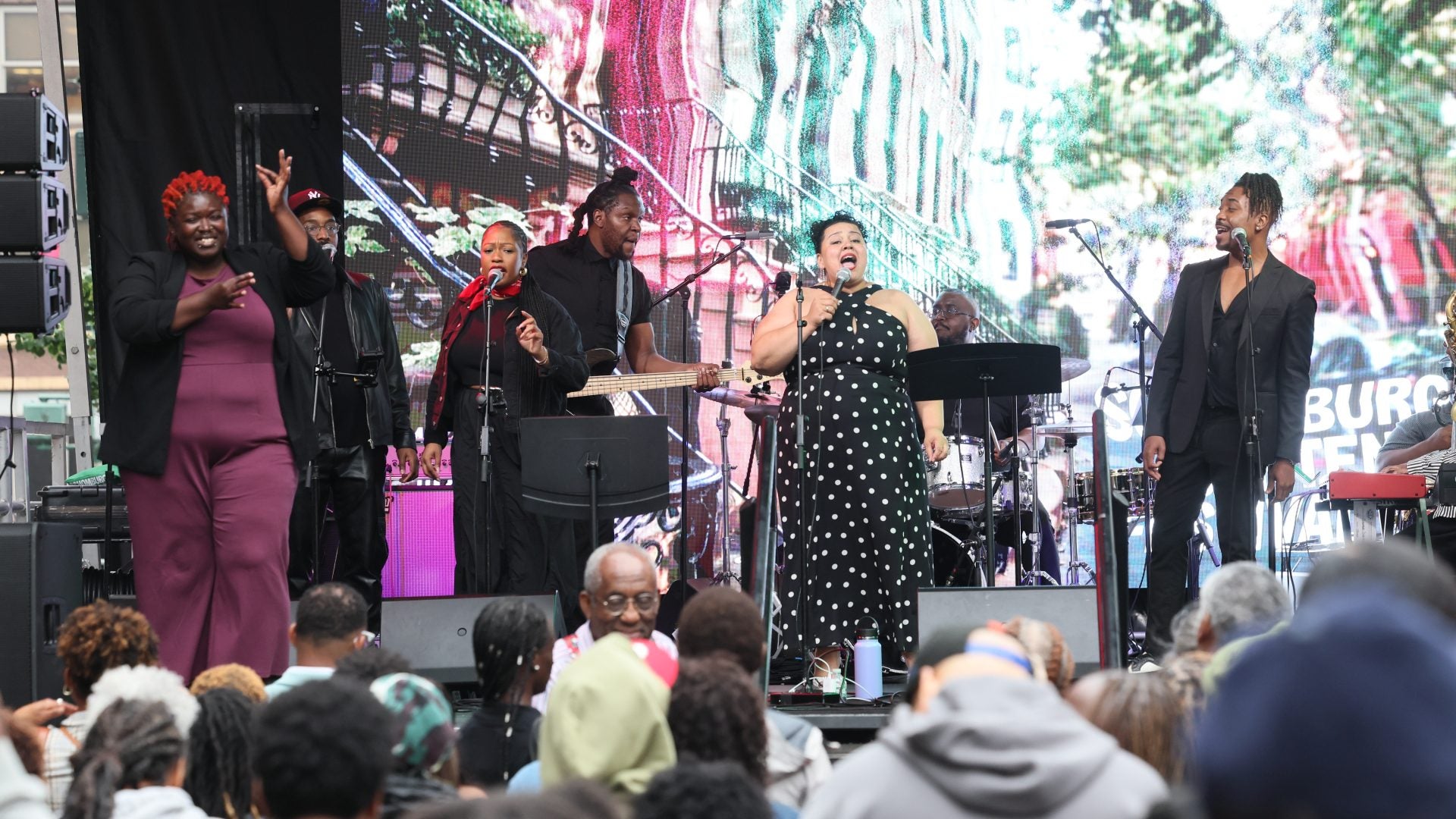
On Saturday, June 14, Harlem celebrated Schomburg’s legacy the Schomburg Centennial Festival, an all-day event featuring author talks, live music, and a block party centered on community. Local vendors offered everything from books to handmade candles and jewelry.
From activist Raquel Willis’ opening remarks to poems recited in honor of the late literary giant Nikki Giovanni, along with talks from leading voices such as Professor Imani Perry and Kiese Laymon, to cultural critic Roxanne Gay, the festival was filled with insight, reverence and celebration.
Throughout the day, The Schomburg Center buzzed with energy. A Black pop culture trivia game brought laughter to the Langston Hughes Auditorium. A DJ set by D-Nice had attendees on their feet, while hip-hop legend Slick Rick and Harlem-based ensemble The Soapbox Presents: Stoop Sessions delivered performances that turned the street into a dance floor.
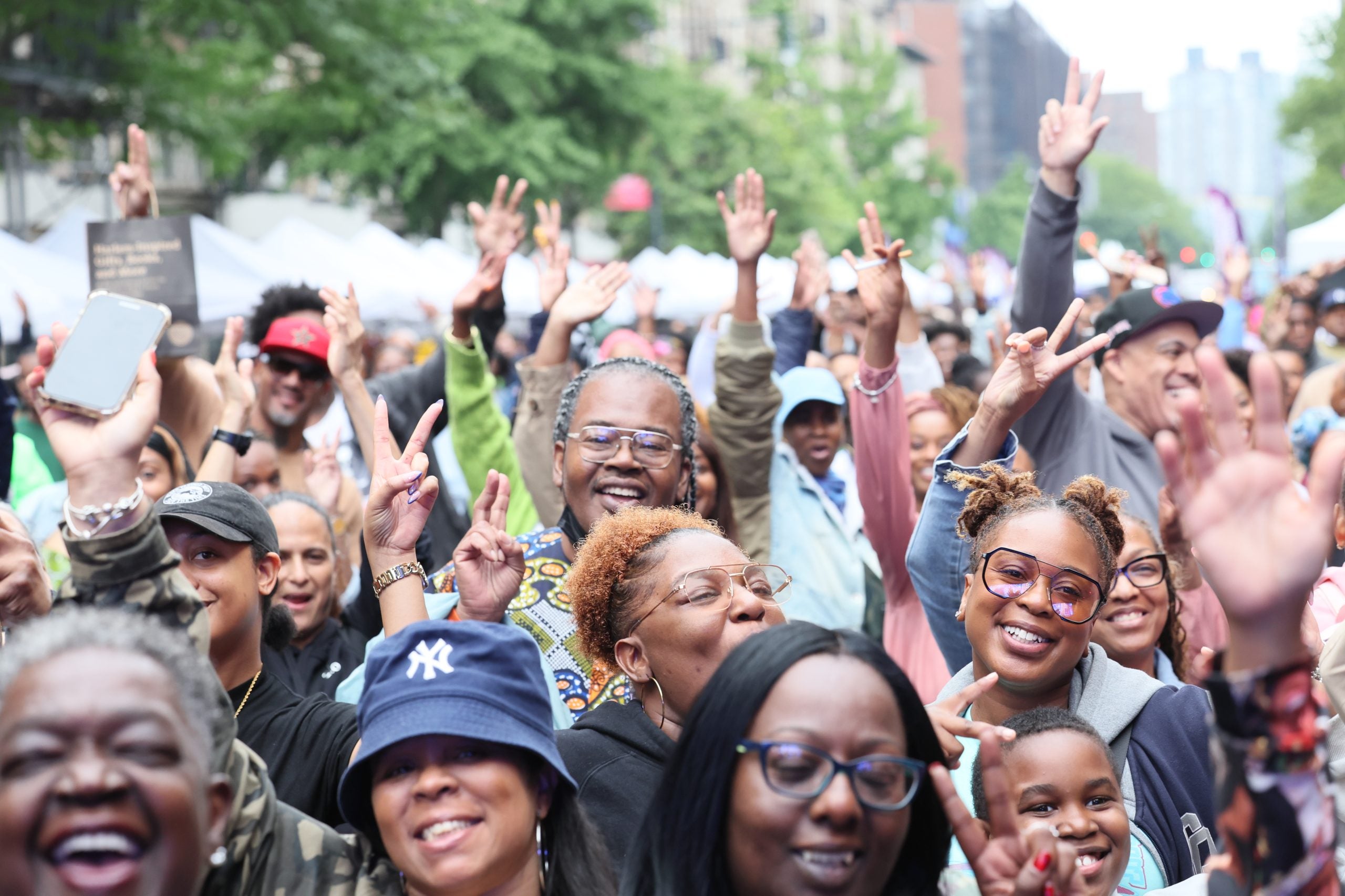
Telfar bags swung next to kente cloth wraps, and authors like Clarence Haynes signed copies of his new novel, The Ghosts of Gwendolyn Montgomery, as lines snaked through the crowds.
The day was nothing short of Black joy.
Even a few days out, it’s hard to describe the magnitude of the festival. I felt as if every corner of the 75,000 square-foot building was buzzing—with conversations about Black institutions and their future, children reading graphic novels on bean bags, and artists and elders exchanging stories.
The Schomburg Center has long been the heart of Harlem’s ongoing Renaissance—from the 1920s until the present moment —the neighborhood teems with an energy of artistic and scholarly abundance that, in turn, shapes political and cultural discourse not just in New York City but across the country.

At a time when Black life is under attack, and libraries, museums, and the humanities, broadly speaking, have had their budgets slashed by federal funding cuts, the Schomburg Center stands tall. Under the leadership of Joy Bivins, it remains a living archive and monument to the brilliance of Black thought and culture.
The Schomburg Centennial Festival was a reminder that in Harlem, Black joy, memory, and imagination are not just preserved —they’re lived. The Schomburg Center gave Harlem another reason to celebrate, and Harlem showed up in all its glory.