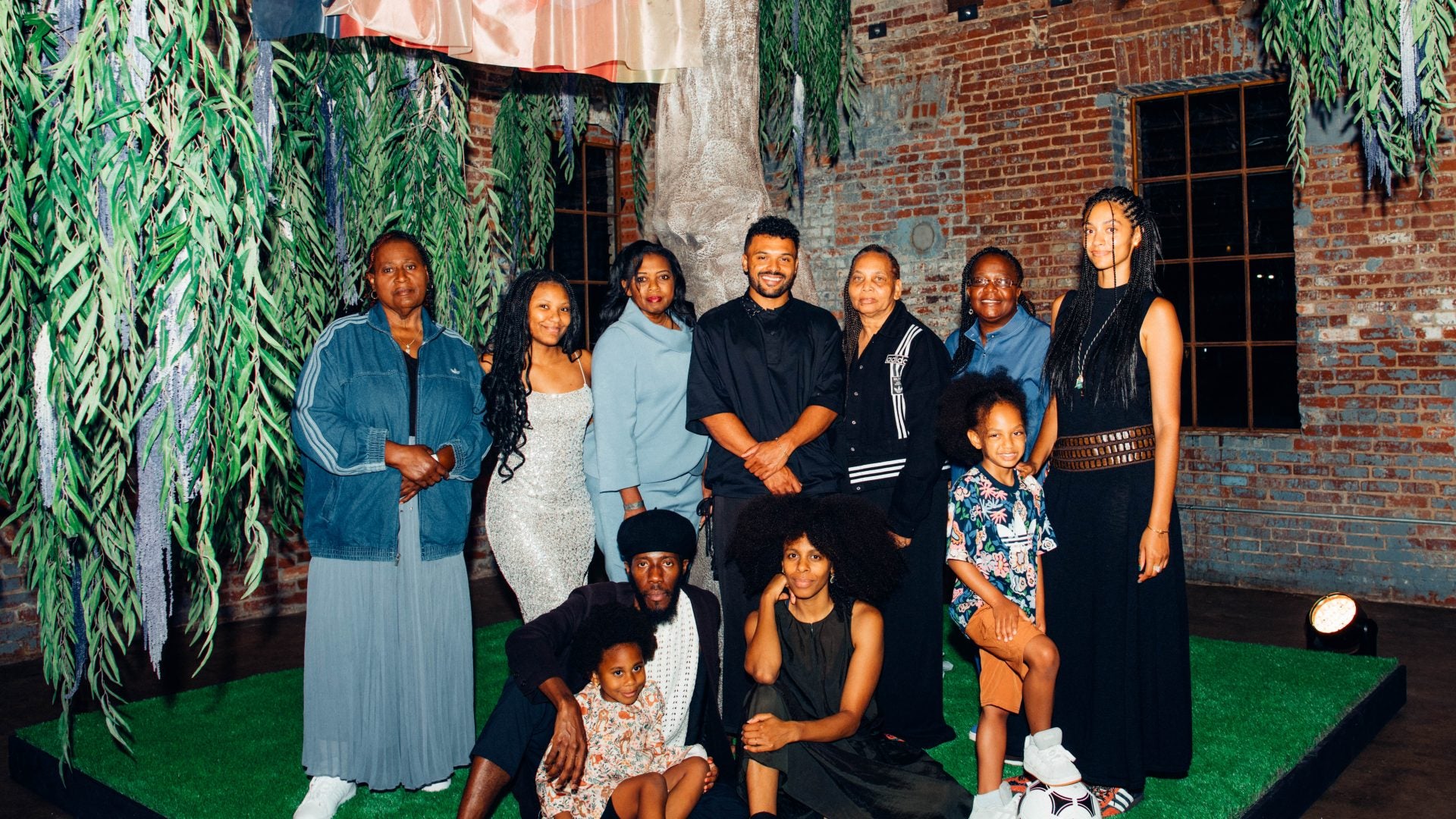

At a time when many companies are scaling back diversity initiatives, Adidas has doubled down. The iconic footwear and athletic apparel brand hosted its fifth annual Honoring Black Excellence (HBE) capstone celebration on June 24th. The immersive experience curated by Rog and Bee Walker spotlighted honorees’ uplifting community through creativity, care and legacy.
“HBE is a beautiful expression of elevating those creating with purpose – fueled by community and the culture that binds us together. Our stories matter,” said Ayesha Martin, Senior Director of Adidas Purpose.
Husband and wife creative duo Rog and Bee Walker curated and directed the experience that captures the imagery and artistry for the three HBE honorees: Gee’s Bend Quilters, Jaycina Almond and Sekou Thornell.
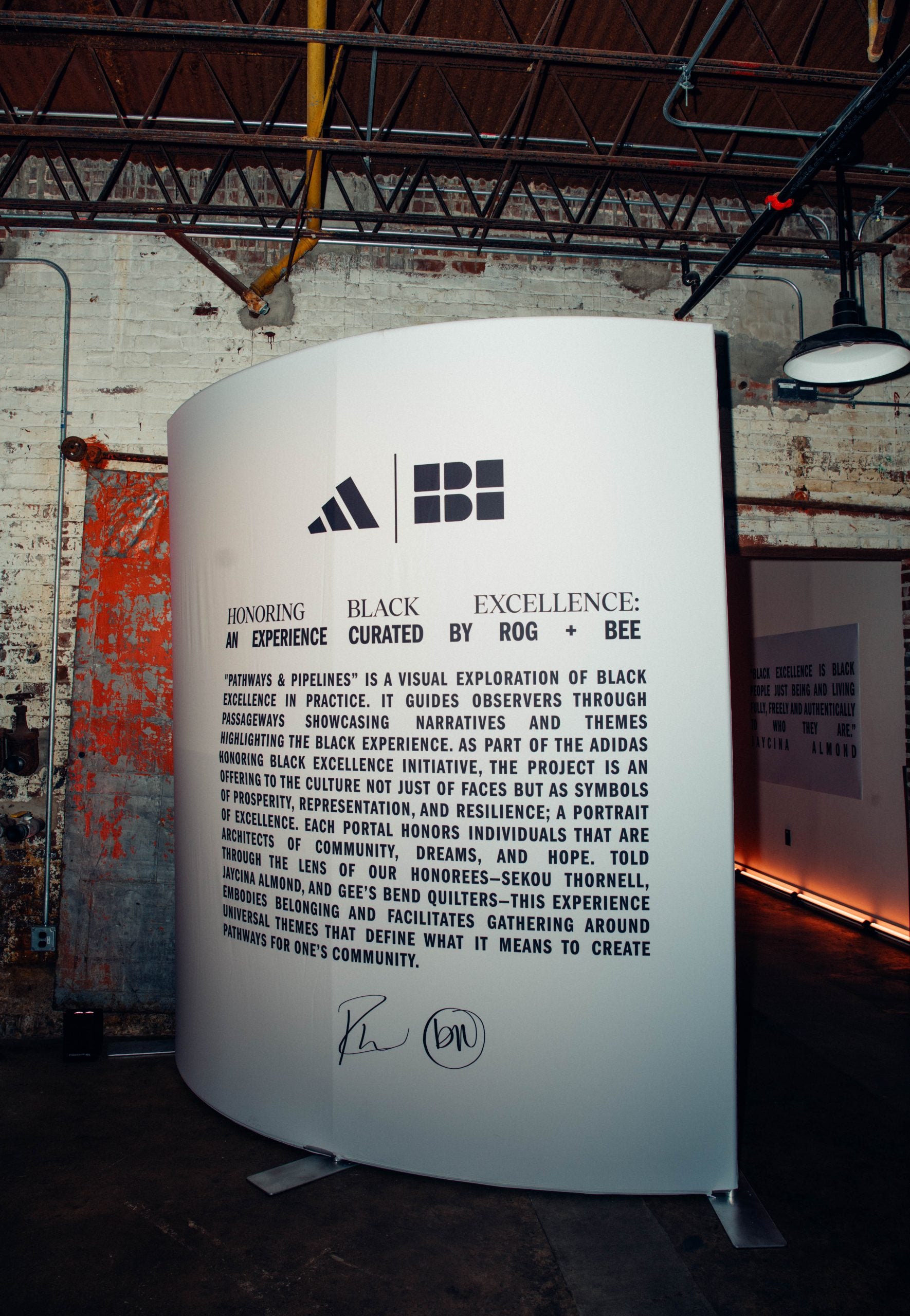
“We were tasked with something we’ve never done before, which is really exciting. So for us, it was meeting the challenge of a new medium,” Bee Walker told ESSENCE. “What we did to orient ourselves was think mostly about the honorees, their stories, what their stories represent, what their communities represent and how we could bring the work that they do into a creative space and represent it as art.”
Rog Walker echoed these sentiments, saying, “It was beautiful that they trusted us, and for us, it really is just this idea of how honorees are creating pathways and really touching on the fact that each of these communities is making spaces for others. That’s what we want to do with our stories as well—not just represent but create a visibility that creates space for people to exist.”
Honoree Jaycina Almond is a model and activist and the Atlanta native is working to shift the narrative around single motherhood with her organization, The Tender Foundation. “Being part of the Honoring Black Excellence celebration is incredibly meaningful; it’s not only about me but also recognizing that the community we serve is long overdue to be included in conversations around what Black Excellence means – because our mamas represent Black Excellence too,” explained Almond.
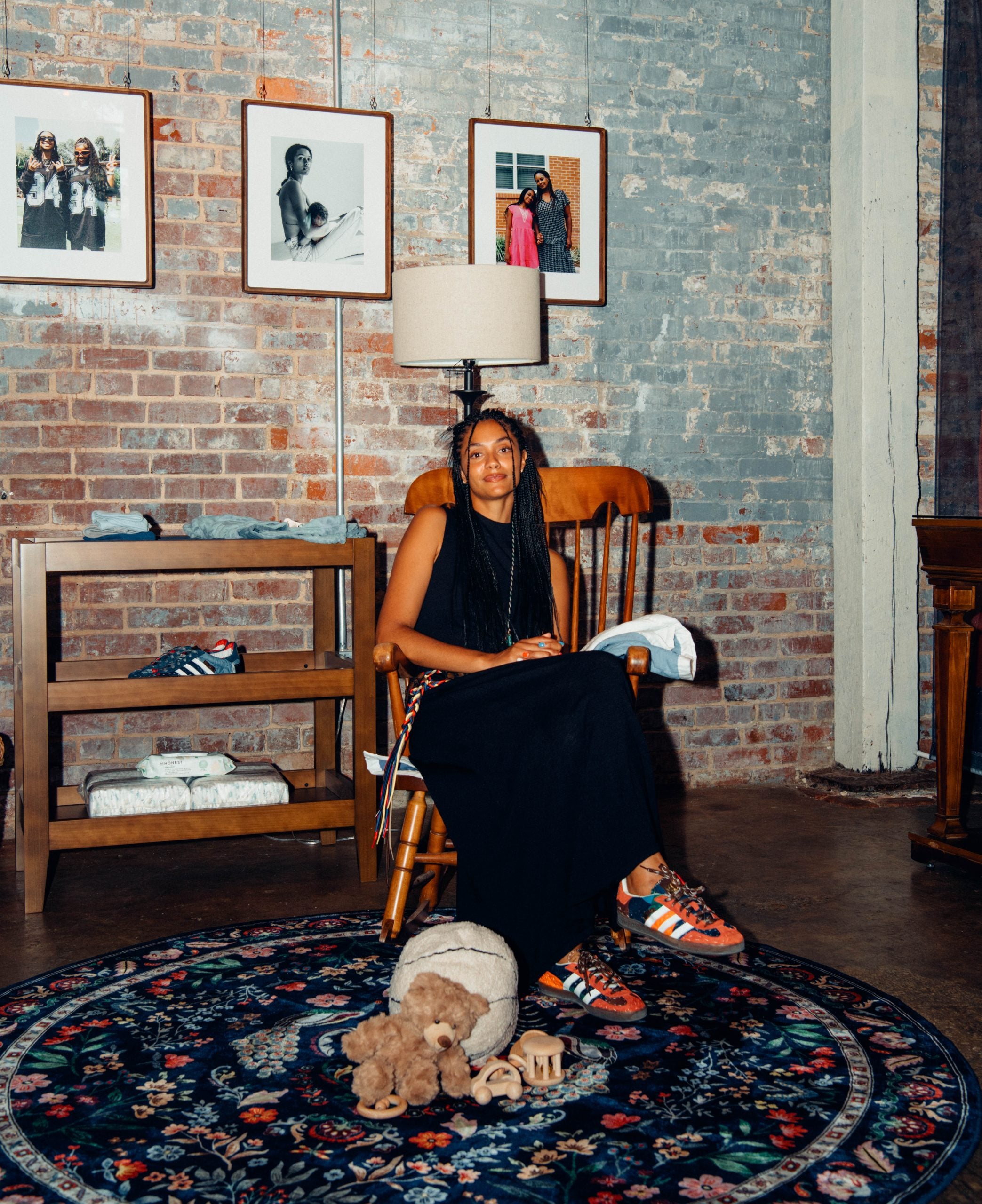
Almond is looking to redefine what power and care look like for Black mothers, and she is adamant that power or strength does not need to equate to struggle or sacrifice. “So many times, our power is centered on how resilient we can be,” says Almond. “I don’t want Black women to only feel powerful because they survived something. To me, care is a right, not a luxury.”
For the Gee’s Bend Quiltmakers, who proudly hail from the Gee’s Bend area in rural Alabama, even though their quilting creations have earned international accolades and are celebrated works in American art history, quilting remains a family tradition. As fourth-generation quilter Claudia Pettway Charley relayed, quilting was born out of necessity, “back then, there was no heat in the houses, and so the women had to quilt to make sure they had enough warmth.”
Charley’s daughter, a fifth-generation quilter, fondly recalled how she first picked up a needle. “I would spend every summer down at my grandmother’s, and eventually, my grandma said, ‘Put down that game controller and come do something useful with your hands.’ I threaded a needle, and that’s who I started with at age 10; it’s been thirteen years of sewing, thanks to my grandma, my great-aunt, and my mom, and I’m forever thankful for them.”
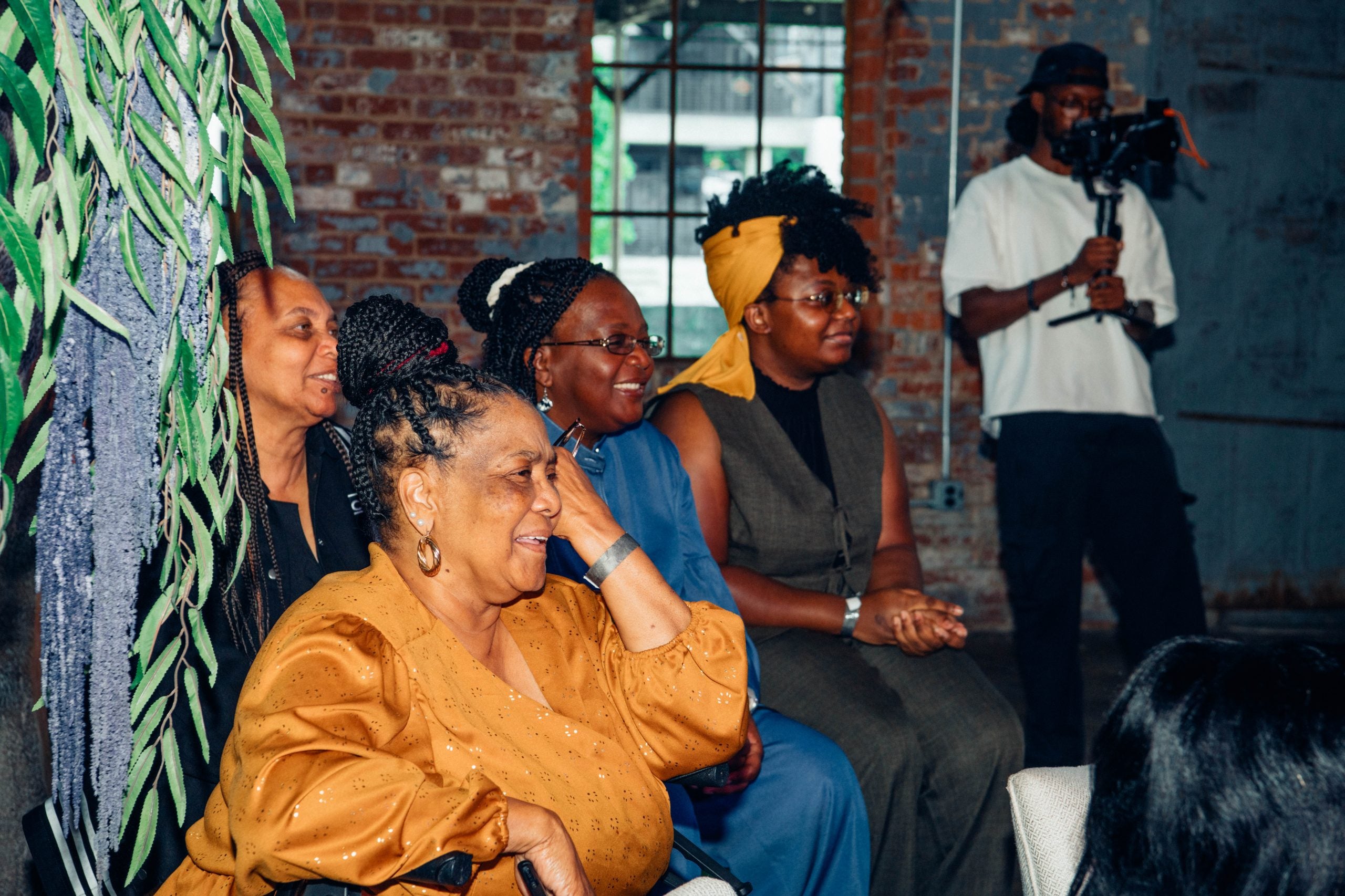
One quilter chimed in with how every quilt is made with love, describing how, “As Black people, we work hard at what we do. It’s a platform of doing the art and having it incorporated from our parents and grandparents. Quilting is relaxing, and it makes you feel good, and for me, I’m just enjoying every minute of it because I feel that I am Black excellence.”
Honoree and founder of the Kitboys Club, Sekou Thornell, wants to showcase “soccer culture and what it looks like through our lens.” “I spent a lot of my life from my teenage years, middle school years, all the way up to high school, buying sneakers and I found a foundational love through storytelling with sneakers and streetwear.”
“Growing up, I always had to explain myself and why I play soccer. Why not football? Why not basketball? So for me, it was really about expanding the knowledge and showing the cool factors of the game, and really showing people that Black folks can get into the game at these levels.”
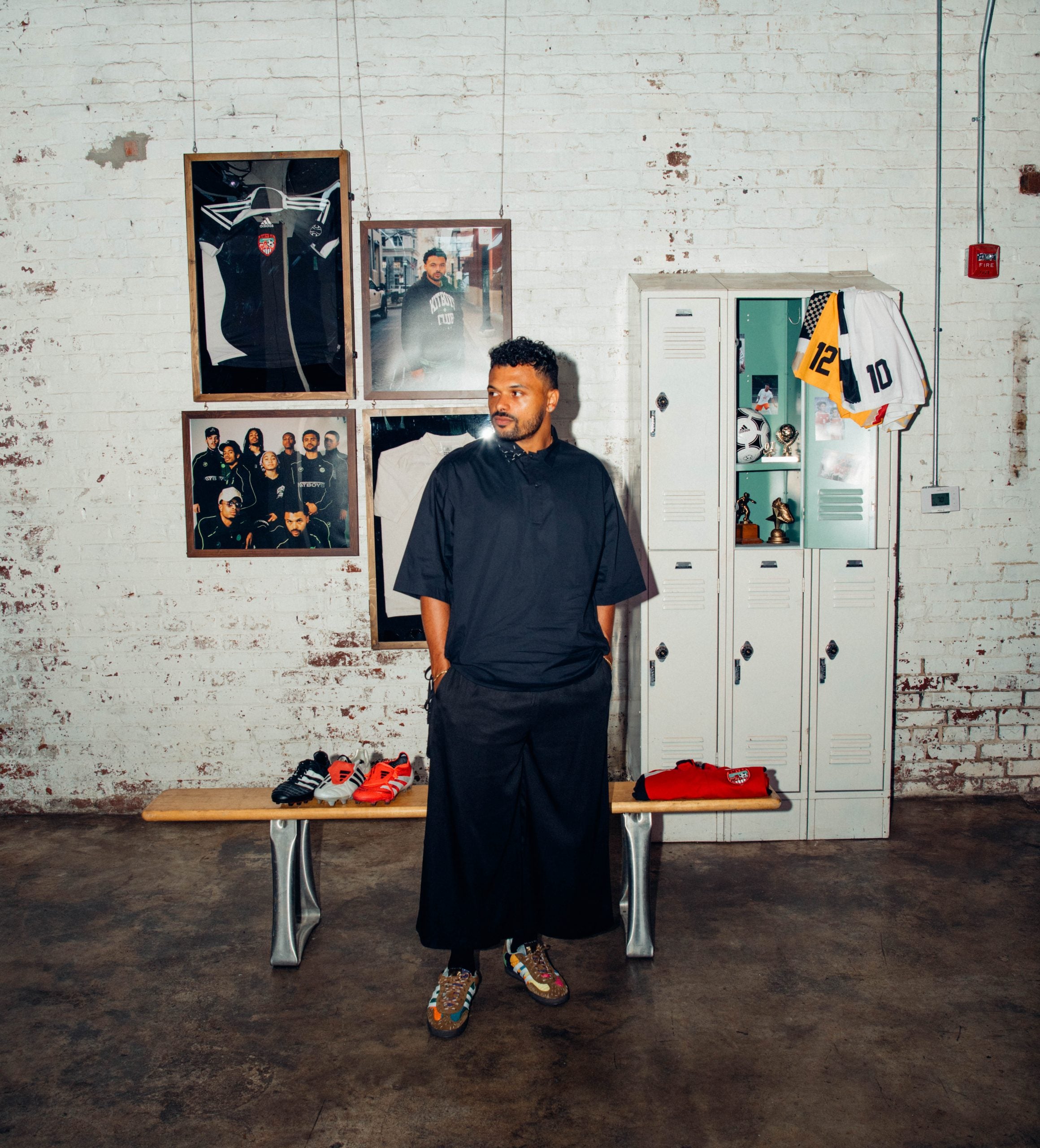
For Thornell, “Black excellence is simply being a proving example in a space as a Black person in my avenue, making sure I’m paving that way for people to come after me and we continue to grow together.”
Reflecting on the entire experience, Bee Walker captured what the night—and the movement—was truly about: visibility, truth and the power of community-rooted storytelling.
“It’s really important that we tell our stories and have visibility,” she said.
She emphasized how meaningful it was to highlight the vulnerability and truth within different communities—and to see that work met with real support.