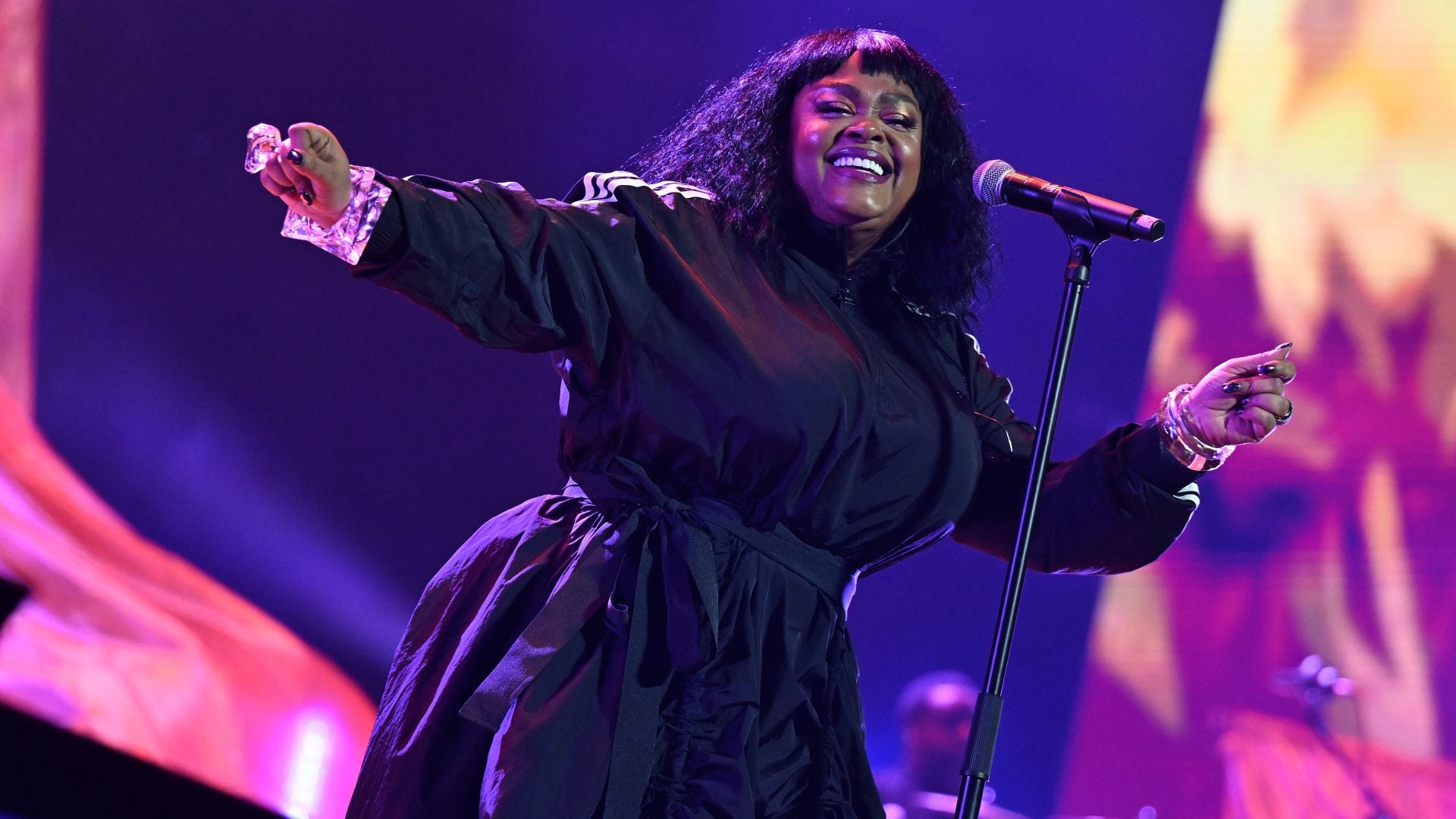

In the summer of 2000, Jill Scott didn’t ease into the spotlight—she stormed in, full of grace, power, and poetry. Her groundbreaking introduction, Who Is Jill Scott? Words and Sounds Vol. 1, marked the beginning of her discography—an introduction that would set the tone for a career rooted in raw emotion, poetic lyricism, and a sound that combined neo-soul, jazz, and spoken word effortlessly.
Even before her voice wrapped around a melody, “Jilltro” swept us up—live horns, deep rhythm, and a vibe that felt like stepping into a smoky, soul-soaked lounge. When she boldly introduced herself with that unmistakable roll call of syllables—J-I-L-L-S-C-O-T-T—we knew she didn’t come to play. Proudly from Philly, her presence was undeniable. Her voice—like honey, smooth and healing—wrapped itself around melodies with intention. From the start, she invited us into something intimate and powerful.
What makes Who Is Jill Scott? a masterpiece isn’t just the content. It’s the delivery. Her phrasing is poetic but never forced. Her transitions between spoken word and melody are seamless. She doesn’t perform emotion—she embodies it. The production, handled by musical legends such as Jazzy Jeff, James Poyser, and Dre & Vidal, is warm, live, and full of soul. It cradles her voice in real instrumentation, making every track feel alive.
Her premiere project was a blueprint for emotional honesty. It swept us into the heart of Black womanhood in all its richness: joyful, sensual, guarded, vulnerable, loving, and bruised. Twenty-five years later, it still resonates—not because we’re clinging to nostalgia, but because her words still understand us.
The album feels like a life unfolding. She begins with sweetness and curiosity—”Do You Remember” paints a soft-focus picture of first crushes and young love. There’s laughter, innocence, the kind of affection that glows before life complicates it.
Then life does complicate it. On “Gettin’ in the Way”, we meet Jill in full protective mode. It’s bold and unforgettable—a warning shot to the woman hovering too close to her man. Her delivery is direct, even playful, but make no mistake: the message is serious. We were ready to take our earrings off too and “whoop her tail for all it’s worth… $5.99 or something like that.” The kind of moment when we all felt like Jilly from Philly.
But love isn’t just about confrontation—it’s about connection. And “A Long Walk” glides in like a fresh breath. With jazz-infused warmth, Jill reminds us of the beauty in simply getting to know someone. Real conversation, shared energy, unforced intimacy. “Roll a tree…feel the breeze…listen to a symphony…chill and just be.” It’s what we imagine love can be when we slow down enough to feel it.
Of course, relationships aren’t always that clear. On “Exclusively”, Jill pulls us into a skit so vivid it might as well be a short film. After a morning of “good, extra lovin” with her man, she’s in the grocery store—soft, glowing, planning breakfast. And just as she’s checking out, the cashier casually asks, “Raheem, right?” The devastation in Jill’s voice as she realizes she’s not the only one cuts straight through the moment—no high notes, no theatrics—just raw, undeniable truth wrapped in quiet heartbreak.
What comes next is the ache of maturity. On “I Think It’s Better”, she’s not furious—she’s heart-heavy. This is the song you play when you know a relationship has run its course, but you still want to leave gently. You can feel the weight of the words she’s trying not to say too harshly. It’s resignation without bitterness, the kind of goodbye that only comes after trying for far too long.
But Jill doesn’t leave us there. Just when it feels like she’s closing the door on love, she opens it again—with light. “He Loves Me (Lyzel in E Flat)” is the sound of being cherished. Her voice soars with wonder as she names the ways her new love sees her, listens to her, values her. You can hear the shift: this love is not about possession or performance. It’s rooted in respect. It’s safe. It’s soft. It’s hers.
And then she brings the bounce with “It’s Love”, a song that radiates joy and flirtation. Jill teases, “Do you want it on your collard greens? Do you want it on your black-eyed peas?” It’s a playful, soulful celebration of the kind of love that feels like Sunday dinner. Familiar. Nourishing. Rooted in rhythm and ritual. The kind of love that shows up and stays.
But Jill isn’t done showing us her range. On “Watching Me”, what once felt like quirky paranoia now lands as eerily prophetic. She paints a sonic picture of unease, long before we lived under constant digital surveillance. In 2000, it felt imaginative. In 2025, it feels real.
Even on deeper album cuts like “The Way”, Jill shows us that sensuality doesn’t have to scream to be powerful. It can whisper. It can hum. It can feel like a satin robe sliding over your skin. In “Show Me”, she asks for reciprocity, for emotional clarity, and for love that doesn’t just speak—but acts.
And on “Brotha”, she turns her attention outward, celebrating Black men with warmth and intention. She lifts them up, reminds them of their beauty, their power, and their worth—even as the world tries to strip it away.
But beyond the vocals and arrangements, the true legacy of this album is the space it created for Black women to be whole. To be layered. Jill Scott gave us permission…and the roadmap to be soft and strong, sacred and sensual, messy and magical. She gave us room to feel without apology.
This album didn’t just age well—it grew with us. It’s the record we return to during heartbreak, joy, and reflection. It’s played on Saturday mornings while cleaning, or late at night when words fail and feelings rise. It’s a companion.
So yes, 25 years later, we’re still asking: Who is Jill Scott?
Because the beauty of that question is that it has no single answer. She showed us it was okay to keep unfolding.
And we’re still listening.